
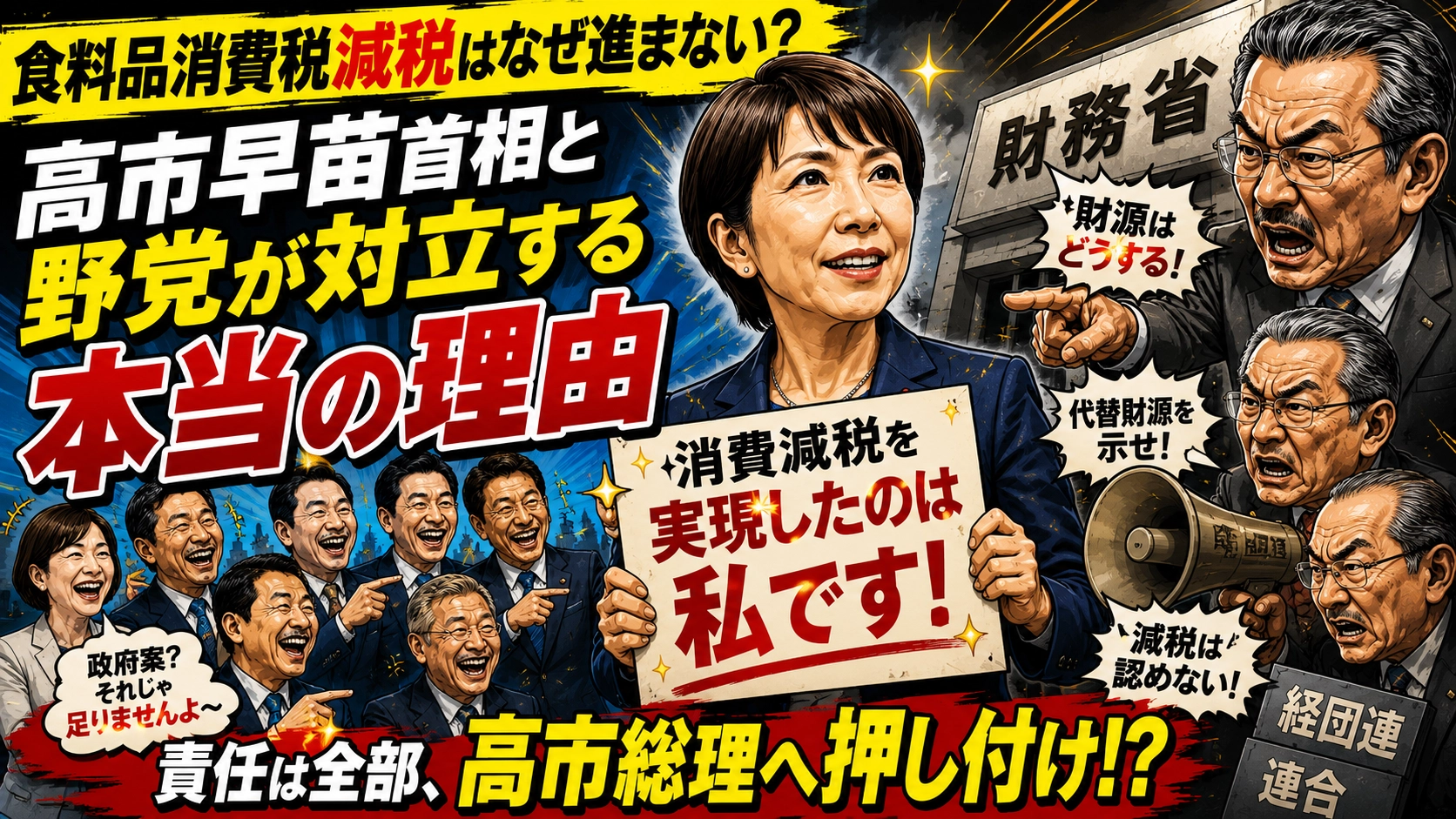
Why isn’t the reduction of the grocery consumption tax progressing? The real reason for the clash between Prime Minister Sanae Takase and the opposition
“We need measures against rising prices,” yet why isn't there progress on reducing the consumption tax on food?
Food prices keep rising and the burden on households continues to grow.
Nevertheless, debate over tax cuts in the Diet is being postponed.Many parties had advocated “consumption tax cuts” in the election, but when it comes to concrete policy design, their positions are not aligned.
From the perspective of the public,“Wasn’t it for tax cuts?”and one wants to tilt one’s head in confusion.
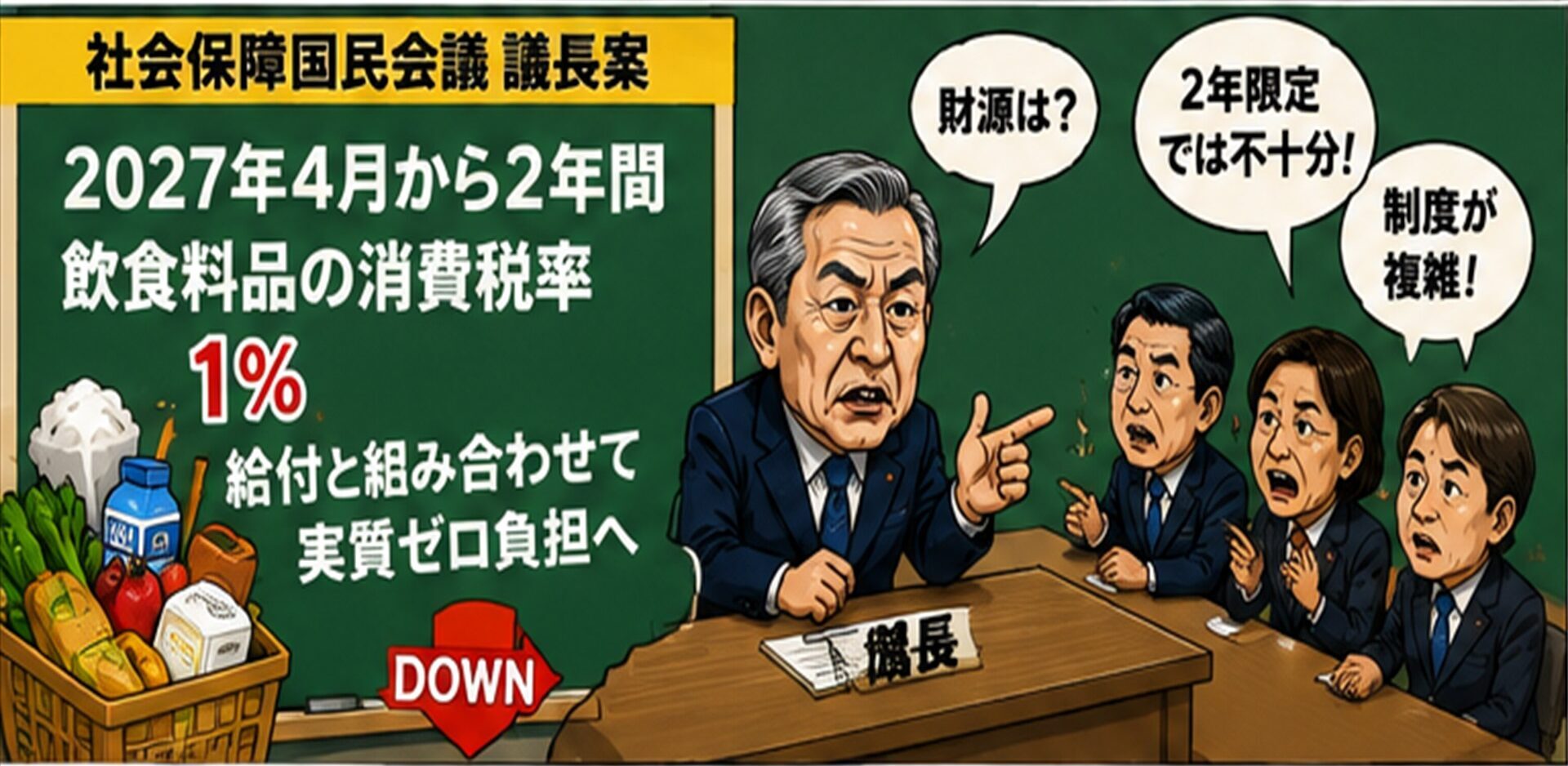
?In elections they call for tax cuts, but when it comes to discussion the opposition is cautious?
Currently, the National Council on Social Security isconsidering the chairperson’s proposalto reduce the consumption tax on food and beverages to 1% for two years from April 2027, combining benefits to aim for a net zero burden. However, many opposition parties are cautious or opposed, and reaching an agreement is difficult.
- The Democratic Party for the People advocatesreducing the tax rate to a flat 5%as a proposed measure.
- The Constitutional Democratic Party, along with Komeito, says “unless it’s a permanent tax cut, a two-year temporary cut will lead to a real tax increase later,” opposing the government’s “1% for two years” plan itself.
- The Constitutional Democratic Party also opposes the plan, arguing from the perspective that with the Middle East situation worsening, “we should implement immediate benefits with more immediacy than tax cuts.”
- Team Mirai has long beencautious about tax cutsand consistently argues for prioritizing reductions in social security premiums and income-linked benefits.
In short, it is more a scenario of “cannot agree with the government’s plan” than outright “opposed to tax cuts.”
Yet, from the public’s viewpoint, it is a bit puzzling. In elections, parties campaigned on “lower consumption tax,” but once tax-cut proposals become a topic, they appear to shift to cautious stances citing funding and design concerns.
Having campaigned on tax cuts, many would find it questionable that they become hesitant when faced with concrete proposals.
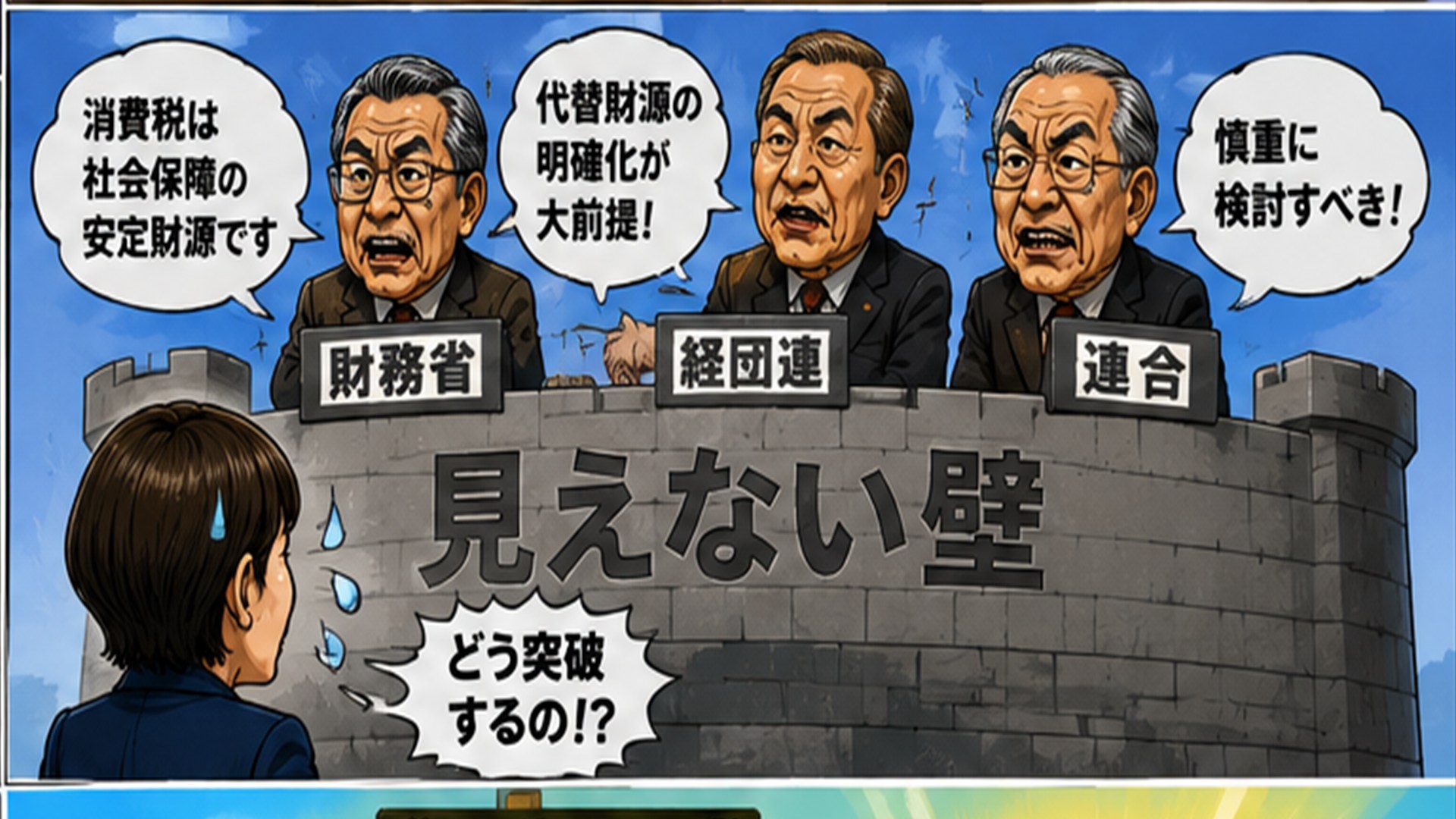
?Ministry of Finance, Keidanren (Japan Business Federation), and RENGO (Japanese Trade Union Confederation)… the invisible wall around tax cuts
Some commentators view that the Aso administration established the National Council on Social Security to create a venue for cross-party discussion and to shift away from a Finance Ministry-led debate.
But in reality,the idea that “consumption tax is a stable source of revenue to support social security”which the Finance Ministry has advocated for years remains strong and heavily influences the direction of the discussion.
Furthermore,Keidanren repeatedly asserts that if tax cuts are made, a clear alternative source of revenue should be identified, and RENGO remains cautious.There are lawmakers within the Liberal Democratic Party who emphasize fiscal discipline, creating a large temperature gap between Prime Minister Takaichi (note: actual name may vary by context) who supports tax cuts and the cautious faction.
?Assigning responsibility to Prime Minister Takaichi
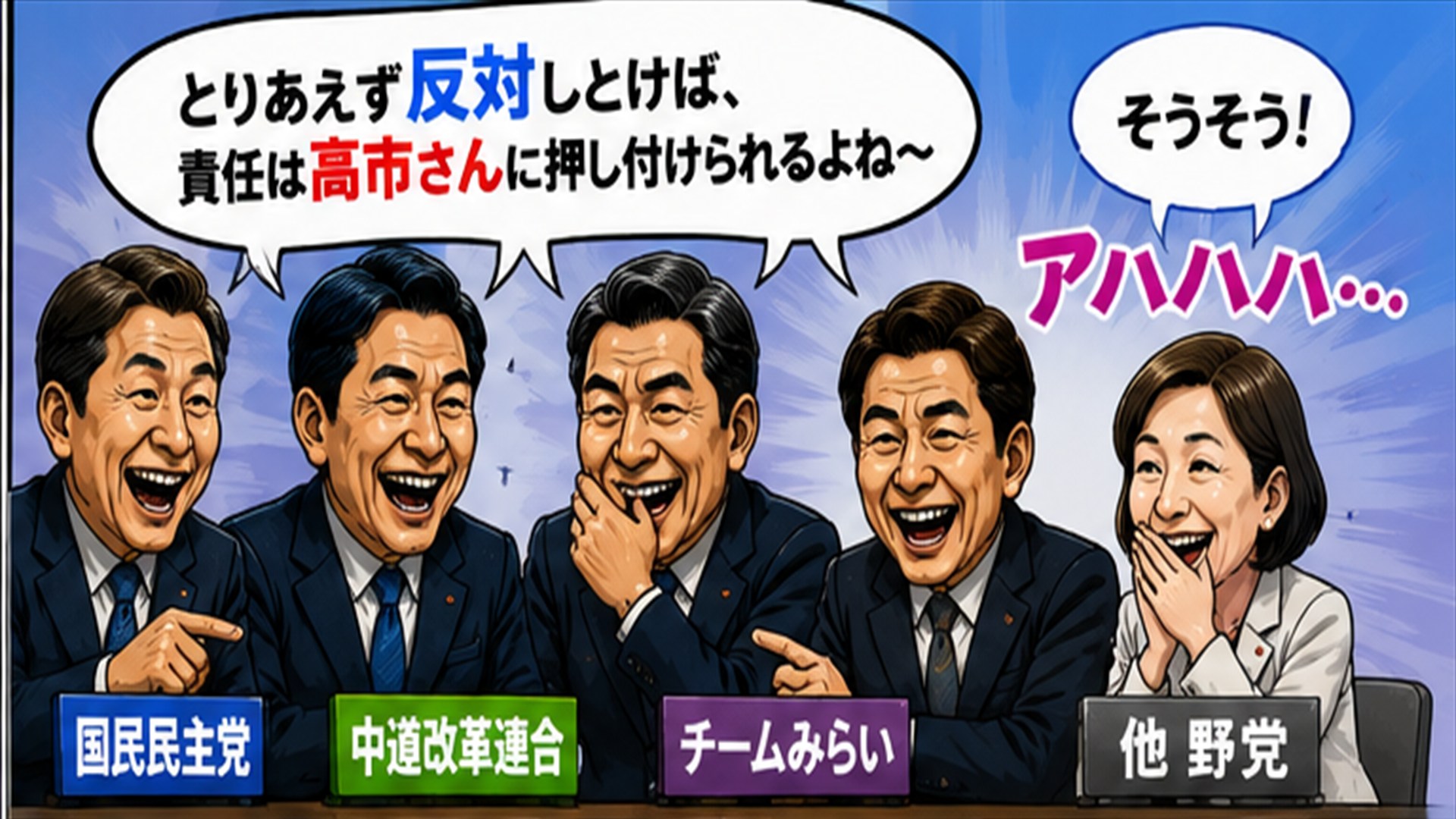
And interestingly, even opposition parties that had advocated tax cuts in the election seem to be riding this cautious wave.
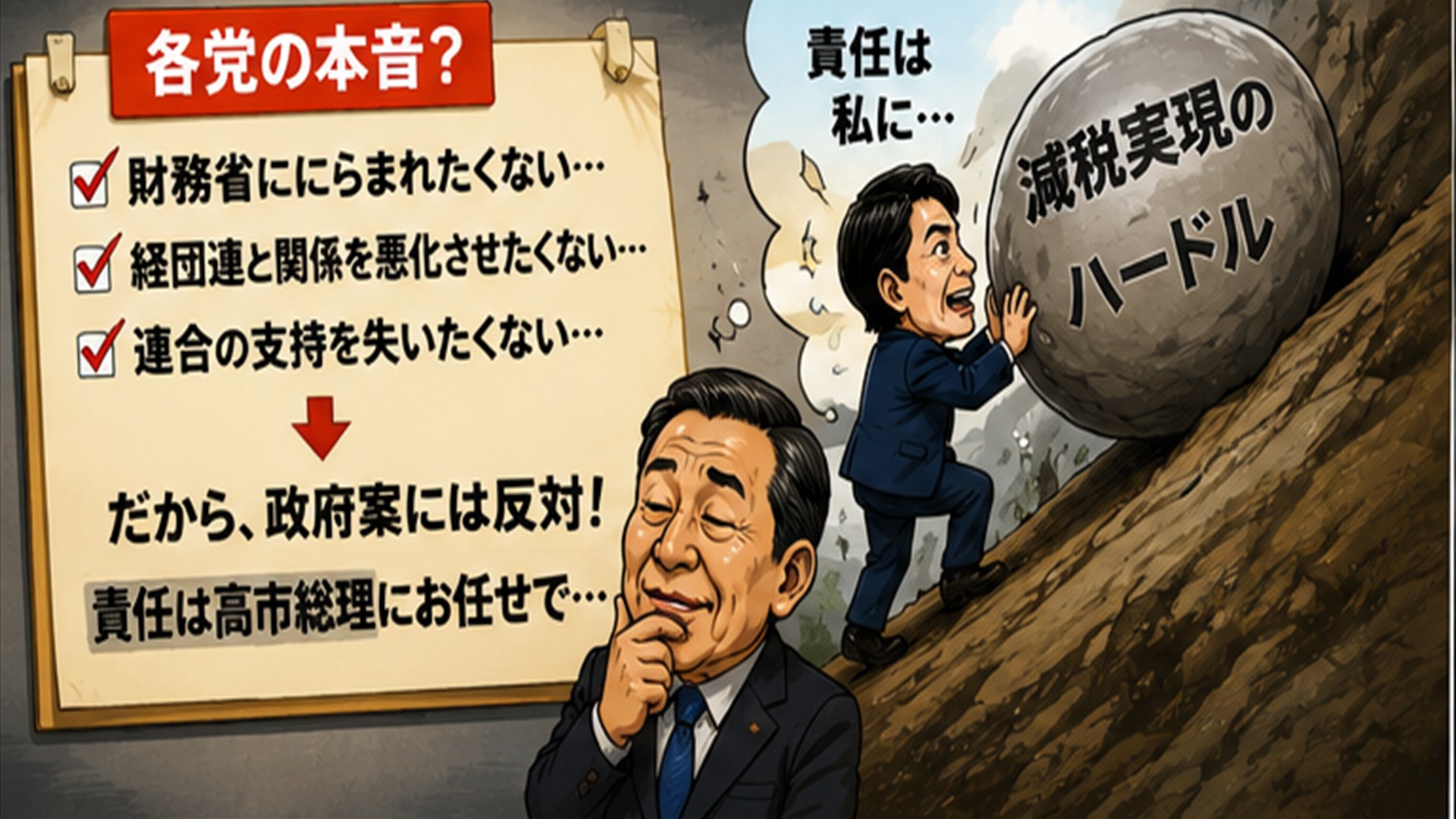
If they were to support the government plan now, some think it could affect relations with the Finance Ministry, Keidanren, RENGO, and others.In other words, by opposing the government plan, it becomes easier to justify calls for more tax cuts “for the public good.”
As a result, ultimate political responsibility appears to rest on Prime Minister Takaichi alone.
In the election, while loudly advocating “Tax cuts!”, the actual policy design shows only cautious voices at the forefront, leading to more people feeling that“in the end, who truly wants to advance tax cuts?”and this sentiment is growing.
?Only Prime Minister Takaichi is pushing tax cuts forward in reality
The debate over reducing the consumption tax on food is not simply a matter of pro- or anti-tax-cut stances; it involves funding sources, policy design, political responsibility, and relationships with various organizations.
One possible approach is to provide about 30,000 yen per person this year, drop the consumption tax on food to 1% from April next year, and a year later reconvene the National Council to discuss whether to transition to a refundable tax credit with benefits as planned, extend the tax cut, or revisit it to 5%.
One thing that can be said is that what citizens struggling with high prices need is not political blame games among parties or politicians, but effective measures.
If politics prioritizes who bears responsibility, it will inevitably affect market confidence to some extent.
Free practice and verification with a completely risk-free trade simulator!
Details page for One-Click FX Training