

Wait for the 30 minutes of the London Open. The idea of currency strength based on session starts

London Open: What was bought is not easy to see
The London and New York opens are known as times when trends tend to emerge within a day. European and American participants join, and overall market volume increases rapidly. For part-time traders, trading opportunities concentrate in this time window after the afternoon.
However, if you try to capture this period with currency strength, there is a problem. Even if you look at strength on typical timeframes like M15 or H1, you are seeing the strength of the past 15 minutes or the past hour, not directly “what was bought since the start of London.”
The flow that had been continuing before the session began and the new capital that comes in after the session starts mix within the same meter. As a result, you end up riding the currency that was strong just before rather than the currency that became strong in London.
What does it mean to measure from the session start?
A way to resolve this iscurrency strength from the session start.
What we do is simple: set the moment the session starts as the baseline (zero) and measure strength/weakness by the rate of change from there. Take London open as 0 and observe how much each currency was bought (or sold) since then. The pre-start flow is reset, leaving only the movement that occurred during this session.
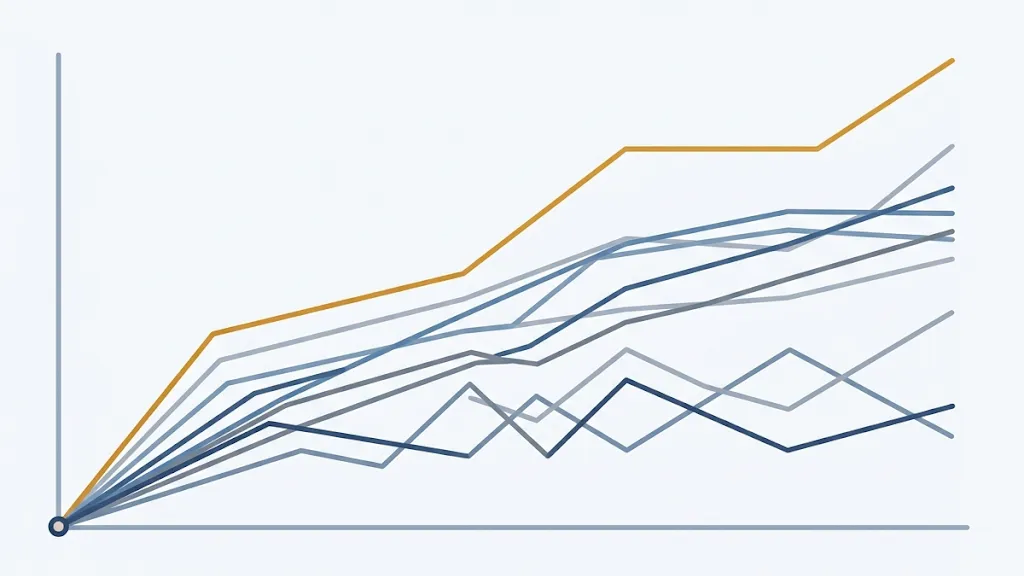
Compared to measuring from daily or hourly starts, the difference becomes clear. A daily-start looks at “how it moved today,” an hourly-start looks at “how it moved in the last hour.” A session-start looks at “how it moved since this session began.” Even at the same moment, the composition of the meter changes depending on the baseline. If you want to ride the London trend, it makes sense to view strength/weakness anchored to London start.
Concrete rules
In steps, it becomes the following.
- Switch the time axis to London (or to the session you want to trade, such as New York).
- Wait about 30 minutes to 1 hour after the session starts, then check the meter once the direction has somewhat settled.
- Form a buy basket using currencies that rank in the top two in strength/weakness. Conversely, if currencies rank in the bottom two, form a sell basket using those currencies as the anchor.
Right after the start, price action is often volatile and direction is not firmly established, so waiting 30 minutes to 1 hour is crucial. The title’s “wait 30 minutes” refers to this.
Example of exit settings
Profit-taking is managed by the overall basket profit/loss, not by individual pips. Here is a setting example (for reference only; optimal values vary by currency and time of day).
- Basket TP: 2.0% / Basket SL: 1.5%
- Trail: start at 1.5% / retrace 0.7%
- If the strength/weakness rank falls to 3rd place or lower, retreat
The trailing feature activates when unrealized profit reaches the start percentage, and if it retraces by the set percentage from the peak, it closes. The strength/weakness retreat means that if the anchor currency loses momentum on the meter and its rank drops, the premise of the trend is considered broken and you exit.
Time zone guide (Japan time)
Approximate times for the entry anchor.
- London start: around 16:00 in summer, around 17:00 in winter
- New York start: around 21:00 in summer, around 22:00 in winter
There is a one-hour shift due to daylight saving changes, but the summer/winter determination is done automatically by the tool described later. No manual calendar checking is required.
Switching session-start strength/weakness with one toggle
The process of “set session start to zero and measure by change rate” up to now can be executed simply by changing the time axis dropdown to London or NewYork, which is whatShinetsu Basket is all about.
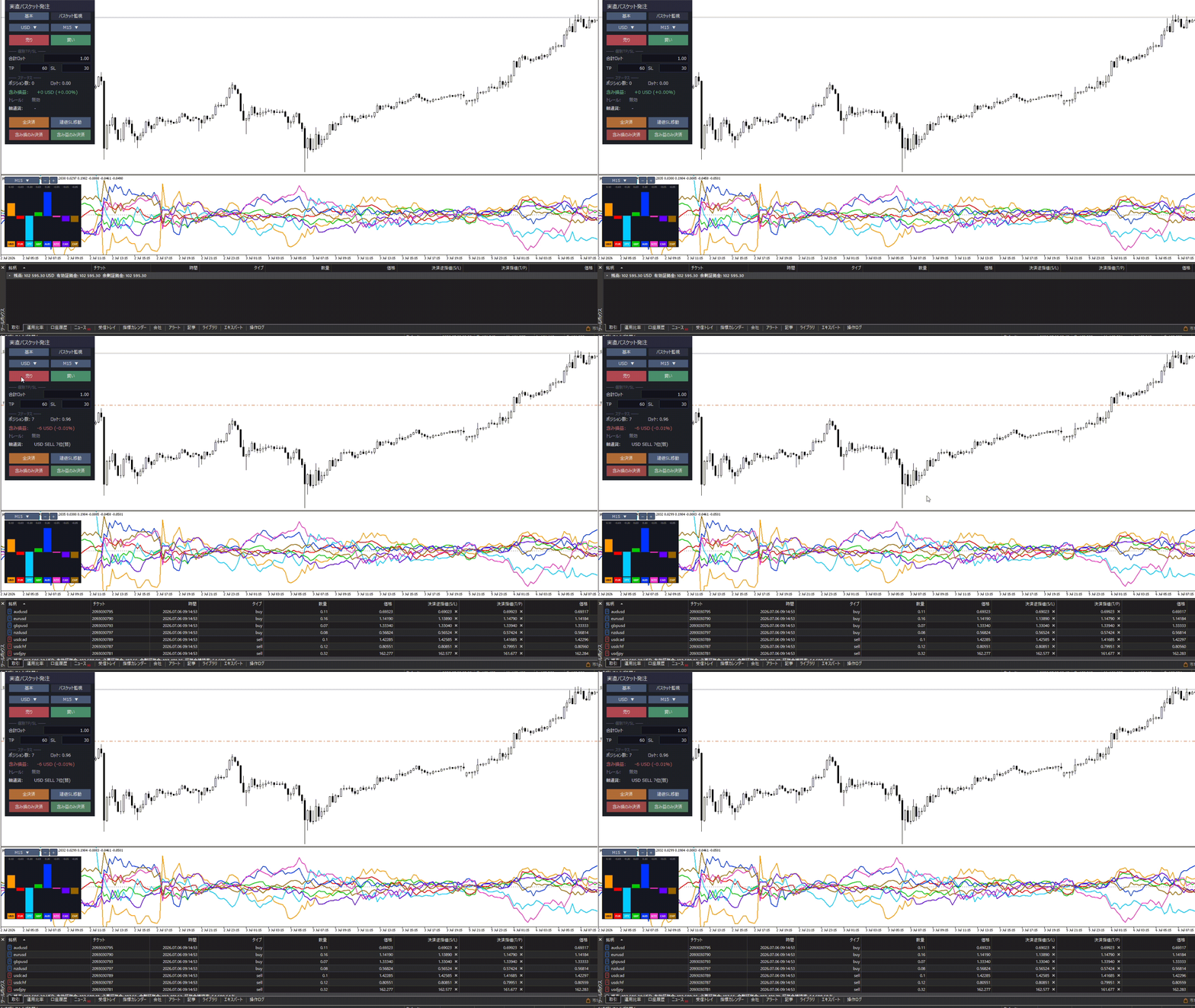
This is a tool for MT5 that provides session timeframes such as Today, Tokyo, London, and New York by default. It displays strength/weakness by the change rate from the session start, and automatically detects summer/winter time. After confirming the top currencies, you can place orders for the related seven pairs in one go anchored on that currency, and monitor total profit in 2-second intervals after ordering. The previously mentioned basket TP%, SL%, trailing, and strength/weakness retreat can all be managed with this monitoring feature. It is not automated trading, but a tool to support discretionary ordering and management.
Early-release price: 19,800 yen (tax included) until July 31.
From that point, the regular price will be 24,800 yen (tax included).
View product page (Shinetsu Basket)
The method described in this article does not guarantee profits. Please test on a demo account and use it at your own risk.