
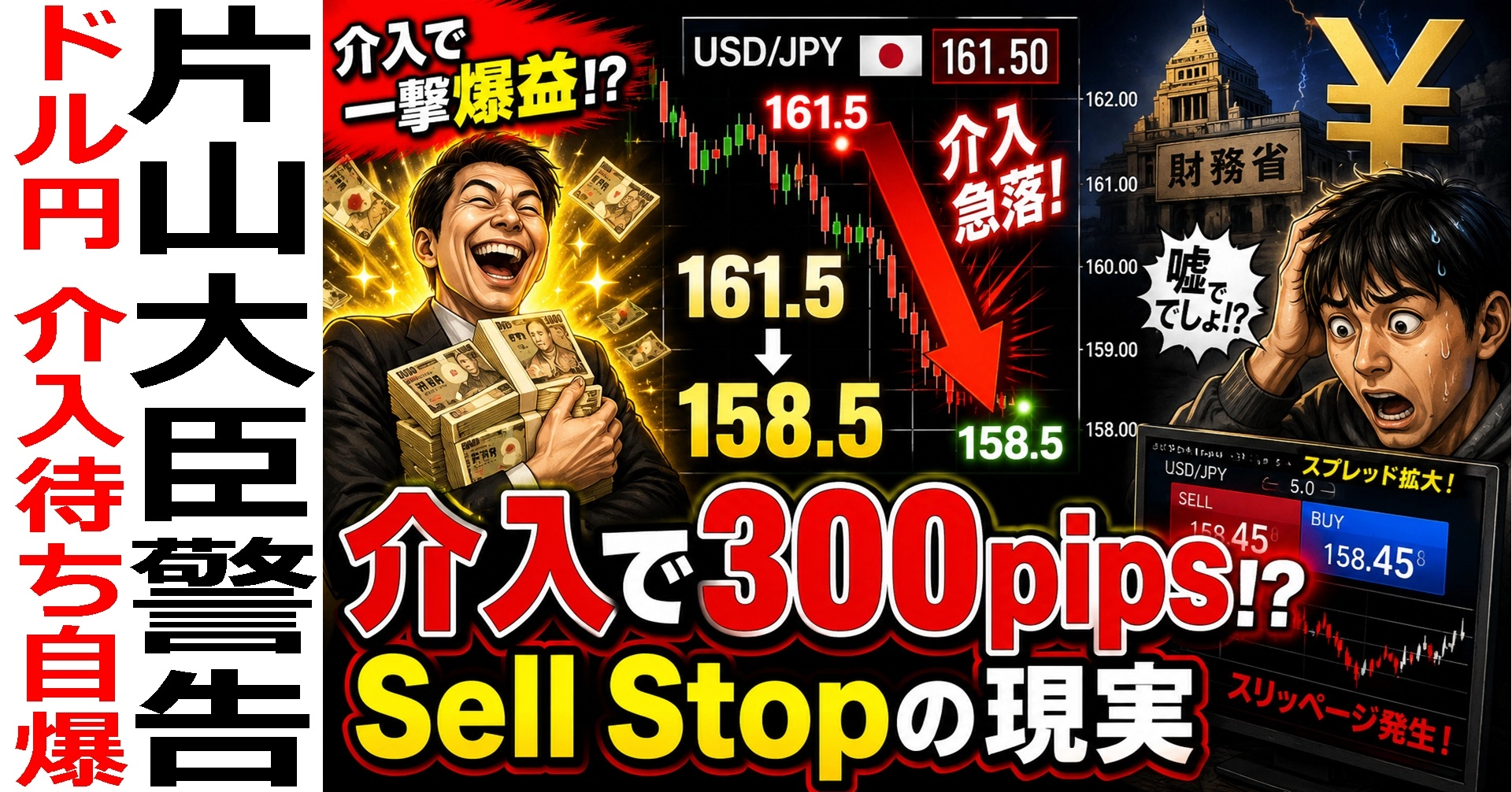
If the USD/JPY intervention hits, 300 pips in one stroke!? The reality of explosive-profit trades aimed with Sell Stop orders
“If you wait for foreign exchange intervention and hold a USD/JPY short position, wouldn’t it be easy to make profits?”
Have you ever thought of such a strategy?
As of June 24, 2026, USD/JPY is in the 161.5–161.6 range, at a yen depreciation level not seen in 39 years, andFinance Minister Katsuyuki Katayama has warned firmly that “if there is speculative movement, decisive action will be taken.”
On the other hand, in a triple-bottom scenario of yen depreciation, stock decline, and oil decline, the risk of waiting for intervention while holding positions is actually higher than people imagine.
Especially on social media, you may see statements like “It’s over 160 yen, intervention is near” or “If intervention comes, you can gain hundreds of pips.”But the actual market is not that simple.
Would you keep a waiting-for-intervention position in this market?

?FX New Generation: One-Click FX Training MAX
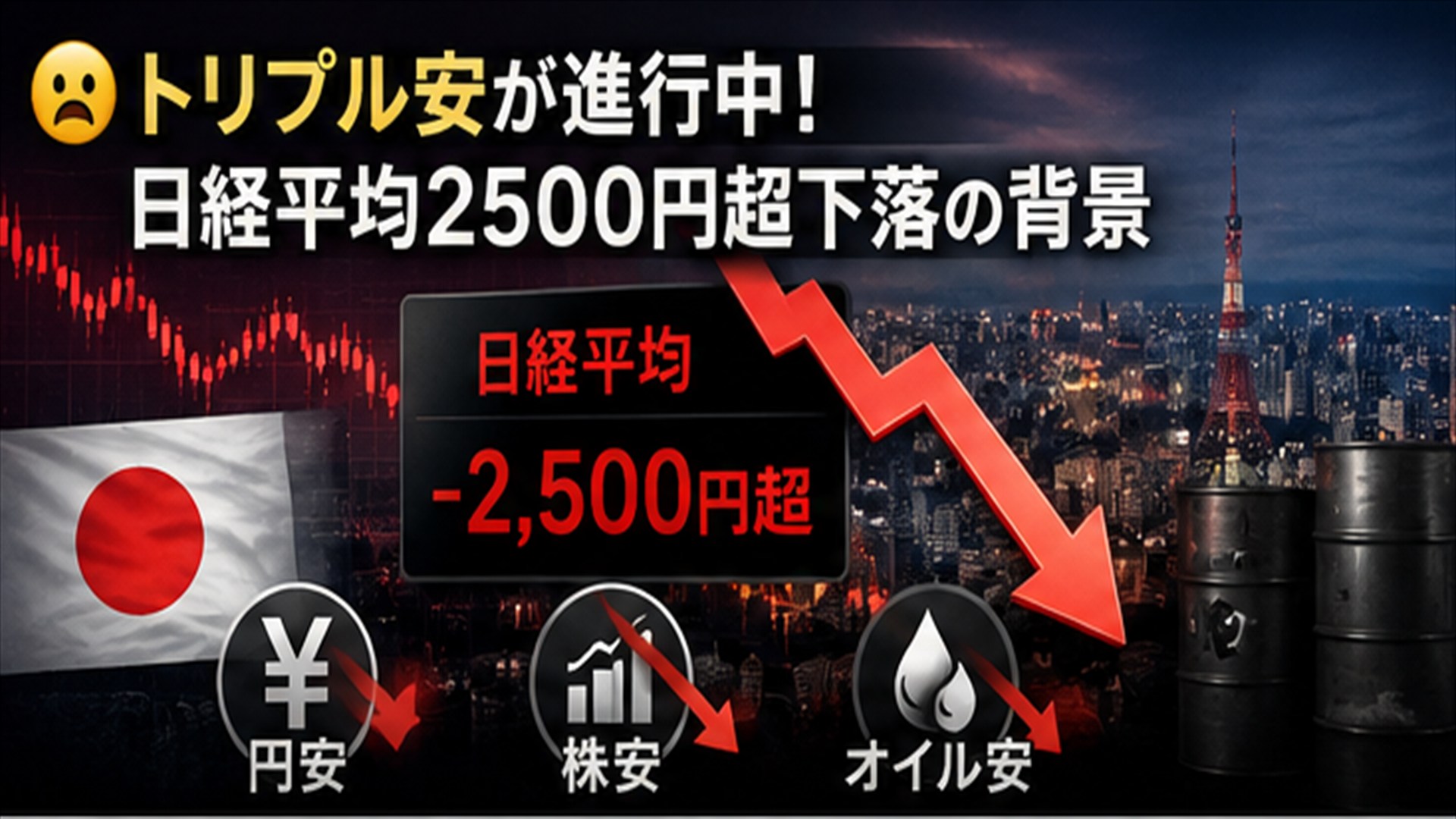
?Triple decline proceeding! Background for the Nikkei dropping over 2,500 points
In the Tokyo stock market on June 24, 2026, the Nikkei index temporarily fell by more than 1,000 points and at one point over 2,500 points.
The main factors were adjustments in US tech giants and semiconductor stocks. Profit-taking and demand caution in AI-related stocks like Nvidia and Micron Technology cascaded into export-related Japanese stocks (like Tokyo Electron, etc.).
Furthermore, WTI crude oil hovered around the 72–73 dollars range, and Brent around 76 dollars, with the “triple decline” of yen depreciation, stock decline, and oil decline progressing simultaneously.
This combination might seem to reduce import costs at first glance, but for market participants it compounds uncertainties. Exporters are affected by stock declines, and energy-related companies could see earnings pressure from crude oil declines.
Some see the long-term uptrend as still intact, but short-term volatility has clearly increased.
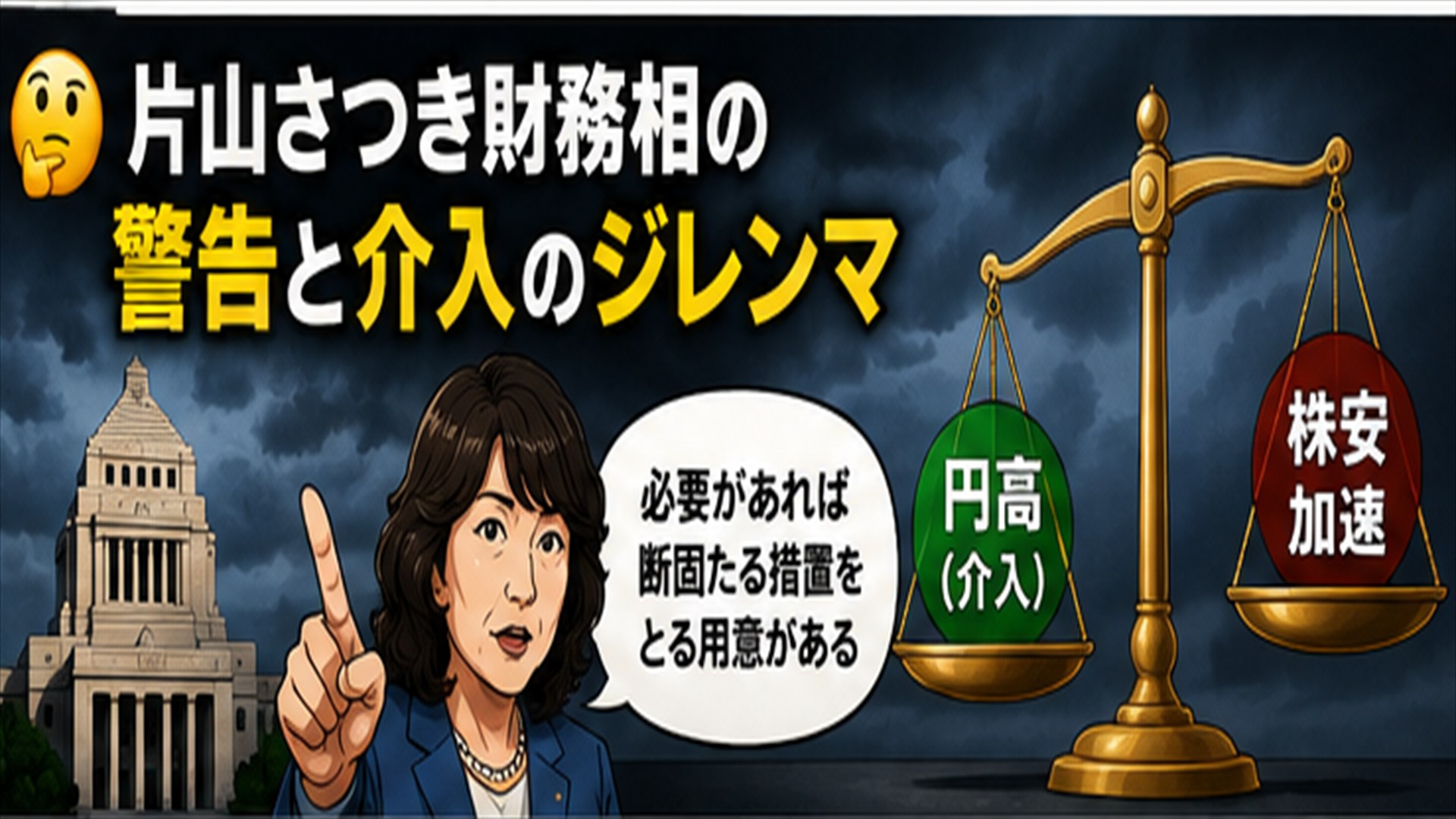
?Warning from Finance Minister Katayama and the dilemma of intervention
Finance Minister Katsuki Katayama recently stated after a meeting with the U.S. Treasury Secretary, “If necessary, we are prepared to take firm measures,” sending a strong message to the market.
In the past, from 2024 to 2026, the Ministry of Finance conducted several yen-buying interventions totaling about 11 trillion yen. When USD/JPY reaches the upper 160s and volatility is rapid, the ministries and the Bank of Japan may act with real money.
However, there is a major dilemma here.
Intervening to push yen higher in a stock-price decline would worsen the profitability of exporters and could push stock prices lower still.
If stock prices are rising and the yen is weakening, intervention is easier, but in a current stock-price decline, there is the concern that “intervention = faster stock decline.”Intervention = accelerated stock decline”
Therefore, it may not be as easy to intervene as the market thinks.
?The greatest risk of waiting for intervention is timing
The biggest weakness of a waiting-for-intervention strategy is the uncertainty of “when will it come.”
It could be in a few hours, a few days, or perhaps not come for weeks.
If the market then tests 161.5, 162, 163, or even 165 yen, short positions could incur substantial unrealized losses.
Conversely, if you wait to see and intervention suddenly occurs, a few hundred pips could fall rapidly.
The fundamental reason is that the Japanese-U.S. interest rate differential has not been resolved.
?The fear of slippage in MT4/MT5 orders
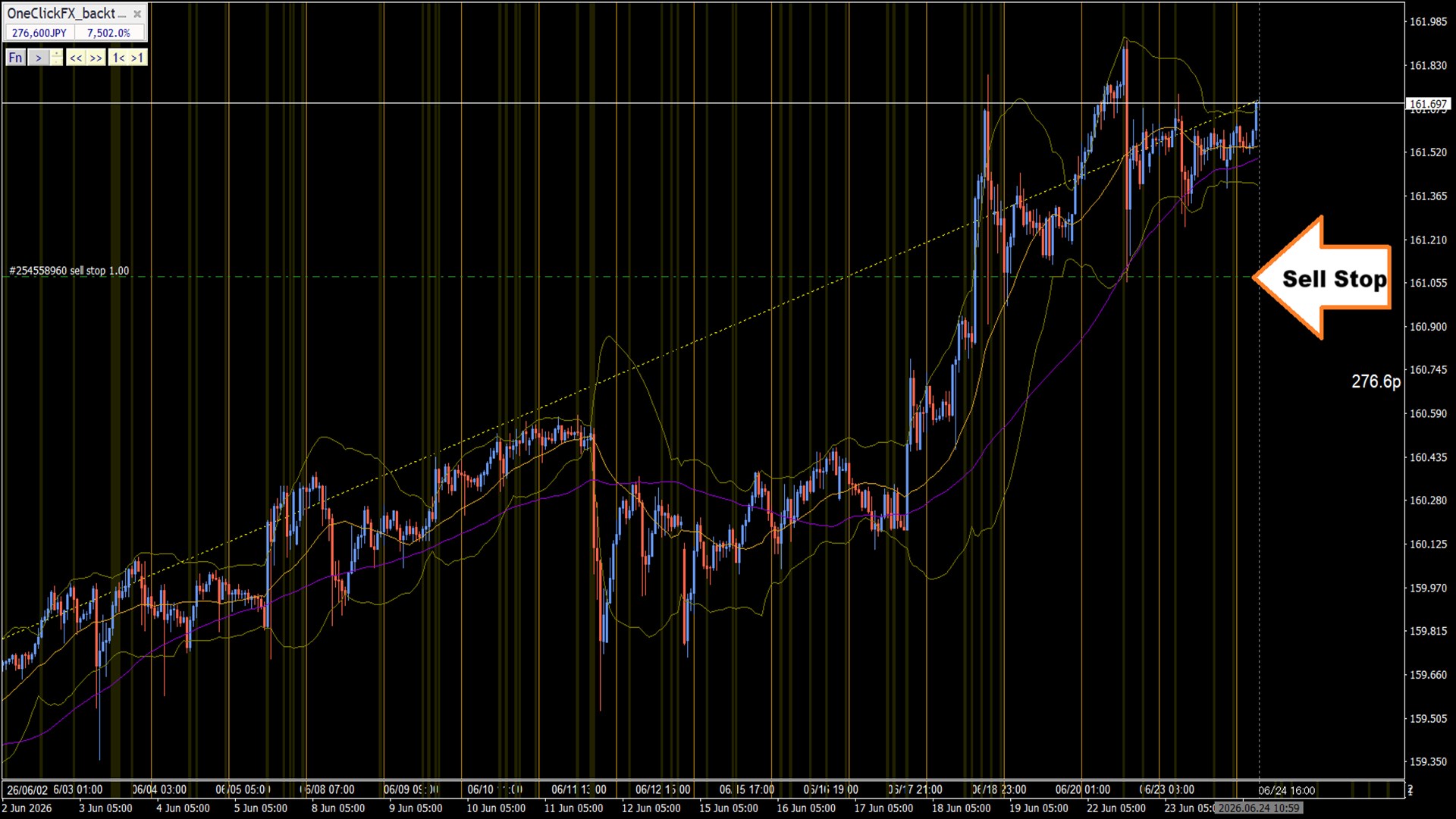
So, what about placing a Sell Stop order so it executes during a sudden drop from intervention? Also, with One-Click FX MAX, you can set a trailing stop at the same time.
However, one thing to be especially careful about in intervention markets is slippage that occurs in MT4 and MT5.
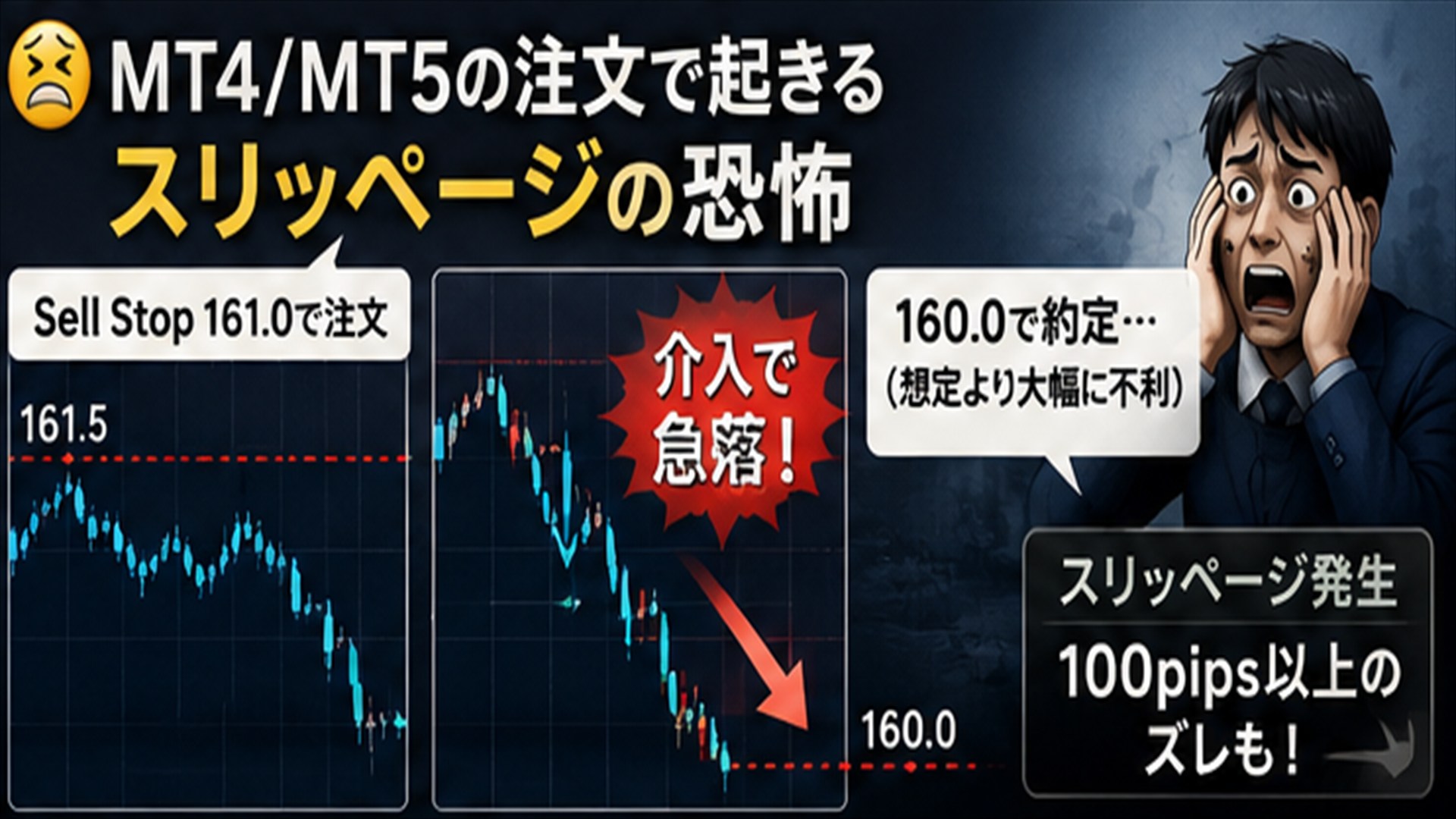
For example, if USD/JPY is around 161.5 and you place a Sell Stop at 161.0, normally the order would trigger at 161.0.
But during intervention, things change.
If the price crashes from 161.5 to 160.0 in one move, you may pass through 161.0 almost without touching it and jump over it.
That is, you might have wanted to enter at 161.0, but actually fill at 160.0 or 159.5. This is a common occurrence in practice.
?Double punch of widened spread! You’re at a disadvantage the moment you enter
Another nuisance is the widening spread.
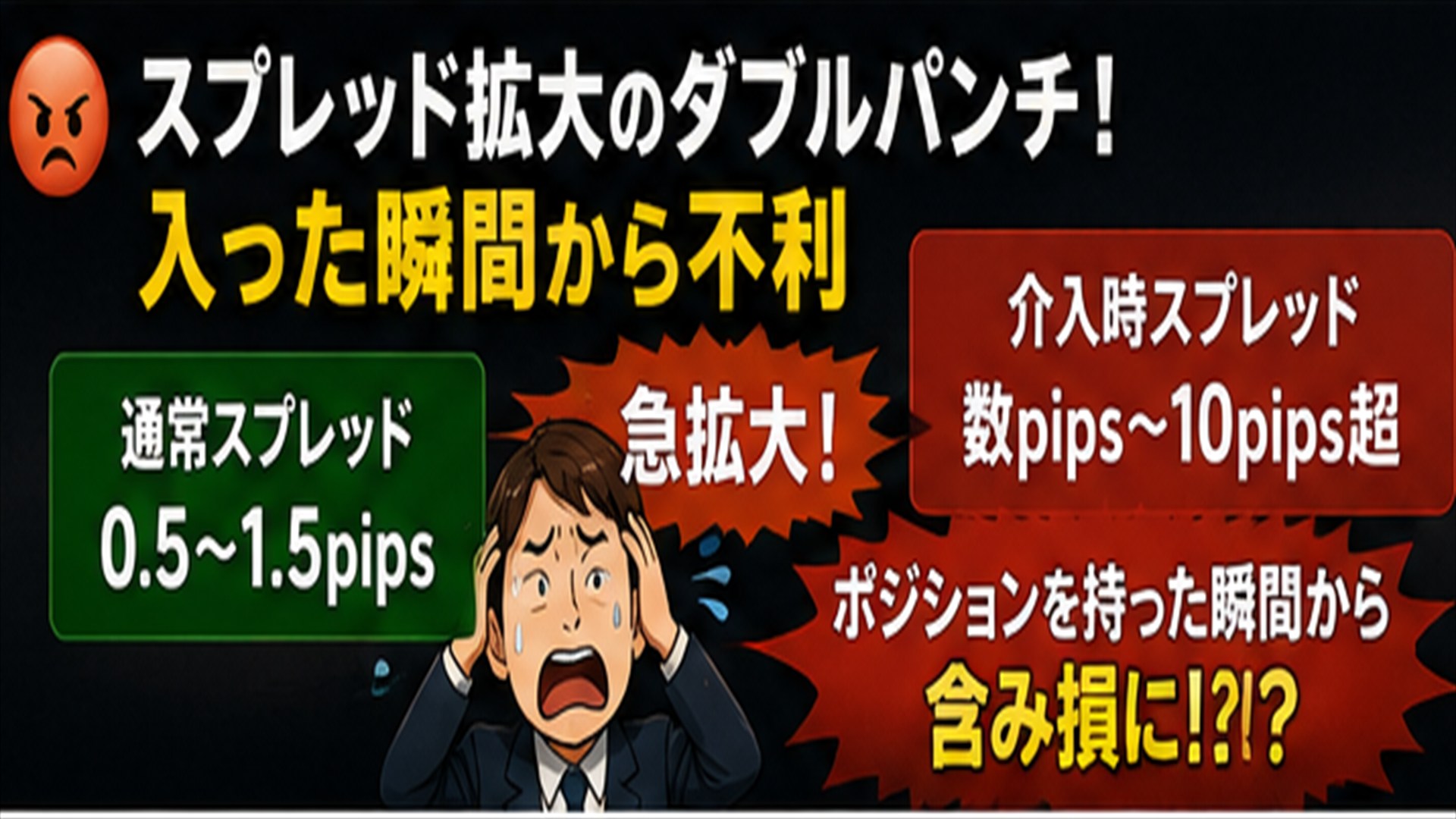
In normal times, USD/JPY trades with a spread of about 0.3–1.5 pips.
However, in extreme volatility such as intervention or major data releases, spreads can widen from a few pips to 10 pips or more.
Because brokers don’t want to take on risk, they temporarily widen the bid-ask spread.
Even if a Sell Stop is triggered at 161.0, a widened spread makes the actual entry price less favorable.
As a result, you can have tens of pips of unrealized loss the moment you take a position.
Moreover, slippage and spread widening occur simultaneously.It’s as if you’re being hit from both sides at once.
Do you realize how dangerous the notion of “we’ll win if intervention comes” is in real markets?
?Actually, what’s more frightening than intervention is “waiting for intervention”
Many traders fear intervention itself.
But the real danger may be waiting for intervention while continuing to hold a position.
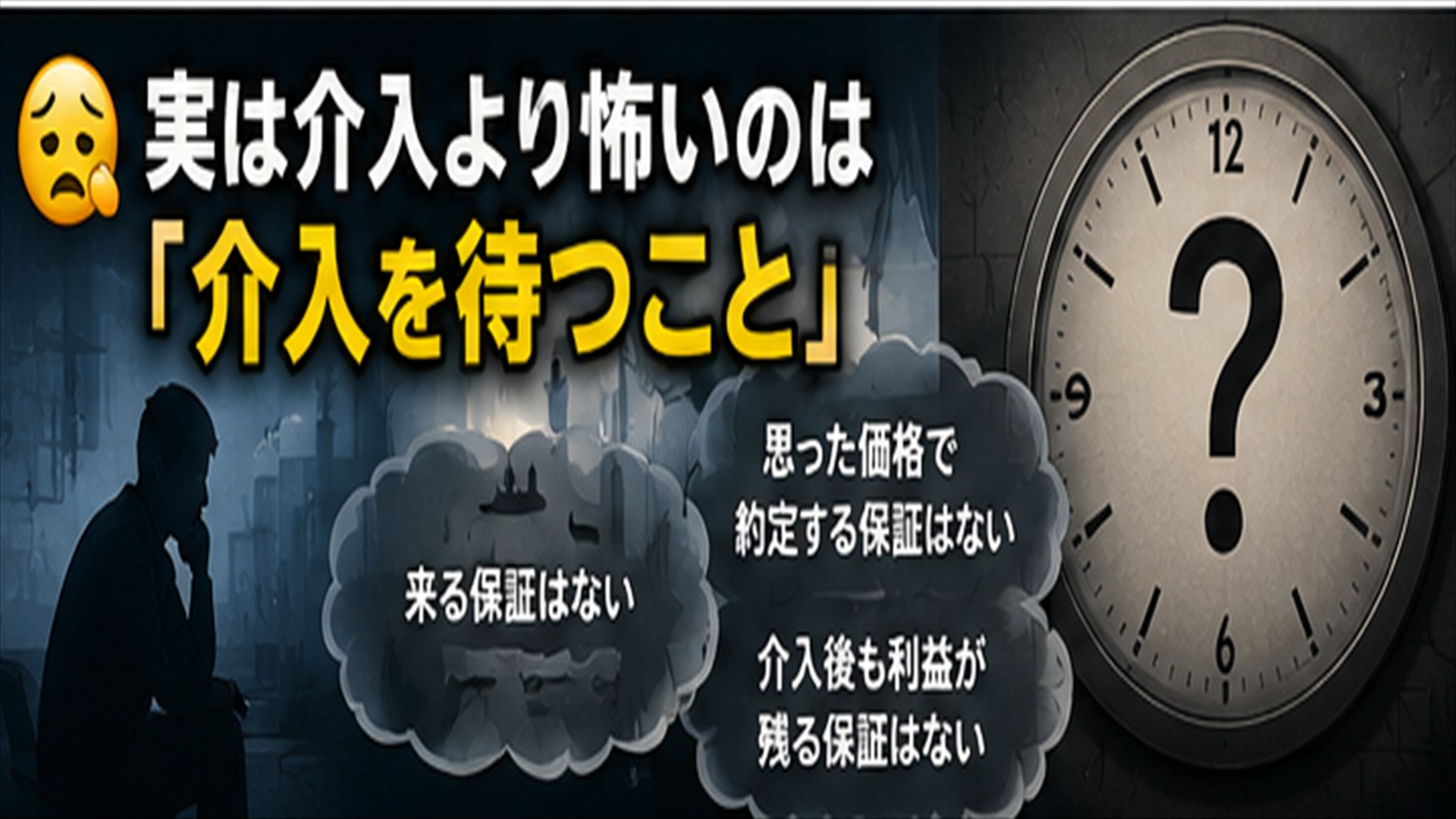
There is no guarantee intervention will come, nor that it will fill at the price you expect.
Moreover, there is no guarantee you’ll profit after the intervention.
In other words, uncertainty multiplies.
In markets, it’s often the case that the simplest strategies aren’t so simple after all.
Waiting-for-intervention shorts are a classic example.
If it were truly easy to win, investors worldwide would be making huge profits with the same method.
?What is a more realistic strategy than waiting for intervention
In this article, we explained the dangers of holding positions while waiting for forex intervention in the USD/JPY around the 161.5 range as of June 24, 2026.
The strong warning from Finance Minister Katsukiyo Katayama, the Nikkei’s sharp drop, the adjustment in US semiconductor stocks, and the ongoing triple decline have left the market extremely nervous.
Intervention may indeed occur. However, we do not know when it will come.
Furthermore, even if intervention occurs, slippage and spread widening may prevent trades from turning out as you imagined.
More likely, waiting for intervention and shouldering extra risk is a greater danger.
Rather than aiming for a one-shot win from intervention, it is safer to participate after confirming the market direction.
The market always presents opportunities. There is no need to rush into difficult situations.
Completely risk-free trading simulator for free practice & verification!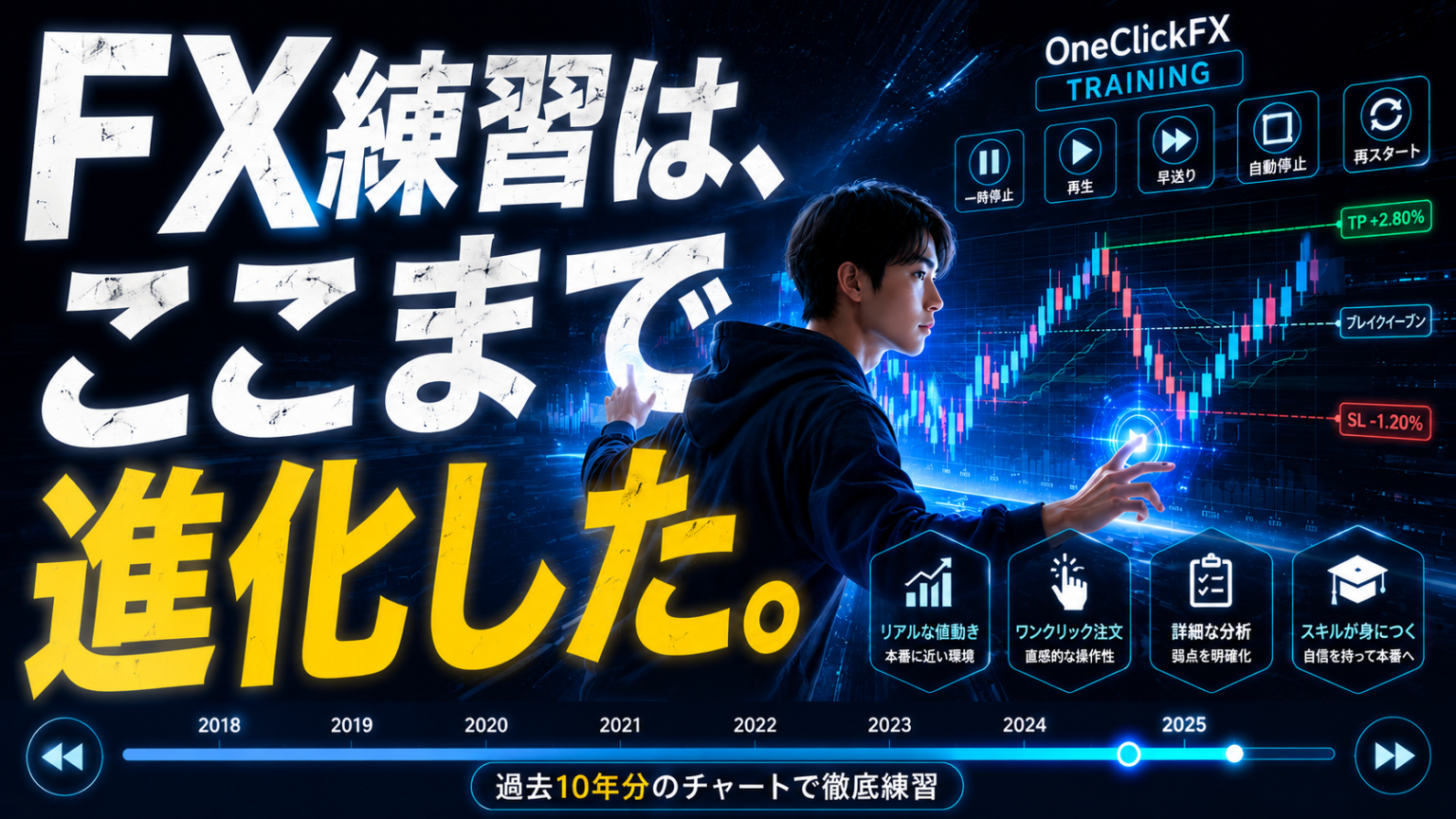 Details page for One-Click FX Training MAX