

Finances Minister Bessent to make a lightning visit to Japan on the 11th–13th! Meeting with Prime Minister Takashi to press China before Trump’s visit to China, “Japan-U.S. unity” puts pressure on China
Everyone, what do you think when you hear that US Treasury Secretary Janet Yellen is coming to Japan? Moreover, it is reported that she is coordinating meetings with Prime Minister Sanae Takashiya, Finance Minister Katsuyuki Katayama, and BOJ Governor Haruhiko Ueda over three days from the 11th to the 13th.
The timing is almost too perfect. Because immediately behind it is President Trump’s visit to China. It’s like a chessboard sequence from a “Japan-US planning session” to the main event in China, a bold turning point with a rook and knight exchange.
We see yen depreciation, currency intervention, concerns over China’s export controls to Japan and the supply of rare earths; this move doesn’t seem like just a “friendly visit.” For investors, it marks the opening act of a geopolitical event that could shake markets.
?FX New Generation: One-Click FX Training MAX
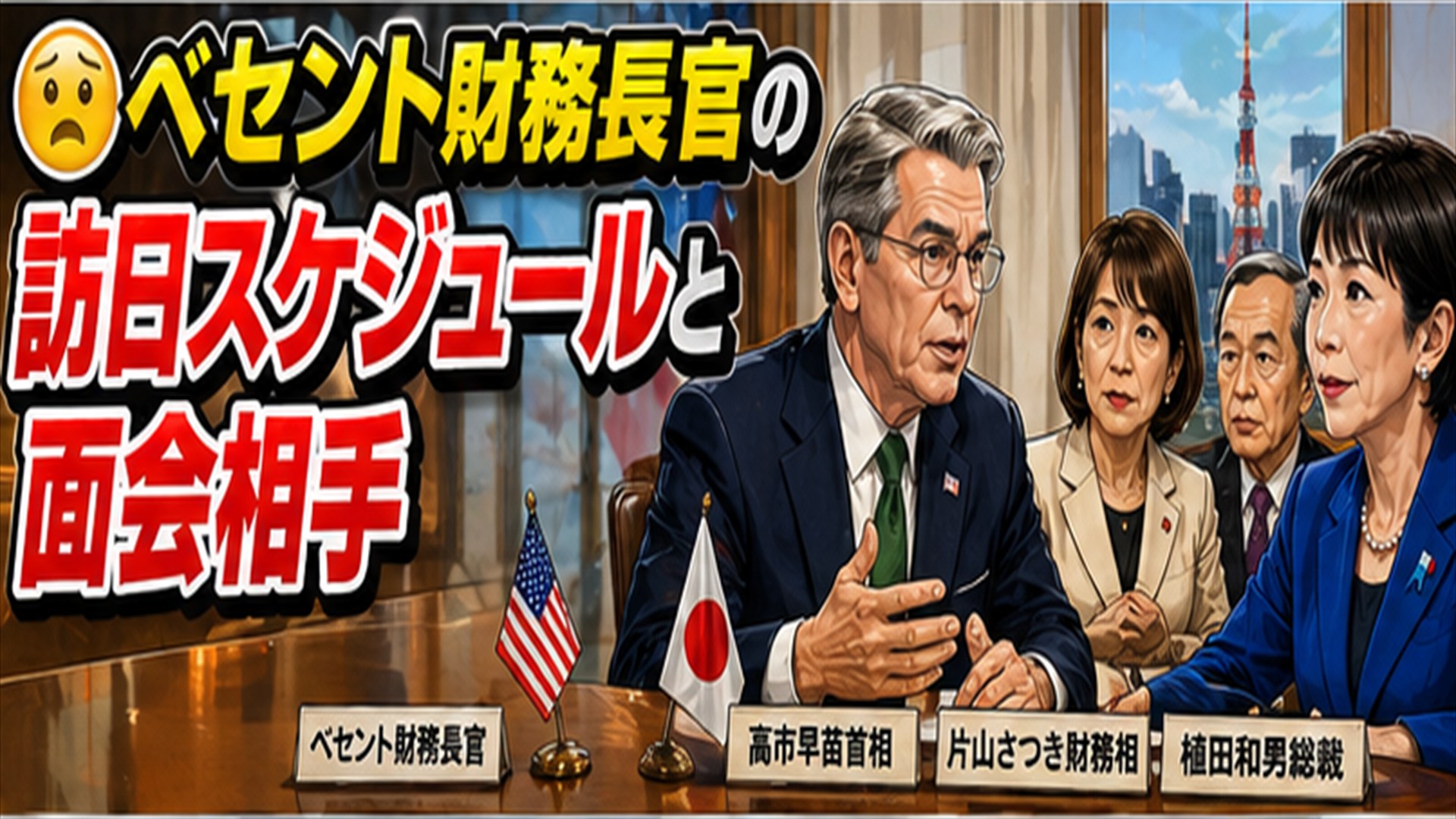
?Bessent Treasury Secretary’s Japan Visit Schedule and Meeting Counterparts
Treasury Secretary Bessent will arrive in Japan from the 11th to the 13th,and is coordinating meetings with Prime Minister Sanae Takashiya, Finance Minister Katsuyuki Katayama, and BOJ Governor Kazuo Ueda.
The publicly stated agenda is to address excessive yen weakness, align financial policy, and economic security cooperation. In expert terms, the “US-JJapan Financial Talks” refers to a venue where monetary and fiscal authorities of both countries align in advance.
There has been recent news of Japan repeatedly engaging in yen-buying interventions, but those interventions almost certainly require close coordination with the United States.
By having Mr. Bessent visit, it signals not just Japan’s actions alone but a strong signal of US-Japan cooperation.
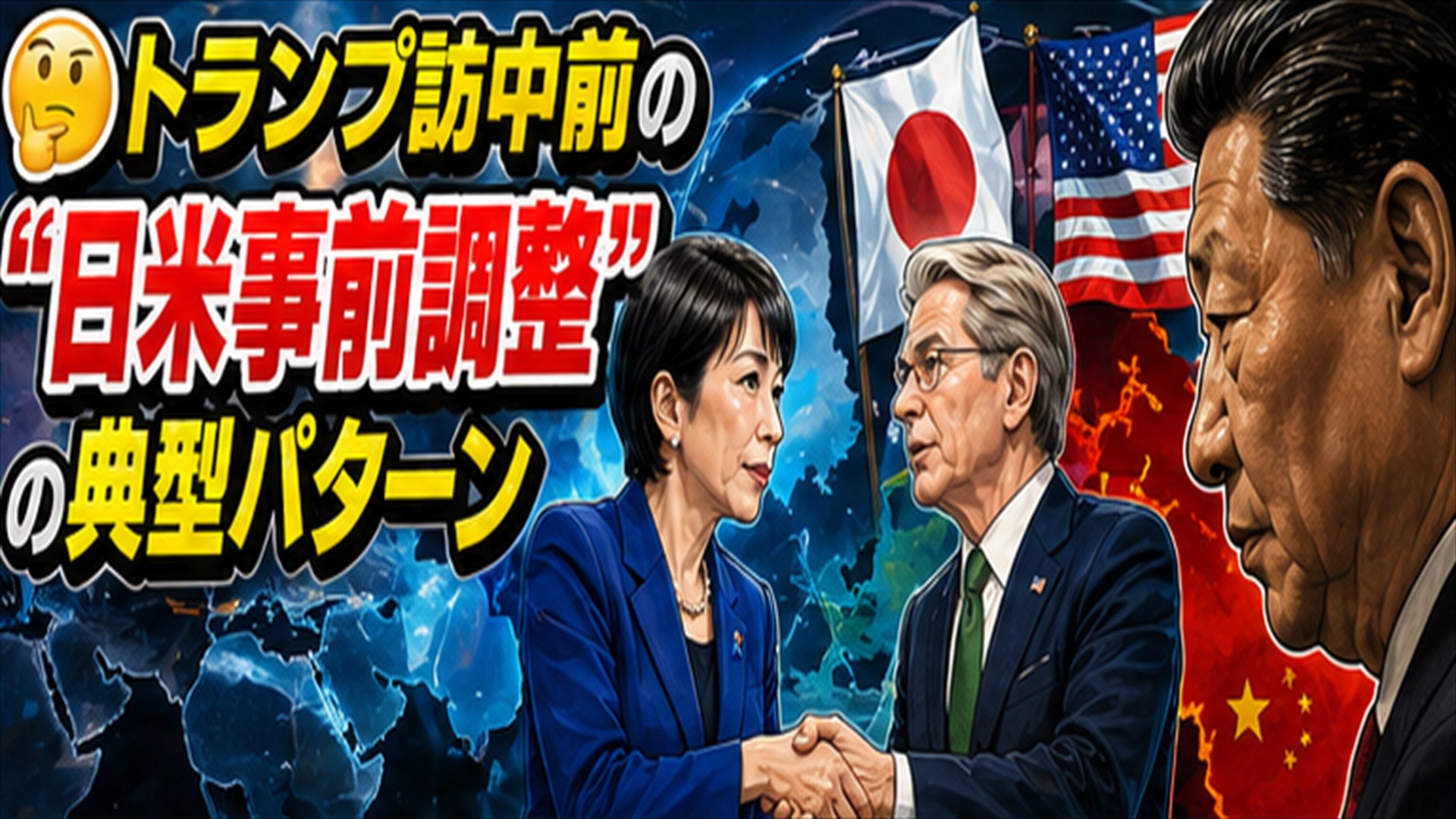
?A Typical Pattern of Pre-Adjustment between Japan and the US before Trump’s China Visit
The key point is right before Trump’s visit to China (April 14–15, with a summit with President Xi Jinping).Briefing with allied countries in advance is a standard tactic of the Trump administration.
The Japanese side’s concerns—progress of yen depreciation, China’s export controls to Japan, and the supply chains of key minerals like rare earths—are carefully gathered and shared in understanding.It’s basically signaling to Beijing, implicitly, that Japan won’t trade with China unilaterally without coordination with the United States.
In Trump’s deal-making style, a common pattern is to solidify allied routes first before going into the main event. As a result, China may perceive it as a reaffirmation of US-Japan unity and raise its guard.
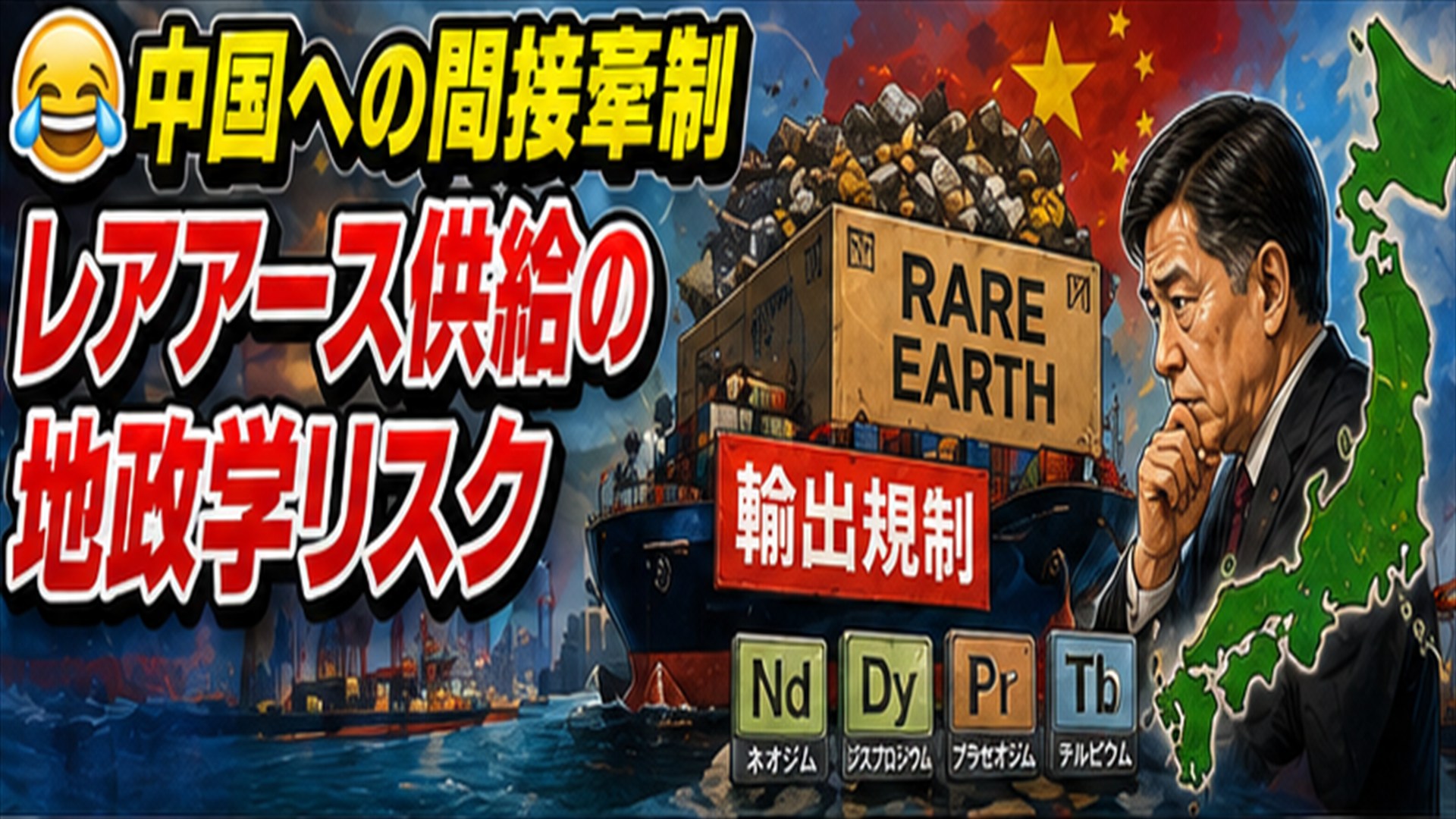
?Indirect Containment of China? Geopolitical Risk of Rare Earth Supply
Of particular note is the stabilization of rare earths and critical minerals supply. Reducing dependence on China is a shared US-Japan challenge, andif Taiwan contingency risks rise, tensions can spike dramatically.
Imagine rare earths essential for smartphones and EVs stopping exports from China due to restrictions; Japanese companies would be hammered.Mr. Bessent’s visit to Japan also functions as groundwork for economic security in that regard.
With Trump visiting China, Japan’s voice is expected to be reflected in calls for supply stabilization and investment promotion for US companies. This is a smart diplomacy designed to ensure Japan is not on the outside.
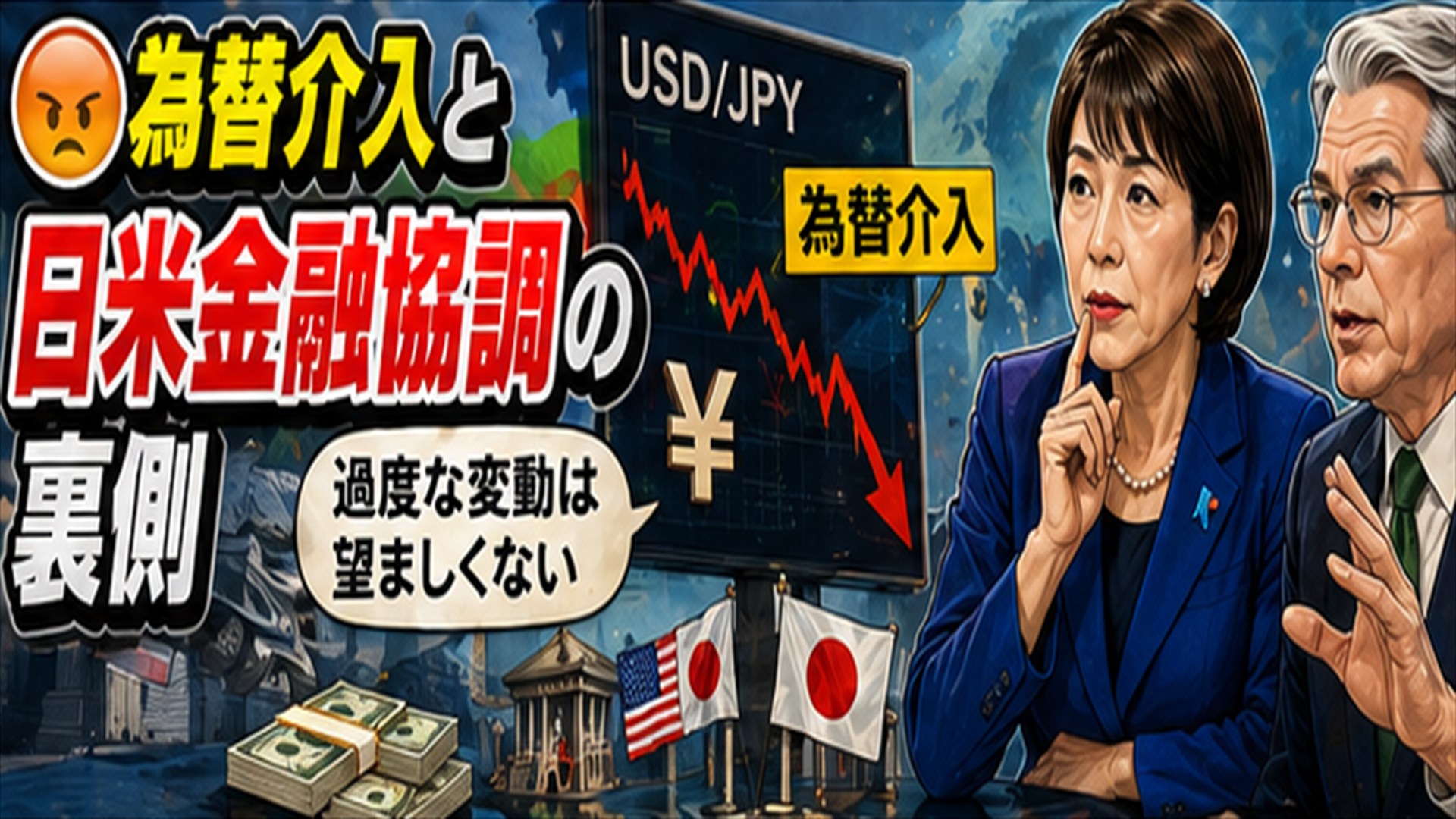
?Currency Intervention and Backstage of US-Japan Financial Coordination
Recent large-scale yen-buying interventions by the Japanese government and the BOJ cannot be done without consultation with the United States. It is highly likely that Mr. Bessent will reiterate that excessive volatility is undesirable, implicitly approving Japan’s measures.
Maintaining a strong dollar policy while supporting allies requires a balance. From the FX trader’s perspective, the content of this meeting could cause short-term swings in USD/JPY. If there are forex-related mentions, there could be yen depreciation pressure; conversely, easing tensions could favor risk-on -> yen appreciation.
This is precisely a timing to watch as it could influence market directions.
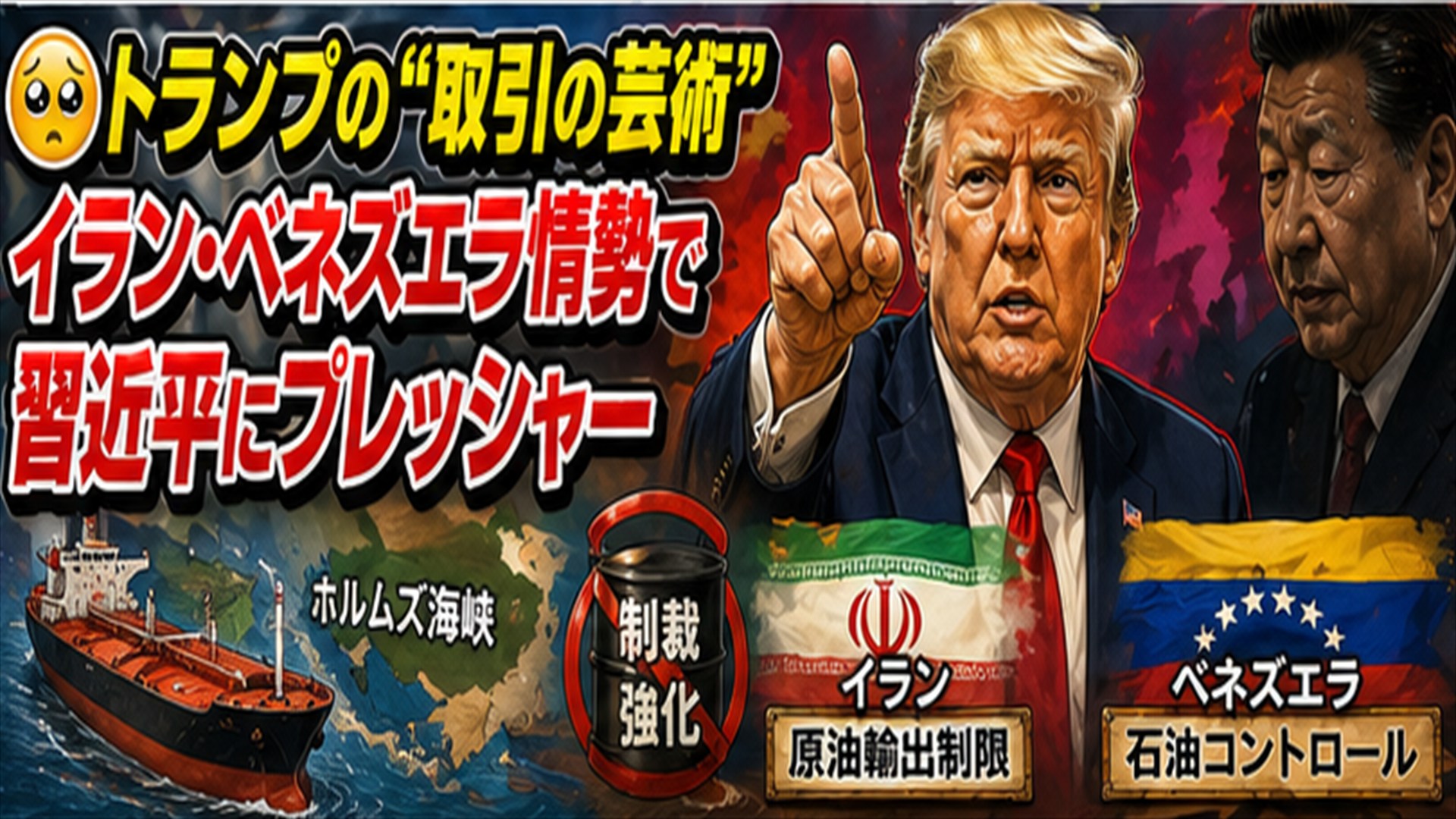
?Trump’s “Deal-Making” Tactics! Pressuring Xi Jinping with Iran and Venezuela
Trump often states in public that he has a very good relationship with Xi Jinping and that he is respectful, butthis is a classic deal-making tactic.
In reality, in Iran, the US is restricting crude oil exports to China by blockading the Strait of Hormuz and tightening sanctions. It uses China’s energy dependency (about 60% via Hormuz) as leverage, proposing to “solve this together.”
In Venezuela, there is a conditional deal to control oil after Maduro’s regime collapses and supply China at “market prices.”On the surface, it presents a win-win, but behind the scenes it undermines China’s interests.
From Xi Jinping’s perspective, this is a situation that could provoke anger, but Trump aims to keep a favorable relationship and does not want to repeatedly close doors.
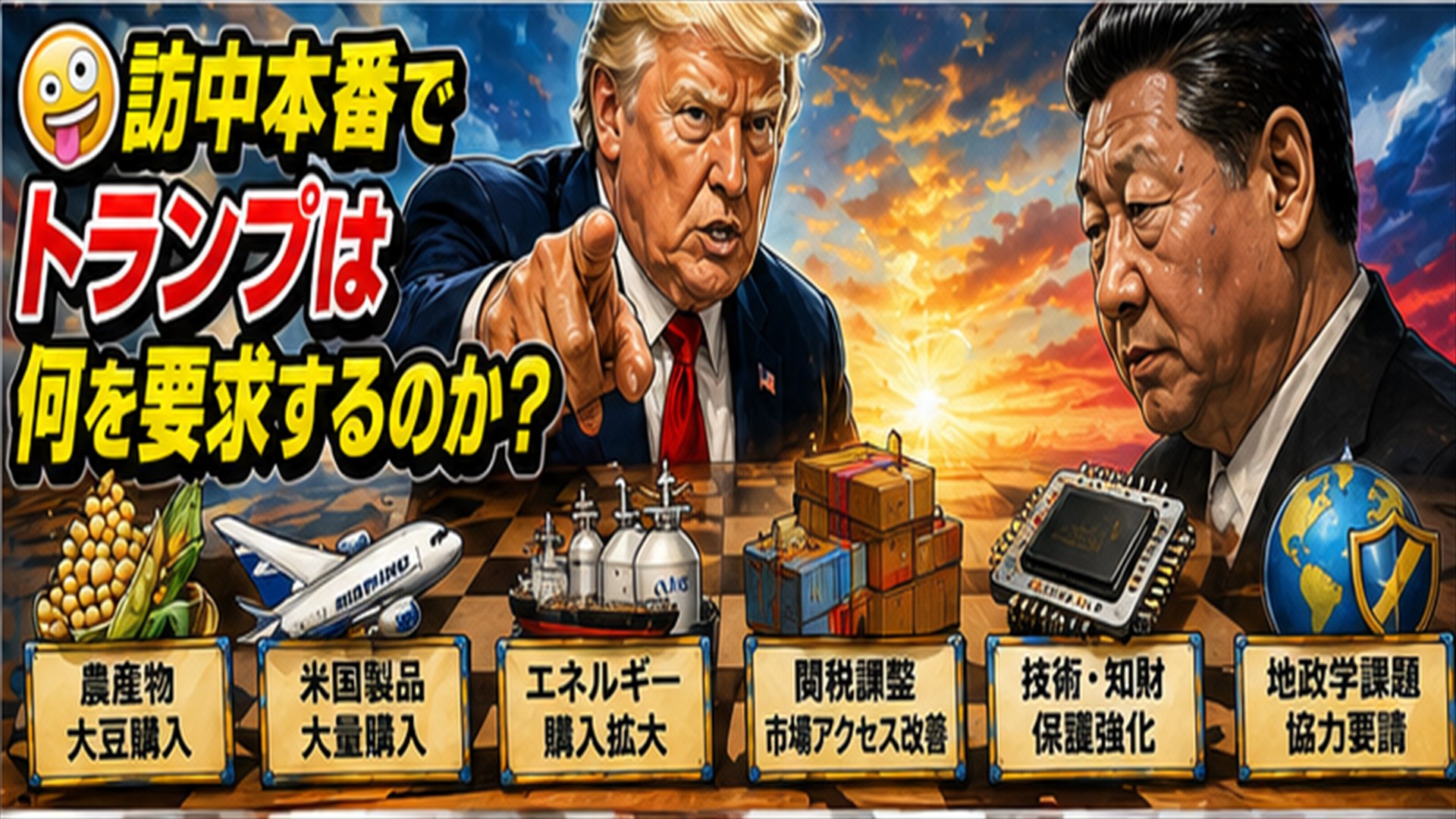
?What will Trump demand during the visit to China?
During Trump’s visit to China, his main demands will be on trade and economics. He will push for massive purchases of Chinese soybeans and agricultural products, Boeing aircraft, and U.S. energy (oil and gas). Additionally, tariff adjustments, correction of subsidies to state-owned enterprises, and improved market access (financial services).
On the tech front, he will seek easing of semiconductor and AI export restrictions in exchange for stronger intellectual property protections, and stable supply of rare earths. In geopolitical terms, restraining Iran’s arms transfers, easing tensions over Taiwan, and stopping fentanyl inflows are on the table.
The plan targets near-term visible wins (agricultural contracts + tariff easing) and medium-to-long-term stability.From China’s side, a pattern of strategic patience with a calm public stance while preparing countermeasures behind the scenes is conceivable.
?Impact on Japan’s Market and FX Traders
In this sequence of events, the most nervous market will be financial markets.
In particular, USD/JPY tends to be volatile when political events and monetary policy converge. Moreover, this time it’s not just macro data; it ties together “US-China relations,” “Japan-US alliance,” “Middle East tensions,” “energy prices,” “rare earths supply,” and “yen-buying interventions.”
In short, themes that usually move separately are being driven by a single overarching event. As a result, a single headline could trigger rapid moves of several yen in a short span.
Traders who can capture the information correctly might profit, while missing it could lead to significant losses.
What changes do you think this event will bring?
Practice and verify freely with a completely risk-free trade simulator!
Details page for One-Click FX Training MAX