

The USD/JPY chart is too unnatural! The trap of the “guess the intervention” game that makes it look winnable
Everyone, after the intervention, doesn’t the USD/JPY chart look “strange…”?
There was an intervention on April 30, and the yen weakened past 155, then collapsed more than 5 yen. After that, on May 1 and May 4, there have been repeated movements like a sawtooth: rising about 1.8 yen gradually, then plunging nearly 2 yen again and again.
Natural market fluctuations? No,this is a typical yen-buying intervention by the Japanese government and the Bank of Japan.The “authorities vs the market” tug-of-war, aimed at punishing speculative yen sellers, is being played out during the thin trading of the Golden Week.
What on earth is happening? Shall we think about it together?
?FX Next Generation: One-Click FX Training MAX
? April 30 vertical plunge! Over 5 trillion yen of confirmed intervention sweeps the market
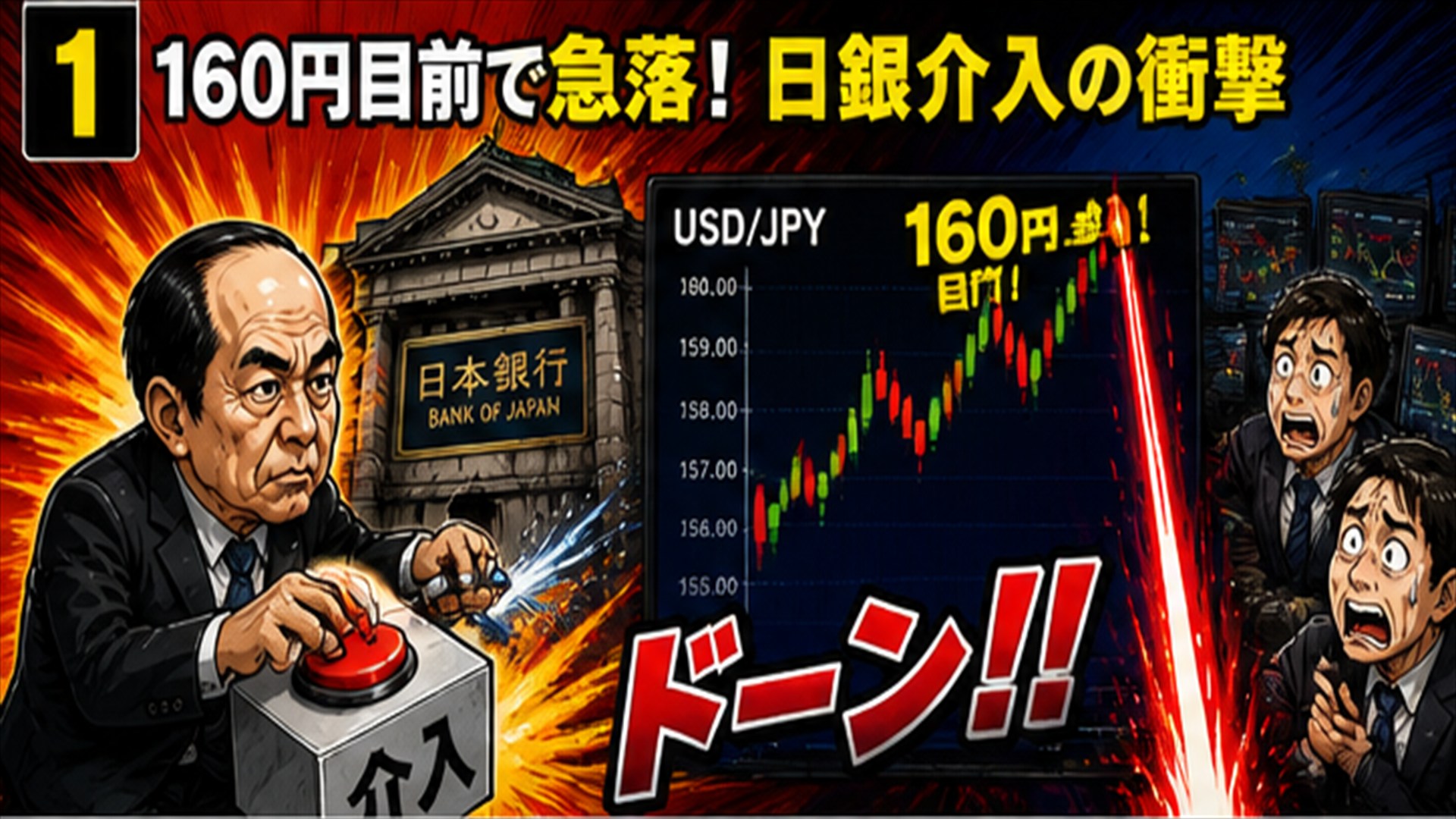
On April 30, USD/JPY rose to a high of 160.72 yen. Then suddenly there was a vertical drop. From around 160.7 yen to the 155.5 yen region, a drop of over 5 yen in one go.
This was due to a large-scale yen-buying intervention by the Japanese government and the Bank of Japan. The estimated scale was about 5 trillion yen. It was a serious intervention with real firepower.
In advance, Ministry of Finance officials warned with strong statements such as “decisive action” and “whatever measures are necessary.” In other words, this was not a coincidence; it was a deliberate strike.
A straight decline and a long lower shadow, which you don’t see in natural market movements. The shape is almost identical to interventions in 2022 and 2024.
? Evidence of the “sawtooth” intermittent intervention on May 1 and May 4?
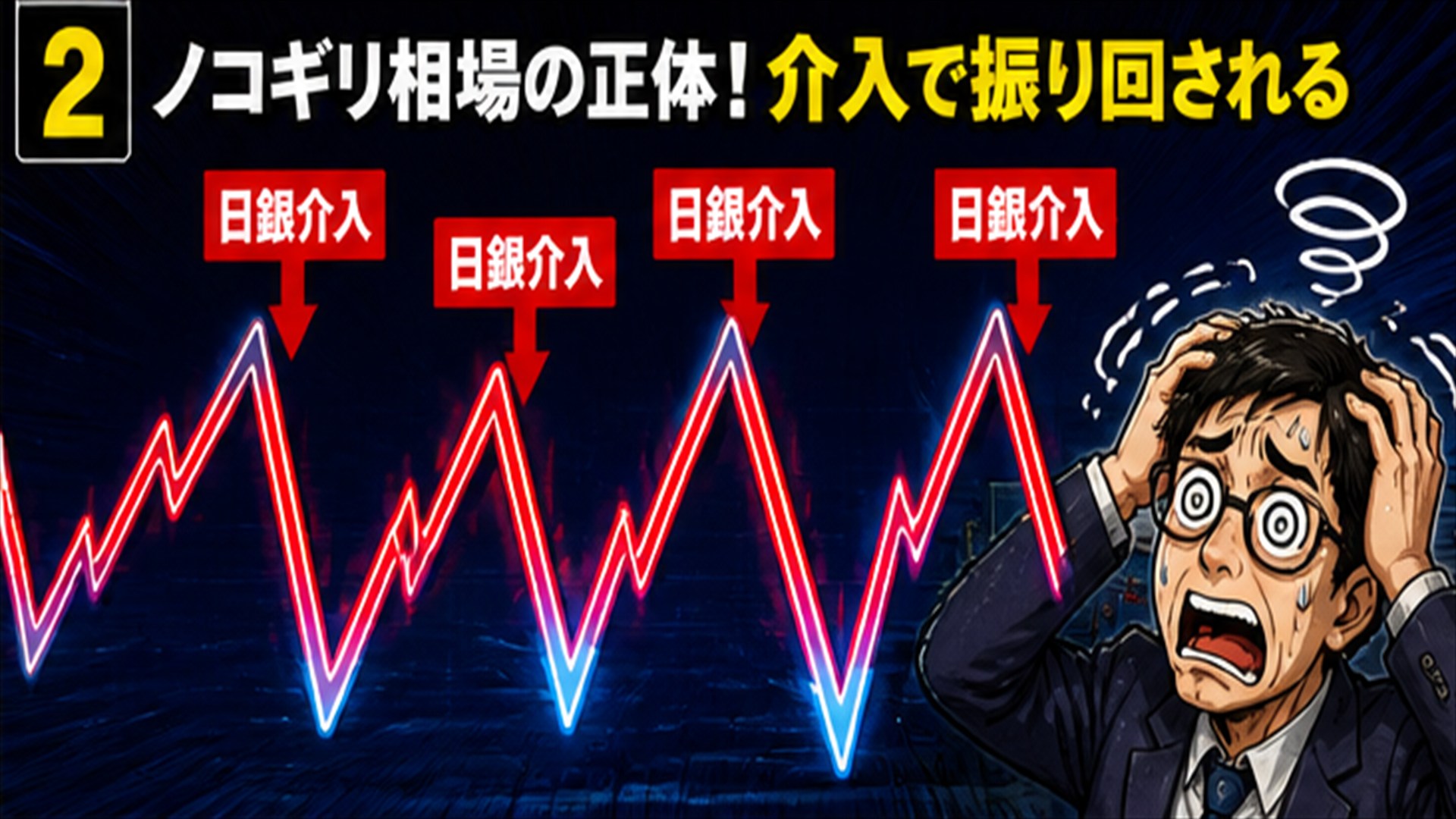
Even after the intervention, the market did not settle. Instead, it moved in more pronounced, quirky ways. On May 1, it rebounded to the 157 yen range, then plunged again in the afternoon. May 4 showed a similar pattern: a gradual rise followed by a sharp drop.
This movement is a classic “sawtooth” flow.
1. Interventions cause a plunge
2. Speculators push in a buy-the-dip
3. The authorities strike again
As this repeats, an “unmovable market” is formed. Moreover, the timing is almost perfect.
They are aiming for the thin trading during Golden Week. They point-blank strike at the time when there is little liquidity, making it easier to move prices with small funds. This is rational as a strategy, but very blunt.
? Sell wall at 157.30 yen! Market psychology shown by the order book
The current range is late 155s to early 157s. What to watch is the thickness of sell orders around 157.30 yen.This is not just technical; it is a “psychological barrier.”
Many market participants think this: “If it goes higher than this, intervention will come again.”Meaning, even without the authorities, people fear selling as the price approaches that level.In other words, there are buyers on dips below the barrier too, so the range becomes fixed.
As a result, a directionless back-and-forth market is formed.Order-book information is not everything, but it is very effective for reading this atmosphere.

?Root cause unresolved… interventions are only time-wasting
This is the most important point. What is the fundamental cause of the yen’s weakness? It’s the interest rate differential between the U.S. and Japan. The U.S. remains high rate, Japan low. As long as this structure continues, yen weakness pressure will not disappear.
In other words, even if prices temporarily drop due to interventions, they naturally rise again over time. The same thing happened in past interventions.
Plunge → range for a while → eventually test new highs
This is likely not an exception this time either. That’s why authorities move not in isolated incidents but intermittently. But that also proves that a fundamental solution has not been found.
Do you think this situation will last a long time?

? How traders should face it
The most dangerous thing in this market is trading with ordinary instincts. Movements cannot be explained by technicals alone. In other words, you cannot predict the future at all.
It may plunge to 157.30 again, or rise to 158, then fall about 3 yen afterward. Even with stop-loss, slippage is possible.
You should especially assume that a sharp drop can come at any time.There are profit opportunities, but the risk is greater than the opportunity. If you lose your cool, you will be taken away.
?Investing is not a “guess the intervention” game
During holidays, USD/JPY has low liquidity and can move a lot with little funds. Indeed the intervention effect is visible, but it is dangerous to conclude that it will fall the same way again.
The market is already highly vigilant of interventions, and participants’ views are biased. In such a situation, the price movement when interventions do not come is the biggest risk. The 157 yen area is not an intervention line; it is a psychologically expected price band, and if broken, selling could fuel a sharp rise.
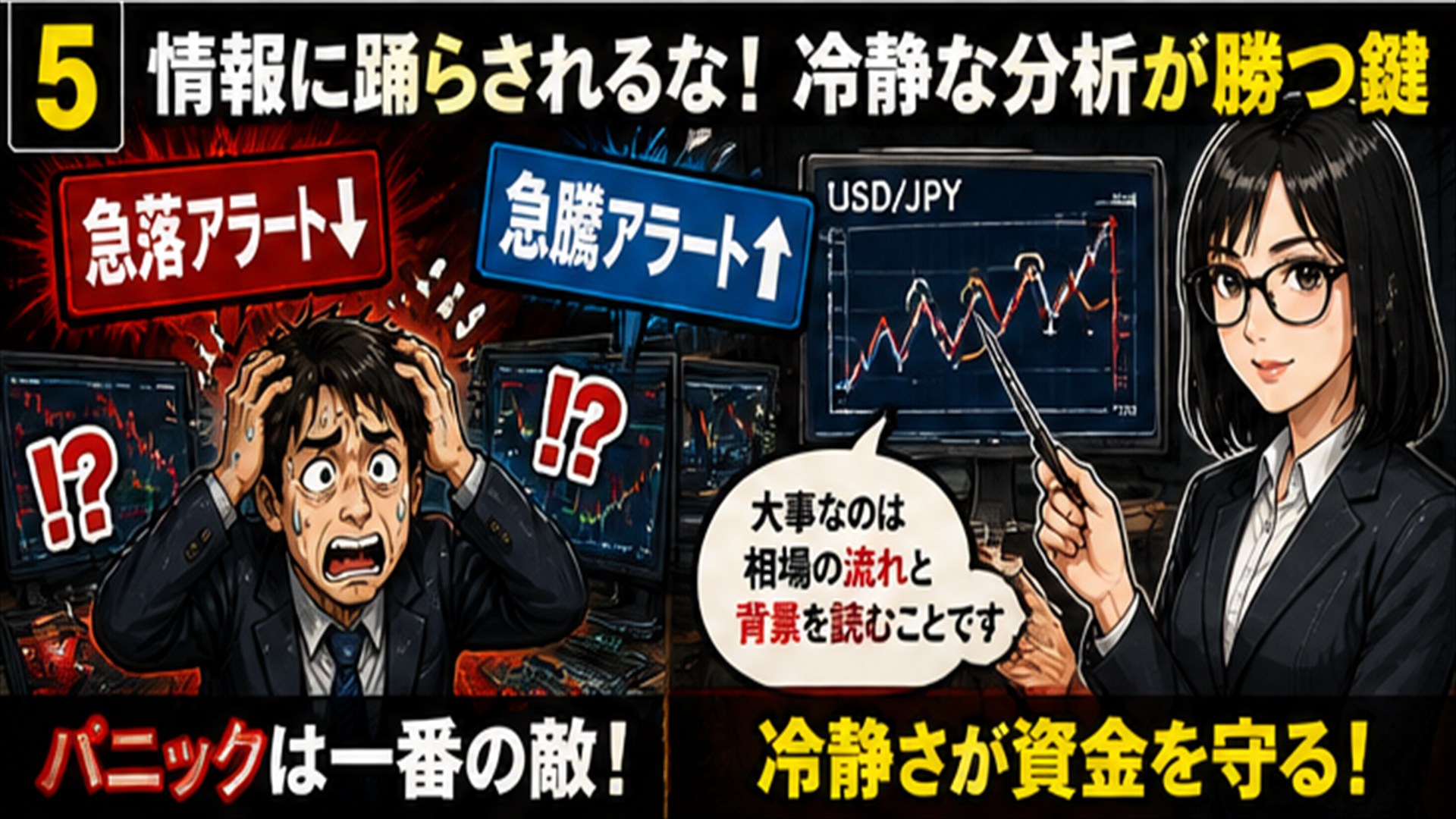
Trading should not be a game of guessing interventions; you must adapt flexibly to market movements.

?Will we see 160 yen after the holidays?
The large intervention on April 30 and the intermittent moves during the holidays show that this yen behavior is clearly not in “normal mode.”Sawtooth price moves, unseen pressure capping the upside, psychological selling walls — all signs of an intervention-driven market.
However, none of the fundamental reasons for the yen’s weakness have been resolved. In other words, this only stops the momentum temporarily and does not change the overall trend.
When the holidays end and the market tests 160 again, a large intervention is entirely possible. It’s both a potentially big profit opportunity and a risk of a sudden move.
However, if you expect to ride interventions for risk-free gains, you will surely be harmed. Are you ready to participate in a high-risk, high-return market?
Completely risk-free trade simulator for free practice & verification!
Details page for One-Click FX Training MAX