

Is Japan in danger? The Persian Gulf blockade: which countries will collapse first and which will be the last to remain
Voices claiming that Japan’s energy policy is in danger… is that really true?
Whenever the term “blockade of the Strait of Hormuz” fills news and social media, reports flash that inflame fear about Japan’s gasoline prices and living costs.
If the blockade by Iran and the United States of the Strait of Hormuz actually lasts for weeks or even months, what would happen? Certainly Japan would be affected, but would it be a crisis capable of shaking the nation?
In other parts of the world, more serious situations may be progressing, and there may be countries that reach their limit first.
And another aspect not to overlook is Japan’s swift response. There are even talks that Japan is already shifting toward U.S. crude oil.
So let’s organize what is actually happening.
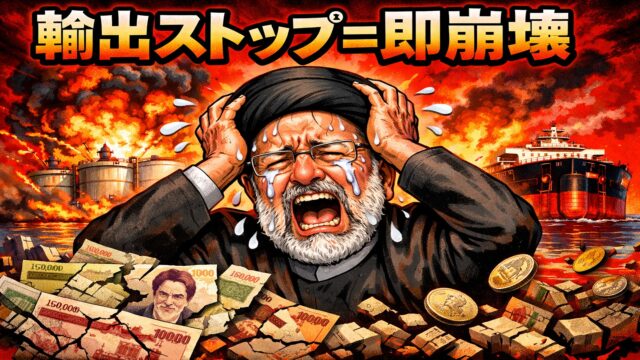
?Iran’s economy faces an immediate, end-at-once blow
First to crumble is likely Iran itself, perhaps surprisingly.
Iran’s economy is heavily dependent on oil exports, most of which pass through the Strait of Hormuz. About 80% of exports are oil and gas related, and over 90% of those pass through this strait.
In other words, a blockade is not just sanctions.This is a situation where the very goods cannot be sold to foreign buyers.
There have been sanctions before, but they were indirect restrictions like finance and insurance. A blockade, however, is different. Ships cannot leave the ports.Tankers cannot move. In other words, income approaches zero.
With daily economic activity worth hundreds of millions of dollars disappearing, the government’s revenue pillar also collapses. Imports stop, the currency crashes, and inflation accelerates.
?Gulf countries face a reality of “zero income”
What’s more serious is the Gulf countries other than Iran.
In particular Kuwait and Iraq have an extremely high dependence on oil revenue. 70–90% of their income comes from oil-related sources, in what are called “rentier states.”
What happens when exports stop with this structure? Simply: the country’s income disappears.
In fact, estimates show exports dropping sharply and revenues decreasing by over 70%. Storage tanks fill up, forcing production to stop.
The important point here is not simply that they will run a deficit.
The country’s ability to pay itself shakes. Public sector salaries, social security, and infrastructure maintenance—everything runs on oil money, so if that stops, national governance itself stops.
In Japan’s terms, a sudden zero tax revenue scenario.
?Asia and Africa reach their limit even sooner
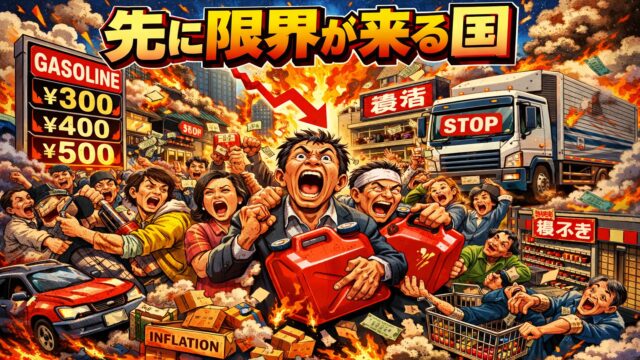
What about import-dependent countries? Here the gap between Japan and others becomes clear.
Southeast Asia and Africa do not hold large-scale stockpiles like Japan. If fuel supplies are disrupted, logistics halt quickly, food prices rise, and social unrest follows.
In particular, Africa’s refining capacity is scarce and import dependence is extremely high, so fuel shortages directly affect daily life.
And China. It would not escape unscathed either. Its high dependence on the Middle East means price spikes and supply uncertainties would hit factory operations, increase transport costs, and pressure the whole economy.
So the picture is this: while Japan says “prices are high and life is hard,” other countries are already in a state where they cannot continue to function.
?If it lasts long, could a default become realistic
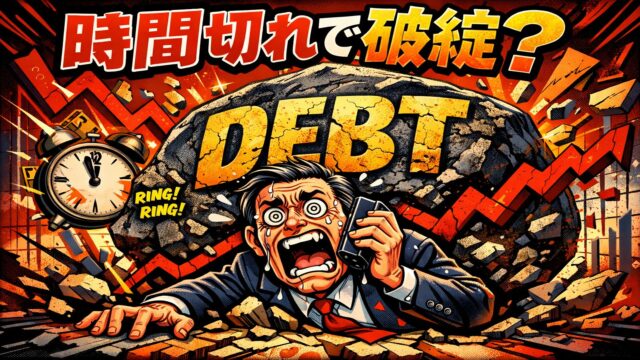
So what if the Strait of Hormuz blockade lasts for 1–2 months?
In short: not an immediate default, but it becomes a credible risk. Iraq and Kuwait have foreign exchange reserves and funds, so they won’t collapse right away. However the issue is cash flow.
With almost no income and ongoing expenses, eventually they would have to rely on borrowing, leading to credit deterioration, higher interest rates, and a fiscal crisis.
In other words, it’s a matter of time. Short-term resilience, but not sustainable in the long term.
This is a fairly realistic scenario.
?Japan ends up being the last to crumble
From here, Japan’s position becomes clearer.
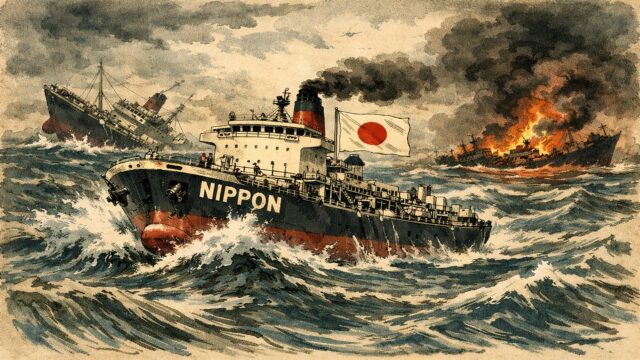
Japan relies on the Middle East for about 95% of its crude oil, but it also holds among the world’s top stockpiles. All together, government and private stockpiles exceed 200 days. Add to that price-control policies by the government, corporate procurement power, and diversification efforts. Considering these, in the short term price increases are more likely to be the main issue.
Of course there will be casualties. Corporate costs rise, and the economy will be affected. But this is an acceptable form of pain.
By the time Japan feels truly endangered, other countries will already be in far worse situations.
?The already underway shift to U.S. crude
Here, the actions of the Takashi administration are noteworthy.
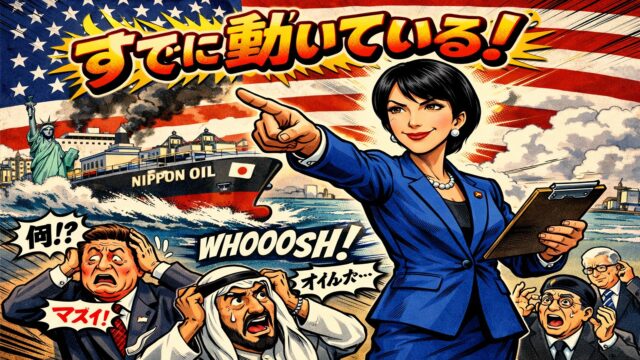
The shift toward U.S. crude oil procurement is already progressing, and reports say tankers are already leaving. This is not merely under consideration. Prime Minister Takai has announced it himself, and it is actually happening.
Diversification to reduce Middle East dependence had been discussed, but this issue has accelerated it. Transportation costs are high and efficiency is not ideal, but priority is “supply that won’t stop.”
This speed of decision is a point to be praised.
?Japan at the end, the world collapses first
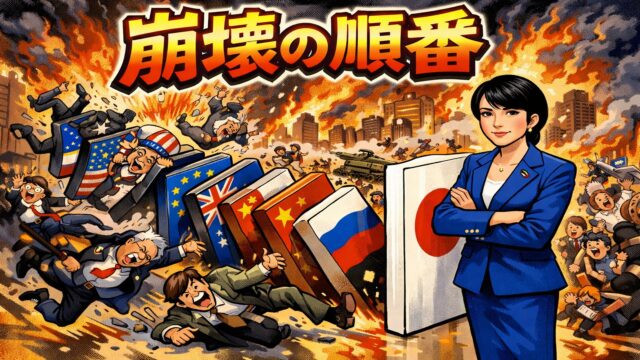
The theme of the Strait of Hormuz blockade is often discussed as a Japanese crisis, but the actual picture is quite different.
First to crumble are the Middle Eastern countries dependent on exports.
Next to be affected are emerging economies with little stockpiling.
And finally Japan.
In other words, Japan is the one that feels pain last. And during that time, it is already taking measures. The shift toward U.S. crude oil is a symbol of that.
If it lasts long, Japan will certainly be damaged, but it is not simply a case of “Japan alone is in danger.” Rather, as the balance of the world shifts, Takashi administration can be seen as calmly moving.
How do you evaluate this response?
Practice and verify freely with a completely zero-risk trade simulator!
Details page for One-Click FX Training MAX