

What is the “unwinnable structure” of Bougainville/Carg island and the Persian Gulf reefs for the U.S. military in ground combat?
Will the United States actually deploy ground troops in Iran? News and social media describe landing operations as imminent, but the reality beyond that is rarely discussed. President Trump has been hawkish about seizing oil and pushing at Karg Island.
However, in military common sense, openly stating a plan you might carry out gives the opponent time to prepare and puts you at a disadvantage.Moreover, the battlefields are the Strait of Hormuz and Karg Island, the world’s energy arteries. The aggressor bears long supply lines and political responsibility, while the defender can fight in its own coastal waters. There are only disadvantageous conditions for the attacking U.S. forces, and Iran only waits for the moment.
Why did wars that seemed easy, like Vietnam, Afghanistan, and Iraq, not end? The same trap is wide open again this time. So why can’t we see a winning scenario in this framework?Because the U.S. military is powerful but not omnipotent.Let’s look at the possible scenarios.
Selling well!A highly functional trade practice tool that feels like the real thing?9,800 yen?
?FX New Era: One-Click FX Training MAX
?The true intentions and risks behind the “Take the oil” remark
This uproar is not mere exaggeration.President Trump, in an interview with the Financial Times, mentions seizing Iran’s oil and pushing into Karg Island.However, the goals are not simple; in a context where nuclear issues, strait security, and negotiations overlap, the focus on oil comes to the front.
The problem is that such statements are both a pressure tactic and a signal that gives the other side time to prepare. Politically they appear forceful, but militarily they can increase risk. On the battlefield, substantial supply and air defense matter more than flashy rhetoric, and the more attention these statements draw, the heavier the burden on the ground becomes.This disconnect is the essence of the danger.
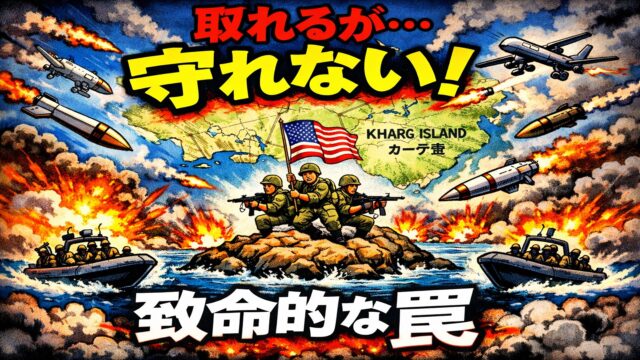
?Karg Island: a deadly trap of “could seize but cannot hold”
Karg Island is the heart of Iran’s oil exports. If seized, it would deal a huge blow to Iran’s economy. On paper, it seems an important stronghold, butwhen it comes to military matters, it isn’t a simple matter of wanting to take it because it’s important.
The biggest problem is distance. Karg Island is too close to the Iranian mainland. In other words, the moment the U.S. military occupies the island, it would be under constant threat from missiles, drones, rocket artillery, fast boats, and suicide drones from the Iranian mainland. Even if the landing itself succeeds,afterward, the job of defending the island would begin, relentlessly taking fire.This is the tricky part.
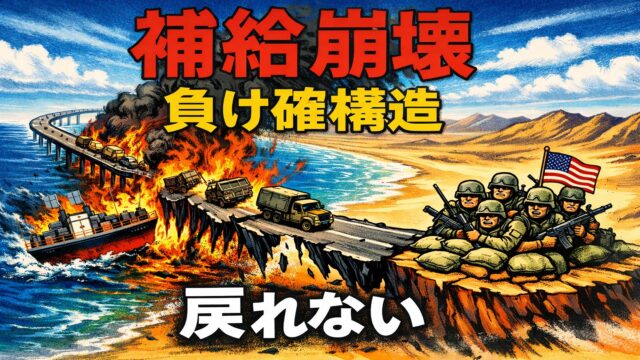
?The “lose-structure” when supply lines collapse
Moreover, the defender, Iran, is close. Supplies, reinforcements, and information move quickly. Meanwhile, the U.S. forces must control sea and air, and supply ships and transport aircraft are constantly targeted. In a limited-war setting, the side that can harass at short range gains an advantage as the other must sustain long-range, expensive equipment. In short, taking a quick victory is possible, butyou end up drained daily.This is a textbook example of “looks like a win but starts to lose.”
This pattern feels familiar, doesn’t it? Yes. America is strong in the first strike but weak when staying put.From the moment you step into the opponent’s homeland, the world’s strongest military becomes the target of the world’s most expensive harassment.It’s truly ironic.
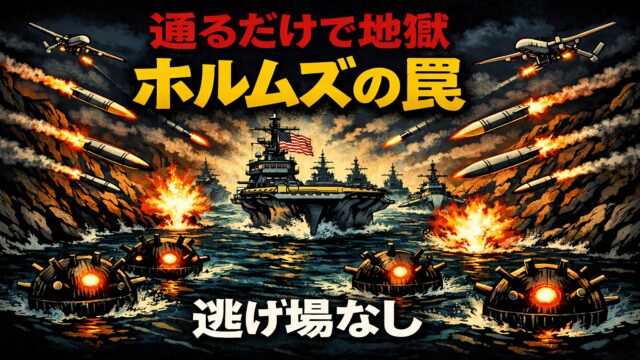
?Why the Hormuz Strait could become a “hellish corridor”
Adding to the difficulty is the Strait of Hormuz. It is the world’s major artery for crude oil and LNG transport, and at the same time a nerve-wracking zone for naval forces. In a situation where the strait is unstable, can landing ships, supply ships, and escort fleets move safely? The answer is rather dubious.
Iran is not a country that fights head-on with carrier strike groups.Rather, it is a country that undermines the opponent’s nerves and supplies with mines, coastal missiles, small boats, drones, and localized raids. Moreover, shallow waters do not favor large warships or submarines. In the end, the U.S. military would be worn down just by passing through, and even after landing, resources would be drained to defend the strait.At this rate, it’s unclear whether winning is happening or losing is ongoing.
?Is the real plan a southern landing? Yet still a losing scenario
So, perhaps Karg Island is a decoy, and the main target is the Hormuz Strait vicinity or Iran’s southern coast. Indeed, if you consider controlling the strait itself, this route seems more logical on a map. Kechm Island, Hormuz Island, or around Bandar Abbas,seizing the points that control the strait could directly enable resumption of maritime traffic.
However, what makes sense in theory is different from what can actually be done. The southern coast is part of the mainland. Reinforcements arrive faster there than on Karg Island, and the defender’s layers are denser,and above all there are many civilians.If ground fighting starts in a port city, residential areas, infrastructure, and military facilities mixed together, civilian casualties are hard to avoid. In that case, the costs would be borne not only militarily but also by international opinion.

?Repeating Vietnam-type quagmires again?
What’s truly frightening is not the ground war itself but what comes after. Iran is a major power with a vast homeland, a large population, and accumulated asymmetric warfare capacities including the Revolutionary Guard, allied forces, militias, and proxies. It’s not a foe you can defeat simply by striking the regular army. Rather, the real challenge begins after defeating the regular army.
Attacks on supply lines, drone strikes around bases, roadside bombs, port disruptions, harassment of maritime transport, retaliation against U.S. bases and companies in nearby countries. If these go on for months or years,will American public opinion endure?

?Endless war... why the mud of the match never stops
Even more troublesome is the fact that Iran could continue fighting even while appearing to be losing. Even if military facilities are destroyed or commanders are reduced, sporadic attacks can continue. In other words, the clear victory conditions the United States seeks andthe conditions Iran establishes for resistance are fundamentally different.
With such an opponent,a supercomputer-like military would end up playing endless mole-whack-a-mole work as a hobby.Strong, yet endless. There is no war as draining as this.
In Vietnam and Afghanistan too, America exhausted itself more from the lack of an exit than from the initial gains. War is harder to end than to win. Will we forget that obvious truth again?
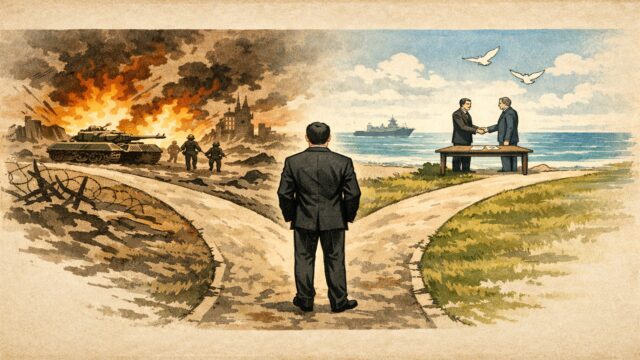
?Avoiding ground war only? Realistic options
If so, realistic options become limited. One is to focus on naval blockade and escort missions to avoid ground occupation. Another is to apply pressure through airstrikes, special operations, and targeted strikes on command systems while moving toward negotiations.In short,削減 the opponent’s capabilities while not getting too deeply involved.Not flashy, but in terms of loss management, this is more realistic.
However, it still isn’t omnipotent.Even if several leaders are eliminated, new leaders will appear. Even if facilities are destroyed, low-cost harassment remains. Even with economic pressure, there is no guarantee of surrender.That’s why full-scale ground war is even less worth it. Ultimately, deploying ground troops may look like a last resort, but in reality it is likely a card that should not be played last.
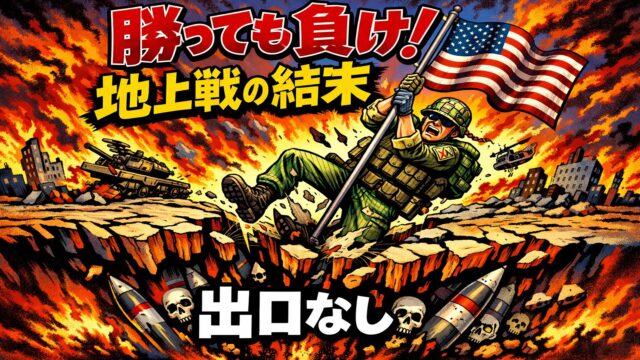
?? Ground war is a war you lose once you start
From what we’ve seen, the scenario of the United States launching a full-scale ground war in Iran is, logically, quite unlikely.Taking Karg Island looks spectacular but would be hell to defend because it’s too close to Iran’s mainland.A southern incursion around Hormuz would have strategic meaning but would bring heavy civilian harm, supply and reinforcement burdens, and international criticism. Either direction moves us toward a Vietnam or Afghanistan-like “a war that cannot be ended once started.”
Ultimately, the essence of this discussion is: “How do you end the war?”If there is no clear answer, ground war is not a glorious option but a costly, long-term contract failure. The termination fee would be soldiers’ lives and the global economy. It’s far too high.
Rather than being swayed by Trump’s strong rhetoric, what should be watched are the supply lines, the strait, the post-occupation maintenance costs, and the mudfights Iran pursues. What outcome do you think this war will have?
Practice and verify freely with a complete risk-free trade simulator!
Details page for One-Click FX Training MAX