

Can Takashi Takashi? The question is whether Takashi Mogi will form the strongest tag team. Japan's diplomacy challenged by Trump talks and Middle East situation
"Should we follow America, or should we distance ourselves?" Is it really a situation that can be described by such a simple binary choice? In March 2026, ahead of Prime Minister Sanae Takashi's visit to the United States and a meeting with President Trump, social media is mixed with voices saying "refuse" or "don't get involved" and opinions that "alliance needs to be strengthened."However, real diplomacy operates on a different level than these emotional arguments.
This visit to the United States takes place in a difficult situation where the strategy toward China is intertwined, and the tensions surrounding Iran and the security of the Strait of Hormuz are expected to be major focal points. Can a friendly relationship like the one during former Prime Minister Abe’s era be built?What stands out here is not only Prime Minister Takashi but also the "Takashi-Mogi line" led by tough negotiator Foreign Minister Toshimitsu Motegi.
A structure that advances political judgment and practical negotiations simultaneously may be the strongest tag in negotiations. However, one misstep could invite strong opposition, making this a difficult situation. What kind of outcome do you expect from this situation?
?The biggest point of contention: the Middle East and the Strait of Hormuz
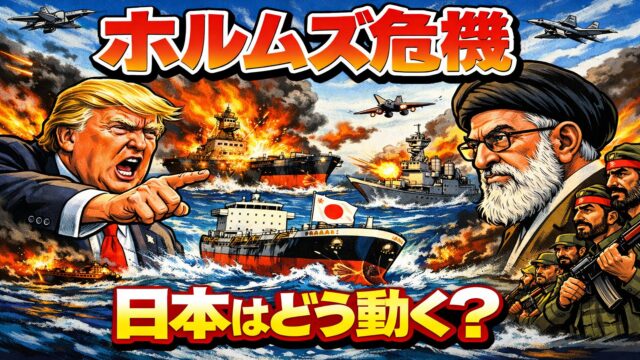
What is most notable in this summit is the Iran situation and the issue of the Strait of Hormuz. After American and Israeli attacks on Iran, safe navigation through the strait has suddenly become a tangible risk. President Trump has spoken to allies about dispatching ships and other forms of cooperation, butthe content is not consistent and there are fluctuations in tone.
From the Japanese government's perspective, dispatching the Self-Defense Forces to the Strait of Hormuz faces significant legal constraints, so a cautious stance is maintained. At the same time, they are considering "what Japan can do within its laws," and discussions are focusing on limited cooperation such as mine clearance, information gathering, and rear-area support.
What matters here is not a binary choice of "cooperate or refuse," but "in what form to be involved."While full military cooperation is difficult, completely cutting off ties is also not realistic. How to strike this delicate balance will be a question for Prime Minister Takashi's decision.
?SNS atmosphere vs. real diplomacy
On social media, opinions urging to say NO to America stand out. With Trump’s approval rating around 38–40% in March 2026 and disapproval around 55–60%, there is a narrative that there is no need to appease a president in a pinch.However, diplomacy between nations does not move according to the mood on social media.
Japan does not gain from opposing America; rather, it could create a favorable situation for China and Russia. Being aggressive out of mere emotion is hardly a viable option in real diplomacy.
Rather, precisely because of situations like this,Japan must demonstrate a cooperative stance while securing its own position—an audacious approach is required.This is not about simply accepting the other party’s demands; it is a process of negotiating to adjust conditions within negotiations.

?The meaning of the Takashi–Motegi line
Here the focus is on the division of roles between Prime Minister Takashi and Foreign Minister Motegi. Takashi makes political judgments focusing on US relations, while Motegi handles negotiations at the practical level. This structure has certain strengths compared with past diplomacy.
In fact, Foreign Minister Motegi spoke with Iran’s Aragi (Aragchi) by phone to discuss safe navigation through the Strait of Hormuz, protection of Japanese nationals, and de-escalation. This is an example of multi-faceted diplomacy, maintaining the alliance with the United States while directly engaging with Iran.
Moreover, there has also been a phone call with Secretary of State Rubio, highlighting the US-Japan alliance while quietly maintaining dialogue with Iran, suggesting a high likelihood of a negotiator’s stance behind the scenes.If this dual approach works, Japan can be a mediator rather than a mere follower.

?Trump and Iran both in a "pinch"
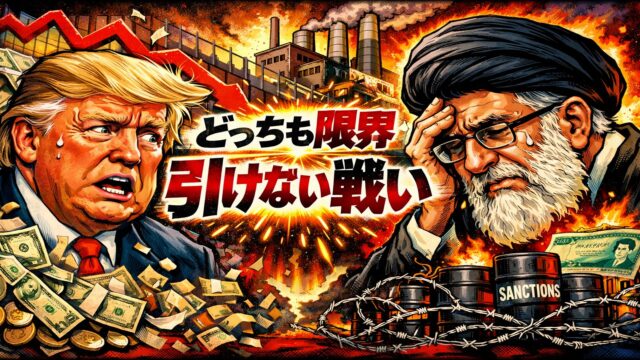
Trump is in a tough domestic situation and feels compelled to show some achievement amid the decline in support after the Iran attack and the run-up to the midterm elections. However, this does not automatically translate into weakness in negotiations,but tends to lead to demanding more burden from allies with a hardline stance.
On the other hand, Iran also faces a difficult position, with domestic dissatisfaction rising due to strikes on nuclear facilities and the impact of economic sanctions. If it concedes easily, it risks undermining its regime’s legitimacy and prestige. Therefore, both Trump and Iran are in a standstill where they cannot easily yield, andpublicly they maintain a tough stance while privately seeking a settlement.
In such circumstances, Japan is asked to not unilaterally support but to show a cooperative stance while adjusting conditions. As a result, this relationship should be perceived not as subjugation but as a bargaining process of balancing interests, and the question is how to safeguard national interests within it.
?Ideal scenario vs. realistic scenario
Ideally, the United States would declare the operation finished, Israel would align, Iran would cease fighting, the Hormuz Strait would be opened, and Japan would broker the peace. However, a rapid resolution is not realistic, and for the time being, tensions would remain while adjustments are made behind the scenesA "managed tension" is likely to continue.
Iran seeks the lifting of sanctions and asset freezes, while the United States remains unlikely to make significant concessions; this structure does not change.Issues of compensation and reconstruction will emerge, but direct US funding is unlikely, and a framework for international humanitarian and infrastructure assistance is expected to be considered at best.
So-called reconstruction funds are likely to be treated cautiously as negotiation cards, with only limited short-term concrete actions. Ultimately, the situation remains a difficult balancing act between ideal and reality.
?The Takashi & Motegi tag team’s stakes
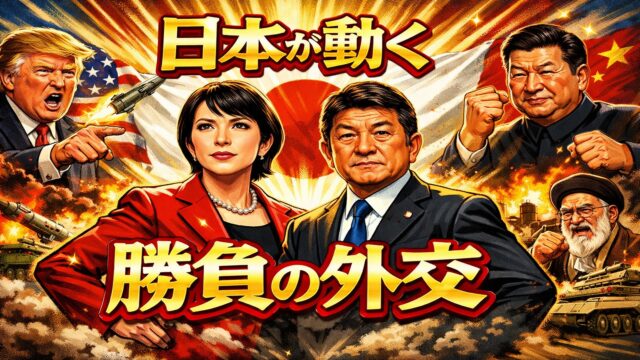
This visit by Prime Minister Takashi to the United States is not merely a summit meeting but a critical moment that will test Japan’s diplomatic posture. It is not a simple confrontation as seen on SNS; in reality, it requires balancing complex interests.
The Takashi & Motegi tag team is being watched as a framework capable of addressing this challenge from both political and practical perspectives.Progressing exactly as planned is not easy, but Japan certainly has room to assert its presence. Cooperating with the United States does not mean swallowing all opinions whole.Rather, how to protect and adjust Japan’s own position within that cooperation is the key question.
It is a difficult situation, but that is precisely why I want to see this tag team succeed.However, is it really a good timing that it is not Ishiba as prime minister and that the Takashi administration is sweeping victories at the polls holds great significance. How do you view the course of this diplomacy?
Completely risk-free trade simulator for freely practicing and verifying!
Detailed page for One-Click FX Training MAX