

?Trump's "attack for fun" remark: the truth and the structure of the "cut-and-paste reporting"
Is it true that President Trump said he would attack “just for fun”? When you only read the headlines, you see words that make you doubt what you’re reading. “just for fun.” However, here is a moment to pause and think.Under what circumstances was that remark elicited?
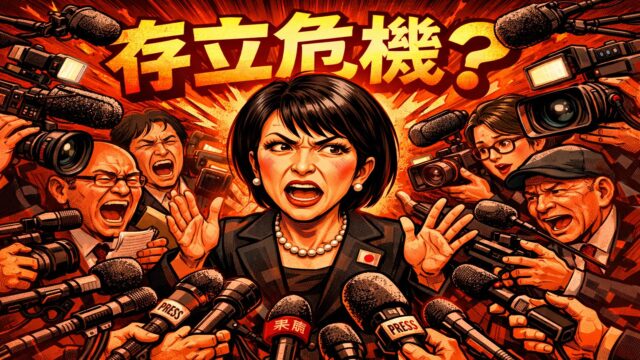
In this case, the format is an NBC News telephone interview, and only part of the remarks are being reported. In Japan as well, Prime Minister Sanae Takenaka’s“Existence Crisis” remark,“I’ll lower your approval rating”, with repeated low-level questions and attempts to provoke an emotional reaction at press conferences are common.
Should we take this situation as merely a “gaffe”? Or should we view it structurally as a “leading remark”? The difference is significant. Are media reports truly neutral? Or might there be an intention to steer viewers in a certain direction?
?Did he really say that? The truth about “just for fun”
First, let’s sort out the factual details. I will calmly look at the facts alone. On March 15, 2026, President Donald Trump spoke with NBC News journalist Kristen Welker in a telephone interview. In this, he mentioned an attack on Kharg Island, a key oil export hub in Iran, and was reported as saying, “We totally demolished Kharg Island, but we may hit it a few more times just for fun.(完全に破壊しましたが、面白半分であと数回攻撃するかもしれません).”
This remark was reported by NBC News as well as several major media outlets starting from NBC News. Reuters and others also cited NBC’s reporting. As of March 2026, there has been no explicit denial or correction from Trump’s side regarding this remark.
Therefore, it is realistic to conclude that the remark itself exists.However, the important point is that the discussion does not end here. Rather, the essence lies in how the remark was cut and the intent with which it spread. That is where the media’s stance is strongly evident.

?Trump vs. NBC is intense… an interview within a hostile relationship
What to keep in mind in this matter is the relationship between President Trump and NBC. They have long been at odds, with Trump openly criticizing NBC and MSNBC as “fake news.” On the other hand, NBC is known for tough questions and critical reporting.
In other words, this interview was likely not just a neutral inquiry from the start; it was probably a high-tension dialogue from the outset.
In such a situation, questions tend to be more aggressive, and the respondent can more easily use emotional or provocative language. It is more like a confrontation than a calm conversation. If you ignore this premise and only cut out the remarks, you can greatly misread the original nuance. Do you take this relationship into account when viewing the remarks?

?30 minutes by phone with no video… the reality of “unfiltered cutting”
The remarks were made not at a press conference but in a “telephone interview.” This is a crucial point. In a telephone interview, the following characteristics apply: - there is no video - full audio is often not released - a full transcript may not be available - reporting centers on quotes edited by reporters, meaning thatwhich parts of a 30-minute conversation to cut and how to cut them is almost left to the reporter and the media.
There is a neutrality problem here.Viewers tend to think they are watching the facts, but in reality they may be shown “selected facts.” This time too, NBC reported by quoting part of the remarks, and the overall flow and context were not disclosed.
In this situation, if only the phrase “just for fun” is emphasized, the viewer’s impression can become greatly distorted. Would you judge a person’s intention based on a single sentence from a 30-minute conversation?
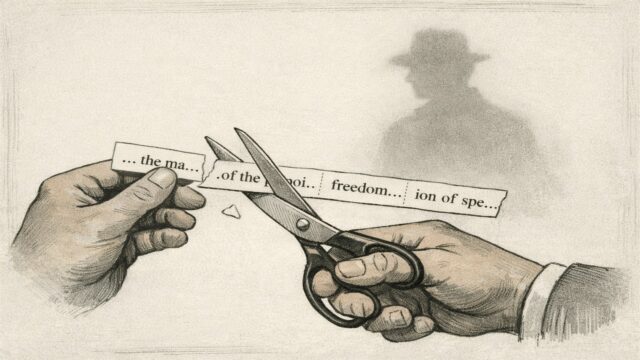
?Gaffes can be manufactured? The mechanics of leading and cutting
This is the key point. Here we see the issue of “leading” and “cutting.” The relationship between Trump and NBC has historically not been cordial, with Trump criticizing NBC and MSNBC as “fake news,” andthe media is known to pose tough questions.
In such a relationship, interviews become not just information gathering but a kind of bargaining. - Questions that elicit strong words - Repeated probing on the same theme - A flow designed to provoke emotional responses, in this exchange,if a politician uses strong expressions, they will be cut out as news.
And that one word can spread independently. This is not a coincidence but, in a sense, a structurally recurring phenomenon.In other words, if the media intends, any remark can be transformed into a “problematic remark.”

?In Japan too? How did the “Existence Crisis” arise?
This pattern is not limited to the United States. Similar cases are frequently observed in Japan as well. For example, Prime Minister Sanae Takenaka’s so-called “Existence Crisis” remark. This is also a typical case of reporting only part of the context while emphasizing a portion.In parliament or press conferences, the same questions are repeated many times.
- Repeating the same gist questions - Trying to force a different answer - Probing to elicit stronger words, in such exchanges, serious politicians are more likely to make remarks that are later labeled as gaffes.
On the other hand, if a style like Shigeru Ishiba’s, who repeats phrases like “we will consider” and “we will judge carefully,” is used, the risk of gaffes decreases.This difference may reflect a difference in approach rather than ability. Rather, it could be more like a game of “how to avoid gaffes” with the media.This could be viewed as a difference in approach to handling the media.
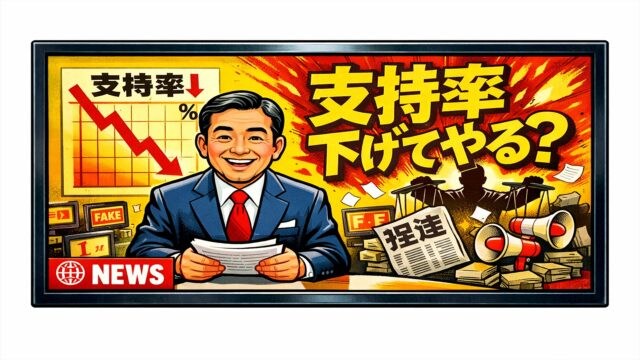
?Is neutrality real? The moment “I’ll lower your approval rating” becomes visible
Here we should consider the media’s role. Ideally, reporting's purpose is to convey facts accurately. In reality, elements such as the following cannot be ignored.• TV ratings and web traffic • Talk value • Political stance, which leads to a tendency to prioritize “clear, strong wording” and “easy-to-ignite expressions.”
Furthermore, the way a report or question is framed to imply an intent to lower approval ratings can create unavoidable moments for viewers. The current “just for fun” may have been cut out as the most impactful part in that context.
?To avoid being guided by the media
So, how should we approach such news? The three important points are: - Be aware of the whole statement, not just a part - Consider the media’s position and relationships - Understand the politician’s style of speaking,In this case, Trump’s remarks do indeed exist.
However, they may have emerged under a limited telephone-interview format with tough questions. Moreover, only one sentence among them has been emphasized in reporting. Understanding this structure can drastically change how you view the news.
News is not merely a list of facts; it is a revised reality. It is also important to check consistency with information from other angles.
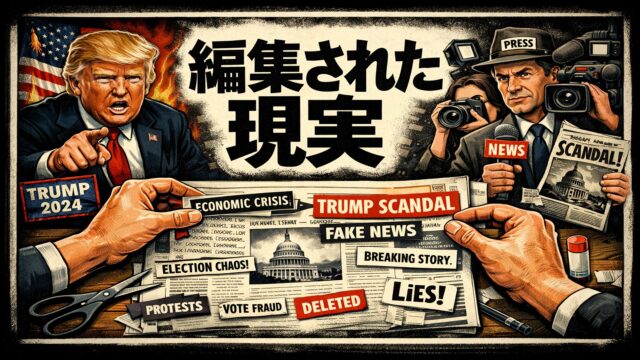
?News is a “reconstructed reality”
Trump’s “just for fun” remark is likely to exist. However, if you only treat it as a simple “problematic remark,” you risk missing the larger picture: the format of the telephone interview, the relationship with NBC, the flow of questions, and the practice of cutting for reporting.When these are combined, you can see how a single remark is emphasized and can take on a life of its own.
And this pattern is repeated in Japan as well. Not only with Prime Minister Takenoko’s remarks, but generally with how politicians’ words are elicited and reported. It is important to be aware of the process. We should not judge by headlines or the impact of a single word, but calmly grasp the underlying context and structure.
Accepting that media coverage is not always neutral is a first step to correctly understanding information.With that, I’d like to rethink. How much do you trust the news that comes through?
Completely risk-free trading simulator for free practice and verification!
Details page of One-Click FX Training MAX