

Not yen depreciation but dollar appreciation? Interpreting the FX market with 4 charts
As of March 2026, USDJPY is trading in the 159 yen range, approaching 160 yen. From such movements, the term "yen depreciation" is widely used. However, when you compare multiple real charts side by side, the situation appears somewhat different.
In short, in the current market it is more natural to view it as a “dollar strength” environment rather than simply “yen depreciation.”
In this article, we will explain how to read the true structure of the FX market by looking at four currency pairs simultaneously. Since exchange rates move on the relative price of two currencies, looking at only one currency pair makes it difficult to see true relative strength; by comparing multiple currency pairs, you can understand the power balance among currencies.
Look at the market structure with four currency pairs
To judge FX strength, it’s clearer to monitor the following four currency pairs at the same time.
- USDJPY
- EURJPY
- EURUSD
- GBPUSD
For example, when USDJPY is rising, it may superficially look like yen depreciation. However, FX rates are the relative price of two currencies, so USDJPY alone cannot determine whether the dollar is strong or the yen is weak.

But at the same time
- EURUSD falls
- GBPUSD falls
- EURJPY falls
means the yen is not necessarily weak.
This combination indicatesthe dollar is strengthening against other currencies. In other words, the rise in USDJPY is more natural to interpret asa rise driven by broad-dollar strength, not just yen depreciation
Why is the dollar strengthening
There are several factors behind the dollar’s strength.
- High U.S. interest rates
- Geopolitical risks
- Rising oil prices
- Dollar buying as a risk-off move
In particular, when geopolitical risks rise, funds tend to flow globally into dollars.

Next week’s market points
Currently (mid-March 2026), USDJPY is generallyin the low-to-mid 159sand is approaching 160. However, since it has not yet clearly broken through, at the momentthe hurdle for actual intervention is high.
The Ministry of Finance and the Bank of Japan are vigilant against “rapid fluctuations” and “speculative moves,” but this yen depreciation is not simply yen selling;the global dollar strength driven by geopolitical riskis the main cause.
In the Middle East, the war in Iran continues, and navigation through the Strait of Hormuz is heavily restricted. Oil prices have surged toward $120 for a time and remain high. This situation tends to attract risk-off funds into dollars, maintaining dollar strength pressure.
Federal Reserve rate cuts
Additionally, concerns about renewed inflation, such as rising gasoline prices in the U.S., keep the Fed cautious about rate cuts. Next week’s FOMC is almost certain to hold rates steady, keeping dollar support on the fiscal side as well.

Possibility of FX intervention
If the 160 yen level is clearly breached and a sudden rise of more than 2 yen occurs in a short period, as in 2024,the likelihood of unilateral intervention could rise sharply. However, as long as the fundamental reason for dollar strength remains unchanged, intervention effects tend to be temporary, as in the past.
Efficient verification
As an efficient way to analyze this, you can synchronize charts to monitor the market usingOne-Click FX Verification with AIwhich is a very effective tool for correlation analysis.
Practice and verify freely with a completely risk-free trade simulator!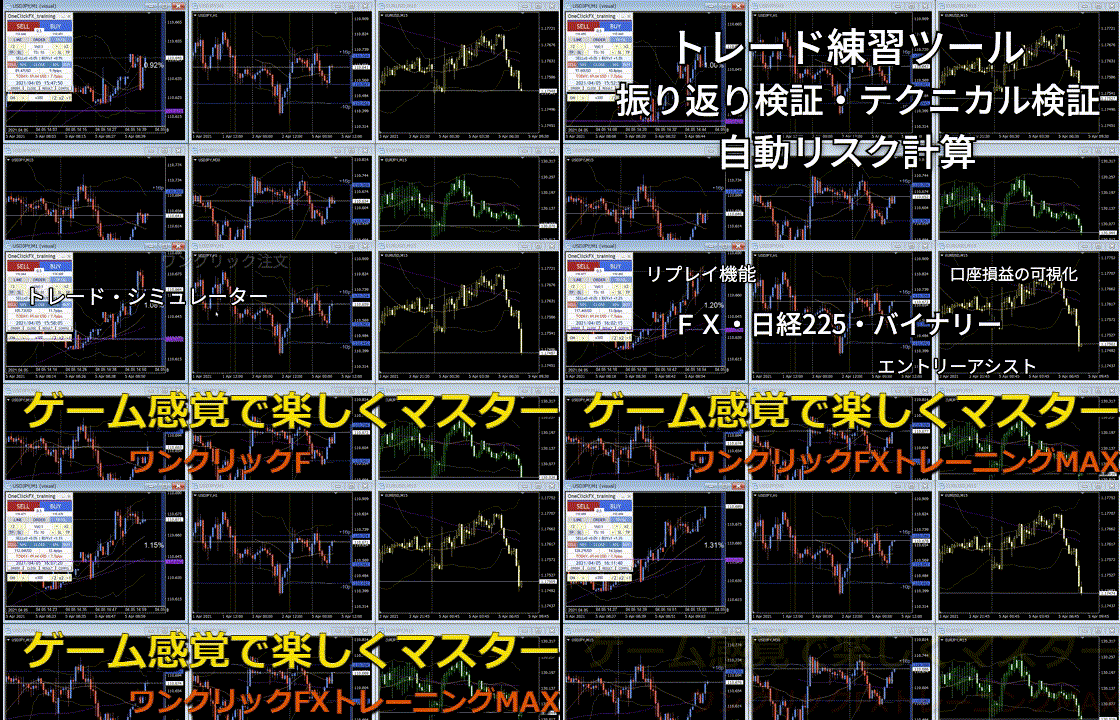
Details page for One-Click FX Training MAX