

I was asked about the ISS ~ Kinugasa-style scalping method ~
“Reproducible” scalping method using Span Model
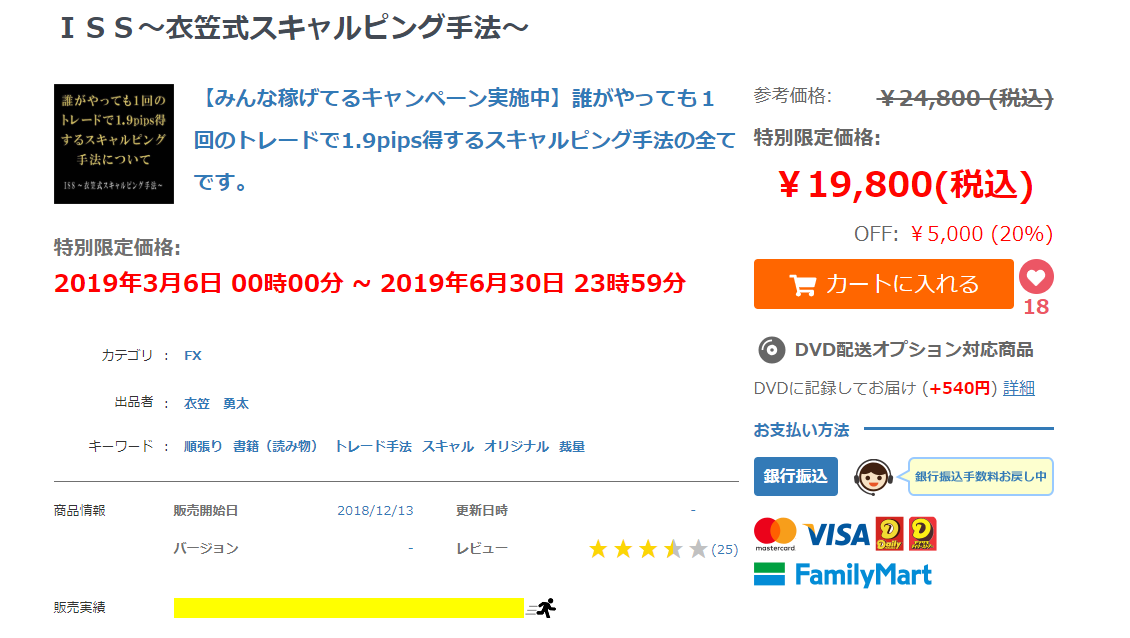
Ms. Ebizawa Kinugasa sells an e-book titled “ISS ~ Kinugasa-style Scalping Method ~” at Gogojan. In this interview, we’ll ask about that ISS. First, please give a brief overview.
Kinugasa: ISS is a scalping method that utilizes the Span Model. The key point is its high reproducibility, converging to the same results no matter who uses it. We aimed for a simple method, with entry and exit timings that are visually easy to understand.
Ebizawa: Scalping generally involves a large proportion of discretionary judgment, but ISS emphasizes reproducibility. Now, could you tell us specifically about the method? First, please share the timeframes you analyze or trade with, and the technical indicators you display.
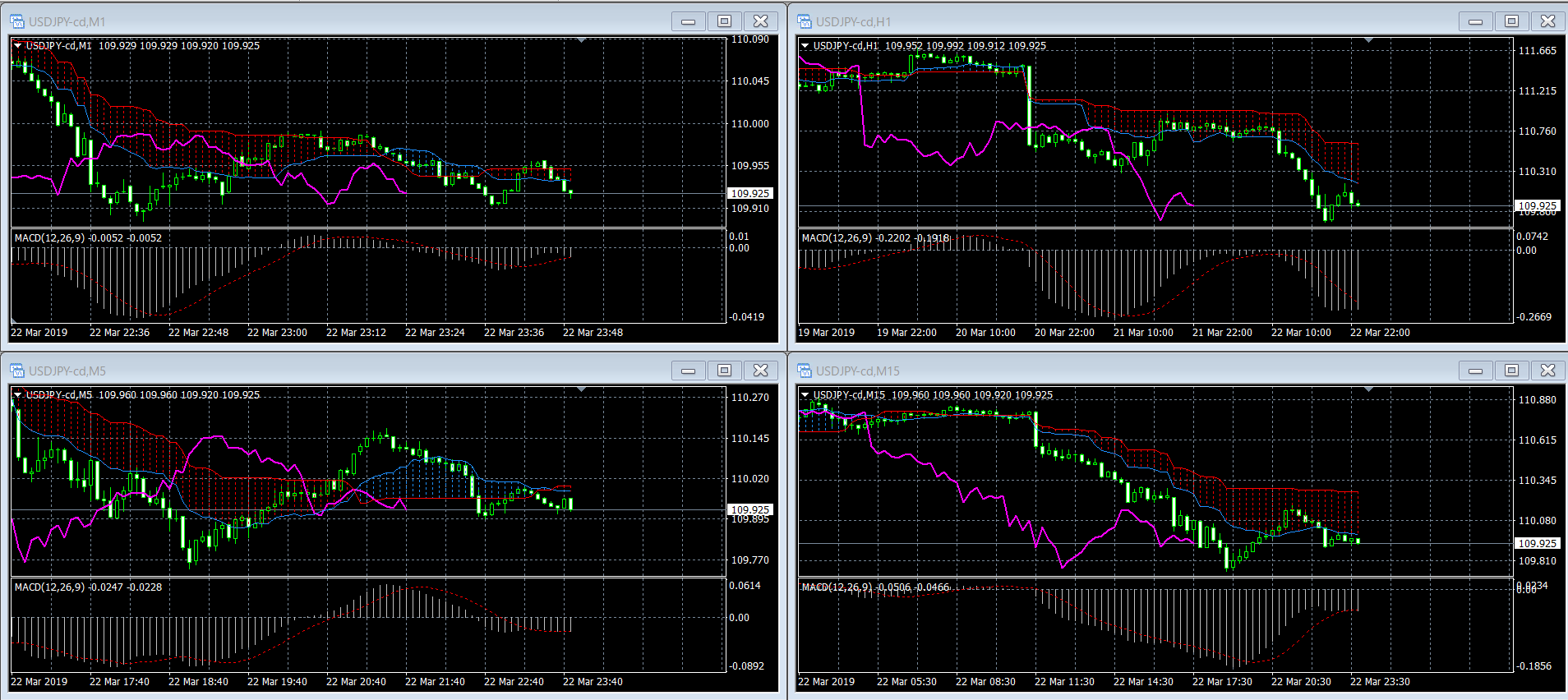
Kinugasa: The charts are 1-minute, 5-minute, 15-minute, and 1-hour. These include the Span Model and MACD.
Ebizawa: In what order are the charts laid out?
Kinugasa: The top-left is 1-minute, bottom-left is 5-minute, bottom-right is 15-minute, and top-right is 1-hour.
Ebizawa: By the way, MT4 does not come with the Span Model built-in.
Kinugasa: You need to obtain the Span Model indicator via a web search (Editor’s note: Span Model is available on FXTF’s MT4).
Ebizawa: So you either search for the Span Model indicator and install it in MT4, or you use a charting software/broker that already has it. Then, what should the parameters be set for the Span Model and MACD?
Kinugasa: The Span Model is set to 9, 26, 52, and MACD to 12, 26, 9.
Ebizawa: Next, please tell us about entry and exit.
Kinugasa: As a baseline, the 5-minute chart is the main reference. If the trend on the 5-minute chart aligns with the trend on the higher-timeframe 15-minute chart, we enter and exit on the 1-minute chart in the same direction. Specifically, we recognize the environment using the Ichimoku cloud and the lagging line (Chikou Span). It’s simple: if the cloud is blue and the lagging line is rising (above the candlesticks), we consider buying; if the cloud is red and the lagging line is falling (below the candlesticks), we consider selling. The timing of trades is determined by MACD. For long entries, enter on a MACD golden cross and exit on a dead cross. For short, the opposite. Exits are guided by the MACD cross; if at that moment the position is at a loss, cut it; if at a profit, take profits.
Ebizawa: First, see if the 5-minute and 15-minute trends align. If they do, trade in that direction on the 1-minute chart… is that right?
Kinugasa: Yes, that’s right. If the 5-minute and 15-minute do not align, we skip the trade. Alternatively, if the 5- and 15-minute trends align but the 1-minute is moving in the opposite direction, we keep it on watch and wait for alignment, while checking other currency pairs in the meantime.
Ebizawa: By the way, which currency pairs do you recommend?
Kinugasa: I monitor six currency pairs: USD/JPY, EUR/USD, EUR/JPY, GBP/USD, GBP/JPY, and EUR/GBP.
Ebizawa: On a single currency pair, how many trading opportunities can you expect?
Kinugasa: It depends on the pair and the time of day, but roughly 1 to 3 times per hour.
Ebizawa: How much price movement do you aim for in these trades?
Kinugasa: For example, if you trade five times, you might see two small profits, two small losses, and one large profit. About 80% are win/loss of 1–2 pips, keeping profits and losses almost even, while the remaining 20% capture a large move of 10–20 pips.
Ebizawa: You also check the 1-hour chart; how is that used?
Kinugasa: If the 5-minute, 15-minute, and 1-hour all point in the same direction, you gain more confidence and can increase position size. Conversely, if the 1-hour direction differs, you may reduce the lot size.
Follow the scenario, not the market
Ebizawa: How did this method come about?
Kinugasa: It’s somewhat unusual, but I set out to create a training material. Looking at social media like Twitter, many people lose money trading FX. I wanted to help them win by creating a useful teaching tool. When creating the method, it was important that anyone could win in the same way. Having an edge and being easy for anyone to practice—those considerations led to this method.
Ebizawa: So reproducibility was a priority. By the way, what’s your FX background?
Kinugasa: I’ve been trading FX for about four years. The first two and a half years I lost a lot. I displayed moving averages, trendlines, and channel lines and chased breakouts, but I didn’t win at all.
Ebizawa: That’s the classic approach. It didn’t work, then.
Kinugasa: The way you draw trendlines varies from person to person; it’s hard for everyone to win consistently. About a year and a half ago, I discovered the Span Model. It’s easy to understand at a glance—if the cloud is blue and the lagging span is bullish, you buy. I liked that it was easy for anyone to understand. I studied how to leverage Span Model to establish my own method.
Ebizawa: With ISS now established, who is this method best suited for?
Kinugasa: The top recommendation is FX beginners. Especially those who are not winning now, trading without a basis, or trading emotionally. ISS is straightforward and easy to use with high clarity.
Ebizawa: What should users watch out for when using ISS?
Kinugasa: ISS is trend-following by nature; it struggles in ranging markets. The difficult moments are when the 1-minute, 5-minute, and 15-minute directions do not align. Do not enter when those three timeframes disagree.
Ebizawa: Not trading in ranges helps limit losses. How can one maximize gains?
Kinugasa: Adhere to the exit rules. Do not close the position until the MACD cross is confirmed. If you exit early after profits, you may miss opportunities for larger moves of 10–20 pips. Aim for a larger profit when possible, so hold until the cross appears.
Ebizawa: Any cautions about capital management?
Kinugasa: I recommend using automatic stop-loss. Place it around 15–20 pips. For example, you may suffer 2–3 consecutive stop-outs, and by the 4th you might lose the nerve. A larger drawdown afterward would be hard to recover from. To prevent such mental blocks on stop-outs, automatic stops help. I personally set mine at 20 pips.
Ebizawa: Thank you. I’ve grasped the ISS overview. The content covered here is fundamental. Besides this basic content, what else is included in the e-book “ISS ~ Kinugasa-style Scalping Method ~”?
Kinugasa: In this interview I focused on ISS, so the Span Model explanations were only foundational. The e-book provides a more detailed compilation of the Span Model, including fundamental concepts, how to identify high-probability points, and methods to improve win rate via “fractal structure.” These ideas apply not only to ISS but to other methods as well, so I hope readers study from basics to practical, structured applications. For ISS, we include chart-based, concrete trading examples to ensure anyone can practice ISS reliably.
Ebizawa: Now, for those interested in ISS or FX beginners, any advice?
Kinugasa: Beginners tend to decide to go long or short based on market movement, like “it surged, so go long,” or “expect a reversal and go short.” That thinking is flawed. Don’t react to market movement; instead, pre-construct your trade scenario and enter/exit when the market moves according to that scenario. Make the scenario the central idea.
ISS provides a clear entry scenario and the scenario you should wait for at a glance. Then you simply wait for MACD signals. Even beginners can trade in high-probability situations easily. Again: do not chase the market, follow the entry scenario. I want beginners to learn and adopt this approach. I’d like ISS to be part of their foundational learning.
ISS ~ Kinugasa-style Scalping Method ~
https://www.gogojungle.co.jp/tools/ebooks/16231




Is it OK?