

Why is China the most delicious? An unexpected scheme behind Trump's attack on Iran
“In the Middle East war, will China really be exhausted? Or will it rather benefit?” Opinions on this question are divided even among experts. The Iran situation has rapidly become tense due to what is said to be an American and Israeli military action that began on February 28, 2026. There are two main ways of looking at this event.
One view is that since China has invested heavily in Iran and Venezuela, China’s economy would suffer a blow. Another view is that China can procure crude oil from Russia and others, so there is no big problem; rather, the United States exhausting military resources in the Middle East would create a favorable environment for China.
Both explanations sound plausible, but in reality many assessments say that China would benefit the most. This article explores the true intent from three perspectives: energy structure, military balance, and China’s strategy.
Selling Well!A high-functionality trading practice tool that feels like the real thing?9,800 yen?
?FX New Generation: One-Click FX Training MAX
?Reasons why China is said to be “the most delicious”
Some military analysts view this situation as a “opportunity” for China. The reasons can be summarized mainly into four points.
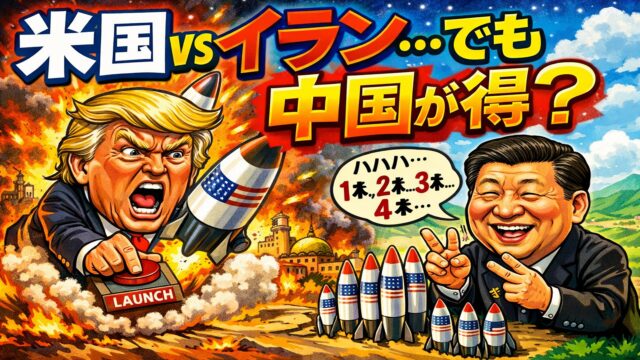
- Watch U.S. military depletion for free: China can observe how America’s precision-guided weapons are used in actual combat and how much they are consumed without firing a shot in anger. Long-range weapons like Tomahawk cruise missiles and JASSM‑ER, once launched, reduce stockpiles and require time and cost to replenish. If operations continue in the Middle East, these weapons and related equipment stocks will gradually diminish, potentially affecting deployments in other regions.
- Make Russia an “subordinate partner”: If weapons exports increase, the Russian military’s equipment becomes more dependent on Chinese-made parts, strengthening China’s influence (a relationship with a distinctly “top-down” tone).
- Active defense industry: China uses exports to Russia as a “test bed” to collect real-world data. Improvements to the J-20 fighter and unmanned systems are directly linked to this.
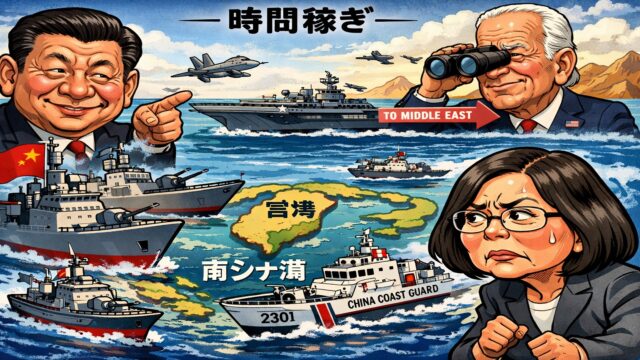
- Buy time in Taiwan and the South China Sea: As the U.S. military is tied down in the Middle East, China can strengthen gray-zone operations around the Philippines and Taiwan.
Here, we organize the reasons from several perspectives.
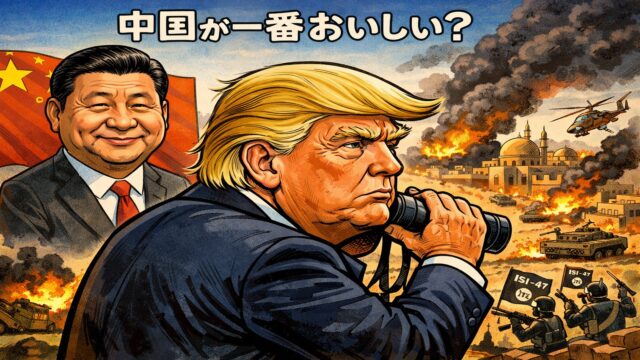
?The “free observation” structure of U.S. military depletion
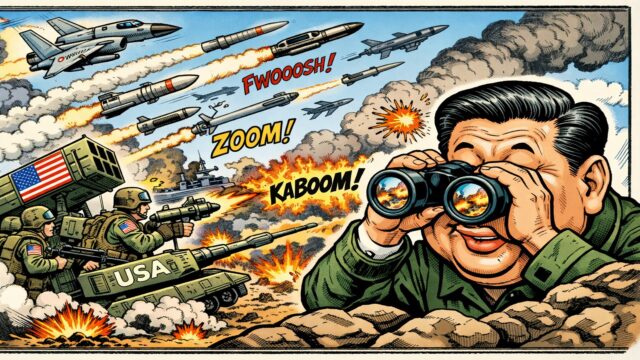
First, attention is drawn to the depletion of U.S. weapons. China is in a position to observe how the U.S. military’s precision-guided weapons are used in actual combat and how much they are consumed without engaging directly in combat. Long-range weapons like Tomahawk missiles and JASSM‑ER, once fired, reduce stockpiles and require time and cost to replenish. If operations continue in the Middle East, supplies of these weapons and related equipment will gradually decrease, potentially affecting deployments to other regions.
From China's point of view, this is also a situation where it can observe how the U.S. weapons are operated and how its supply chain and procedures are conducted, without fighting itself.Knowing which weapons are used against which targets, how quickly supplies are delivered, and other battlefield data will be valuable for planning future military actions. For this reason, some military analysts view this situation as “China being able to study U.S. war from afar.”
?Russia’s dependence on China may strengthen
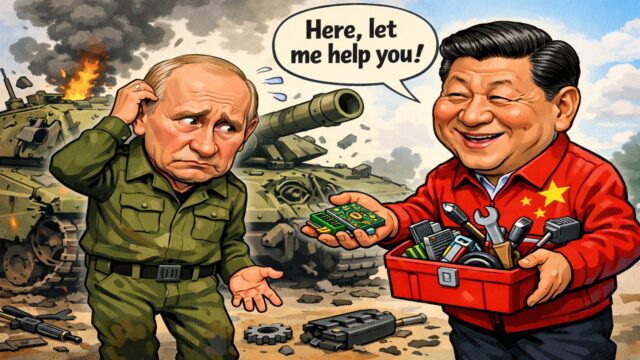
Second is the relationship with Russia. As the Ukraine war prolongs, Russia’s defense industry is said to rely on overseas technologies in areas such as electronic components, communications equipment, and machine tools. With Western sanctions restricting supplies from Western companies,China-made parts and machines are increasingly used as substitutes in many cases.
In particular, drone-related electronics, semiconductor components, and industrial machinery are fields where Chinese companies are expected to supply. As this supply increases, Russia’s defense industry could become more dependent on China’s supply chain.Even if the relationship remains formally equal, the party controlling technology and parts supply tends to hold influence.
Russia has abundant energy resources, and China has manufacturing capacity and financial strength, but if this balance shifts, some argue Russia may become more dependent on China. Consequently, the bilateral relationship could gradually tilt toward China's favor.
?The defense industry’s “real-world test” aspect
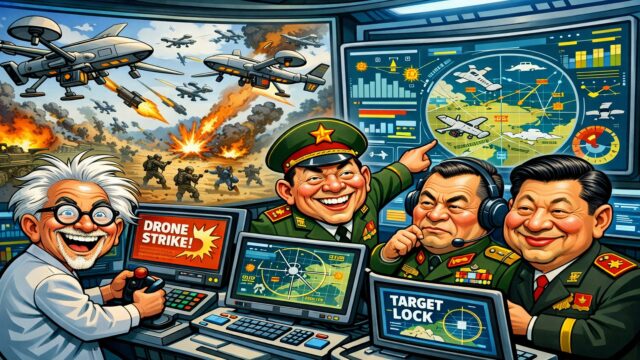
Third is the defense industry perspective. Parts and equipment China exports to Russia will be used on actual battlefields. For China, this provides an opportunity to obtain real-world data.Real-world data is extremely valuable for weapons development.
Problems not apparent in exercises or tests are often found on the battlefield. Stability of communications, resilience to electronic warfare, sensor performance, and other elements can only be understood in real combat. If Chinese-made electronics and components supplied to Russia are used in battle, the results could feed back into technological development.
These experiences are thought to contribute to improvements in China’s drone technology and aircraft technology. For example, China’s stealth fighter J‑20 and various drone systems are still being improved.Electronic warfare and communications data obtained on the battlefield could be used to enhance these weapons’ performance.In this sense, Russia’s defense relationship is seen as a kind of “real-world test environment” for China.
?Time-wasting in Taiwan and the South China Sea
Fourth is the element of time. If the United States concentrates its forces in the Middle East, the balance of power in the Indo-Pacific region will temporarily change. The U.S. military is deployed worldwide, but its carriers and long-range bombers have limited force. If operations in the Middle East continue, the force that can be allocated to other regions may decrease.What matters to China is this time.
In the areas around Taiwan and the South China Sea, so-called gray-zone operations continue with low-intensity pressure. Activities such as coast guard and militia ships near the territory, and aircraft approaching territorial airspace, are examples.These activities are not large-scale warfare, but over time they can shift regional power balances.
As the U.S. military focuses on the Middle East, there is room for China to intensify these activities. In other words, the Middle East situation could grant China time and space.
The People's Liberation Army sees it as a “heaven-sent opportunity”
Taken together, several factors suggest that the current situation may not be a simple loss for China. The exhaustion of U.S. military resources, the strengthening of Russia’s dependence on China, and real-world data for military technology could all progress simultaneously.
For these reasons, some within the People’s Liberation Army describe the situation as a “heaven-sent opportunity.” Of course, this is not an official statement, but it is a frequently cited analysis in military studies.
However, how advantageous this will be for China depends on how long the war lasts.If the United States ends the operation quickly, the benefits to China may be limited. On the other hand, if the war lasts longer, U.S. military resources will be dispersed, and the relationship between Russia and China may deepen further.In short, the conclusion to this issue is not yet decided.
This issue may be evaluated differently depending on the time frame. How do you view this situation?
Completely risk-free trading simulator for free practice and verification!
Details page of One-Click FX Training MAX