

Is the Nikkei VI 40 at panic level? Will the Nikkei 225 crash? | The true meaning of the Japanese version of the "Fear Index"
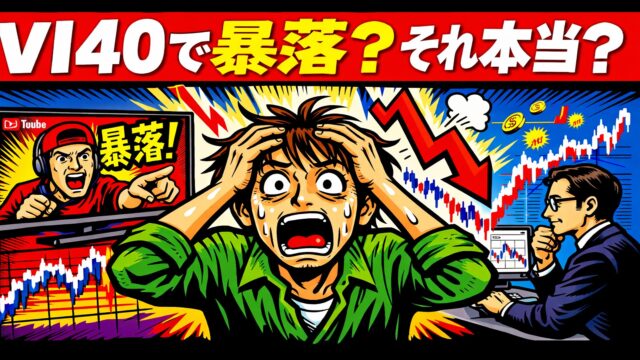
“The Nikkei VI has risen above 40. So the market will crash at the start of the week.” Such provocative analyses are spreading across the internet and in videos. Is that really the case? Indeed, the figure of 40 for Nikkei VI signals that the market is warning about the potential for a large move.
However, it might be a bit premature to conclude “crash guaranteed” or “downtrend started” based on that alone.Nikkei VI is calculated from the Nikkei 225 option pricesthe 30-day ahead implied volatilityand it is an indicator of how large the price movement might be, not the direction of the market.
In other words, a high VI means the market is wary of increased volatility, but it does not necessarily mean a decline will occur. The current market has risk factors such as Middle East tensions and oil prices, while there are also positive drivers like policy expectations and thematic stocks in Japan.Therefore, next week’s market is not a simple binary choice of “crash or stability,” but a situation to determine whether the high volatility will lead to continued adjustments or if there will be a catalyst for a rebound.It is more realistic to assess whether the market will continue to adjust amid high volatility or find a trigger for a reboundin this environment.Selling well!A high-function trading practice tool that feels like the real thing?9,800 yen??FX New Generation: One-Click FX Training MAX?What does Nikkei VI above 40 signifyWhen the Nikkei VI rises above 40, it indicates that the market is not in a normal state and that market participants are bracing for greater volatility. Therefore, there is a strong possibility of large movements at the start of the week. However, note that the rise in Nikkei VI is not a cause of declines; it is a result of other factors.The presence of risk in the market pushes VI up; VI rising does not automatically cause the market to fall.In past markets, episodes of VI or VIX surges often occurred alongside sharp declines, but there were also many cases where the market recovered relatively quickly afterward. This is because panic selling due to leverage unwinding tends to settle, after which a rebound can occur.Therefore, rather than assuming selling-only simply because VI is at 40, it is more important to observe whether risk factors will deteriorate further or settle down.?Is the label “Fear Index” truly accurateHere is something to clarify: is it truly accurate to call Nikkei VI or VIX the “fear index”? In reality, VI does not measure fear itself. Its calculation is straightforward: it is derived from the price of Nikkei 225 options to infer “the expected volatility over the next 30 days.”In essence, it is the expected magnitude of movement, not a direction indicator.Then why is it called the “fear index”? Because when stock prices fall sharply, demand for put options rises rapidly, which tends to push up volatility. This association has led to the image of “stocks fall → VIX rises = fear.”Thus, rising VI does not automatically mean a decline; rather, it reflects a market that is prone to volatility.In other words, VI is not fear itself, but an indicator of how much the market is expected to swing.?Next week’s real focus: Iran situation and oil pricesThe driver of this market is the Middle East situation. Corporate earnings shocks aren’t the immediate cause; geopolitical risk is elevating volatility.Of particular importance are the prolongation of the Iran situation and oil prices.If tensions escalate and oil stays high, Japan, as an energy importer, faces higher corporate costs and inflation concerns, weighing on stocks. Conversely, news of easing tensions could rapidly unwind the oversold-in risk.Markets tend to rebound when they have already priced in the worst-case scenario but the actual outcome is not as bad as feared.In short, next week’s key is not VI itself but how Middle East risk and oil price movements change.?Perspective that Nikkei has risen too much in the last two monthsWhen considering this decline, an important point is that the Nikkei Average rose quite sharply over the past two months. It was around 50,000 at year-end, but it rose to nearly 60,000 early this year. About a 20% rise in a short period is quite rapid. While there were factors such as policy expectations from the administration and election results and defense-related investments, the S&P 500 was flat, whileNikkei alone surged, creating a sense of overheating.Thus, some pullback is not unusual. A pullback after a sharp rise is a common market pattern. Even if it drops to 50,000, that would be the level at the end of last year.Rather than viewing the recent short-term decline as a market collapse, it is more natural to interpret it as a correction following an overextended rise since the beginning of the year.?Targeting the strong categories of Japanese stocksLooking at indices alone can make you pessimistic, but market leadership varies by sector.In this case, defense, heavy industry, and security-related sectors tend to stay comparatively strong.As geopolitical risk increases, defense demand and supply chain realignment expectations strengthen, attracting money into related stocks. In Japan, defense policy and security themes continue, making a broad decline less likely.Opening of a military market can contribute to economic growth.Of course the overall index could stay heavy due to high oil prices, but “Nikkei average down” does not mean “all Japanese stocks are weak.” Next week too, stock-specific strength and weakness may be more pronounced than the index itself.?Is the claim that a 1500 yen drop in the night session equals a crash trueI watched a video by a certain YouTuber that claimed, “From the Nikkei 225 close, the night session dropped 1500 yen, so it will crash at the market open.” But this needs a calmer consideration.Nikkei 225 futures night session trades from evening into the next morning and overlaps with the New York market’s hours.In other words, if NY falls overnight, Japanese futures fall too, and if NY recovers, futures recover as well.Movements of several hundred to over a thousand yen are not unusual.In recent night sessions, moves of 300, 800, or more than 1000 yen have occurred frequently. With geopolitical risk or oil price news, moves around 1500 yen are not exceptional.Therefore, the statement “night session drop of 1500 yen guarantees a crash at the open” is a simplification.?The relationship between night session moves and the Nikkei VI is not directMore importantly, this discussion is not directly tied to Nikkei VI. VI is derived from option prices to estimate 30-day ahead volatility, and it does not explain temporary moves in the night session. Night moves are mainly influenced by external markets such as NY equities, oil, and forex. In other words,how the market opens on Monday cannot be determined by a temporary night drop alone.In markets, even if there is a big drop at night, the opening can recover, or it can fall further. Ultimately, it depends on NY close and news, sothe logic “1500 yen drop equals guaranteed crash” is quite crude.Such sensationalism attracts viewers, but it is somewhat detached from the actual market mechanics.?Mon opening may have room for a drop, but declaring an immediate downtrend is prematureA realistic scenario for next week is that early trading could be very volatile. With high Nikkei VI and unstable external conditions, a gap-down or around 5% downside is plausible. However, declaring a downtrend solely on that would be premature.This decline is not due to a sharp deterioration in corporate earnings; it is mainly driven by geopolitical risk and oil price concerns.These factors can change with the news.Therefore next week is more about whether the causes of the decline are expanding or becoming priced in, rather than simply asking “will it go down or up.”It is important to monitor Iraq developments, oil prices, and actions of President Trump.?What should traders do in this situation?In this situation, a balanced approach that acknowledges risk rather than outright bullish or bearish is most practical. There is indeed room for short-term downside. Since Nikkei VI remains high, volatility will stay elevated, making price swings larger.If the market appears overheated, there is room for gradual buying on dips. When VI settles around 35 or 30, a staggered dollar-cost averaging type approach could be realistic.The key is not to jump to conclusions all at once.Rather than putting all funds in at once during a decline, adopt a stance of gradually adjusting positions while watching news and price reactions. Investing is not gambling, so aim to increase capital by small percentages over time.?VI and fear are just imagesJudging solely by a Nikkei VI above 40 to declare a crash or a downtrend is somewhat simplistic. VI is a measure of uncertainty, not a directional determiner. If there is a downtrend, the reasons would bethe prolongation of Middle East tensions and continued oil price increases.On the other hand, Japanese stocks have risen sharply in the past two months, so a correction is natural. Therefore, looking ahead, the most realistic view is that short-term volatility is possible, but a long-term decline is not yet decided; a stance of gradually deploying dips as conditions evolve seems appropriate for the current market.This seems aligned with the current market conditions.A realistic possibility of a third world war is extremely low; the question is who would challenge the U.S. military when America demonstrates strength? Many countries feel they cannot oppose Trump, which is itself a point of anxiety, perhaps.There are also aspects that could be a tailwind for Japan, though there are many methods that stoke fear with pessimistic words. By carefully examining trustworthy information and staying calm,aim to trade without overextending your risks.Do you feel fear from the fear index?Completely risk-free trade simulator for free practice and verification!Details page for One-Click FX Training MAX
Therefore, next week’s market is not a simple binary choice of “crash or stability,” but a situation to determine whether the high volatility will lead to continued adjustments or if there will be a catalyst for a rebound.It is more realistic to assess whether the market will continue to adjust amid high volatility or find a trigger for a reboundin this environment.
Selling well!A high-function trading practice tool that feels like the real thing?9,800 yen?
?FX New Generation: One-Click FX Training MAX
?What does Nikkei VI above 40 signify
When the Nikkei VI rises above 40, it indicates that the market is not in a normal state and that market participants are bracing for greater volatility. Therefore, there is a strong possibility of large movements at the start of the week. However, note that the rise in Nikkei VI is not a cause of declines; it is a result of other factors.The presence of risk in the market pushes VI up; VI rising does not automatically cause the market to fall.
In past markets, episodes of VI or VIX surges often occurred alongside sharp declines, but there were also many cases where the market recovered relatively quickly afterward. This is because panic selling due to leverage unwinding tends to settle, after which a rebound can occur.Therefore, rather than assuming selling-only simply because VI is at 40, it is more important to observe whether risk factors will deteriorate further or settle down.
?Is the label “Fear Index” truly accurate
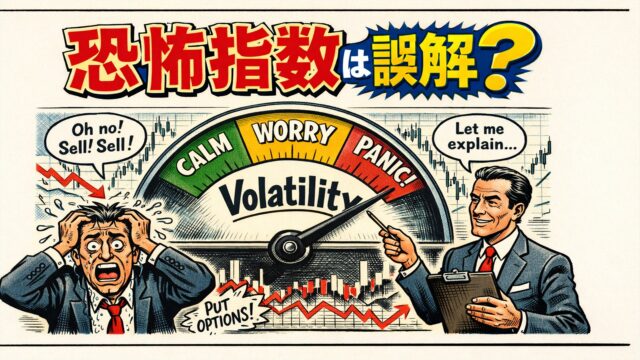
Here is something to clarify: is it truly accurate to call Nikkei VI or VIX the “fear index”? In reality, VI does not measure fear itself. Its calculation is straightforward: it is derived from the price of Nikkei 225 options to infer “the expected volatility over the next 30 days.”In essence, it is the expected magnitude of movement, not a direction indicator.
Then why is it called the “fear index”? Because when stock prices fall sharply, demand for put options rises rapidly, which tends to push up volatility. This association has led to the image of “stocks fall → VIX rises = fear.”
Thus, rising VI does not automatically mean a decline; rather, it reflects a market that is prone to volatility.In other words, VI is not fear itself, but an indicator of how much the market is expected to swing.
?Next week’s real focus: Iran situation and oil prices
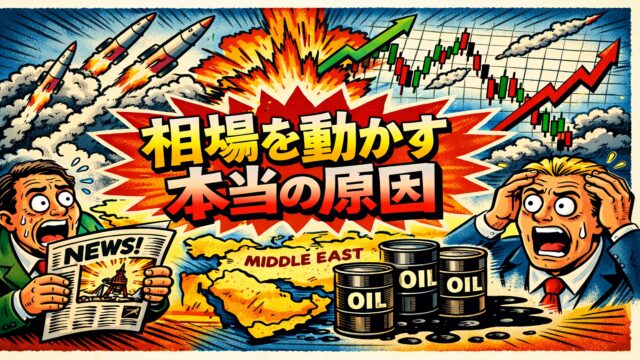
The driver of this market is the Middle East situation. Corporate earnings shocks aren’t the immediate cause; geopolitical risk is elevating volatility.Of particular importance are the prolongation of the Iran situation and oil prices.
If tensions escalate and oil stays high, Japan, as an energy importer, faces higher corporate costs and inflation concerns, weighing on stocks. Conversely, news of easing tensions could rapidly unwind the oversold-in risk.
Markets tend to rebound when they have already priced in the worst-case scenario but the actual outcome is not as bad as feared.In short, next week’s key is not VI itself but how Middle East risk and oil price movements change.
?Perspective that Nikkei has risen too much in the last two months
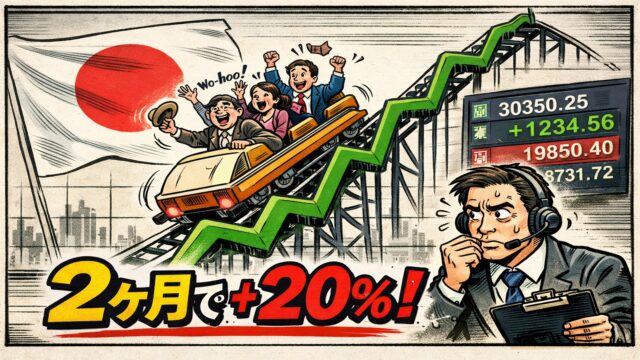
When considering this decline, an important point is that the Nikkei Average rose quite sharply over the past two months. It was around 50,000 at year-end, but it rose to nearly 60,000 early this year. About a 20% rise in a short period is quite rapid. While there were factors such as policy expectations from the administration and election results and defense-related investments, the S&P 500 was flat, whileNikkei alone surged, creating a sense of overheating.
Thus, some pullback is not unusual. A pullback after a sharp rise is a common market pattern. Even if it drops to 50,000, that would be the level at the end of last year.Rather than viewing the recent short-term decline as a market collapse, it is more natural to interpret it as a correction following an overextended rise since the beginning of the year.
?Targeting the strong categories of Japanese stocks
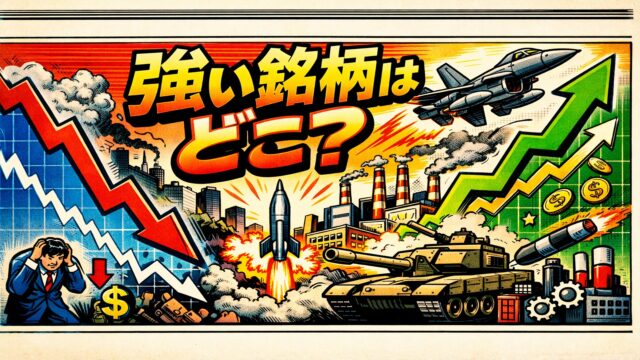
Looking at indices alone can make you pessimistic, but market leadership varies by sector.In this case, defense, heavy industry, and security-related sectors tend to stay comparatively strong.As geopolitical risk increases, defense demand and supply chain realignment expectations strengthen, attracting money into related stocks. In Japan, defense policy and security themes continue, making a broad decline less likely.
Opening of a military market can contribute to economic growth.Of course the overall index could stay heavy due to high oil prices, but “Nikkei average down” does not mean “all Japanese stocks are weak.” Next week too, stock-specific strength and weakness may be more pronounced than the index itself.
?Is the claim that a 1500 yen drop in the night session equals a crash true
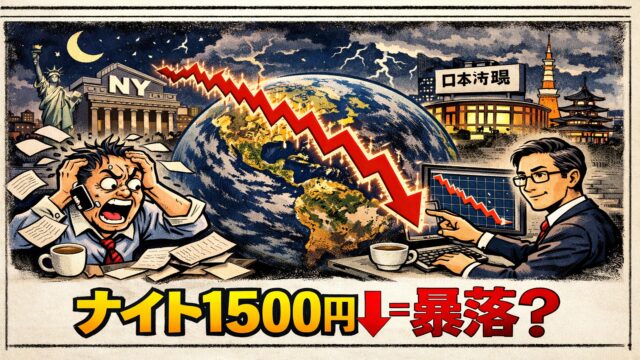
I watched a video by a certain YouTuber that claimed, “From the Nikkei 225 close, the night session dropped 1500 yen, so it will crash at the market open.” But this needs a calmer consideration.
Nikkei 225 futures night session trades from evening into the next morning and overlaps with the New York market’s hours.In other words, if NY falls overnight, Japanese futures fall too, and if NY recovers, futures recover as well.Movements of several hundred to over a thousand yen are not unusual.
In recent night sessions, moves of 300, 800, or more than 1000 yen have occurred frequently. With geopolitical risk or oil price news, moves around 1500 yen are not exceptional.Therefore, the statement “night session drop of 1500 yen guarantees a crash at the open” is a simplification.
?The relationship between night session moves and the Nikkei VI is not direct
More importantly, this discussion is not directly tied to Nikkei VI. VI is derived from option prices to estimate 30-day ahead volatility, and it does not explain temporary moves in the night session. Night moves are mainly influenced by external markets such as NY equities, oil, and forex. In other words,how the market opens on Monday cannot be determined by a temporary night drop alone.
In markets, even if there is a big drop at night, the opening can recover, or it can fall further. Ultimately, it depends on NY close and news, sothe logic “1500 yen drop equals guaranteed crash” is quite crude.Such sensationalism attracts viewers, but it is somewhat detached from the actual market mechanics.
?Mon opening may have room for a drop, but declaring an immediate downtrend is premature
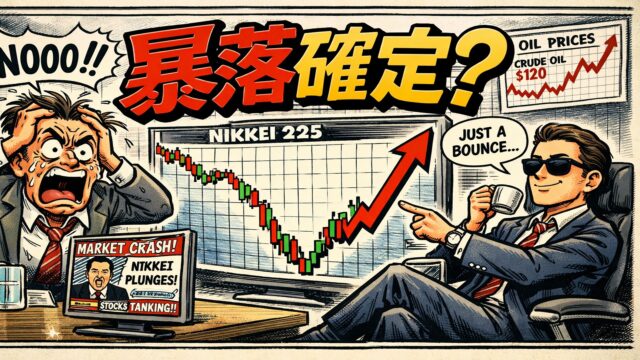
A realistic scenario for next week is that early trading could be very volatile. With high Nikkei VI and unstable external conditions, a gap-down or around 5% downside is plausible. However, declaring a downtrend solely on that would be premature.
This decline is not due to a sharp deterioration in corporate earnings; it is mainly driven by geopolitical risk and oil price concerns.These factors can change with the news.Therefore next week is more about whether the causes of the decline are expanding or becoming priced in, rather than simply asking “will it go down or up.”It is important to monitor Iraq developments, oil prices, and actions of President Trump.
?What should traders do in this situation?
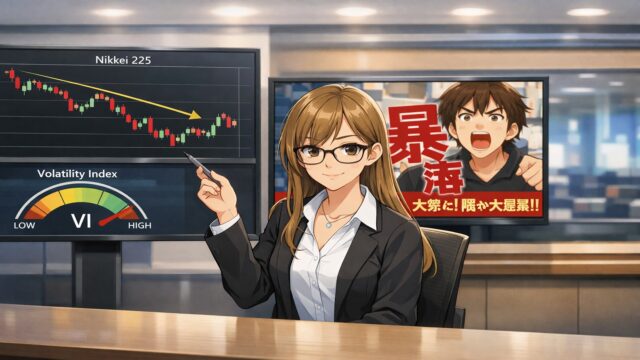
In this situation, a balanced approach that acknowledges risk rather than outright bullish or bearish is most practical. There is indeed room for short-term downside. Since Nikkei VI remains high, volatility will stay elevated, making price swings larger.
If the market appears overheated, there is room for gradual buying on dips. When VI settles around 35 or 30, a staggered dollar-cost averaging type approach could be realistic.
The key is not to jump to conclusions all at once.Rather than putting all funds in at once during a decline, adopt a stance of gradually adjusting positions while watching news and price reactions. Investing is not gambling, so aim to increase capital by small percentages over time.
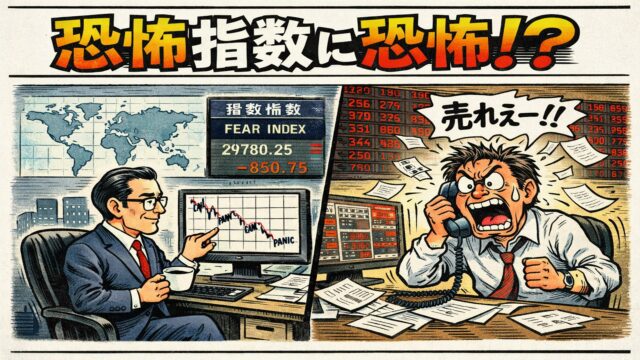
?VI and fear are just images
Judging solely by a Nikkei VI above 40 to declare a crash or a downtrend is somewhat simplistic. VI is a measure of uncertainty, not a directional determiner. If there is a downtrend, the reasons would bethe prolongation of Middle East tensions and continued oil price increases.
On the other hand, Japanese stocks have risen sharply in the past two months, so a correction is natural. Therefore, looking ahead, the most realistic view is that short-term volatility is possible, but a long-term decline is not yet decided; a stance of gradually deploying dips as conditions evolve seems appropriate for the current market.This seems aligned with the current market conditions.
A realistic possibility of a third world war is extremely low; the question is who would challenge the U.S. military when America demonstrates strength? Many countries feel they cannot oppose Trump, which is itself a point of anxiety, perhaps.
There are also aspects that could be a tailwind for Japan, though there are many methods that stoke fear with pessimistic words. By carefully examining trustworthy information and staying calm,aim to trade without overextending your risks.Do you feel fear from the fear index?
Completely risk-free trade simulator for free practice and verification!
Details page for One-Click FX Training MAX