

Does the Trump administration’s military operation collapse China and Russia’s air defense systems? The Iran and Venezuela attacks demonstrate the overwhelming power of the U.S. military
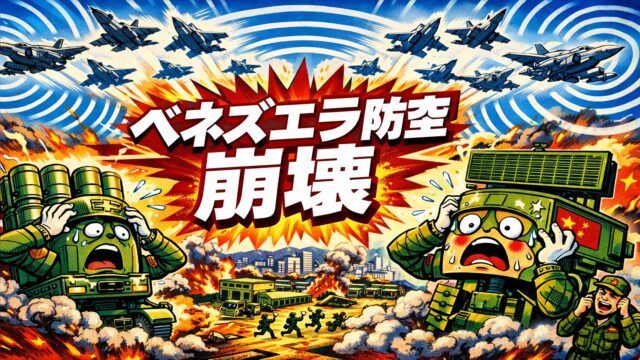
Were China and Russia’s air defense systems powerless against the US military led by President Trump? Or were capabilities such as “counter-stealth” and “counter-electronic warfare” closer to propaganda? The American military carried out large-scale operations in Venezuela and Iran,and it was reported that they neutralized air defense networks in an astonishingly short time.
The forces involved included F-35 stealth fighters, EA-18G electronic warfare aircraft, cyberattacks, and so on—what is called modern integrated warfare. What attracts attention is the opposing side. In Venezuela, Russian S-300 and Chinese radar were deployed; in Iran, S-300 and Chinese HQ-9B, among others, were deployed.
Trump’s military operation is said to have succeeded, and US losses were reportedly very small.Is there such an overwhelming gap in power?What happened in Venezuela and Iran? And did China and Russia’s air defense systems really fail to function before the US military? How strong are the US air defense systems? The global military balance may be shifting significantly.
Selling well!A high-function trading practice tool that feels like the real thing?9,800 yen?
?FX Next Generation: One-Click FX Training MAX
? Iran’s air defenses silenced in a short time
From February to March 2026, there are reports that a large-scale attack by the United States and Israel against Iran was conducted. The targets included Iran’s missile bases and nuclear-related facilities. Iran’s air defense network is not a single system but a multi-layered structure combining technologies from multiple countries.
In the long-range layer, there is Russia’s S-300PMU-2, and Iran’s domestically produced Bavar-373, which was developed with reference to it, is one of the main elements. In recent years, China’s HQ-9B and other systems have also been introduced to strengthen air defense capability. However,multiple reports indicate that defense systems may not have functioned adequately in this attack.
Analyses also suggest that the US and Israeli forces conducted a combined operation with stealth aircraft, electronic warfare aircraft, and cyberattacks, potentially fragmenting the air defense network. Particularly for Chinese HQ-9B and related radars, there are analyses stating they fell silent quickly due to electronic jamming, with effective interception by air defense missiles being rarely confirmed.
As a result, analyses suggest that the US-Israeli side could have secured a relatively short period of air superiority and dealt blows to missile-related facilities and military bases.

? The air defense network collapsed in the Venezuela operation too
In January 2026, there are reports that the United States conducted a military operation in Venezuela called “Operation Absolute Resolve.” This operation involved F-35 stealth fighters, EA-18G electronic warfare aircraft, and F/A-18 Super Hornet, among others, andthe air defense network around Caracas reportedly malfunctioned in a short time.
Venezuela possessed air defense systems such as Russia’s S-300VM and Buk-M2, and had Chinese JY-27A radars. China advertised this radar as capable of detecting stealth aircraft, but there are reports that it hardly functioned due to electronic disruption.As a result, air defense missile launches were scarcely confirmed, command and control (C2) systems collapsed in a short time, and some reports say the operation ended quickly, suggesting the Venezuelan regime’s leadership may have fallen into deep disorder.
These outcomes are discussed as indicating that Russia-made missiles and Chinese radars may not function adequately against the US’s stealth, electronic warfare, and network warfare capabilities.
? What about the United States’ air defense system?
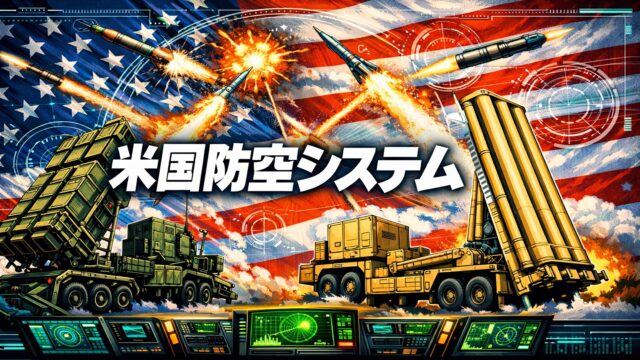
Here, the opposite case is of interest: when a country that has US-made air defense systems is attacked, how strong is its defense capability? Israel and Ukraine are often cited as references.Both operate air defense systems with substantial involvement from American technology, and there is abundant operational data.
While Russia and China’s air defense systems have been said to be neutralized quickly against the US military, American-made air defense systems have shown tangible results in practice. However, they do not guarantee complete defense, and their limits become evident with increased attacks or evolving tactics.
? Israel’s multi-layered air defense shows high interception rates in practice
Israel possesses one of the most advanced multi-layer air defense systems in the world. Systems such as Iron Dome, David’s Sling, and Arrow are arranged in tiers, with substantial technical cooperation from the United States. During large-scale attacks from 2024 to 2025, Iran fired hundreds of missiles and drones, butinterception success rates are estimated at about 80–90% by multiple analyses.
The Arrow system handles long-range missiles, David’s Sling handles mid-range, and Iron Dome handles short-range rockets. Additionally, the US THAAD was deployed temporarily, and information sharing and defense cooperation among allies functioned. This multi-layer defense and real-time information sharing helped keep damage relatively limited.This is considered one of the most successful operational examples of air defense networks including US technology.

? Ukraine’s Patriot also accumulates battle data
Another important reference is Ukraine. In Ukraine, the US-made Patriot PAC-3 has been the main missile defense for intercepting ballistic missiles. From 2023 to the first half of 2025, Patriot showed high interception rates against Russia’s ballistic missiles and cruise missiles. There are reports that a single unit shot down numerous ballistic missiles and targets.
Russia claimed that the Kinzhal hypersonic missile was “uninterceptable,” but Ukraine announced multiple Patriot interceptions, drawing attention to Patriot’s capabilities.However, in the second half of 2025, Russia reportedly introduced new tactics such as decoys and maneuvering trajectories, and interception rates dropped significantly.
In other words, even powerful air defenses can be breached if the attacker evolves tactics. Nevertheless, Patriot is regarded as one of the most effective defenses against Russia’s ballistic missiles, and ongoing additional deployments continue.
? Why Maga supporters are getting excited
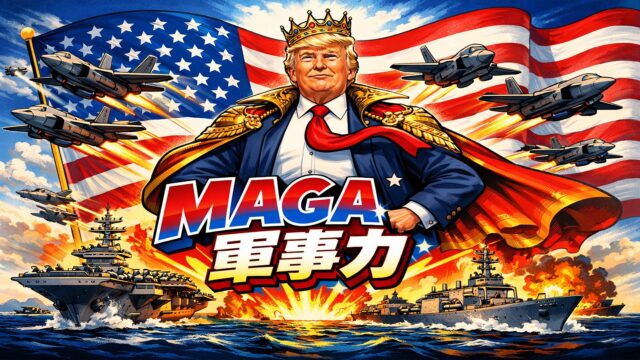
These military operations also align with the political messaging of the Trump administration. The Make America Great Again (MAGA) agenda has emphasized not only economic policy but also “America’s overwhelming military superiority.”
In Venezuela, the goal was “removing dictatorship,” and in Iran, “blocking nuclear development.” Both were claimed to yield results in a short time.Among MAGA supporters, many regard this as “proof that America’s power has returned.”In particular, the assessment that China and Russia’s military tech did not function before the US military carries symbolic political meaning.
However, such military actions draw strong criticism as well. Attacking sovereign nations raises international-law concerns, and European research institutions and international media label it an “infringement of sovereignty.”
There is also domestic debate in the United States.With the 2026 midterm elections approaching, voices within the Democratic Party argue that expanding military action would be politically risky. Even if operations appear successful militarily, they may contribute to regional instability in the long term.

? Where should Japan position itself?
The recent actions in Venezuela and Iran strongly emphasize the US’s advantages in stealth, electronic warfare, and network warfare. At the same time, Chinese- and Russian-made air defense systems show significant challenges in direct confrontations with the US military.
This development aligns with the MAGA direction of the Trump administration and is regarded as symbolic of “America’s military superiority” to the world. Yet, debates about sovereignty violations and international law, as well as domestic political tensions ahead of the midterms, cannot be ignored.Military success does not necessarily translate into long-term stability.
The world may be entering an era where the gap in military power is more exposed than ever. If so, those opposing the Trump administration could be placed in a difficult position.One could say we are entering a rather precarious world.
In that context, what position should Japan take? How should Japan balance its own prudent judgment with national strength? Given the current international environment, isn’t it worth rethinking? How do you evaluate President Trump’s military operations?
A completely risk-free trading simulator for free practice and verification!
Details page for One-Click FX Training MAX