

All the people involved in the Sanae Token scandal, can they just say they didn’t know everyone involved? Sorting out the behind-the-scenes of the spread
“Sanae Token.” When you hear this word, almost everyone will think of Prime Minister Takai. However, the prime minister herself has fully denied it, saying, “I have no idea at all.”So, who undermined this token and who profited from it?
A cryptocurrency bearing the name of the serving prime minister is praised by a celebrity, and its price spikes tens of times in a short period. Then, with the prime minister’s denial, the price plummets, and various people involved give explanations,to the extent that authorities may investigate the matter.Hearing the progression to this point, it may be hard to believe at first.
But in reality, from February to March 2026, when Japan’s social media and the cryptocurrency scene were greatly agitated,the “Sanae Token controversy” was a major flashpoint.This controversy combined elements of a cryptocurrency using the name of a serving prime minister, celebrity endorsements, spread on SNS, and a rapid rise and fall in price.
Furthermore, the complete denial by Prime Minister Takai, discrepancies in explanations from involved parties, and posts spreading from a supporter group “Team Sanae,” all contributed to it becoming political news beyond just a cryptocurrency gimmick. What was this “Sanae Token”?
Selling well!A high-functioning trading practice tool that feels like the real thing?9,800 yen?
?FX New Generation: One-Click FX Training MAX
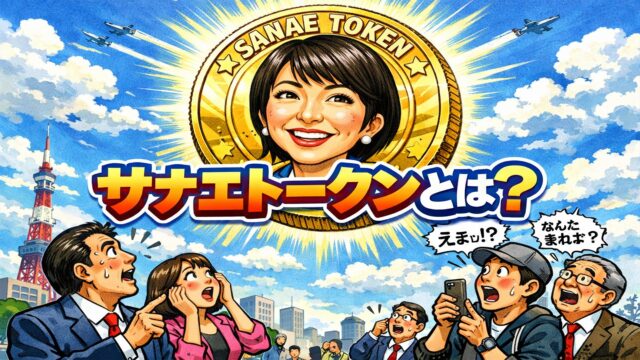
?What was Sanae Token?
Sanae Token is a meme coin issued on the Solana blockchain on February 25, 2026. This project is said to be connected to NoBorder, a YouTube program hosted by Yuji Mizoguchi, COO of BreakingDown, and to a community called NoBorder DAO.
On the surface, its concept stated that it would update democracy, collect public opinion to deliver to policymakers, and grant tokens as incentives for posting opinions.In other words, it was described not as a mere cryptocurrency but as a “community token” and a mechanism to co-create Japan’s future.
However, the name used Sanae, the surname of Prime Minister Sanae Takai, exactly as is, and promotional materials included caricatures and illustrations. At that point, many viewers may have wondered, “Is this official?” What do you think?When a cryptocurrency with the name of a serving prime minister appears, many people may feel there is some involvement.
?Why did it become a hot topic so quickly
The biggest reason this token drew attention was its rapid price surge immediately after issuance. According to reports and trading data, the price rose about 20–30 times in a short period after issuance, and at its peak market capitalization was reportedly around $17–19 million (about 2.5–3 billion yen). This surge drew many investors and SNS users to wonder what was happening.
Additionally, the spread was propelled by the appearance on YouTube program “REAL VALUE” hosted by Takafumi Horie, where Mizoguchi Yuji, associated with NoBorder, described the project’s concept.In the program, there were positive assessments such as “it could become a Trump Coin-like phenomenon” and “there is significance in social implementation,” which boosted its buzz.
Also, involvement of Kyoto University professor Satoshi Fujii was discussed, creating the impression of a “project involving celebrities” spreading rapidly on SNS. As a result, fear of missing out grew, with expectations like “don’t miss out” and “might be the next Trump Coin,” and funds flowed in quickly, a meme coin’s typical pattern.
?Situation changes with Takai’s complete denial
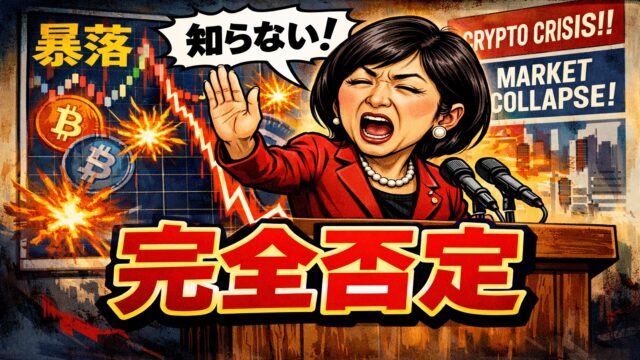
The turning point occurred on March 2, 2026, when Prime Minister Sanae Takai posted on X, stating that she had no idea about this token, that her office had not been informed, and that she had not given approval.In other words, although the name had been used, she clearly denied any involvement.
For a serving prime minister to directly deny a cryptocurrency project is extremely rare. This statement caused the price to plunge. Some reports say it fell more than 70–80% from the peak, marking the burst of a short-term bubble.
Here’s a question to pose again.Even if something has no underlying value and rises dozens of times, can we really call that an increase in asset value?
?What happens when celebrities get involved
Another focus of this incident was how celebrities were involved. For example, Mizoguchi Yuji (NoBorder), who is said to have introduced the project, is noted as having initially indicated or been perceived to be communicating with Takai’s side, but those expressions have since been deleted or corrected.
Also, Kyoto University professor Fujii later explained that he thought it was something like an in-app points mechanism and that he learned later it would be tokens widely circulating in external markets. Furthermore, the supporter group “Team Sanae” initially shared posts in a sympathetic manner, but later deleted the posts and explained that they had been advised that it was a different mechanism from crypto assets.This sequence reveals a pattern: “explanation → celebrity diffusion → general participation.” First, a project is launched by someone; then a celebrity emerges who believes the explanation and spreads it; finally ordinary users join.
In the cryptocurrency world, this pattern has repeated many times.
It creates buzz, attracts attention, and prices rise. When problems emerge, those involved distance themselves. Haven’t you seen this pattern somewhere?
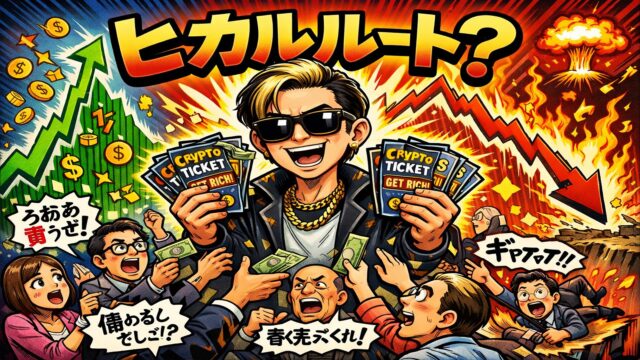
?Commonalities with Hikaru-type projects
Looking at this incident, many may feel they’ve seen a similar pattern before. In fact, there are many comments that it resembles cryptocurrency and NFT projects involved with the YouTuber Hikaru. Their characteristics include: highlighting celebrity or influencer involvement,strongly promoting potential and possibilities to spread rapidly on social media and videos.
Then funds flow in, prices surge, and when troubles or suspicions arise, prices plummet. In cases involving Hikaru’s crypto or NFT projects, attention was drawn by the influencer’s posts, followed by explanations like “I didn’t know” or “the explanation was different.”
Celebrity involvement makes the project appear trustworthy.This psychology makes many people lose calm judgment. The Sanae Token fiasco is said to share this pattern to some extent.
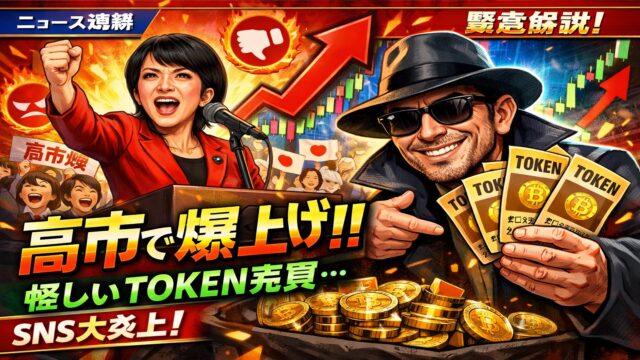
However, there is a major difference. In Sanae Token, the name used was that of the current prime minister, Sanae Takai.With politics and cryptocurrency, an extremely sensitive topic, it escalated to a social issue with Financial Services Agency investigations and nationwide news coverage.
?Was Team Sanae an accomplice?
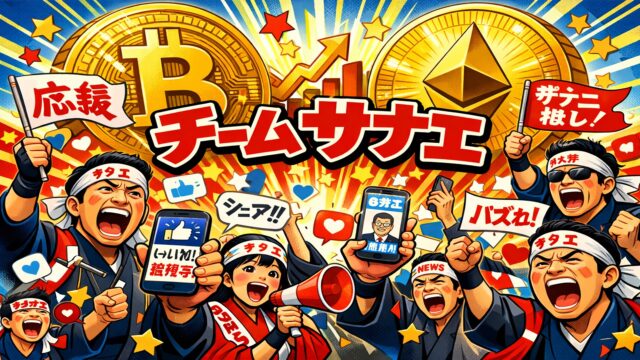
To answer briefly,there is no confirmed evidence that Team Sanae as an organization exists to commit fraud.It is a political support group organized by volunteers centered in Nara, engaging in street campaigns with the national caravan “Veanas-gou.” It has continued its activities, and as of 2026, the X (formerly Twitter) account has more than 160,000 followers, indicating its influence.
Moreover, it operates a shop selling official goods like hats and T-shirts, using the proceeds as activity funds. However, in the Sanae Token controversy, immediately after the token’s issuance on February 25, reposts were made in support of NoBorder, and posts were made indicating collaboration with Veanas-gou, which was criticized.This dissemination gave the impression that “the official support group for Prime Minister Takai was backing the token,” thereby reinforcing a narrative of an officially approved project created by the token’s side.
?Can anyone create a token?
Cryptocurrencies like Sanae Token can be created easily. By using dedicated services, you can issue a token in a matter of minutes to a dozen minutes. What’s needed is to input the token’s name, symbol, image, supply, and other basic information, plus a Solana wallet and a small fee.In other words, technically, individuals can create such tokens quite easily.
However, “easy to create” and “a trustworthy project” are entirely different issues. Confusing the two increases the risk of trouble.Since transaction histories on the blockchain are public, tracing the flow of funds is possible.In some cases, investigation agencies or authorities may analyze addresses that profited.
On the other hand,Japanese people historically suffer heavy losses with Bitcoin, and the concepts of “token” and “coin” are not yet fully understood, so topics and name recognition can drive funds in. This environment is pointed out as a backdrop for recurring speculative projects.
?The fact is you’re late when you hear a sweet deal
When整理ing the Sanae Token controversy, several elements overlapped: a meme coin using the name of the serving prime minister Takai, and a rapid surge immediately after issuance. Further, people involved in introducing the project, Mizoguchi Yuji (NoBorder), Horie Takafumi on a YouTube program, and Kyoto University professor Fujii Satoshi, among others,whose names all appeared together drew rapid attention.
Moreover, the supporter group “Team Sanae” spreading posts contributed to the impression of an officially approved project. But after Prime Minister Takai herself clearly denied involvement saying she had “no knowledge” and “did not approve,”the situation changed drastically and prices fell sharply.
This structure is not uncommon in the crypto world, but its social impact became notable because it intersected with Japanese politics. At this time, there is no confirmed illegality or responsibility, so it is necessary to monitor investigations by financial authorities and future explanations.
完全ノーリスクのトレード・シミュレーターで自由に練習&検証!
ワンクリックFXトレーニングMAXの詳細ページ