

What is the real intention behind Iran issue—an encirclement strategy by China?! How far will President Trump's America First policy go?
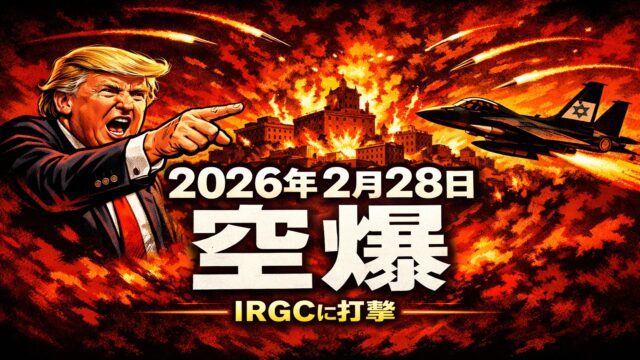
Is the target really Iran alone? Or is there a larger picture behind it? On February 28, 2026, the Trump administration in the United States carried out a large-scale air strike on Iran in cooperation with Israel. The targets were military facilities, nuclear-related sites, and the leadership centers.
As a result, it was reported that Supreme Leader Ayatollah Ali Khamenei (86) died, and serious blows were dealt to the IRGC (Islamic Revolutionary Guard Corps).Iran declared a 40-day mourning period and vowed retaliation. Tensions have spread to Iraq, Lebanon, and Gulf countries.
Meanwhile, early-year attacks on Venezuela, intensified defense of Taiwan, semiconductor restrictions, and renewed tariffs against China are proceeding in parallel. What would it look like if we connect these into a single line rather than viewing them separately? How do you feel about it? Let's calmly sort it out in order.
Selling well!A high-functionality trading practice tool that feels like the real thing?9,800 yen?
?FX New Generation: One-Click FX Training MAX
? Facts about U.S. and Israel's attack on Iran
On February 28, 2026, the United States (Trump administration) and Israel carried out a large-scale air strike against Iran's military facilities and nuclear-related sites. Washington described the aim as "nuclear deterrence," "deterring support for terrorism," and "regional stability," and Israel characterized it as a "preemptive security measure."
As a result of the attack, Ayatollah Ali Khamenei was reported dead, and multiple IRGC bases were destroyed.Iran declared retaliation, and pro-Iranian militias in Iraq and Hezbollah in Lebanon have intensified their activities. U.S. military bases in Gulf countries are also under tension.
However, no ground troops have been deployed. The focus has been on airstrikes aimed at decapitating leadership. It is unlikely that the regime would collapse immediately from airstrikes alone, and anti-regime factions are fragmented.The IRGC is maintaining control, and a sudden regime change seems unlikely in the near term.
? Iran’s position and relations with China
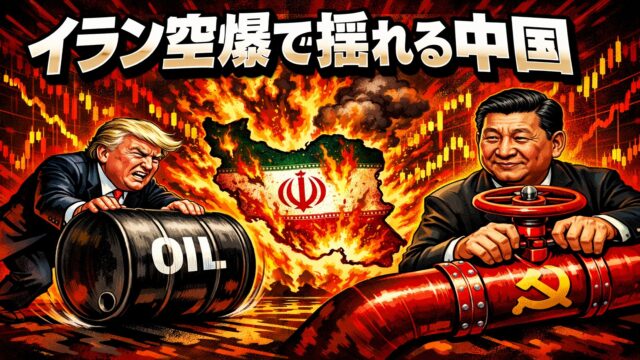
What becomes important here is the relationship with China. China is Iran’s largest customer for crude oil and has imported large volumes, including sanction-avoidance routes. Discount crude oil has helped sustain China’s manufacturing cost competitiveness. Iran is a member of the Shanghai Cooperation Organization (SCO) and participates in the BRICS expansion. It is also a key node in the Belt and Road Initiative (BRI) Middle East corridor.
For China, Iran is not just an oil-producing country but an energy supply source and a testing ground for reducing reliance on the dollar in settlements.If Iran’s oil exports were to falter, China’s energy costs would rise. Prolonged Taiwan contingency planning, military fuel reserves, and industrial costs could be affected. This is an element Beijing cannot ignore.
? Common points with Venezuela
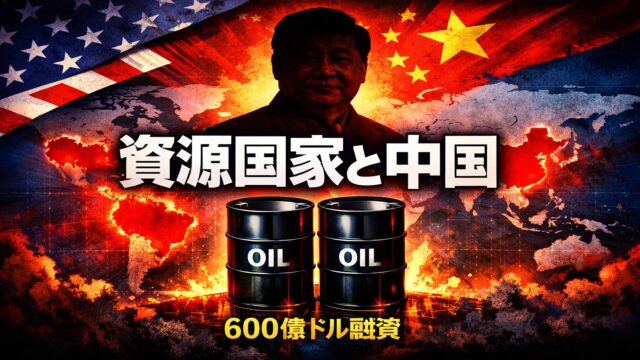
Venezuela was also a resource-rich country deeply tied to China. China provided roughly $60 billion in loans and strengthened ties through oil-collateral schemes. It was a base of China’s influence in Latin America. Iran and Venezuela are geographically distant, but they share commonalities.
Both countries lie on the fringe of China's energy and resource networks.Pressure on these countries by the United States can be interpreted less as a regional issue and more as a move to undermine China’s external leverage. Is this coincidence, or a calculated course? How would you judge it?
??️ Continuity of Trump administration policies
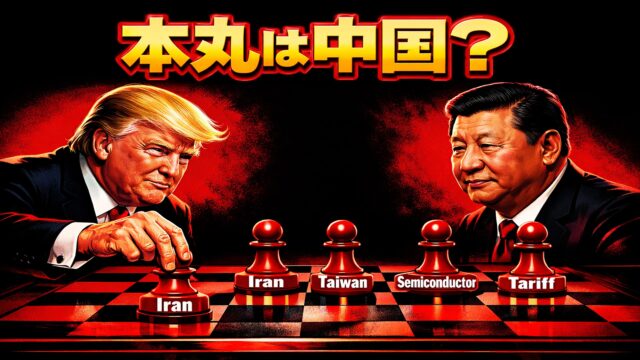
Iran airstrike, Venezuela pressure, strengthened Taiwan defense, semiconductor export restrictions, and renewed tariffs against China. Taken separately they seem sporadic, but viewed as a single axis of China-facing strategy they become coherent.The Trump administration advocates "America First," but that does not necessarily equate to isolationism.
It takes a hard line against perceived security threats. While citing nuclear issues, the real impact extends to China’s energy procurement network. Is Iran or Venezuela the ultimate target? Or is it to indirectly curb China’s long-term rise? This is the focal point.
? Sectarian conflict and risk of proxy wars
Of course, the expansion of proxy wars between Shia and Sunni groups is a realistic concern. Movements by Hezbollah, Houthis, Iraqi militias, etc., continue. In reality, attacks are confirmed not only on nearby U.S. bases in Iraq but also in urban areas, blurring the line between military targets and civilian areas. Gulf countries are wary of Iran, and tensions are rising in multiple areas including Israel, southern Lebanon, and western Iraq.If these tit-for-tat attacks continue, the conflict could spill over across the Middle East.
However, viewing this at the tactical level, strategically it would push Middle East instability up, increasing crude oil prices and China’s import costs. The U.S. has relatively high energy self-sufficiency, making it easier to maintain an advantageous position. The expansion of sectarian clashes and attacks on urban areas could, as a consequence, act as part of great-power competition. Is this intentional or a side effect? It requires careful consideration.
? Where is the exit
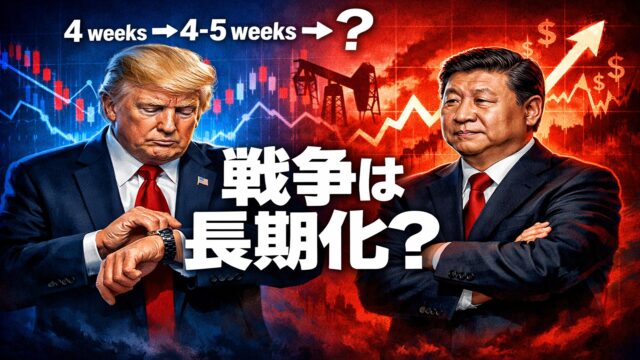
The exit is not determined solely by Iran’s succession issues. How the IRGC moves, how far China is involved, how much Russia supports, and where oil prices stabilize—all are variables. President Trump initially said it would end in four weeks, but later adjusted to "four to five weeks," and then "it may take longer." The prospect of a short-term resolution is (now) uncertain.
If China steps in to actively support, the conflict will widen. If China stays distant, Iran risks deeper isolation. Moreover, if fighting drags on and guerrilla warfare continues, it could drive up military spending and energy prices, affecting the U.S. economy.Prolongation offers few clear advantages and could ripple through market sentiment and the dollar.Beyond Iran’s succession, China’s strategic calculations and impacts on the U.S. economy are at stake.
? Where is U.S.-China confrontation heading
The Iran airstrike is not an isolated incident. Starting from the fact of military action by the U.S. and Israel against Iran, regional tensions have escalated. But its effects are not limited to the Middle East. Iran is part of China’s energy supply network, and Venezuela was likewise deeply tied to China.
Taken together, there is a suggestion that the core lies in pressuring China’s long-term strategic capabilities.Rather than how Iran changes, we should watch how China’s energy procurement, endurance, and geostrategic choices evolve. Should we view this as a regional conflict or as a facet of great-power competition?
President Trump has repeatedly stated a good relationship with President Xi Jinping, but there is also a view that pressure on Venezuela and Iran is part of a strategy aimed at China.Prime Minister Takai (Kishida) will visit the U.S. and there is a planned meeting between President Trump and President Xi, but concrete details have not been revealed. What negotiations will take place there? How do you view this U.S.-China confrontation?
Practice and verify freely with a completely risk-free trade simulator!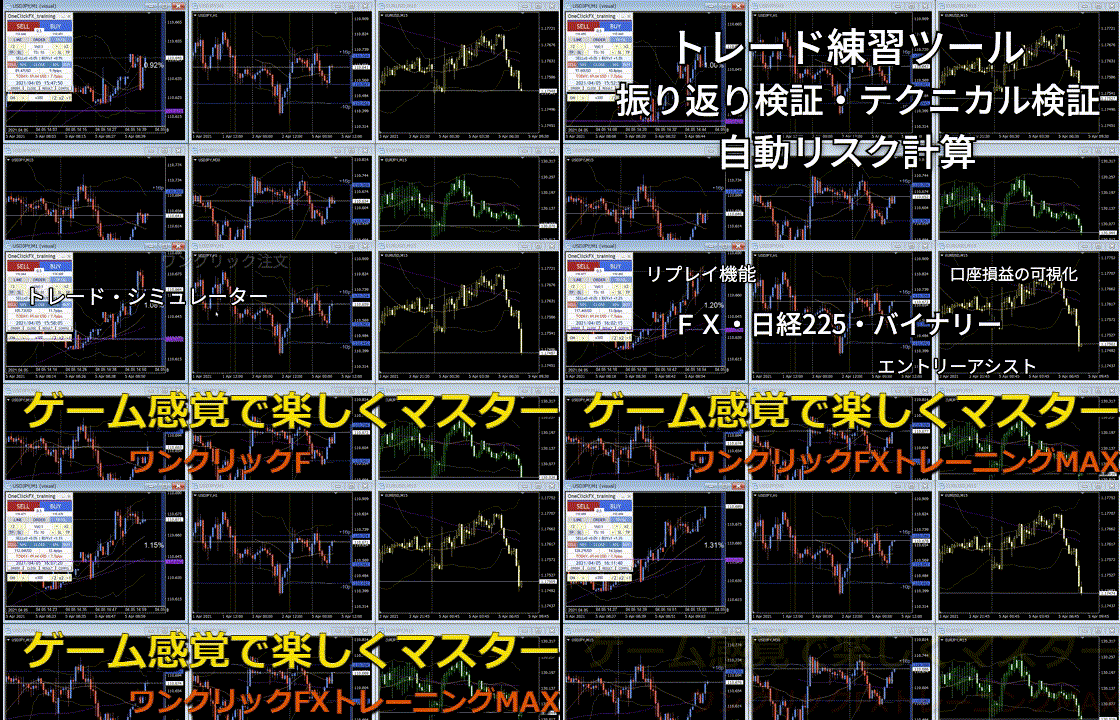
Details page for One-Click FX Training MAX