

?The old media dancing over Prime Minister Takashi's catalog gift problem and opposition lawmakers! Is the 122 trillion yen budget, defense spending increase, and crisis management investment review sufficient?
“What is really worth debating, the 30,000 yen catalog gift or the 122 trillion yen budget proposal for fiscal year 2026?” The 2026 budget proposal is facing ongoing battles over passage within the fiscal year.In the midst of this, the catalog gift issue has surfaced.
Last year, a similar uproar occurred in the case of former Prime Minister Ishiba. Nevertheless, why did Prime Minister Takaichi provide materials that are so clearly subject to criticism?Old media and some lawmakers naturally keep asking questions about catalog gifts.
However, the budget proposal includes important structural elements such as increased defense spending, multi-year investment frameworks, growth investments, and crisis management investments.There are fundamentally many points that should be deliberated.With limited deliberation time after the elections, isn’t there a budget item that passes without thorough scrutiny? Let’s consider this from various angles.
Selling well!A high-function trade practice tool as if in a real game?9,800 yen?
?FX New Generation: One-Click FX Training MAX
?Comparison with past cases and double standard
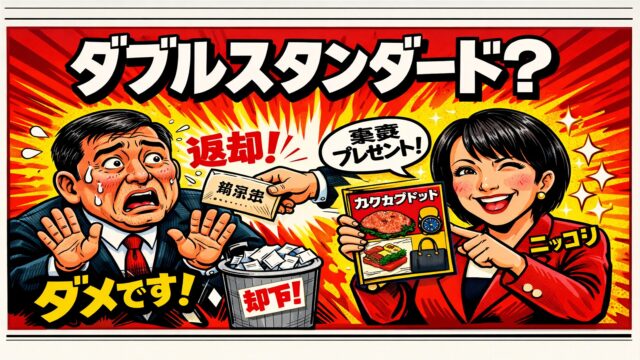
Last year, former Prime Minister Ishiba distributed 100,000 yen gift certificates to 15 new lawmakers, and all of them were returned. It was framed as individual donations between individuals and raised questions about political activity. Subsequent reporting also stated,that giving out gift certificates in this manner is a common practice on Capitol Hill and not particularly unusual.
What differs this time is the legal framework about “individual vs. branch.” Still, the question of “why now” remains. Given the Ishiba case’s backlash, what is the meaning of expanding to about 315 people?Criticism could easily have been anticipated.
Therefore, it is natural to read into it as possibly having ulterior motives. From here, after organizing the facts, we will deliberately enter the realm of hypothesis.
?Is it a decoy tactic or truly reckless?
One possibility is that, with the budget deliberations approaching, this is a tactic to avoid the core questions. The FY2026 budget proposal exceeds 122 trillion yen, the largest ever. There is also a push to expedite deliberations, and the ruling party is strongly aiming for passage within the year.
If the opposition spends time questioning the catalog gift issue,that could push essential issues like the consumption tax, defense spending, and multi-year budgets into the background.From the ruling party’s perspective, it would be logical to claim that “the opposition wasted time with low-level criticisms.”
However, this is also a very transparent scenario.While a simple extension of the post-election celebratory culture might be the easiest explanation, how far is it rational for the ruling party, which holds an overwhelming majority, to deliberately create a flashpoint that could risk their approval ratings? For example, it could be a distraction to prevent full discussion on the core issues.
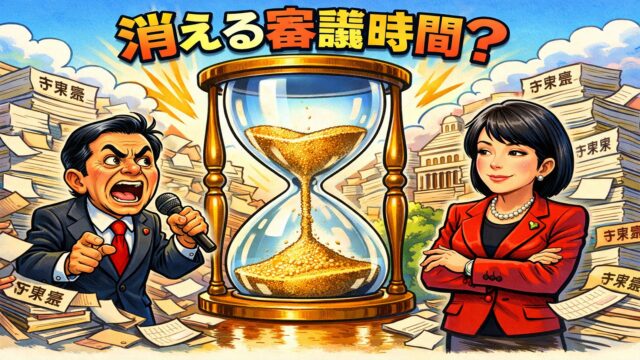
?Possibility 1: Create a situation where the opposition’s questioning time is “consumed,” and one can say deliberations were conducted formally
Here, the scenario foreseen isto ensure the opposition’s questioning time is fully secured, while later the ruling side can say the content was trivialand that the discussions did not move the needle.
- Gift-gift issue responses are relatively simple (legal issues “no problem,” “donations from a branch”)
- Long discussions may not change the conclusion
- Meanwhile, the budget deliberation time would be consumed
As a result, it would be possible to explain, “We gave questioning time,” “We created time for discussion,” and “Even so, the opposition did not hit the core issue.” In the rush to pass the budget within the year, crafting a “we followed the procedures” justification is a plausible angle.
?Possibility 2: Do not want to delve into defense spending increases and related measures
Increases in defense spending, its breakdown, equipment procurement, and related infrastructure are large in scale and closely tied to international relations.Especially when considering relations with the United States and long-term security strategies, in-depth questioning becomes a very involved debate.
- The appropriateness of the increase
- Sustainability of funding
- Mid- to long-term equipment plans
- Division of roles with allied nations
If focus shifts away from these major security debates toward a simpler issue like gift-giving,the details in the defense sector would receive relatively less attention.There are concerns that some matters needing internal quick progress might be included.

?Possibility 3: Embed “future” in multi-year budgets and growth investment frames
Multi-year budgets and crisis management and growth investment frameworks aredifficult to reverse once established as a system.
- This year may be modest, but could expand significantly in the next fiscal year
- Discretion expanded under the banner of crisis management investments
- Growth investments encompassing a wide range of projects
Such structural designs, if debated thoroughly at the early stage, can be forced to be revised; if passed formally, they become a fait accompli. Therefore,there is a possibility that the motive is to predefine multi-year frameworks first, which is another view.

?Possibility 4: Use up the media’s coverage window
Television and newspaper coverage time is limited. If there is a topic that is easy to attack and emotionally engaging, time will inevitably be allocated to it.
- Constitution amendments
- Consumption tax and refundable tax credits
- Fiscal reconstruction and active fiscal policy balance
These topics require time to explain and are not easy to gauge in ratings. In contrast, discussions about “catalog gifts,” “30,000 yen,” and “decorated paper” are more approachable.
As a result, if Old Media’s coverage frame focuses on this issue, complex policy debates and long-term national design discussions can fall into the background. Some may think there was an idea to deliberately provide easy-to-debate material to divert media attention.
?The factual relation of catalog gifts and the basis for “legality”
The distribution is described as coming from the Nara Prefecture District 2 chapter, where Prime Minister Takae is the chapter head. She expressed on X (formerly Twitter) that the gift was to acknowledge victory and to be useful for future parliamentary activities, and she stated that no political party funds were used.In the House of Councillors representative question, she also answered that there is “no legal problem.”
Under the Political Funding Control Act, donations from individuals to individual politicians for political activities are prohibited, but donations from political parties or party branches to individual lawmakers (including in-kind items) are permitted. Takae’s side has positioned it as in-kind donations from the branch, andthe government and ruling party’s unified view is that “legally safe.”
However, criticisms are clear. The gift noted “Congratulations Takae Sanae” only for the individual’s name on the noshi paper, with no title for the branch head. The total amount is nearly 10 million yen. The inclusion of high-grade beef or hotel vouchers, and the coherence with “useful for political activities,” are points of contention.Moreover, given the LDP’s ongoing issues surrounding “politics and money,” some voices call this act rash.Within the party, there are also voices calling it reckless.

?The mechanism of catalog gifts and “un-ordered” gifts
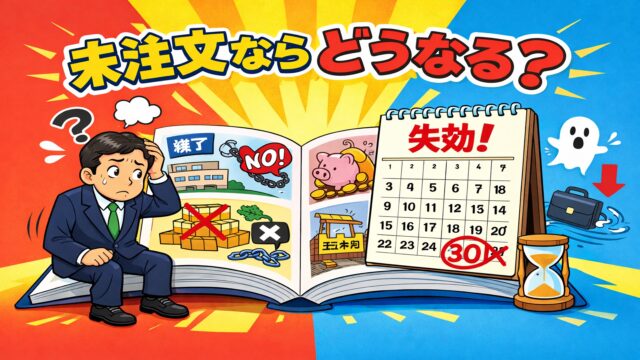
Catalog gifts are a pre-paid payment instrument, where the giver pays the full amount in advance. The recipient must order within the deadline; otherwise the right expires, and in principle there is no refund. In other words, if the lawmakers do not place orders, that portion becomes a real loss for the branch. In the Ishiba case, everyone returned them, but this time it is a scale of 315 people, so it is not easy to track everyone’s response.If it becomes a problem, some lawmakers may distance themselves by not ordering.
Conversely, some lawmakers may legally decide that there is no problem and order as usual. In other words, whether to accept or not is at each lawmaker’s discretion. The system is designed to allow such choices. Will the media ask lawmakers whether they ordered them?
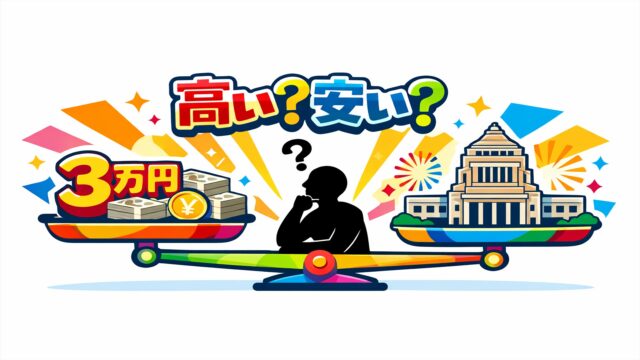
?Is 30,000 yen expensive or cheap?
Here, the debate splits into two camps. Public opinion tends to view a total of 10 million yen as high, and not appropriate for honoring staff in an era of rising prices. Some street surveys and polls have reported that a majority consider this an issue.
On the other hand, some voices say that 3 million yen per person is rather modest.In Nagatacho’s gift-giving culture, orchids or celebratory gifts can cost tens of thousands to over 100,000 yen. Would a CEO giving 30,000 yen to 300 people be considered expensive? It might even be seen as not expensive enough.
Conversely, how would you feel if Prime Minister Takae’s catalog gift were 3,000 yen?There is also a point that comparing Japan’s top leader to a typical boss may be inappropriate.
?A perspective that questions the “core” that no one is talking about
This article remains a speculative interpretation. As of now, there are few commentators openly pursuing such deep analyses. Media and opposition focus on surface questions like “Is 3万円 expensive?” or whether the sense of money is off. Yet is that truly the core? Why would such a controversial topic be pursued at all?Some people think it is unlikely Takae’s camp is so naïve as to do this.
To present an extreme hypothesis, perhaps some underlying direction on labor policies or immigration is being quietly shaped. Or there may be developments in the framework for defense or growth investments that will bind the future.Of course, these are mere conjectures without evidence.
At least one thing citizens can do is clear. Do not be swept away by media rhetoric, do not unconditionally trust the ruling party’s explanations, and pay attention to what is truly the core and where time is being spent.Democracy does not end only on Election Day.How do you view this controversy?
Practice and verify freely with a completely risk-free trade simulator!
Details page for One-Click FX Training MAX