

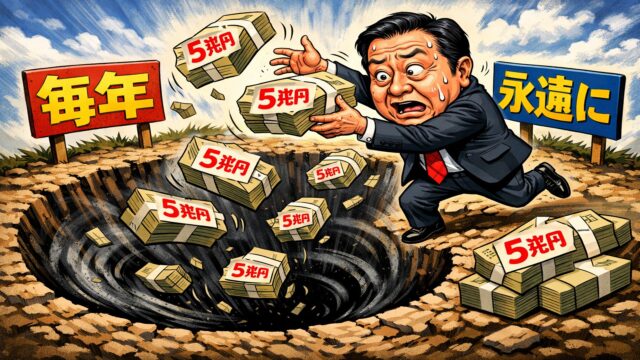
What about a zero-consumption tax funding source: a "5,000 trillion yen Japan Fund"—a dream-like pledge where 5 trillion yen spontaneously wells up every year at 1% interest?!
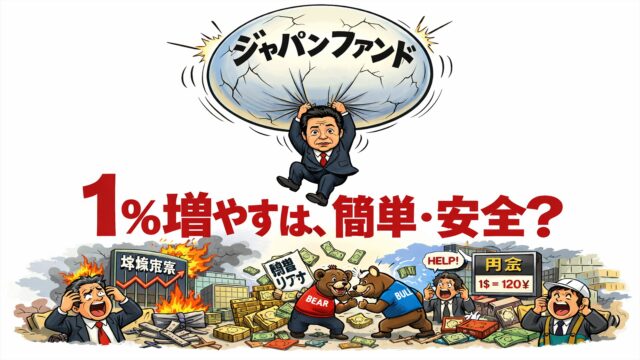
“If you simply increase 500 trillion yen by 1%, the consumption tax on food will be permanently zero.”If such an easy method to create revenue were possible, there would be no need for tax increases or fiscal policy debates.
For investment beginners, it wouldn’t be surprising if someone thinks, “Just invest 1% more in the all-in-one fund (Orkan) and you’re set.” In reality, on SNS and in comment sections, claims like “it’s safe because it’s a fund” or “it’s easy since it’s only a 1% increase” are being posted shamelessly.
The very idea of anchoring expected gains, which can go down when markets are poor, as the foundation of a permanent tax system change, deviates greatly from the basic principles of national finances, and the fact that this is openly stated as a party platform by the center-right reform alliance is already abnormal.
Why the “1% myth” does not holdLooking at the contents one by one reveals harsh realities that cannot be filled by wishful thinking.
?5 trillion yen per year forever required? The heavy reality of “permanent zero”
First, organize the basic numbers. The consumption tax revenue from food (with the reduced tax rate at 8%) is estimated at about 5 trillion yen per year in the Finance Ministry’s baseline.If this is made permanently zero, there would be a need for a stable revenue source that can continuously fill 5 trillion yen every year, regardless of economic conditions.
For temporary subsidies or time-limited measures, it may be possible to rely on government bonds issuance or fund depletion. However, since a “permanent zero” is being pursued, a stable annual income is assumed. This is the starting point for the discussion.
?That 500 trillion yen, whose money is it? A plan to put all pensions, foreign currency reserves, and the Bank of Japan together
This “about 500 trillion yen” does not involve creating new taxes or issuing government bonds. It describes reorganizing assets already owned by the government and public sector.The main breakdown is: public pension reserves (GPIF management portion) about 250 trillion yen, Foreign Exchange and Foreign Currency Assets (FOREX reserves) about 180–200 trillion yen, and BOJ-held ETFs about 70–90 trillion yen (market value).
In total, it exceeds 500 trillion yen. The argument is that by moving from siloed management to integrated management and utilizing GPIF know-how, returns could be improved by about 1% compared with the current situation.

?1% is not magic! 500 trillion yen is the size that can shake the market
Here, the important thing is how to interpret the “1%” figure. For individuals investing hundreds of thousands of yen in index funds, a 1% fluctuation is not unusual. But a scale of 500 trillion yen is no longer a participant in the market; it becomes an entity that can influence the market itself.If this much funds move all at once, front-running buying, forced selling, and price volatility are inevitable.
In many cases, large inflows push prices up, which then leads to profits-taking by existing holders.As a result, the anticipated returns may not be achieved, or may even turn negative.Furthermore, public fund management, including GPIF, is already designed to be efficient and low-risk on a global scale. Adding a stable 1% on top of that is considered by experts to be extremely optimistic.
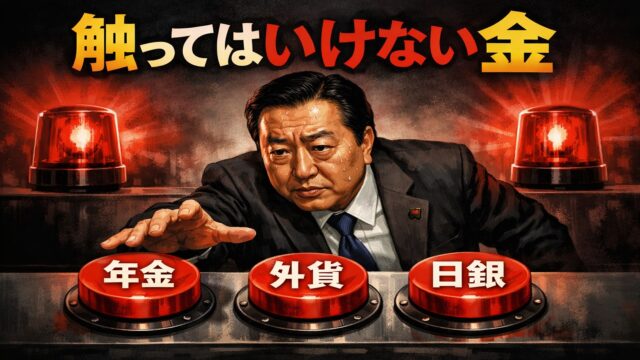
?The danger of touching unthinkable money
Pension reserves are entrusted assets to stabilize pension benefits for current and future generations. Using these to cover consumption tax cuts would likely provoke strong backlash such as “pension privatization” and “pension robbery.”FOREX reserves are safety devices for currency intervention and financial crises. Increasing riskier investments could undermine the yen’s credibility and Japan’s international reputation.
BOJ ETFs are byproducts of monetary policy and are normally intended to be reduced or sold gradually from the market. If the government uses these as a revenue source, it would raise serious concerns about compromising the BOJ’s independence.
?Experts冷静に: “Too optimistic,” “Institutionally impossible”
Major media and experts, including JBpress, Tokyo Shimbun, and Nihon Keizai Shimbun, generally respond cautiously or negatively to this plan.Criticisms include questions about feasibility, excessive optimism, and lack of long-term stability; some go further and say it ignores reality or is structurally flawed.What is common is the recognition that “public assets exist” and “they can be used as a permanent revenue source” are entirely different issues.
?Why people are misled? The dangerous misconception that “funds are safe”
There is a clear reason this policy gains some support from investment novices.“Can reduce taxes without raising them, “use dormant money effectively,” “funds look safe”and similar plain, attractive phrases line up. In reality, however, a fund is merely a container, and safety depends greatly on its contents and investment goals.
Investment gains are only expected values and cannot be a guaranteed, permanent source of income for an enduring policy.Many experts are concerned that this fundamental premise is not sufficiently shared as discussions progress.

?The danger of this becoming a party platform
The very fact that such a simplistic idea, which even laypeople might come up with, is publicly listed as a party platform after review is abnormal.Reliance on market fluctuations for a permanent tax change is fundamentally inconsistent with the principles of national finances.Policies that provide exemptions or conditions, even for tax cuts, are more realistic than trying to rely on market-based returns.
If permanent zero for food consumption tax is pursued, it is necessary to show how a definite revenue source will be secured, rather than words that appeal to fund management or yield-seeking.This promise, made without addressing the discussion, goes beyond saying “easy to say, very hard to implement” and risks challenging common sense in policy.
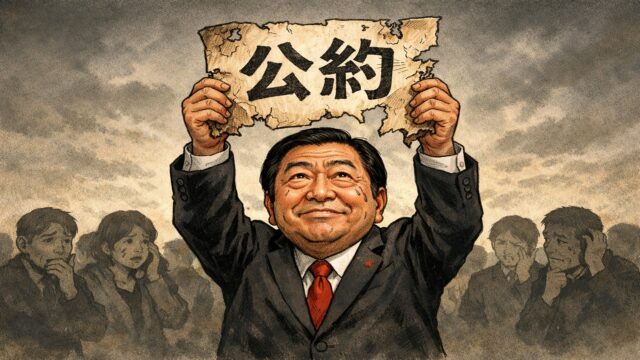
?If you don’t understand, better not invest
Investing is not about talent or instinct, but at least a basic level of understanding is necessary.If you cannot break down the mechanism and calmly interpret numbers, you are prone to misjudgments in the market.
In that case, instead of forcing repetitive buying and selling, it would be healthier and safer to choose systems like積み立てNISA or mutual funds that help build wealth without requiring meticulous personal planning.Choosing such systems that automatically accumulate assets will be a sound and safe option in the end.
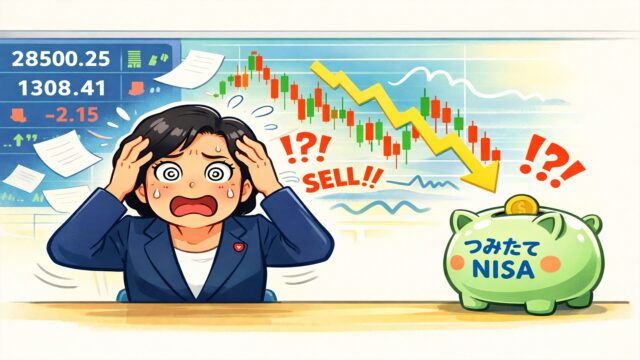
?Voters will judge with a strict eye
Even if this plan is framed as not absolutely impossible, in reality its feasibility as a policy is extremely low. When you calmly add up political cost, investment risk, and the difficulty of changing the system, it’s almost certain that it will not be realized.If you come into power, it is highly likely that you will be forced to revise it into a time-limited measure, scale it down, or see it fail due to funding shortages.
Ultimately, the responsibility to judge rests with voters. The media tends to emphasize easy-to-understand issues like “whether to cut taxes,” but the real question should be whether it can actually be implemented and whether the funding is feasible.Rather than being swayed by pleasant slogans, voters should demand politicians who can present policies that withstand institutional and numerical scrutiny.
In the end, it comes down to the election. Do not merely complain; think, decide, and definitely vote. Each vote helps reduce irresponsible promises and choose policies that face reality.
Completely risk-free trade simulator for free practice and verification!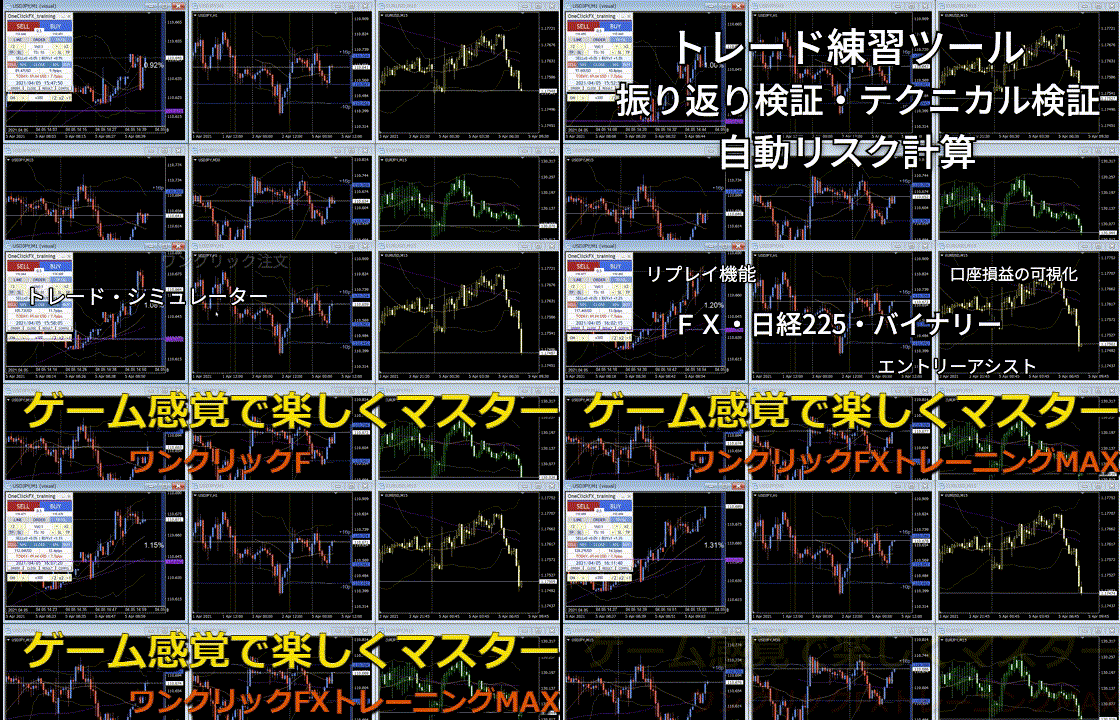
Details page for One-Click FX Training MAX