

The Challenge of the Yao City Administration! Why isn’t the 0% consumption tax moving? The opposing forces and their reasons
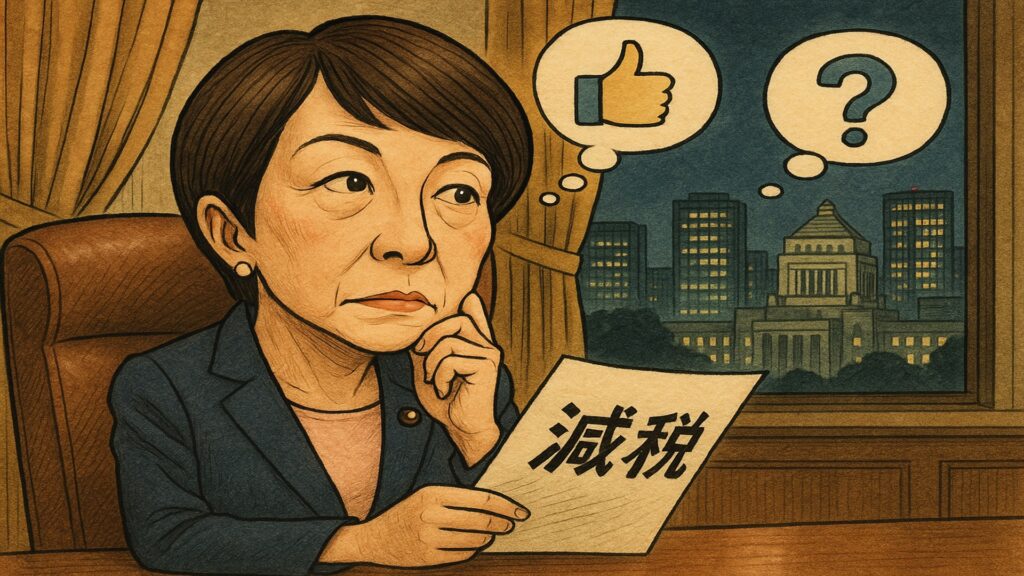
If Sanae Takaichi becomes Prime Minister, many expect that tax cuts like 0% for groceries or a general consumption tax reduction would advance quickly.Looking at social media, posts such as "not in line with promises" and "betrayed again" are increasing.
On the other hand, those against Takaichi are piling on with attacks, and on social media every day there is a clash of opinions.So, if Prime Minister Takaichi really tries, can she decide to reduce the consumption tax overnight like an American executive order?
When considering Japan’s political system, the dynamics within the Liberal Democratic Party, the Ministry of Finance, major corporations, Rengo and other stakeholders, the obvious reality emerges: it isn’t as easy as it sounds. How do you, readers, deal with this gap?
?“Even with Prime Minister Takaichi, Things Won’t Move” The SNS Expectation and Disappointment
First evident is the large width of expectations unique to SNS. Prime Minister Takaichi, during the party leadership race and Diet debates, repeatedly said that 0% for groceries and a cut in the consumption tax are not ruled out as options. From that stance, an image that she would “cut taxes immediately upon taking office” or “bend the Ministry of Finance to her will” has developed in some ways.
On the other hand, in actual governance, the prudent choice has been to prioritize nationwide cash benefits and supplementary budgets to counter inflation, postponing tax reform.Regarding this time lag, on social media, disappointment like “in the end they won’t do it” and “the Liberal Democratic Party is the same no matter who the Prime Minister is” are erupting, and anti-Takaichi accounts post daily clips and label-based criticisms.
?Consumption Tax Reduction Hitting the Structure of "Stable Revenue"
As mentioned in the original source, one reason why consumption tax cuts don’t advance is that the tax serves as a stable source of social security funding. It accounts for about 20% of total revenue, roughly in the mid-20 trillion yen range for 2022, and about 23 trillion yen when including both national and local governments. Moreover, Japan faces rapid low birthrate and aging, with social security costs projected to exceed 25% of GDP around 2040. The national debt already stands at about 1,200 trillion yen, and even a small rise in interest rates would increase debt servicing burdens.
In this context, it is natural that the Ministry of Finance and many economists are cautious about even temporary tax cuts measured in trillions of yen.Once a precedent is set to lower consumption taxes, political pressure to “make it permanent” or “not return to 10%” intensifies, and concerns grow that future rate hikes (the IMF recommends 15%) or maintaining the rate would become difficult.
In other words, the structure is “because it is a stable revenue source, it is extremely hard to reduce even once.” How do you evaluate this point?
?Exporting Companies and Refunds: The Hidden Resistance
Another key point is the relationship between export companies and consumption tax refunds. Since consumption tax taxes final consumption domestically, export goods are generally taxed at 0%. In return, exporting companies receive refunds for the consumption tax paid on inputs in the form of a “export refund tax.”
If the tax rate is 10%, the refund amount increases accordingly, becoming a multi-trillion-yen cash flow factor for major corporations like Toyota and Sony.Estimates suggest refunds related to exports may reach around 5 trillion yen annually, and for large companies, lowering the rate would be a marginal loss or slightly less profitable.
If groceries alone are 0%, the impact is expected to be in the hundreds of billions to tens of billions of yen, and for export-oriented manufacturing companies, the direct hit might be limited.Nevertheless, considering the industry networks among food manufacturers, wholesalers, and retailers, and the structure of political donations through major business groups (Keidanren), the incentive to maintain the status quo rather than cut taxes is real.With votes and donations entangled, how far can politics go? This is another point to watch calmly.
?Ministry of Finance and Liberal Democratic Party Internal Dynamics: Lessons from LGBT Legislation
In Japan, taxes can’t be changed by a single presidential order like in the United States. Modifying the consumption tax rate requires legal amendments, and consensus within the LDP is essential beforehand. Specifically, discussions occur in the Policy Research Council’s Tax Subcommittee and the Finance and Financial Affairs Committee, and government policy requires approval from the General Council.
Here, the Ministry of Finance exerts strong influence.From the perspective of social security and fiscal discipline, the Ministry of Finance has consistently been cautious about consumption tax cuts, and many LDP lawmakers lean toward the Ministry of Finance. Prime Minister Takaichi has previously taken a critical stance against forced votes and the bypassing of intra-party procedures regarding LGBT legislation. Therefore, if she becomes Prime Minister, she must be careful not to adopt a similarly forceful leadership style.
If she were to push through only by pressing the General Council to pass a consumption tax cut, it could lead to resentment not only from conservatives but also from fiscal hawks, potentially shaking the ruling coalition’s foundations.You can understand why there are calls for Prime Minister Takaichi to "do more," but balancing that with the party’s internal process is a key question.What level of risk would you personally take?
?Can the Opposition Do More Than Criticize and Present a Plan?
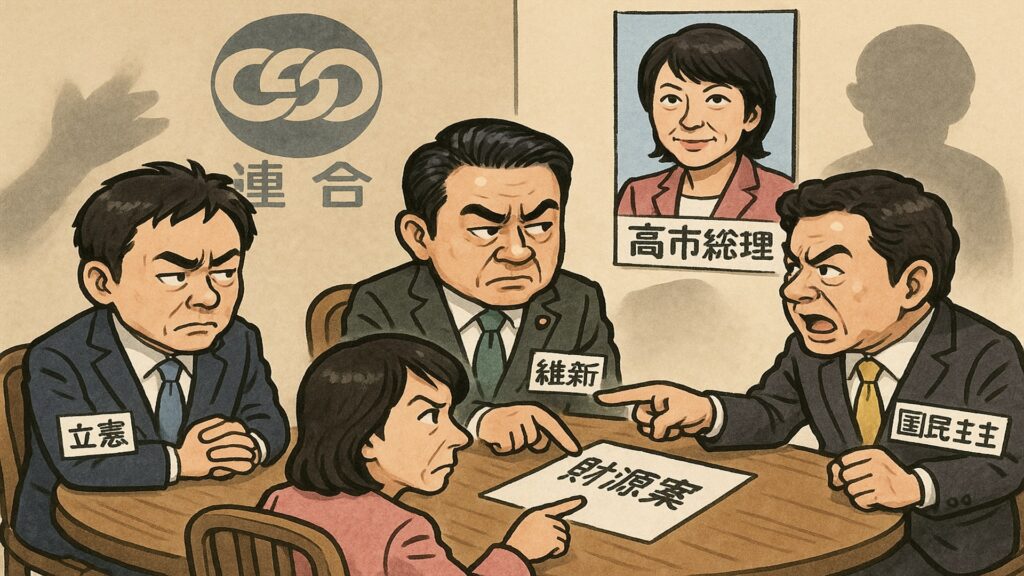
On the other hand, the opposition also faces challenges. Constitutional Democratic Party, Nippon Ishin no Kai, and Democratic Party for the People pledge zero groceries or a uniform 5% tax cut ahead of the House of Councillors election. However, simply criticizing “do the tax cut” or “Takaichi is violating her pledge” won’t move real politics.What matters is whether they can present concrete bills detailing how to fund the plan, how to align with social security, and how to persuade Rengo (labor unions) and major corporations.
Conversely, if the opposition organizes a package of “time-limited 0% for groceries,” “review of euro-dollar surplus and tax measures,” and “transition to benefits-laden tax credits,” and presents a bill that satisfies Rengo and some companies, it would give Prime Minister Takaichi material to persuade the Ministry of Finance.What the opposition is asked to do is not just criticize but present a realistically workable plan.What kind of plan would voters find satisfactory?
?0% for Groceries and a Democratic Settlement
Is there no path at all? Not necessarily. Extending the reduced tax rate to groceries that already have it is a relatively low-hurdle option within the system. Since the scope is limited, costs for registers and invoicing renovations would be lower than for universal tax cuts.Direct impact on export companies would be limited, and the immediate effect on households would be more pronounced.
Additionally, as a temporary measure for 1–2 years, funding could be drawn from surplus in special accounts or higher-than-expected tax revenues, with targeted tax credits for low-income households as a supplement.If both ruling and opposition parties bring such proposals to the table and discuss them publicly with the Ministry of Finance, Rengo, and major companies, that is the essence of a democratic process.
If you conclude, “The Ministry of Finance will oppose anyway,” or “Prime Minister Takaichi can change it alone if she is serious,” you abandon the process itself. What kind of settlement would you accept?

?Conclusion: Think in Terms of “Realistic Process”
It is true that there are high expectations for consumption tax reductions under Prime Minister Takaichi, and there is no need to negate those expectations entirely. However, given Japan’s system and political structure, the idea that “Prime Minister Takaichi can do anything” is not realistic.Consumption tax is a stable source of social security funding, and once lowered, future tax increases become extremely difficult due to institutional reasons.
The relationships among exporting companies, refunds, major business groups, the Ministry of Finance, and Rengo involve multiple actors, and a single prime minister cannot decide like a president.Therefore, the opposition is required not only to criticize but to draft bills that integrate funding and interest adjustments, and the ruling party must also deepen discussions from the perspectives of national life and democracy, not solely “Ministry of Finance convenience.”
Taking a bit of distance from the SNS-bashing battles and calmly considering “why is this difficult” and “how can we move forward” may ultimately protect our own lives. What do you expect from this process?
Completely risk-free trade simulator to practice and test freely!
Details page for One-Click FX Training MAX