

Translation (keeping HTML format, no extra line breaks): Prime Minister Takashi? The 80 trillion yen “Ishiba debt” being described as a nice recovery
As there are numerous reports of成果 from President Trump’s visit to Japan, the most notable has been the fate of the “80 trillion yen in U.S. investments.” This framework originated during the Ishiba administration, but during negotiations its contents remained vague.
After Prime Minister Sanae Takaichi took office, the framework was rebuilt, and a fact sheet was prepared with Japanese companies taking a proactive role, marking a major shift.What was once called Ishiba’s negative legacy is now turning into a new opportunity for the Japanese economy.This time, let’s整理 the history and current progress.
?The Ishiba Administration’s “80 trillion yen Promise”
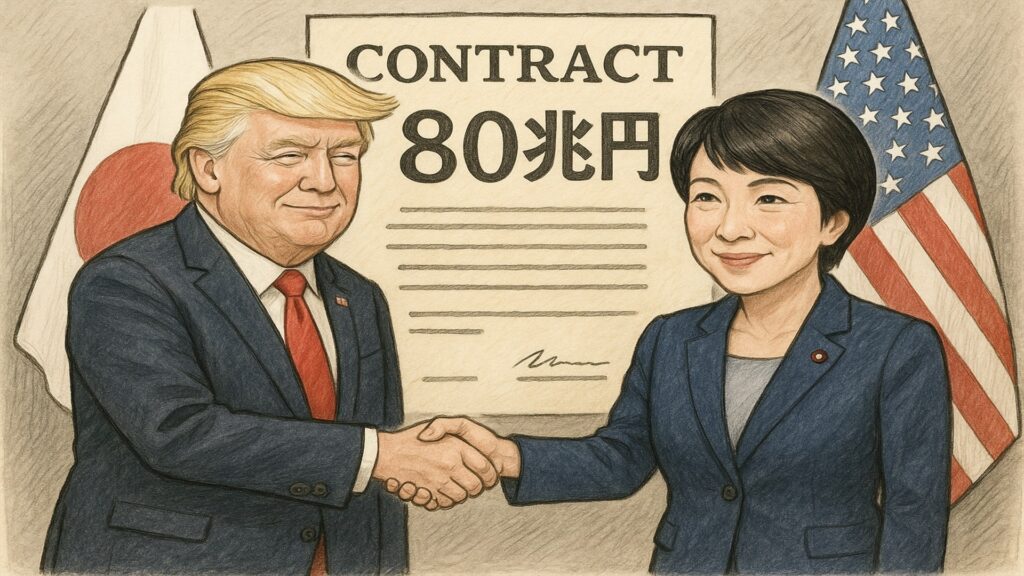
On September 4, 2025, President Trump signed a memorandum aimed at resolving trade frictions.Based on this agreement, Japan pledged to undertake about 80 trillion yen (roughly $550 billion) of investments in the United States.
Behind this was a political deal in exchange for removing automobile tariffs; the framework was created during the Ishiba administration, but its implementation was left to the succeeding Takaichi administration.
?21 projects shown in the fact sheet
According to the Ministry of Economy, Trade and Industry’s published “Japan-US Strategic Investment Cooperation Fact Sheet,” a total of 21 projects were anticipated, mainly in energy, AI infrastructure, critical minerals, and materials sectors.
The total is about 60 trillion yen, with the remaining 20 trillion yen to be added later.All of these projects involve Japanese company participation and are designed to be profitable,reflecting Prime Minister Takaichi’s emphasis on “protecting Japan’s interests” in negotiations.
?Negotiation revisions to protect national interests
Initially, under the Ishiba administration, concerns existed that the benefits would skew toward the United States. In response, Prime Minister Takaichi negotiated to ensure profitability for Japanese companies and technology transfer.
As a result, it was revised toward a near “50:50” model where benefits are shared equally rather than led by the United States.Additionally, government support was arranged to minimize corporate outlays and limit risk.
?60 trillion yen moving rapidly with Trump’s visit to Japan
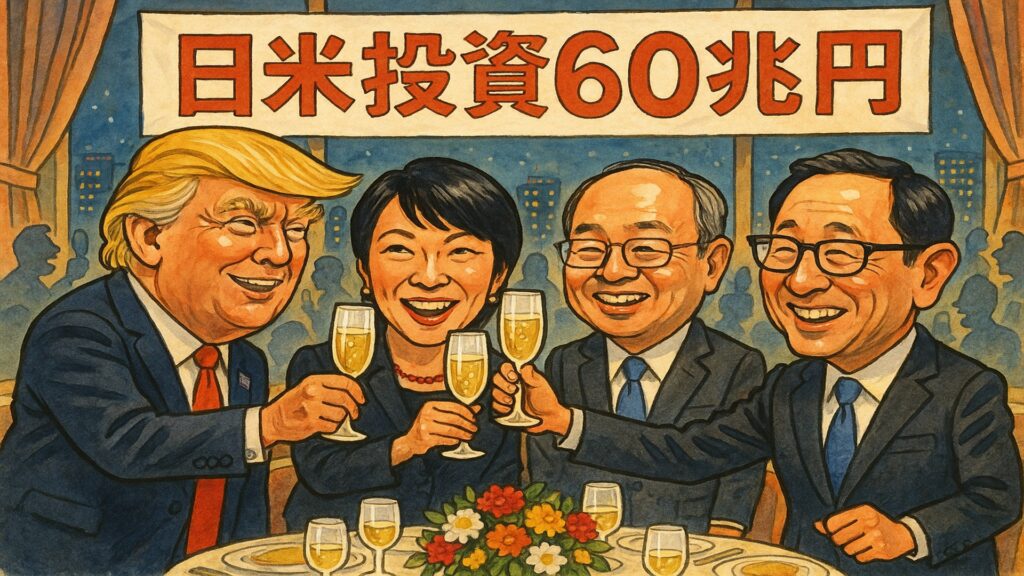
During President Trump’s visit to Japan, the two governments jointly announced a mid-term report on the fact sheet. It was reported that projects led by SoftBank Group, Hitachi, Mitsubishi Heavy Industries, Toshiba, and others had entered the “substantive agreement” stage.
At the dinner, executives from Toyota’s Akio Toyoda and Takeda Pharmaceutical attended, symbolizing private sector-Japan-U.S. collaboration.As Prime Minister Takaichi stated, this is a form of “supporting America with Japanese technology.”
?Challenges left by Ishiba administration and Mr. Akazawa’s responsibility
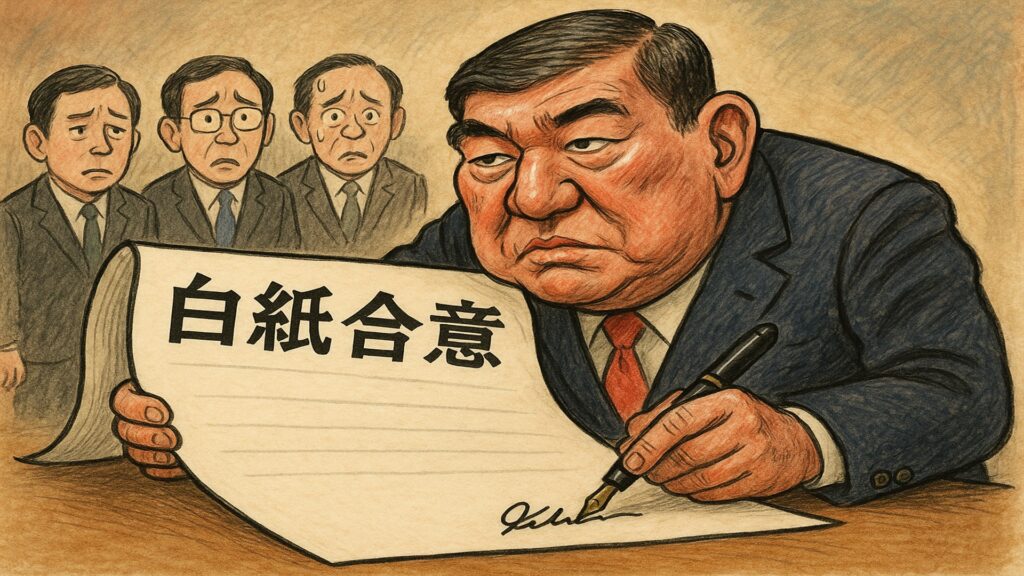
Nonetheless, the starting point was the Ishiba-era “blank agreement.” At the time, the minister in charge, Akizawa Ryoshō, signed without concrete projects or corporate involvement, leaving only the total amount decided.
Subsequently, the Takaichi administration organized the practicalities and finally rebuilt a framework with substance.In the current administration, Foreign Minister Motegi and Finance Minister Katayama Satsuki have taken the negotiation lead, while Akazawa as Minister of Economy, Trade and Industry remains in a formal role.
?Position in Japan-US relations
This 80 trillion yen investment is not merely economic cooperation but also a symbol of a new form of the Japan-US alliance.For Trump, it provides material to showcase expansion of investment from Japan domestically, and for Prime Minister Takaichi, it is highly valued as a diplomatic achievement that protects national interests while building trust.
In the diplomatic bargaining, this move turned Ishiba’s unstable promises into tangible成果, a true “nice recovery.”
?Summary: turning a negative legacy into value
Prime Minister Takaichi transformed Ishiba’s “80 trillion yen promise” into a set of concrete projects. This recovery demonstrates flexible negotiation in diplomacy and is expected to bring bright effects to the domestic economy as Japanese companies gain new opportunities in the American market.
Not everything is finalized yet, and future regime changes or shifts in international circumstances may pose risks.As progress and challenges continue to attract attention, it will be regarded as a major achievement of the Takaichi administration in terms of investment diplomacy that protects national interests. How do you evaluate this recovery?
Practice and verify freely with a completely risk-free trade simulator!
Details page for One-Click FX Training MAX