

?AI Prediction: With constant reductions, the opposition coalition goes seriously! With only a few rebels, could Tepu Saito (Tetsuo Saito) unexpectedly become Prime Minister?
Political currents can change in moments of surprise that no one anticipated. The current focus in the Diet, “reducing the number of lawmakers,” is one such example. It may seem like a dull reform, but behind the scenes, each party’s survival strategy collides, and speculations that could determine the fate of seats continue to unfold.
In AI-generated latest simulations, this reduction in the number of seats could trigger the withdrawal of the Komeito, strengthen the opposition bloc, and ignite dissent within the Liberal Democratic Party (LDP) among some members, revealing the potential for a rebellion within the party.Just a few votes shifting can shake the seat of power—a “numbers-driven comeback story” is quietly gaining plausibility in reality.
?Reality confronted by the seat-reduction
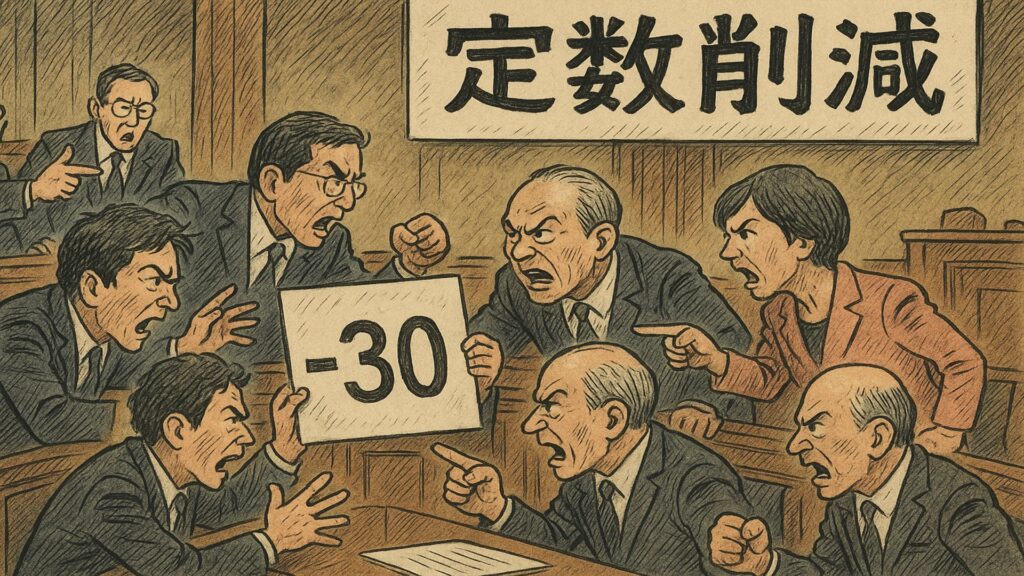
Reducing the number of seats is a reform that compresses the seats of smaller parties by decreasing the proportional representation quota. This hits hardest for the Komeito, the Japanese Communist Party, the Social Democratic Party, the Reiwa Shinsengumi, and the Democratic Party for the People with a higher proportional representation share.If the proportional seats in the House of Representatives decrease from 176 to 126, the proportional seats won by all parties would fall to two-thirds by simple calculation.
If the ruling bloc’s LDP and Ishin advance this reform, these parties would face a survival crisis. As a result, beyond “support or oppose the reform,” a unity for survival would emerge. In other words, a common enemy could unify the opposition.
?Komeito's withdrawal and the pressures behind it
Komeito unilaterally left its coalition with the LDP. Officially, the reason cited is issues related to “politics and money,” but some view that pressure from supporter groups and external organizations played a background role. During the talks, demands were raised to accelerate decision-making, and many lawmakers felt uncomfortable with the hastened progress.
In a situation that hardly qualifies as normal policy negotiations, many stakeholders wonder why such actions occurred.In terms of seat composition, Komeito currently has 24 seats, with 20 of them being proportional and only 4 from single-seat districts, indicating a high dependence on the proportional quota. If the proportional quota is reduced, roughly 7 seats are expected to disappear,and when considering the further impact of the coalition’s dissolution on proportional vote share, the effect becomes even larger.
?The numbers AI simulations reveal
The following seat configuration is assumed.
- Liberal Democratic Party: 191 seats
- Nippon Ishin no Kai: 38 seats (coalition with LDP)
- Komeito: 24 seats
- Constitutional Democratic Party of Japan: 148 seats
- Japanese Communist Party: 8 seats
- Social Democratic Party: 1 seat
- Reiwa Shinsengumi: 3 seats
- Democratic Party for the People: 28 seats
- Independents: 24 seats (assumed all invalid votes)
Of the 465 House of Representatives seats, a majority requires 233 seats. If no majority is obtained in the first vote, a runoff between the top two candidates is held by simple plurality.
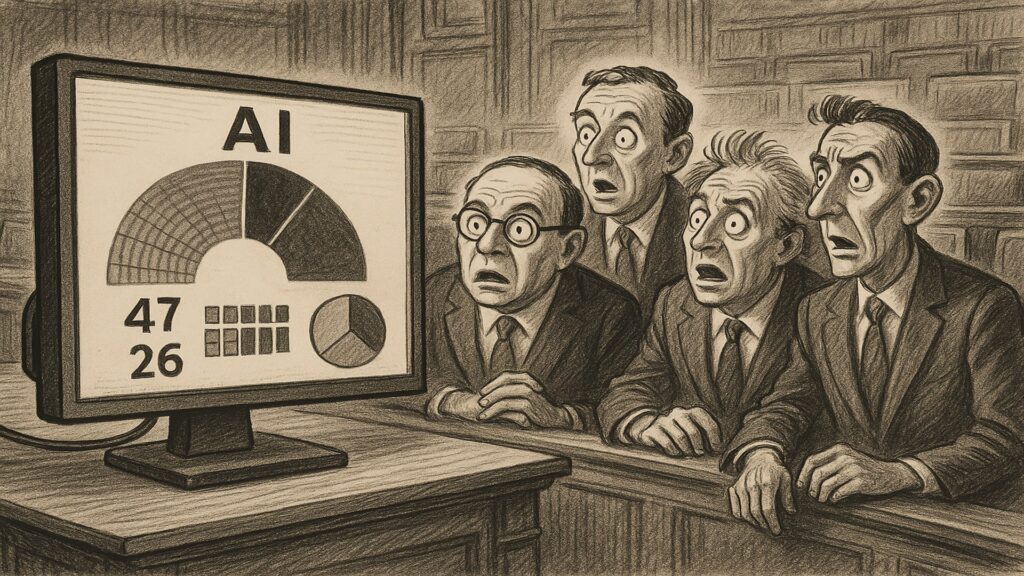
The LDP–Ishin coalition is fixed at 229 votes. The opposition bloc consists of Constitutional, Communist, Social Democratic, and Reiwa with 160 votes. If Komeito joins, it becomes 184 votes, and if Democratic Party for the People joins, it becomes 212 votes.Here, if just a few members defect from the LDP or Ishin, the outcome can change dramatically.
?The weight of 9 defector votes
According to AI calculations, if Constitutional, Communist, Social Democratic, Reiwa, Komeito, and Democratic Party for the People cooperate, the total would be 212 votes, approaching the 229 votes of LDP–Ishin. In this state, if the LDP or Ishin havejust 9 defector votesemerge, a comeback in the runoff would be possible. Moreover, if several abstentions or blank votes occur, the conditions for a comeback ease further.
Delicate factional fissures, dissatisfaction over ethics bills, and anxieties about district allocations could become fuel for a nine-vote defection, which is by no means unrealistic.In particular, Ishin is not a monolith and there is a possibility of casting blank votes. Blank votes could also come from the Osaka Prefectural Federation of the LDP.
?A “compromise-style leader” that all parties can rally behind
In this situation, AI deems the most realistic candidate to be Mr. Tetsuo Saitou. Although he is the Komeito leader, he maintains a moderate and neutral policy stance and would be easier for Constitutional, Democratic, and Democratic Party for the People to accept. It would also appear to the LDP as a “non-hostile moderate.”
Left-wing forces like the Communist, Social Democratic, and Reiwa could temporarily cooperate around the core issue of proportional representation cuts. The Democratic Party for the People has expressed cooperation with Komeito, so there is little resistance to forming an alliance. In other words, with Mr. Saitou,all forces could share voting behavior around the single aim of “anti-LDP reform”This single-focus compromise is the blind spot AI has identified.
?Fire in the LDP
Within Prime Minister Kishida’s reform path, opinions differ inside the party. Some lawmakers value deep ties with China or long-standing cooperation with Komeito, and the 26-year coalition history has complicated networks and trust. Of course, if policy confrontations become clear, they could be punished as party disciplinary violations, but there is also speculation that defector lawmakers might be welcomed by Komeito or other parties. Local organizations fear that proportional cuts will erode their base, becoming a source of internal anxiety.
AI analysis estimates the number of lawmakers at risk of defection could range from 20 to 30.Even if only a subset actually acts on their voting, exceeding the 9-vote threshold remains quite possible.
?Summary: The quiet conclusion suggested by “numbers”
AI projections are based on dense calculations rather than coincidence. As long as the reform path led by the LDP and Ishin continues, proportional reductions are inevitable, and the cohesion among smaller parties will likely strengthen. With Komeito leaving the coalition, the opposition will move toward “cooperation for survival,” and even a small defection could alter the seat dynamics. Supporting Komeito leader Saito may be a practical option to act as a buffer in the confrontation.
When Shigeru Ishiba was chosen prime minister in last year’s LDP presidential race, factions and forces briefly united against Kishida. There is no denying the possibility that this scenario could recur at the time of appointing the prime minister.
Politics moves more by numbers than logic. Under the current seat arrangement, if Komeito and Democratic Party for the People align, and nine votes defect from LDP or Ishin, the government could reverse—this is the core of this article.
Can you dismiss this hypothesis as impossible?
Practice and verify freely with a completely zero-risk trade simulator!
Details page for One-Click FX Training MAX