

Nikkei 55,000 Yen Scenario and Expectation for Prime Minister Takashi? or 高市総理 (Takaichi) - Neutral Verification of Yen Exchange Rate, Oil, and Prime Minister Nomination Risks
In tense moments, we want to calmly look at the data. We want to quietly lay out the current data to confirm the overall picture.As of October 20, 2025, the Nikkei Stock Average is approaching the 40,000 level, and there is a view spreading that “if Sanae Takaio is selected as prime minister in tomorrow’s (October 21) Prime Minister designation, the 50,000 level could be within reach.”
On the other hand, the exchange rate is around 151 yen and does not have the momentum of the summer surge, and WTI crude oil remains around the low 60s. These multiple factors interact to support stock gains while also providing material to gauge the balance of market movements. Because this is a moment where expectations are ahead, let's calmly organize the current stock price level, the impact of exchange rates and crude oil, and the year-end market scenario.
?Current status of Takai’s Prime Ministerial prospects and stock highs
We begin with organizing information. On October 4, Sanae Takai was elected as the new president of the Liberal Democratic Party, and there is a broad expectation that she will take office in the Prime Minister designation election on October 21. The market has priced this in, and the Nikkei Average rose sharply from the previous week’s close, closing at about 49,185, up 1,603 from the previous close and marking a record high.
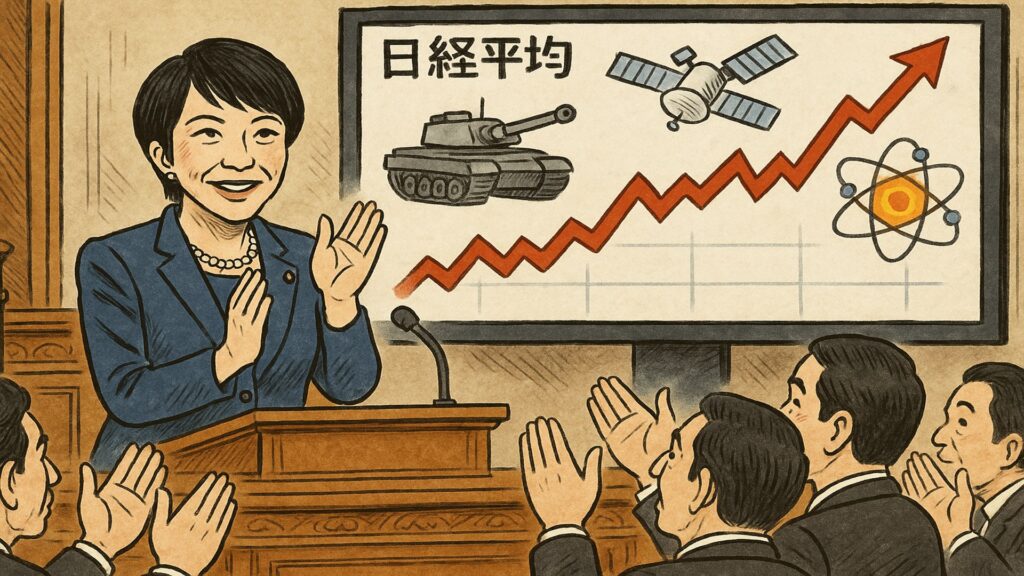
Behind this is the expectation for Takai, who advocates proactive fiscal policy and growth investment, with policy themes such as defense, space, and nuclear fusion acting as pillars of buying. Nomura Securities and Mizuho-related forecasts anticipate a range of 49,000–52,000 by the end of 2025, and the mood of anticipation is indeed present.However, the rapid gain of over 1,600 points also creates short-term overheating and room for profit-taking.
?Path of the yen
The exchange rate is in the early 150s. Compared with the summer around 152, the momentum is weaker, and one can feel that “yen weakness is not advancing.” As the U.S. Federal Reserve implements gradual rate cuts, the U.S.-Japan interest rate gap has narrowed, and as Bank of Japan Governor Ueda indicated that the “opportunity is ripe,” the BOJ is in a phase of carefully considering rate hikes based on inflation and wage trends. This narrowing gap is said to dampen the engine for dollar buying and yen selling.
Furthermore, warnings from the Ministry of Finance and the Bank of Japan (so-called jawboning) are keeping near 155 yen in mind, and speculative yen selling is being restrained. With the October-end BOJ meeting (29–30) ahead, expectations and caution are in a tug-of-war.Unlike stock prices, the currency responds to policy “micro-differences.” Going toward year-end, will it settle into the 140s, or stay in the 151–155 range?

?The two-facedness of crude oil decline and its reflection on stocks and exchange rates
Crude oil (WTI) is around $68. Since Japan has a high dependency on energy imports, low crude oil prices promote a strengthening in the trade balance by curbing import costs, which provides support for the yen. On the other hand, lower import costs improve domestic demand, retail, and transport cost structures, which is positive for the stock market.In short, crude oil decline has a two-sided effect: it slows the acceleration of Yen depreciation while supporting higher stock prices.
Of course, in phases where crude oil declines signal weaker global demand, a “risk-off” yen buying can also occur.At the moment, expectations for Sakine-no-Mikusu (Sanae Economics) with stock gains and policy caution (yen stabilizing) are modestly contributing, with crude oil easing.
?Is 55,000 yen within reach by year-end?
There are voices that treat the 50,000 level as a milestone, and there is a view that if the yen stays around 140, the 55,000 level could come into view. As a baseline check,
(1) the exchange rate stabilizes in the 140–145 range (avoiding sharp yen depreciation or appreciation),
(2) the BOJ holds off on additional rate hikes at the October meeting and maintains a accommodative stance,
(3) the Takai administration’s supplementary budget (observed around 20–30 trillion yen) and accelerated investment materialize by December,
(4) U.S. stocks maintain high levels
these are the keys.
Meanwhile, a 55,000 yen level at a price-earnings ratio of around 16–17x is explicable if two-digit growth in earnings per share is assumed, but it requires policy progress and earnings trends to be supported. Technically, the key is to manage pullbacks after establishing the 50,000 level.

?What about downside risks?
There are two main short-term risks. First, an unlikely but possible reversal defeat in the Prime Minister designation. If such a shock occurs, the Nikkei Average could fall sharply. Second,the scandal with the Japan Restoration Party (Japan Innovation Party) coalition partner could surface. This is a realistic risk, and gossip magazines may already be preparing.
It is easy to anticipate political and money problems arising, but the market impact depends on how the media covers it. If more local or parliamentary scandals cascade, it could delay cabinet formation, budget planning, and policy execution.
Additionally,unexpected rate hikes at the October BOJ meeting, renewed U.S.-China tensions, and U.S. tariff policy are external shocks that could cause volatility.In the situations where prices rise, keeping these “politics × finance” cross-risks in mind is prudent.
?“Takai stocks” and the cycle of overheating
Themed sectors include defense (for example, Mitsubishi Heavy Industries, IHI), space, nuclear fusion, and AI/semiconductor-related areas that are likely to be perceived as “Takai stocks.” Since policy directions are clear, funds tend to flow, but one should also beware of event-driven fluctuations.
The content of the supplementary budget, the timing of deregulation, and the roadmaps for bids and demonstrations could become moments that correct stock-price “front-running.” Export-oriented sectors (automotive, electronics) may see limited negative impact on earnings if the yen stays in the 140s, but are vulnerable to abrupt yen appreciation.
Crude oil declines could also create relatively attractive opportunities in domestic-demand sectors (retail, transportation, chemicals).
?Summary: coexistence of expectation and caution
Looking at the big picture, the drivers of stock gains are “Takai’s rise expectancy × proactive fiscal policy,” while the currency is steered by “policy caution × yen support from crude oil declines,” resulting in a modest path. A year-end 55,000 yen is within reach if the yen stabilizes in the 140s, the October-end BOJ meeting is uneventful, and supplementary budgets and growth investments materialize within the year.
On the other hand, downside risks include “shock in the Prime Minister designation,” “scandals involving coalition partner,” and “external shocks.”Given the cycles of overheating and correction, a practical approach may be to check prerequisites milestone by milestone.
Finally, I ask you again. How would you weigh in order on (1) the likelihood of passing the Prime Minister designation, (2) the BOJ at the end of October, (3) the scale and timing of the supplementary budget, (4) the currency range? Your priorities will define your scenario toward year-end. In the face of market waves, how will you position yourself?
Practice and verify freely with a completely risk-free trade simulator!
Details page for One-Click FX Training MAX