

The given text is in Japanese. Translating while preserving HTML structure and keeping the content on one line: Is the reduction of the counter in the Meiji restoration reforms, reform or backroom deal? Sanae Takai and Hirofumi Yoshimura’s seriousness
As the ruling Liberal Democratic Party and Ishin no Kai push forward with coalition talks, the focus is on “reducing the number of lawmakers in the Diet.” At first glance, this appears to be a reform that would be popular as a tightening of government, but behind it, the motives of political forces may be more tangled than they seem.
Is this proposal to reduce proportional representation by 50 truly a fair reform?Or is political logic at work, aiming to create an advantageous set of rules? Who gains, who loses—this is not merely about reducing the number of Diet members; it could be part of a broader realignment in the political world. Can you predict the result of the next election?
? What’s in the reduction?
Ishin is proposing to cut about 50 seats, mainly in the House of Representatives’ proportional representation, which amounts to about a 10% reduction in total seats. The biggest issue is how to treat proportional representation. Ishin has pledged in recent years to cut the number of Diet members by about 10% in both houses, and regards this as a mandatory condition in coalition talks.They place particular emphasis on reducing the House of Representatives’ proportional representation and reviewing or abolishing the proportional resurrection through overlapping candidacies (the current total is 465 seats, with 176 proportional). They anticipate submitting and debating a bill in the ordinary session.
Ishin has proposed lowering the weight of proportional representation so that single-member districts become relatively heavier, and criticized the proportional resurrection as “the reflection of the public will becomes unclear.” For the seat-tie of the reduction, they cite the reduction in Osaka prefectural and Osaka city assemblies as a bargaining point.
? What couldn’t be realized in the second Abe administration
In discussions at the end of the Democratic Party administration under Prime Minister Noda and before the launch of Abe’s second Cabinet, there was an agreement to advance consumption tax increases and seat reductions simultaneously. However, in reality, what was implemented was only district reapportionment like the “zero increase, five decrease” in single-seat constituencies, and permanent reductions in proportional seats were postponed.
Ishin’s proposal continues that unfinished task, and leader Yoshimura positions it as a “restart of political reform.” Some see it as more feasible if Ishin places it as a condition for the coalition rather than the administration led by Takaichi, making it a focal point in political maneuvering.Many would feel uncomfortable that this proposal suddenly rose to the status of an “absolute condition.”
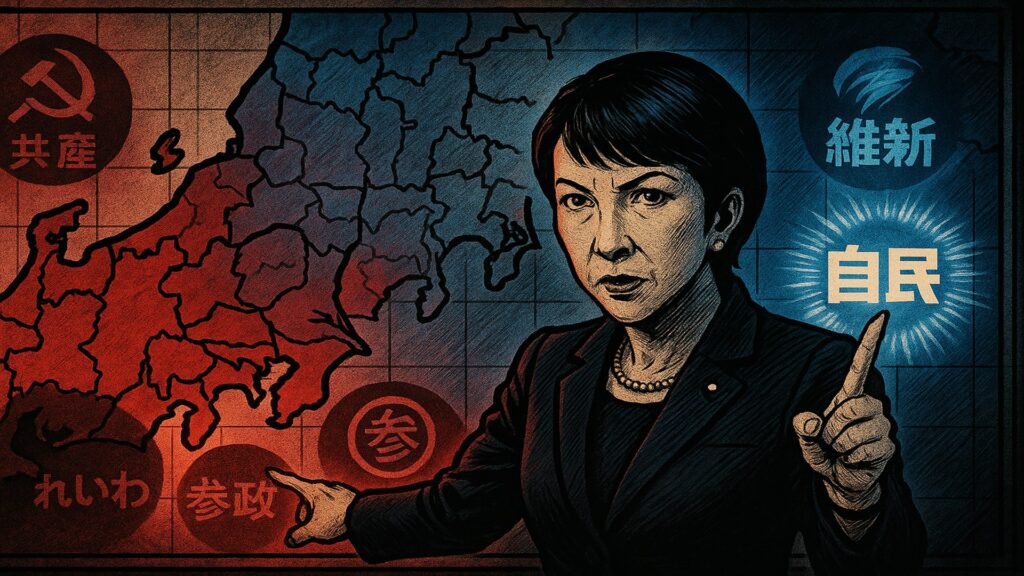
? Which party would benefit?
If proportional representation is reduced, large parties like the LDP and regional parties like Ishin will have an advantage. Their characteristic is that they hold many strong candidates in single-seat constituencies. On the other hand,the smaller parties that rely on proportional representation—Communist Party, Reiwa Shinsengumi, Social Democratic Party, Komeito, and SanseitoThese parties are spread across the country, and proportional representation was the only route reflecting the public will. Reducing proportional seats would be fatal for politicians without organizational support, local bases, or funds. In single-seat constituencies, it would be extremely difficult for candidates without an existing base to compete, and a reversal would be very hard. Furthermore, reducing proportional seats directly reduces the seats of the entire party.will be heavily hit.
Given these parties have dispersed support nationwide, proportional representation was their sole channel to reflect public will. Reducing proportional seats would be devastating for politicians who lack strong organization or local bases. In single-seat districts, incumbents with established bases would be hard to beat, and a reversal would be extremely challenging. Additionally, reducing proportional seats would reduce seats for the entire party.
? Will net users’ voices become inaudible?
With the spread of social media, many citizens can directly voice their opinions. However, with reductions in proportional representation, the “public opinion that flows through online networks” will be less likely to influence seats. Consequently, new online-driven public opinion could be swallowed by traditional ground-level politics. This is a structural issue that makes it harder for a new type of politician to emerge.The online generation’s voice may become harder to reflect in seats.
In fact, in the last upper house election, Kazuma Hamada of the NHK Party, who had about 330,000 votes, failed to win a seat.Even candidates with high online fame will struggle to win if proportional representation becomes highly competitive. This tendency will affect not only minor parties but also young, proportional-reliant or nonpartisan lawmakers within the LDP. In other words, the gate of politics will narrow further for people who rely on output power rather than their local base.
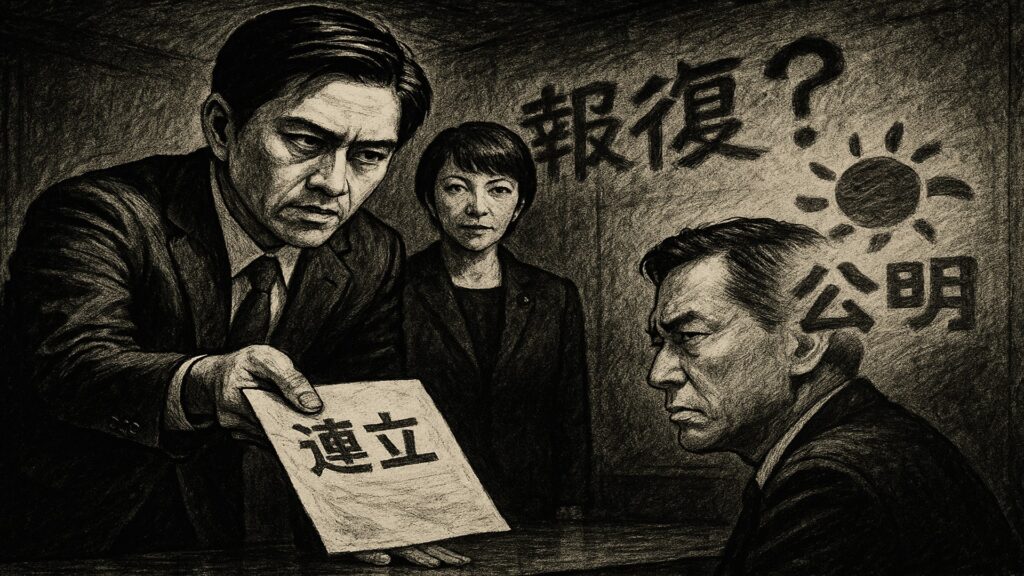
? Is this a retaliation against Komeito?
Indeed, the message “reduce lawmakers” and “make politicians slimmer” is clear and likely to gain support. Yet, from a systemic perspective, this could move to strengthen the hold of established powers. It would be a major blow to parties that rely on proportional representation, especially.
If House of Representatives’ proportional seats decreased from 176 to 126, overall proportional seats for all parties would fall to two-thirds by simple calculation. The parties most dependent on proportional seats are the Communist Party, Komeito, Democratic Party for the People (Konk), and Reiwa; as a result, their seats are expected to be greatly reduced.
Given this situation, it cannot simply be dismissed as an incidental effect; there is an indication of an intention to change political dynamics. Still, Ishin would likely describe this as an unavoidable sacrifice to push forward reform.
? How to reflect net public opinion in the next era
Meanwhile, the era when the net influences politics has already begun. Candidates with nationwide support through SNS are increasing, and participatory politics that cross regional boundaries is expanding. Rather than simply reducing proportional representation, it is necessary to consider how to reflect public opinion gathered online in the electoral system. In addition to traditional single-member constituencies and proportional systems, discussions about introducing multi-member districts or new representation quotas are needed.
From another perspective, a system where candidates can run by policy area or specialty—such as a “sector-proportional” model for defense, diplomacy, finance, environment—would also be worth considering.While preserving local voices, it is necessary to devise ways to reflect nationwide interest and broad but shallow public opinion. Revising the electoral system in a variety of frameworks seems to be a future challenge.
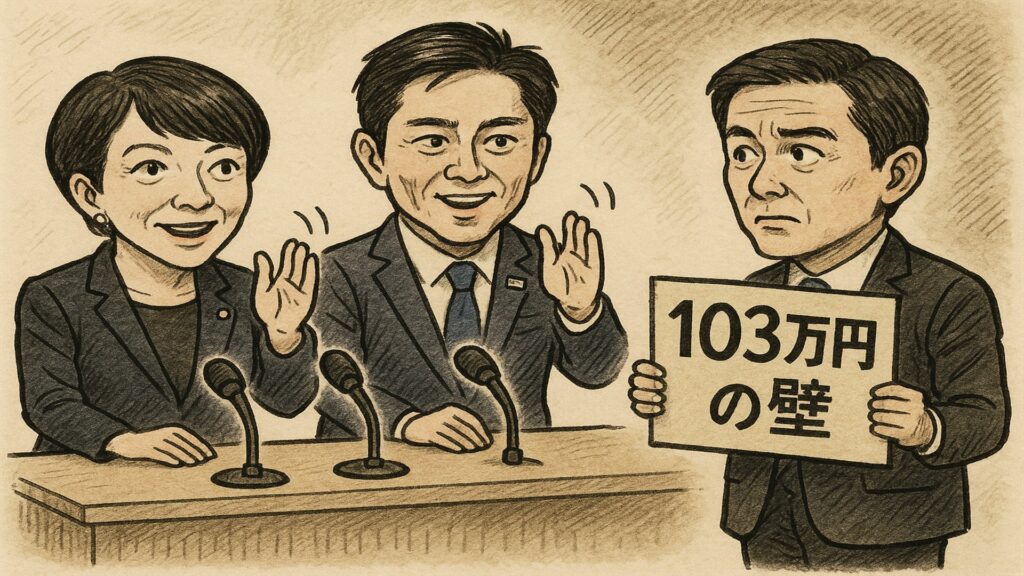
? Summary: a tangled political stage
The proportional reduction that Ishin conditions is likely to become an important bargaining chip to realize a coalition with the LDP. At the same time, its impact goes beyond simple seat counts and raises concerns that diverse opinions will be harder to reach in politics.The concern that minority voices will be buried as proportional representation is reducedemerges. Proportional reduction could deepen the dominance of emerging parties or independents, and strengthen traditional politics based on local bases and organizational strength.
What kinds of motives lay behind Ishin and LDP’s interaction under the umbrella of the phrase “tighten reform”? Is it a check against Komeito? A move toward casino resort realization? Various motives may be tangled.If there was a nudge from the Takamori side to Ishin’s leader Yoshimura to include a proportional reduction as a condition, that too would be a piece of the political chessboard’s maneuvering.
This could be over-reading, but viewed from these perspectives, today’s moves appear more three-dimensional. How do you evaluate this recent “proportional reduction”?
Completely risk-free trade simulator to practice and verify freely!
Details page for One-Click FX Training MAX