

🤣解散総選挙はいつ?ガソリン減税と補正予算で読む年内総選挙シナリオ(日程予想つき)
As the prime minister-designate election is expected to be held on October 21 (Tuesday), the question “What will be prioritized in the extraordinary Diet session, and when will we dissolve?” is becoming increasingly realistic.A review of the gasoline temporary tax (so-called gasoline tax cut) has reached a framework agreement between the ruling and opposition parties, making short-term enactment conceivable, while the supplementary budget, which includes measures against rising prices, remains a flashpoint over its scale and contents.
So, if the government and ruling party take the shortest path, how would the schedule unfold? Considering diplomatic schedules (late-October summit movements and APEC) and frameworks like the Public Offices Election Act’s “within 40 days from dissolution to voting” and “12 days from public notice to voting,” we calmly organize a realistic calendar for elections within this year. If you were in charge, in what order would you proceed?
? Only a dissolution general election can “ask the people for their trust”
Right after the prime minister-designate forms a cabinet, it is essential to clearly tell the public what will be implemented and what the issues will be. Given changes in coalition relations, political volatility, the composition of ruling forces, and trade and diplomatic matters (tariffs with the United States, relations with China, residence and labor policies), it is expected that the new administration will soon face a stage to confirm the public’s trust.There is little merit in delaying the base of the administration; establishing the regime under trust improves policy predictability.
On the other hand, a prompt response to international situations and domestic price and energy measures is also essential. Therefore, after handling priority issues in the extraordinary Diet session, the decision on dissolution should be made; that is, in the first Diet session, delivering one solid “achievement,” then presenting a large-package as the main issue, is an easy-to-understand progression for both ruling and opposition sides. So, what exact timetable can be drawn?
? Premises (Law, Administration, External Schedules)
We outline the framework. First, the House of Representatives sets the voting date for the general election within 40 days from dissolution. Second, from public notice to voting is 12 days of campaigning. Third, the session of the extraordinary Diet can be flexibly set by the Cabinet, with the possibility to shorten or extend according to the purpose laws. Fourth, by the end of October, foreign schedules including Trump’s visit and related APEC events (10/31–11/1) will overlap, influencing domestic and foreign affairs planning.
Finally,Gasoline tax cuts (handling of the temporary tax) have a framework agreement between the ruling and opposition, so if deliberations are thorough, passage could occur within a matter of days; however, the supplementary budget tends to require more days in committee deliberations.With all this in mind, we present four scenarios A–D and propose the earliest possible dates. Which case seems most rational?
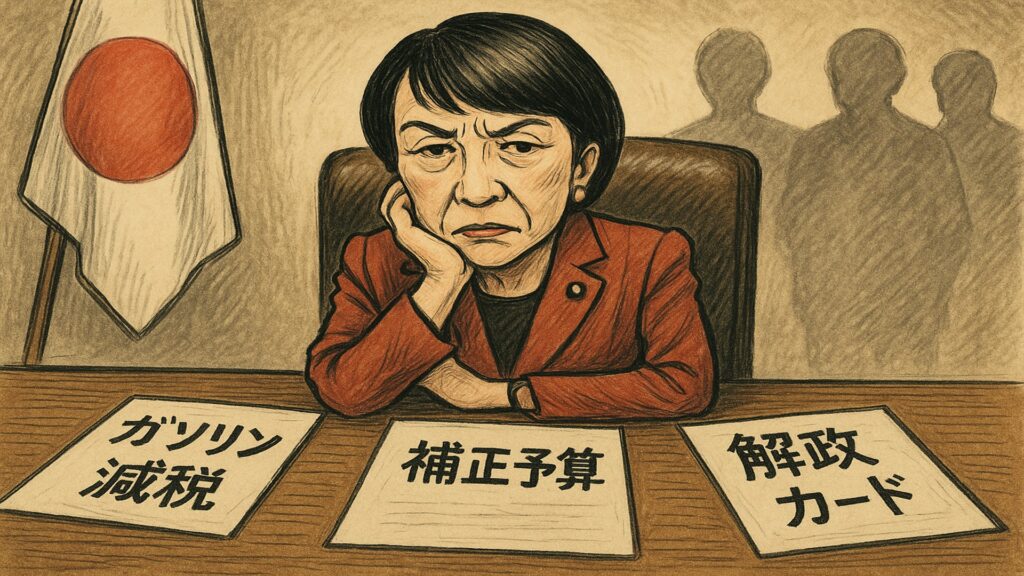
? Scenario A: Pass the gasoline tax cut first and “dissolve immediately”
10/21 (Tue) designate PM and convene extraordinary Diet → 10/22–25 gasoline tax cut enacted → 10/28 (Tue) dissolution → 11/09 (Sun) public notice → 11/21 (Fri) or 11/23 (Sat/Sun) voting。
The aim is simple. Pass the relief that directly affects daily life as quickly as possible and use the achievement as momentum for a “short, decisive battle.”By completing the bill before foreign affairs events, you can present a picture of domestic and foreign policy “simultaneously achieved.”For the governing party, it is advantageous that opposition parties may appear to be opposing for the sake of opposition on a theme where they can gain points first.
If deliberations take longer than expected, the schedule will immediately slide to B or C.
? Scenario B: Use the summit meeting (late October) as a result, dissolve right after the meeting
10/21 nomination → 10/22–25 gasoline tax cut enacted → 10/28 (Tue) summit meeting → dissolve on the same day or shortly after → 11/09 public notice → 11/21 or 11/23 voting。
This design maximizes diplomatic winds. The administration uses both domestic (tax cuts) and diplomacy (summit) as dual pillars, leveraging momentum with a dissolution immediately after the meeting. Voters can more easily understand energy, security, and economic issues in an integrated timing.
However, depending on changes to the meeting date or contents of the agenda, the emphasis of points of appeal may vary.If schedules shift, securing an alternative window in advance is a key practical point.
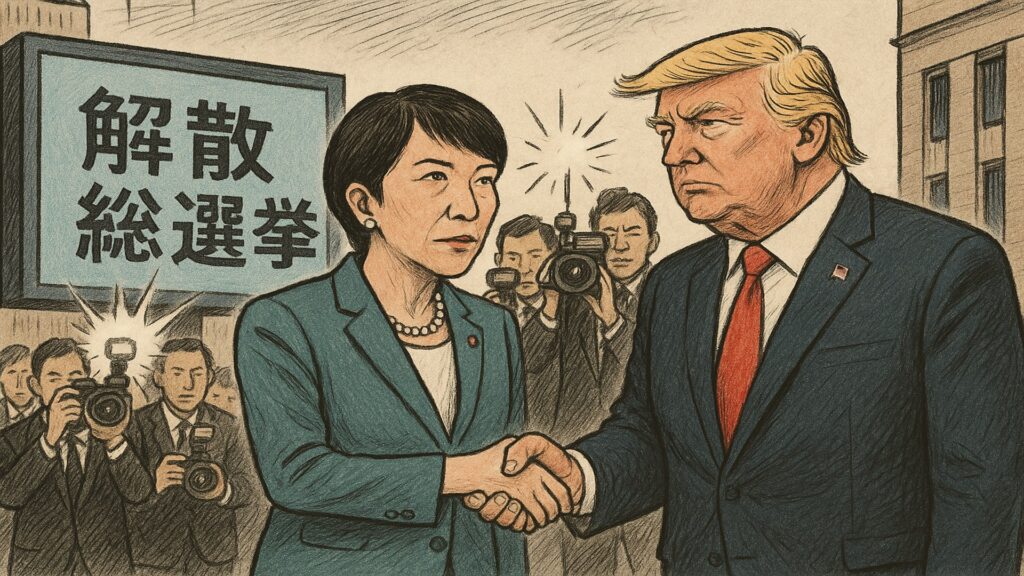
? Scenario C: Submit a supplementary budget, and dissolve if deliberations become tangled (aiming for early December)
10/21 nomination → by 10/25 gasoline tax cut enacted → 10/28 submit supplementary budget bill → 10/29–11/12 Budget Committee debates in the House → 11/14 (Fri) dissolution → 11/25 (Tue) public notice → 12/07 (Sun) voting。
With a thicker content of the supplementary budget (benefits, disaster prevention, growth investments), the opposition will continue to attack with revisions, counterproposals, and extended deliberations. The ruling party positions it as seeking public opinion to push forward economic measures,Voting in early December becomes the target.
While the supplement can be made a focal issue,hasty dissolution carries risks of criticism and lower turnout due to year-end忙. If deliberations extend by one week, public notice and voting would be postponed to December 21 (Sun).
? Scenario D: Pass the supplementary budget and then dissolve (legitimacy first, but tight)
10/21 nomination → around 10/28 submit supplementary budget → 11/late to mid stage enactment → immediately dissolve → voting mid to late December。
The sequence of “do what must be done before dissolving” foregrounds the legitimacy of policy implementation. Criticism resistance is higher, but schedule becomes tight depending on the volume of deliberations. In reality,12/7 (Sun) to late December 21 is the latest possible line; if pushed to the limit,
This method reduces the cost of coordination within the ruling coalition and the coalition, while giving the opposition more preparation time, making electoral advantages relatively weaker.
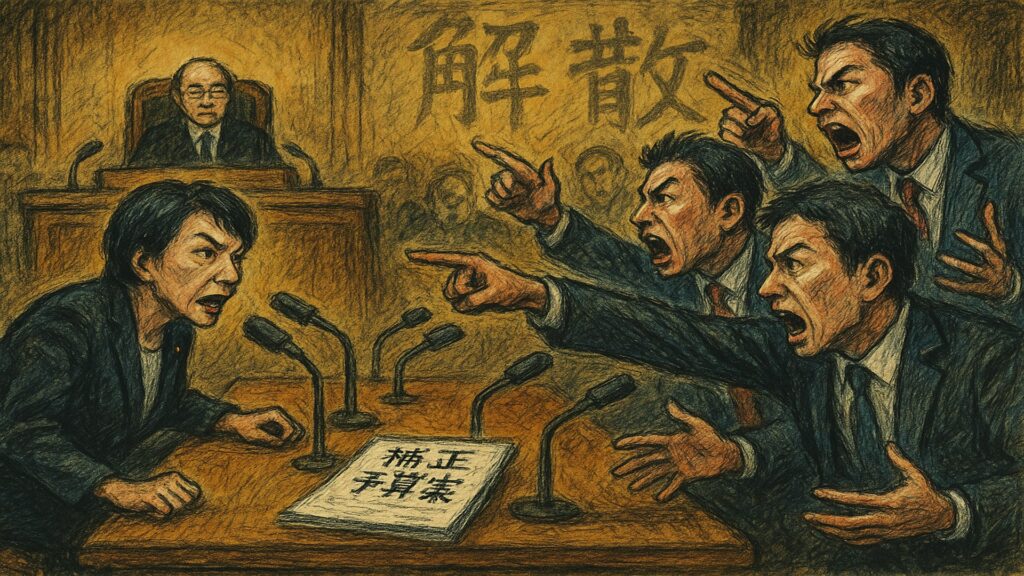
? Summary: Which calendar is most rational?
If you want the earliest achievement and momentum,A/B (voting in late November), if you want to focus on the supplementary budget to clarify distinctions between the ruling and opposition,C (voting on 12/7, delayed to 12/21 if late), if you prioritize legitimacy of policy execution,D (supplementary budget enacted first, voting in mid-to-late December) is a realistic option. The common premises are that dissolution to voting is within 40 days, public notice to voting is 12 days, and the late October diplomatic schedule must be considered. Gasoline tax cuts should be enacted around10/25 or so as the baseline, and the question is which order to play the cards from there.
Political situations including changes in coalition relations are fluid, but it also suggests that voters are increasingly able to choose based on policy. As the center shifts from a two-party system to a multi-party coalition, how will nationaldecision-making change? What is required now is for each party to clearly state concrete policies and priorities,and present a clear process to ask the people for their trust.
Free practice and verification with a completely risk-free trade simulator!
Details page for One-Click FX Training MAX