

?FX: Sanae Takachi? (Takachi?) Trade blazing blaze? The yen depreciation and stock rise won’t stop! Is the new NISA Orcan one-sided approach a big loss? Surprising facts and opportunities
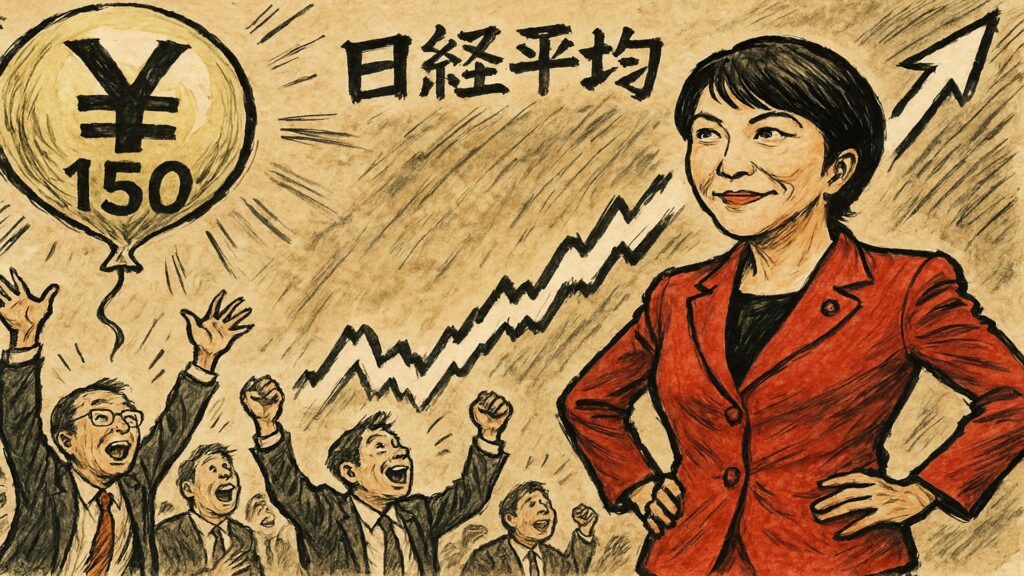
October 6, 2025. The weekend saw Japan’s politics and markets move for the first time in a while. Sanae Takai was elected as the new leader of the Liberal Democratic Party, and the first female prime minister of Japan is expected to be born.In the market, the term “Takai Trade” is flying around, the Nikkei Stock Average reached a new all-time high, and the trend of rising stocks and a weaker yen has gained momentum.
Amidst this, many may be wondering, “Is it okay to focus solely on Orthan (Orkan)?” With Japanese stocks rising sharply now, it can be an opportunity to reassess asset allocation. How can you most efficiently ride the trend created by Takai’s proactive fiscal policy? Let’s think about it together.
? What is Takai Trade? Simultaneous weak yen and rising stock prices
Takai Trade — it is the buying of Japanese stocks and selling of yen driven by policy expectations for Sanae Takai. Her pledges include proactive fiscal policy, continued monetary easing, defense, focused investment in semiconductors, energy, and the space industry, which have enough to stimulate market sentiment.
In response to these policy expectations,the Nikkei Average broke away from the stagnation of the Ishiba administration, rising about 2,200 yen at one point. The closing price on October 6 was 47,944 yen, breaking the previous all-time high by a wide margin.In Nikkei 225, the weak yen provided tailwinds, with nearly broad-based gains. Defense-related Mitsubishi Heavy Industries, among others, reached new highs.
? Is there no stop to the yen’s depreciation?
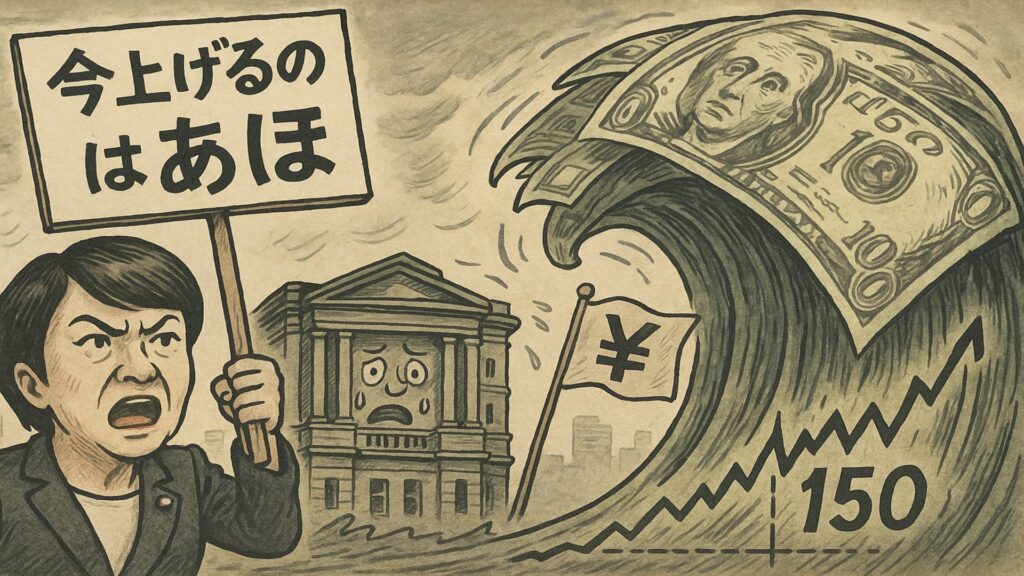
Meanwhile, in the foreign exchange market, with markets watching for potential Fed rate cuts, the yen has breached 150 per dollar. If the yen continues to weaken, intervention risk may be considered, but for now there are no factors stopping the trend.
Takai explicitly denied a rate hike by the Bank of Japan, and even remarked, “Now is not the time to raise,” which also drew attention. The message of continued monetary easing is further accelerating the yen’s depreciation.“Strong Japanese stocks” and “weak yen.” These two trends coexisting now can be seen as right in the thick of Takai Trade.
? The Risks and Realities of a World-Index-Only Approach
In recent years, the standard for long-term investors has been “eMAXIS Slim All-World Equity (All-Country),” commonly called Orokan (Orkan). It tracks the MSCI ACWI, covering about 3,000 stocks worldwide for ultimate diversification. However, in a current “yen weakness × Japan stock strength” scenario, its strengths can backfire.
Looking into Orokan’s breakdown, roughly 60% in the U.S., about 30% in developed markets, and only about 8% in Japan. In other words, you can only enjoy a small portion of Japan’s rally with this structure.There is the yen-denominated asset valuation effect from the weaker yen, but more importantly, concerns about the real purchasing power erosion. We cannot overlook the headwind where yen-denominated assets weaken against rising prices.
Of course, Orokan’s low cost (management fee 0.05775%) and stability are attractive, but in a market dominated by domestic shareholders like now, the opportunity cost is large. In other words, “worldwide diversification alone cannot capture the rise” in the current Japanese market.
? Capture both with a 3-region balanced approach: Yen-weakness resilience × Japan stock gains
Therefore, attention turns to the “eMAXIS Slim All-World Equity (3-Region Balanced)”.Designed to include roughly 33.3% each in Japan, developed markets, and emerging markets, the share of Japanese stocks is about four times that of Orokan. This allows you to ride the Takai Trade more directly.
With this configuration, you get:
- Japanese stocks: benefit from Takai’s policy-driven stock price increases (no currency risk in yen terms)
- U.S. stocks and developed-market stocks: yen depreciation increases yen-denominated returns
- Diversification: balance helps cushion shocks
This provides an ideal balance. The trust fees are the same as Orokan, making it well-suited for diversification. In particular, until the prime ministerial designation on October 15 and the parameters of the year-end supplementary budget are finalized, money may concentrate in Japanese stocks.
? Another option to ride the short-term wave with Nikkei 225 ETFs
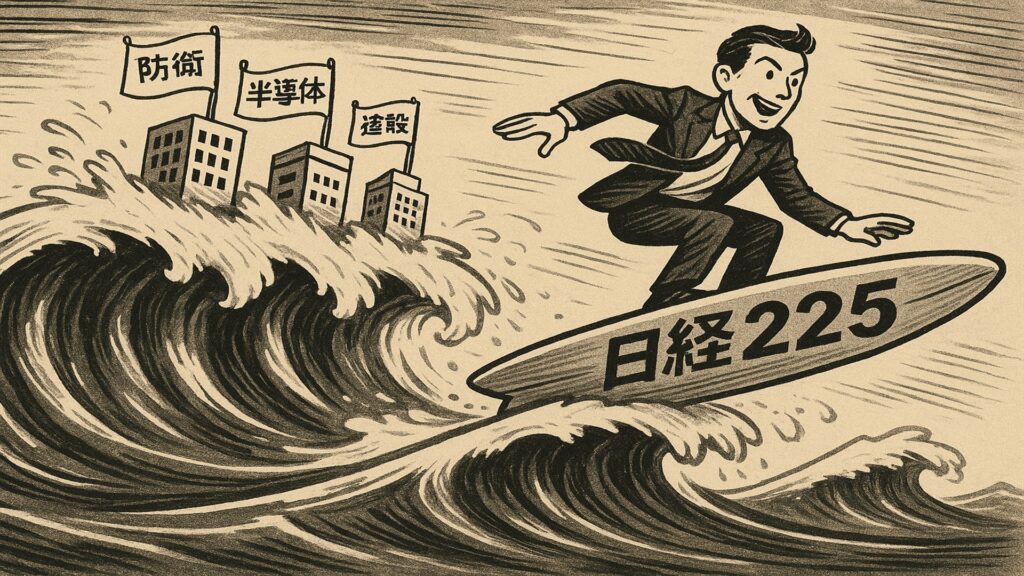
As another option, it is effective to allocate a certain proportion to “Nikkei 225-linked funds and ETFs.” In a yen-weak environment, export-related stocks are strong, and under the current policy environment, defense, semiconductors, construction, and energy-related stocks have momentum. These are exactly sectors directly affected by Takai’s policy.
For example, shifting about 20% of the portfolio to Nikkei 225 and keeping the rest in a 3-region balanced mix (30%) and Orokan (50%) is one plan. This way you can fully benefit from Japanese stocks while maintaining diversification in overseas markets.
Toward the end of the year, a Nikkei 50,000 is becoming more realistic. For timing, it’s best to shift gradually while watching key indicators such as the prime minister designation (October 15), Bank of Japan’s Tankan, and U.S. employment data.
? Risk factors: intervention, interest rates, and overheating
Of course, a market that depends only on expectations cannot last forever. If yen depreciation exceeds 150 yen per dollar, the risk of FX intervention by the government and the BOJ becomes tangible. Also,the 10-year yield on Japanese government bonds is rising, and there are limits to balancing strong fiscal policy with other considerations.
In the U.S., if there is a risk of a government shutdown or softer employment data, a risk-off shift could occur. Moreover, a massive flow of around 80 trillion yen into investments abroad could exert yen depreciation pressure, while euro-area instability could put upward pressure on the yen, and factors like the Fed’s rate trajectory and policy pressure on the BOJ could cause the market to swing widely in both directions if multiple factors align.
Additionally, tensions involving Russia and NATO, the Taiwan Strait, and the Gaza situation,there is also concern that Takai’s tough stance could raise tensions around the Senkaku Islands.The world is in a tightrope walk, to put it mildly. Therefore, now is a time to base decisions on “pricing in expectations,” avoiding excessive risk while steadily building profits.
? Summary: A redevelopment opportunity, breath in the economy
In the long-stagnant atmosphere, Takai Trade has briefly brought a surge of energy into the Japanese economy. With rising stocks, a weaker yen, and policy expectations converging, now is a season where investors can act again.
Still, a pure Orokan-only approach might not fully capture the enthusiasm.Adopt a 3-region balanced approach to capture the breath of Japanese stocks, and use Nikkei 225 ETFs to catch short-term waves. Allocate funds according to roles to maximize future profits.
The basics of investing are riding the trend. It would be a waste not to ride the wave created by a prime minister proposing proactive fiscal policy. If this opportunity mirrors the early days of Abenomics, how much money would you invest?
However, you must also remain mindful of risk and gauge how much capital to shift with composure.So, how would you balance to ride this wave?
Practice and validate freely with a complete no-risk trading simulator!
Details page for One-Click FX Training MAX