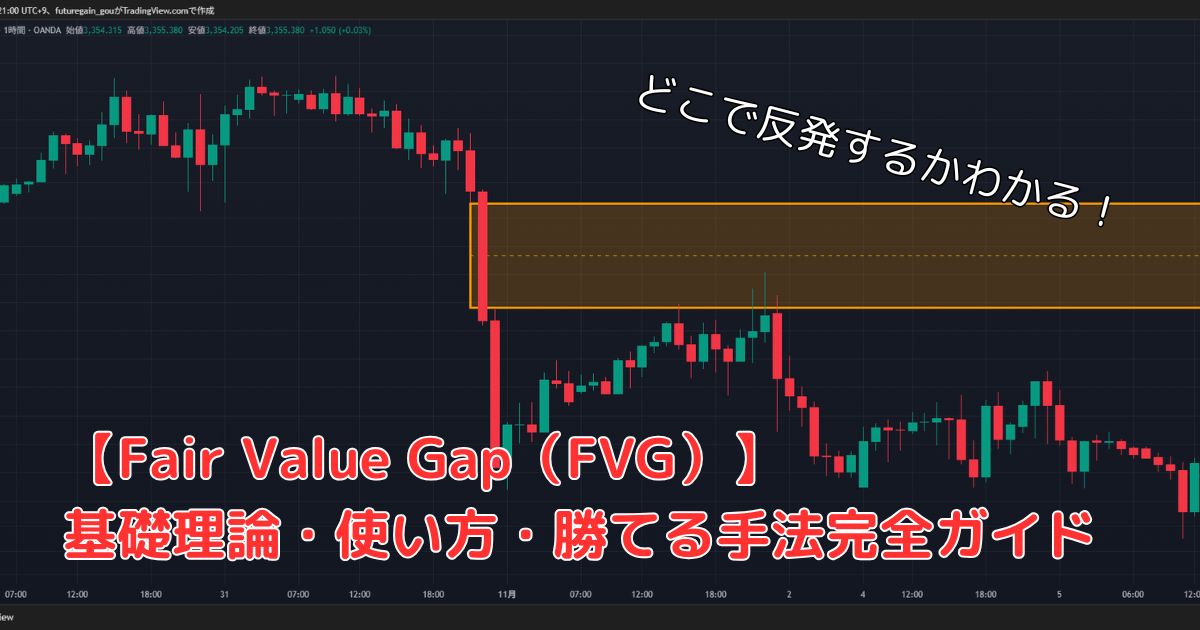
【Fair Value Gap (FVG)】 Basic Theory, Usage, and Complete Guide to Winning Techniques
Chapter 1: What is FVG? [Basic Knowledge]
● What is Fair Value Gap (FVG)?
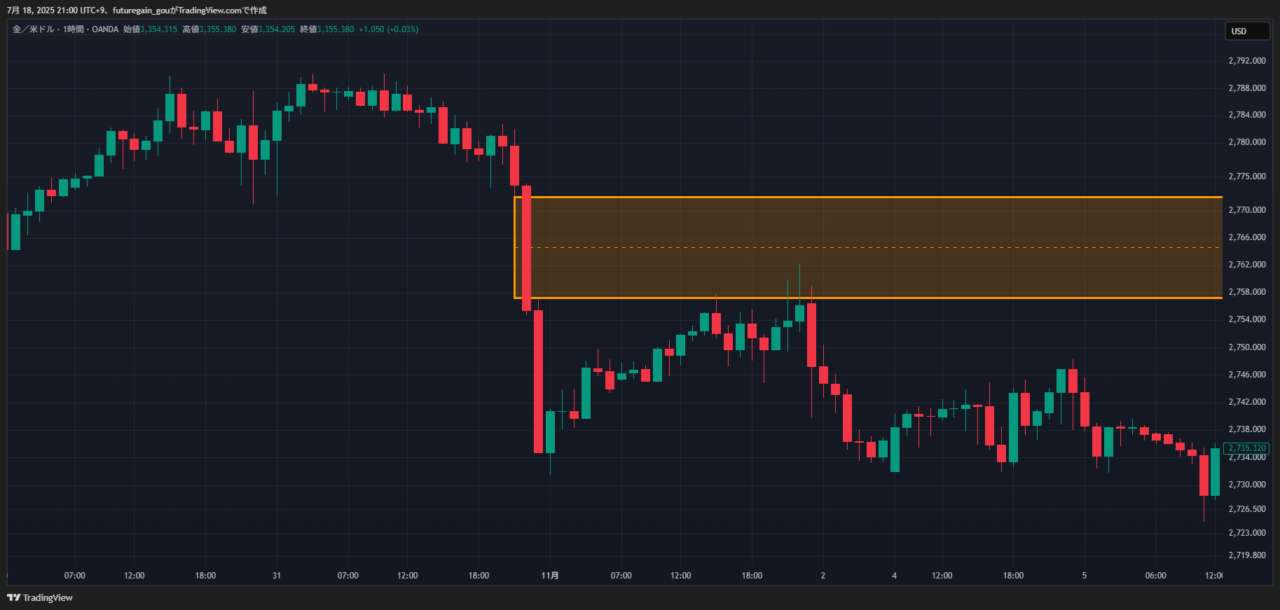
Fair Value Gap (hereafter, FVG) refers to the "price gap" that appears on a chart when price moves rapidly.
In particular,there is a characteristic where the highs and lows of the first and third candles do not overlap in three consecutive candles..
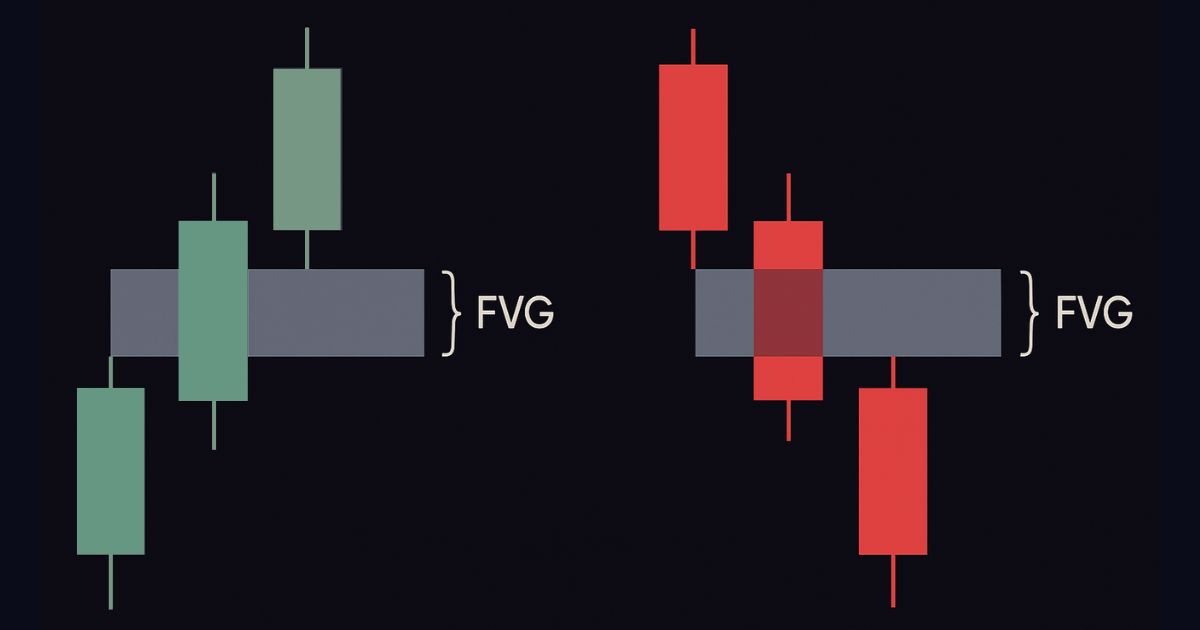
This gap is evidence that the market's supply and demand balance temporarily collapsed. In other words,a situation where buyers and sellers suddenly increasecausing the market to skew in one direction.
And after that gap is formed, often there is aretesting phenomenon where price returns to fill the gap. This is where trading opportunities begin.
● Characteristics
Item | Content |
|---|---|
Occurrence timing | When there is a surge of buying or selling (i.e., orders skewed to one side) |
Constituent candles | Three candles: the highs and lows of the first and third candles do not overlap |
Expected movement | Movement to fill the gap (retest) → rebound or continuation start |
Usage scenarios | Buying on dips, selling on rallies, turning points, and判断 trend continuation |
Chapter 2: How to Find FVG on Charts
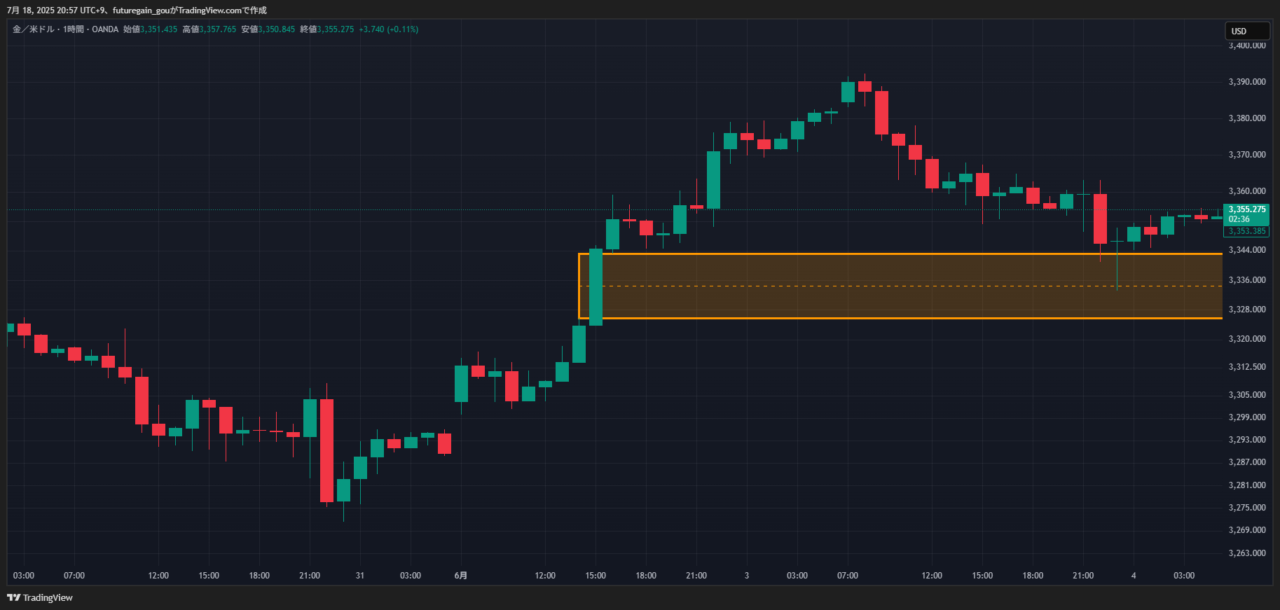
● Bullish FVG (upward gap)
- First candle's high
- Second candle: strong bullish candle
- Third candle's low
→If the first candle's high and the third candle's low do not overlap, that interval is an FVG.
Example:
In a strong uptrend on the USDJPY 1-hour chart, if the second candle's body is long and the third candle's low is above the first candle's high, that area is a Bullish FVG. When price retraces, it is highly likely to rebound at the retest.
● Bearish FVG (downward gap)
- First candle's low
- Second candle: strong bearish candle
- Third candle's high
→If the first candle's low and the third candle's high do not overlap, that interval is an FVG.
Example:
An FVG formed during a sharp drop. It functioned as a retest selling point and became basis for continuing the downtrend.