
【Scalping】 August 8, 2025 - Euro/JPY recap
This time, we will look back on the euro-yen scalping trade from August 8, 2025.
I will explain as simply as possible the tools I actually use and my approach to trading, so please use it as a reference.
■ Tools and environment used
To improve the reproducibility of trading, first I will disclose the tools I use and their settings.
① The One Who Finds Deep Pullbacks in Trends
An indicator that tells you the timing when a pullback occurs in the short-term chart in the direction of the long-term trend.
【Parameter Settings】
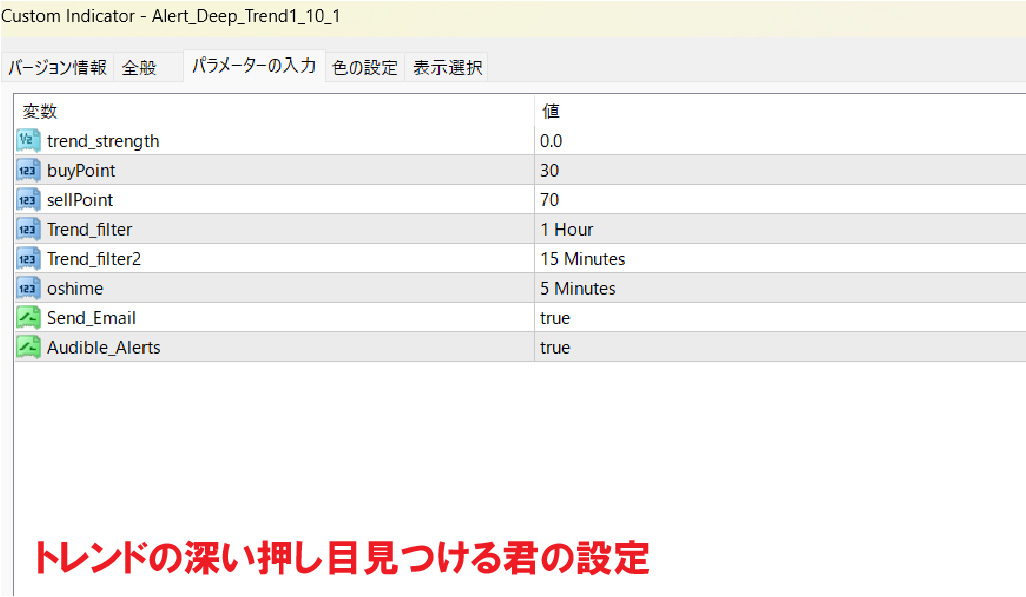
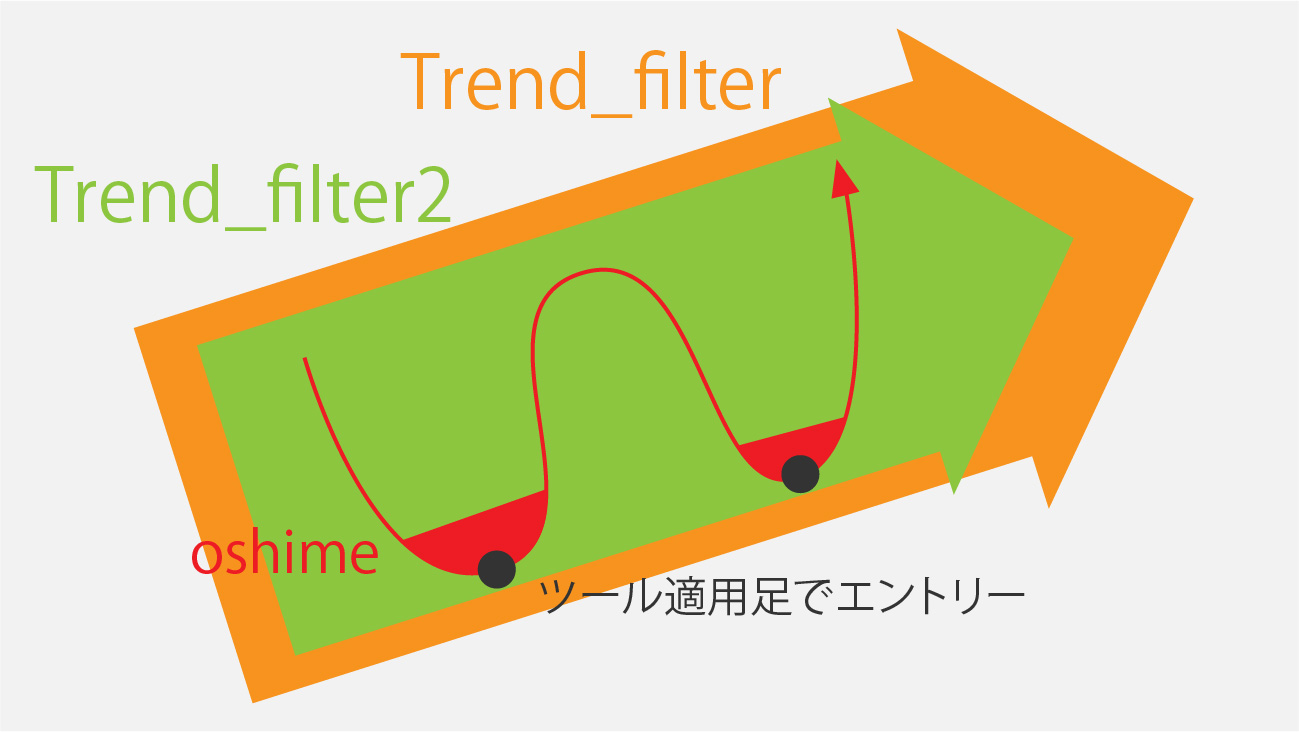
Setting Trend_filter to 1 hour and Trend_filter2 to 15 minutes determines the long-term trend direction.
Then set oshime to 5 minutes to capture short-term pullbacks that occur within the long-term trend.
This is a mechanism to catch short-term pullbacks within the long-term trend.
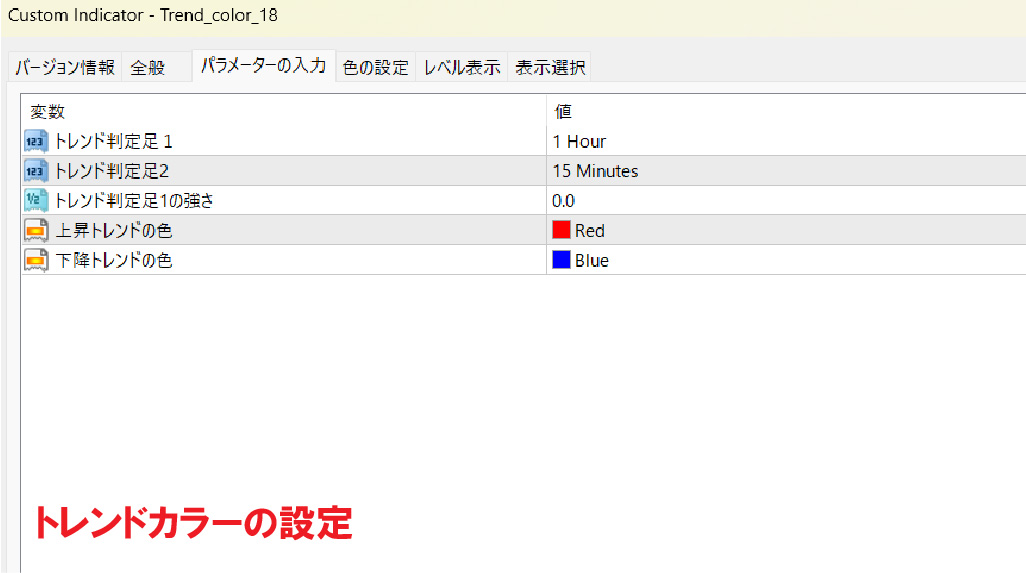
② Trend Color
An indicator that displays in a sub-window whether the current market is in an uptrend or downtrend by color.
【Parameter Settings】
This indicator is based on the same idea as “The One Who Finds Deep Pullbacks in Trends,” and when the directions of the 1-hour and 15-minute charts align, a trend is considered to be in place.
Visually grasping the trend makes entry preparation easier.
■ Trading environment
Currency pair: EUR/JPY
Applied time frame: 1-minute chart (5-minute chart also OK)
■ Daily trade review
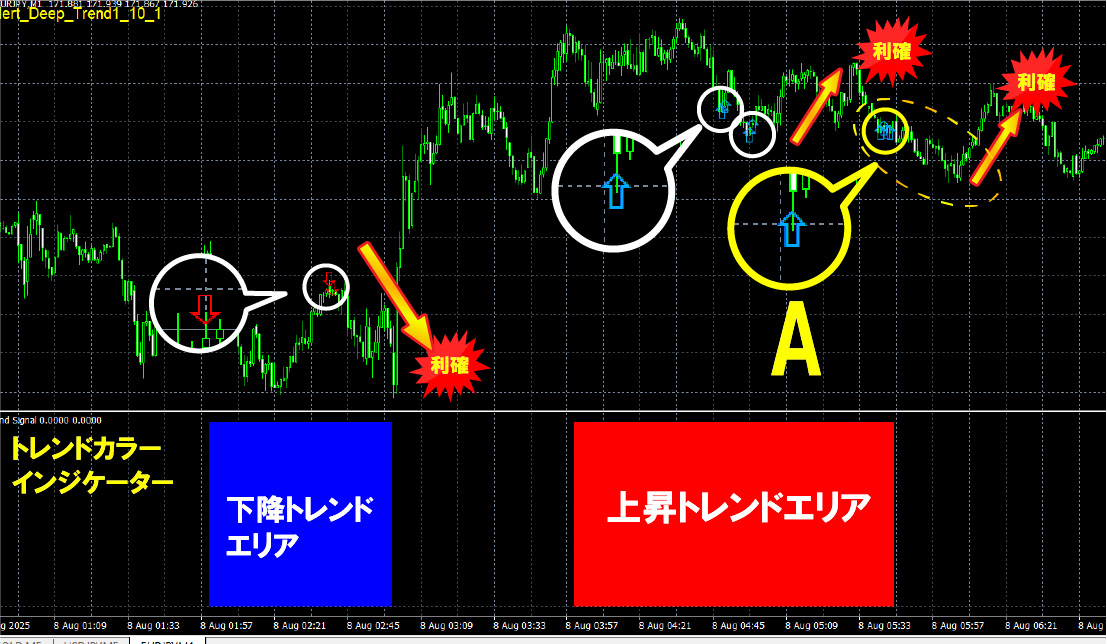
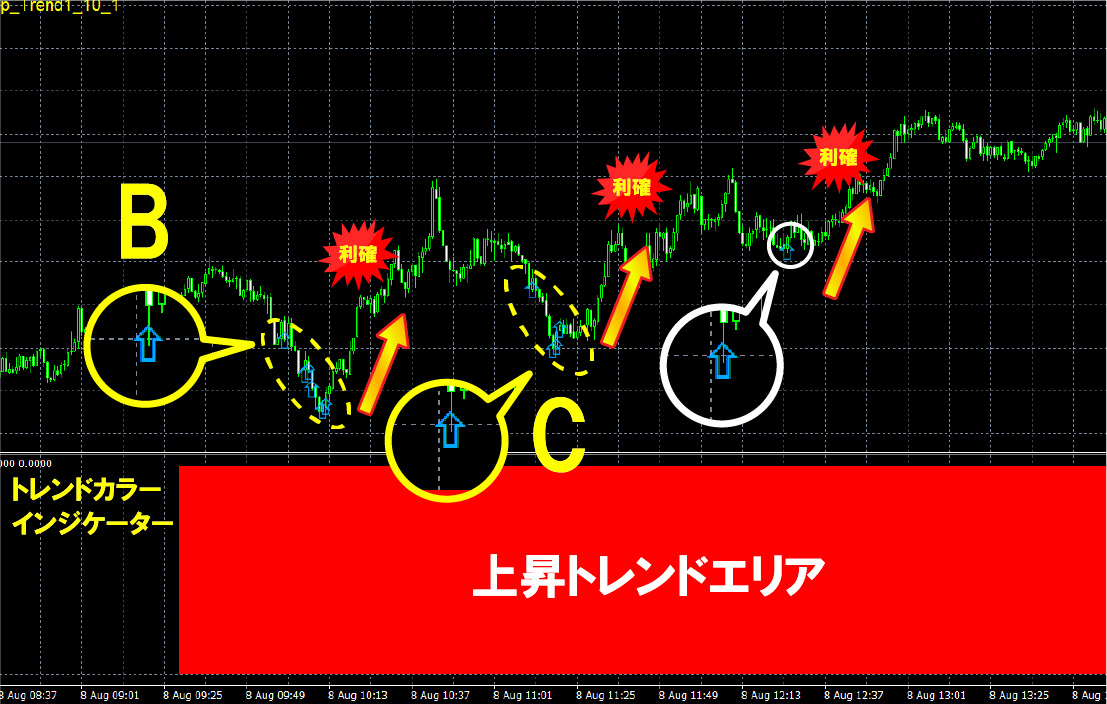
1. Confirming the market environment
First, look at the sub-window “Trend Color” to grasp the big trend of the day.
On this day, the market initially showed a downtrend (blue area), but later continued to rise (red area).
Therefore, the basic strategy for this day is narrowed down to “buying (going long) on pullbacks within the uptrend.”
2. Basic rules for entry and take profit
Once the strategy is decided, enter on the 1-minute (or 5-minute) chart following the signals of “The One Who Finds Deep Pullbacks in Trends.”
Take profit with a light touch, aiming for about 1–10 pips, as the key to scalping is to close positions promptly without greed.
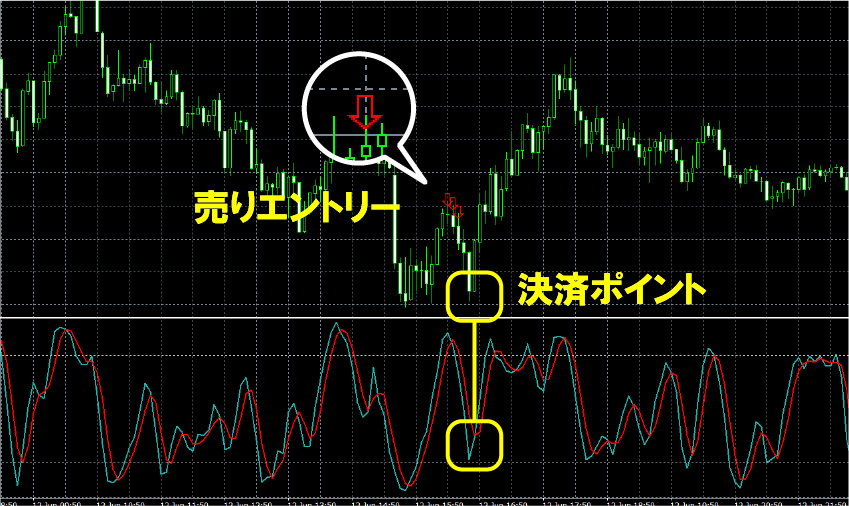
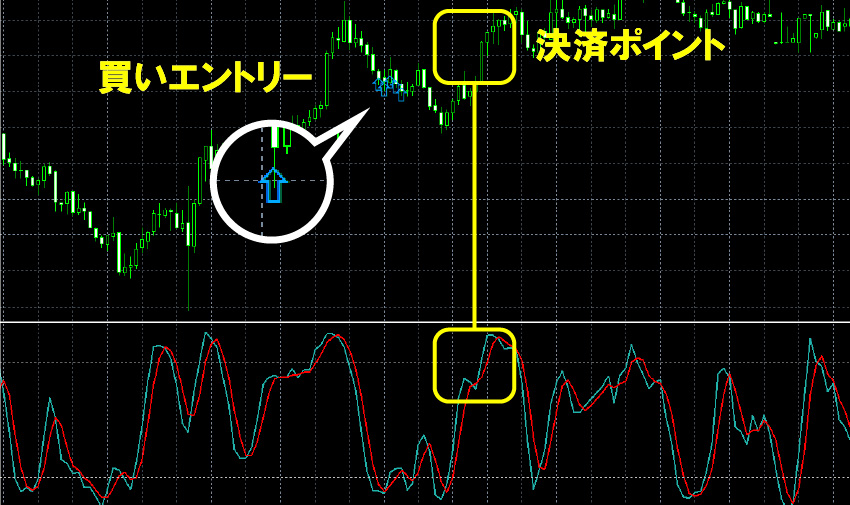
For timing of exits, using Stochastic is convenient.
If the level reaches overbought/oversold, exit mechanically (example↓↓)
3. How to handle unrealized losses
Now, this is the main point.
Even if you follow the long-term trend, after entry the price may reverse at points A, B, or C on the chart and you may incur unrealized losses.
Getting flustered and quickly cutting losses or adding positions impulsively (averaging down) is a common beginner mistake.
Instead, we will respond with a disciplined, planned partial-entry strategy based on clear rules.
■ Mindset and precautions
The method explained here is a tactic to improve the average entry price of a position with unrealized losses, so that subsequent small price recoveries can reduce losses or turn them into profits.
However, this strategy presumes that the long-term trend will continue. If the price does not revert as expected, losses can grow larger than usual.
Therefore, be sure to follow the rules explained below and practice.
■ Rules for planned partial entries and exits
1. Additional entries limited to a maximum of 5
After entering on the initial signal, you may add positions up to a maximum of 5 times (total of 6 positions). Prepare additional margin so you can hold up to 6 positions (for example, with 100,000 yen in margin start with 0.01 lot).
2. Take profit fixed at “+1 pips”
If you hold multiple positions, when the overall net profit reaches +1 pips or more, close all positions without greed.
■ The most important rule: “Stop loss”
This becomes the lifeline to protect your funds.
Before entering, decide one of the following rules (your own rule is fine):
- Rule A (technical judgment):
If, having added positions, the price reverses again and clearly breaks the low of the candles in a buying scenario, all positions are stopped out.
- Rule B (fund management judgment):
Set a rule that the total loss on one trade (including partial entries) does not exceed 2% of account funds. If unrealized losses reach this amount, mechanically close all positions.
In this way, decide your own stop-loss rules and proceed with calm, planned partial entries.
■ Summary
The content explained this time is just one example of my trading method.
In particular, the pip width for partial-entry and the setting of stop-loss rules that fit you need to be optimized through practice.
While adhering to concrete rules such as “total positions” and “stop loss at 2% of funds,” please practice repeatedly on a demo account first.
【Notice】
※ If you want to try the signal tool “The One Who Finds Deep Pullbacks in Trends,”Here.
※ The indicator “Trend Color” is currently in preparation.