
Why is Hornet USDJPY performing well and popular?
The top of the popular Hornet FX trading system rankings are all highly used by investors, and I think they are quite impressive.
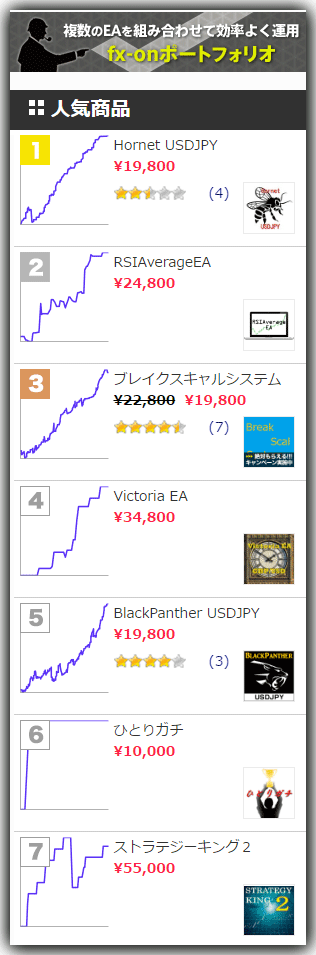
This time, among them, the number one in the rankings (as of January 3, 2017)Hornet USDJPYis what I would like to investigate to understand why its performance is strong and popular.
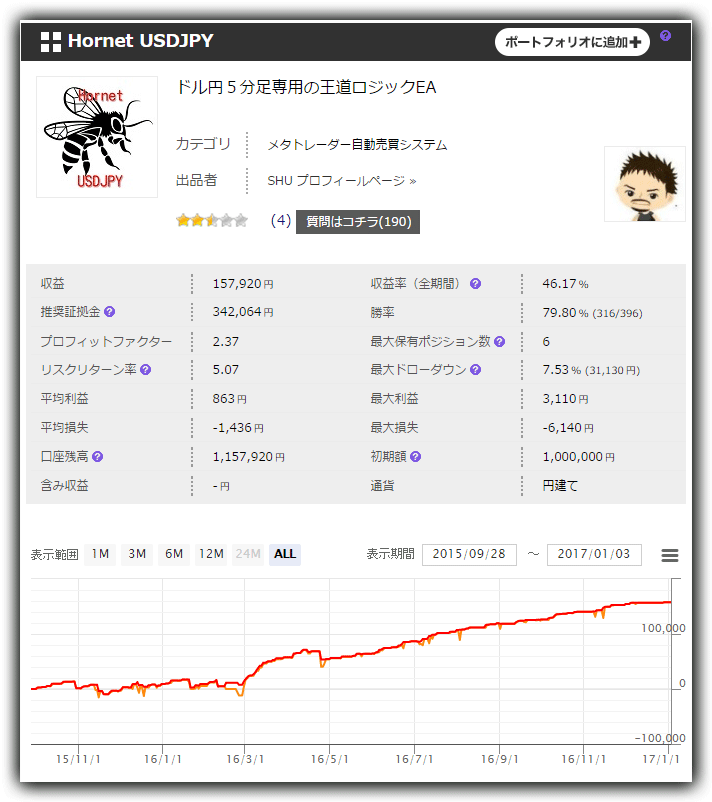
First, looking at the results since the forward test started on September 28, 2015, the profit has steadily accumulated to 157,290 yen, and apart from a couple of larger losses in November 2015 and April 2016, the trades have been smooth overall.
Average profit per position is 863 yen, maximum profit 3,110 yen, average loss -1,436 yen, maximum loss -6,140 yen.
Each position is 0.1 lots, i.e., 10,000 currency units, so roughly in pips terms, average profit is 8 pips, maximum profit 31 pips, average loss -14 pips, maximum loss -61 pips.
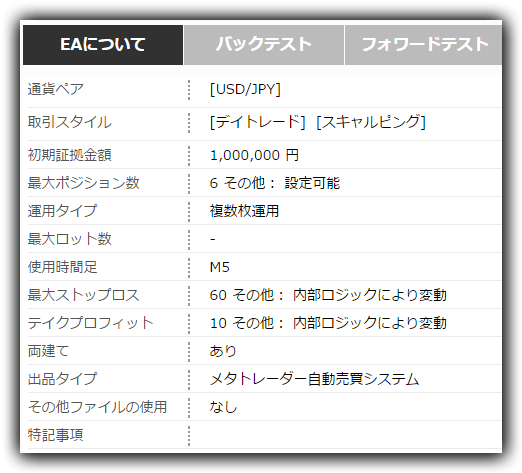
The developer SHU's design includes a maximum stop loss (stop-loss setting, though it fluctuates) of 60 pips, and take profit (profit realization value, though it fluctuates) of 10 pips, but this is a so-called scalping type logic (narrow profit targets).
When we think of scalping types,White Bearseries is famous, so many of you may know it well, but
Hornet USDJPYhas a notable point in its logic in that the take profit is described as “however, it fluctuates,”
and there are many opportunities to aim for more than 10 pips.
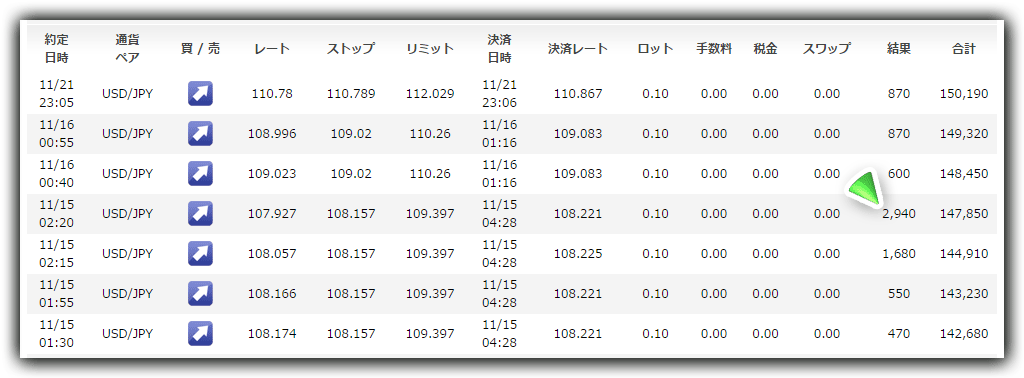
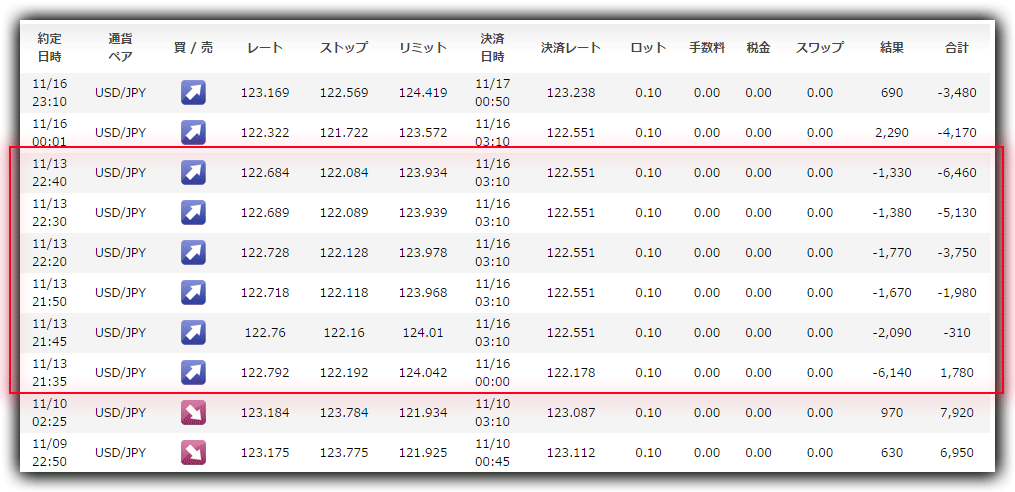
In the figure below, it gets 2,940 yen (roughly 29 pips).
Scalping-type EAs fix the take profit number in pips, or within a few pips. The maximum stop loss is designed to be five times that, in the range of 30 pips to 70 pips, and many have win rates above 80%.
Therefore, even though you accumulate small wins of a few pips, when a large trend occurs, the equity curve may drop sharply; a good EA will sustain profits over a long period, but an EA with poor entry accuracy may see its win rate decline and end up negative overall.
However,Hornet USDJPYmakes the take profit variable, so depending on the situation it can capture larger profits, thereby limiting damage even when a maximum stop loss of 60 pips occurs.
Of course, in addition to that, having extraordinarily high entry accuracy is also an important point for good performance.
Regarding entry accuracy
In a product review, on June 18, 2016, user でんすけ (Densuke) wrote
“At the end of April 2016 there were quite a few losses, but apparently this prompted an upgrade,”
On December 15, 2016, user ゴトー (Goto) wrote
“There were issues as well, but if you report them, they quickly implement fixes, and even looking at the developer's blog, I can see the effort”
As described, it seems that the timing of losses and customer improvement requests led developer SHU to refine the system significantly.

Now, what exactly were those improvements, and at what timings were they made? Let’s look at examples.
Historically, there have been five version upgrades.
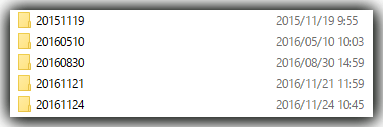
Densuke wrote in the product review
“The timing of the substantial losses at the end of April 2016 ...” was clearly addressed with a version upgrade on May 10, 2016, but what kind of countermeasures were taken is best understood from the November 19, 2015 upgrade example, which I would like to introduce here.
In the image below, the six-entry position on November 13, 2015 remains open until the settlement on November 16, three days later, as Hornet USDJPYHornet USDJPYcontinues to hold the position longer.
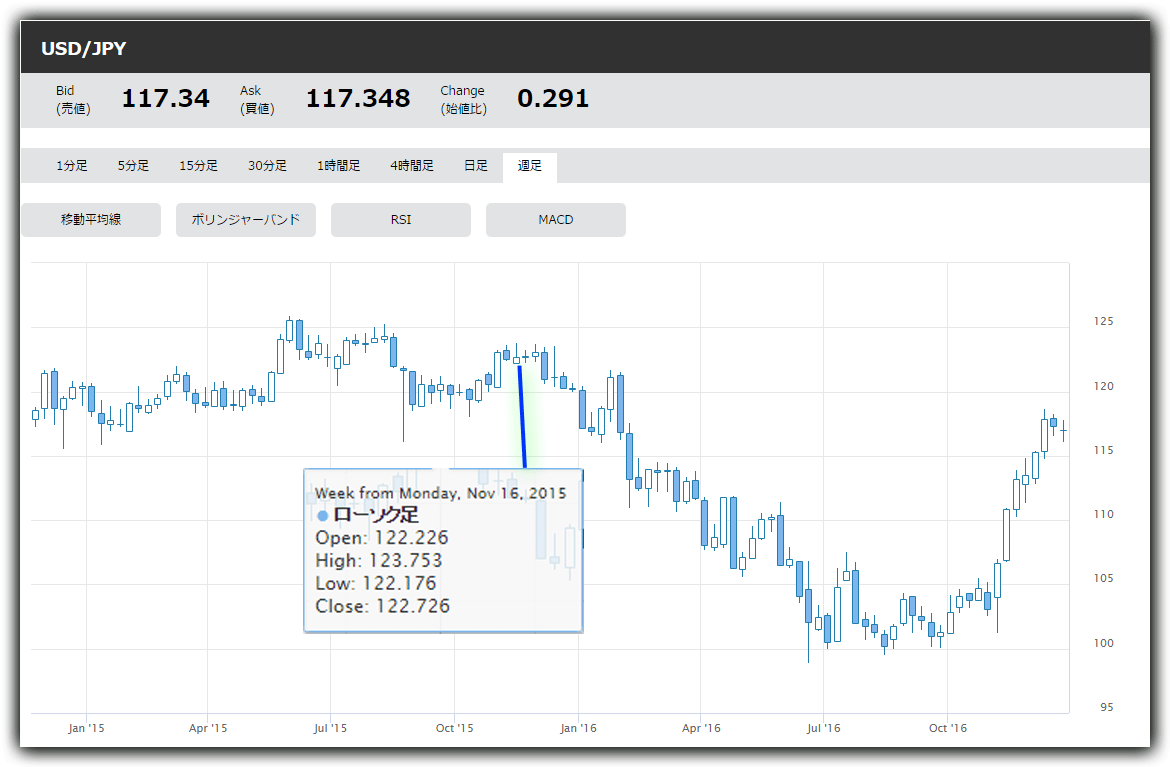
Looking at the weekly chart from that time, as shown in the image, from late October 2015 to December, the price had formed a range of only a few dozen pips at most.
Before the November 19, 2015 upgrade,Hornet USDJPYthis range-trading exposed weaknesses in its entries.
The reason is that later range-bound periods, especially the stagnation around 103 yen in November 2016, did not produce large losses.
Today,Hornet USDJPYhas shown that although it is a scalping-type, it is able to take larger take profits, and SHU's continual improvement attitude is a key to its good performance and popularity.

 written byHayakawa