|
Hello! This is Tejima from GogoJungle.
A very popular series—the interviews with developers!
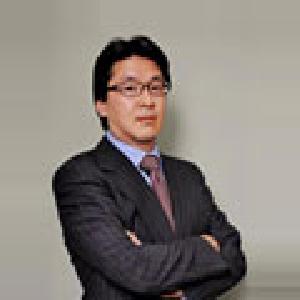
This time,Takizawa Hakubunhas joined us.
|
|
|
| The author of Takizawa Chicago Letter, read by finance professionals |
|
Takizawa Hakubun
Joined Nikko Securities in 1988, began his career in branch sales as a generalist in 1993 at Nikko International Chicago, and served at Nikko International NY headquarters in 1997.
Subsequently, in 1999, transferred to the U.S. Citi Group NY headquarters.
From 2000, transferred to Salomon Smith Barney Chicago under Citi Group.
Rejoined as a CBOT member, providing analysis of the U.S. market to major Japanese financial institutions from the Chicago market.
Currently, as the only Japanese floor member at CME (CBOT), provides various information.
|
|
|
Takizawa is known for analyzing financial markets from a political-global-macro perspective and distributing his analyses and strategies via letters.
Many financial professionals subscribe to his letters seeking his insights.
Now Takizawa finally appears in a special interview!
We've asked him in depth about his career and the details of Takizawa Letter, so please enjoy the main video as well.
|
Q. Please tell us about Takizawa's career, which everyone is curious about. |

|
| Takizawa Hakubun |
|
He joined Nikko Securities in 1988 and began his career in branch sales as a generalist.
In the first year, he visited mid-sized companies and learned the fundamentals.
That experience became his footing in many respects and proved to be valuable. |
|
Q. Please tell us about futures that led to your later Chicago assignment. |
|
|
| Takizawa Hakubun |
|
The Yokkaichi branch where I was assigned had many generous bosses, and they proposed the then-new futures.
At that time the market was in a downtrend, so simply buying stocks wouldn’t suffice.
To boost personal sales figures, I actively handled futures options that started in Osaka.
Nikko Securities had pioneered Chicago futures trading, so I caught their eye as a member of that team, and after five years in personal sales I was assigned to the Chicago branch. |
|
Q. I’ve heard your career at Nikko Securities is unusual; what aspects stand out? |
|
|
| Takizawa Hakubun |
|
The Yokkaichi branch was a branch that consistently won the President’s Award for five to six consecutive years.
In Mie Prefecture, the local Okasan Securities is strong, but I remember Nikko Securities ranking second.
There probably wasn’t another branch in Japan where Nikko Securities ranked higher than Nomura Securities.
Later in Chicago, Nikko Securities had a stronger presence.
I think it’s quite rare for an employee of Nikko Securities to have such experiences in both Japan and overseas. |
|
Q. What kind of duties did you perform at the Chicago branch? |
|
|
| Takizawa Hakubun |
|
At that time it was the long-term 30-year bonds, and I was in sales for CBOT focusing on T-Bond futures.
I pitched the trends in the U.S. economy to traders at Japanese city banks, major life insurers, and major non-life insurers.
Bank traders usually say 'Broker sales talks aren’t needed,' but with U.S. long-term bonds many factors come into play, so they sought advice.
Thus my sales pitches matched their needs well.
In the 1990s, I think I traded with people who were dealing in U.S. Treasuries almost exclusively. |
|
Q. After that, you moved to Citi Group—what were the circumstances? |
|
|
| Takizawa Hakubun |
|
I was curious about what the big figures on Wall Street, such as Sandy Weill, who are regarded as kings of finance, think and feel.
The main reason was that I wanted to break into their inner circle. |
|
Q. When did you start writing the letters? |
|
|
| Takizawa Hakubun |
|
I started writing letters after moving to Citi.
To be honest, I didn’t have a product to offer.
Citi Group was a mosaic of various securities firms.
Japanese clients treat futures and cash as the same; the cash information is provided by another group, so sending the same information to clients as a futures trader would be pointless.
So I needed to publish information myself, which became the prototype of Takizawa Report. |
|
Q. What is the guiding idea behind the letters? |
|
|
| Takizawa Hakubun |
|
After leaving Citi, providing the same information as they do wouldn’t make sense.
So I needed to bring out my originality and pursued it thoroughly.
As a result, I arrived at a strategy to neutrally forecast the United States from my own perspective, based on historical context and current events. |
|
|
How was it?
Next, we will delve deeper into the details of the Chicago Letter!
Please also enjoy the main video.
|
| Episode 1 |
| 【Jumping to the offices of major securities employees and Wall Street moguls】 What is the origin of Takizawa Report read by finance professionals [Takizawa Hakubun / #1] |
|
|
|