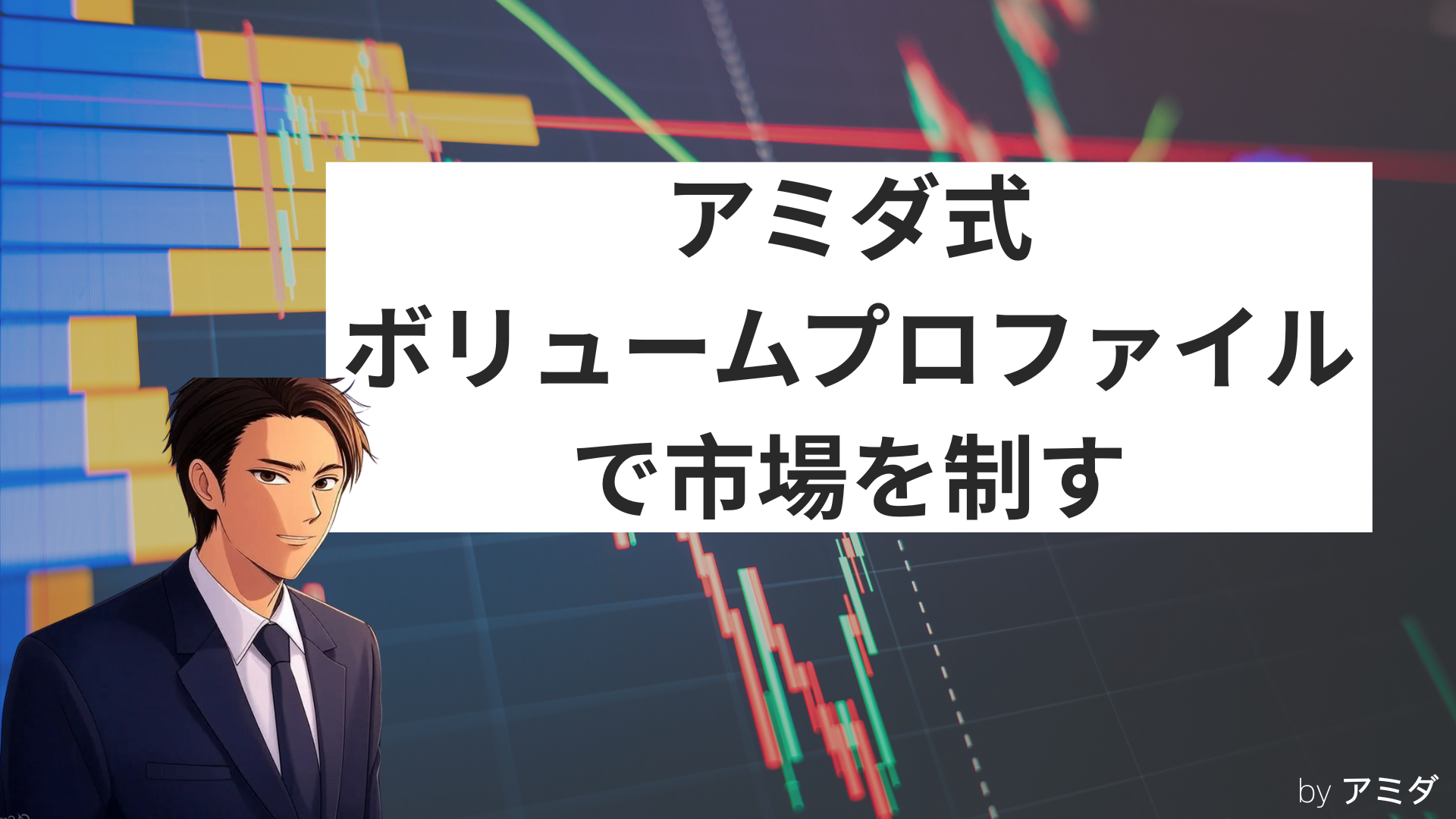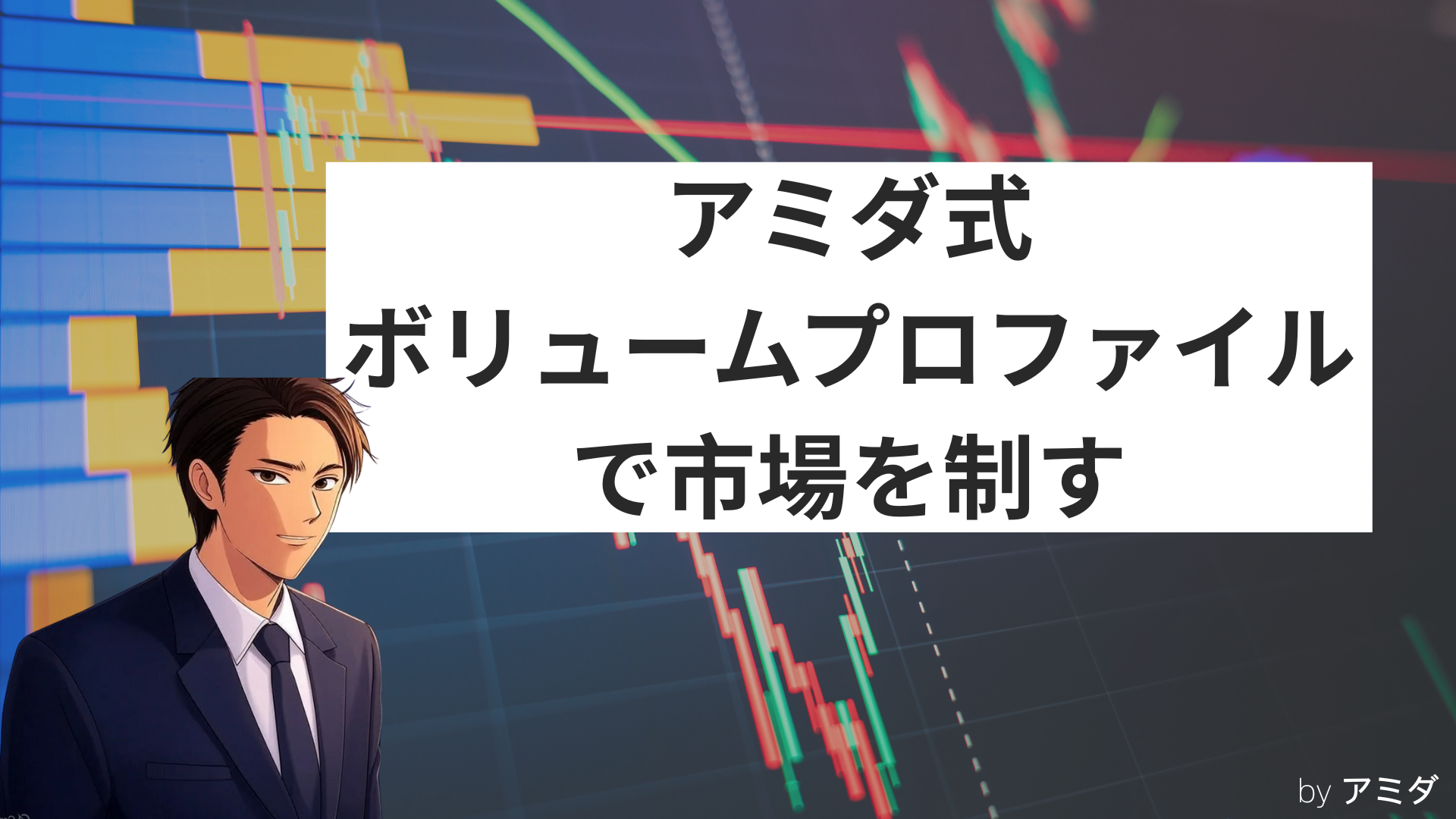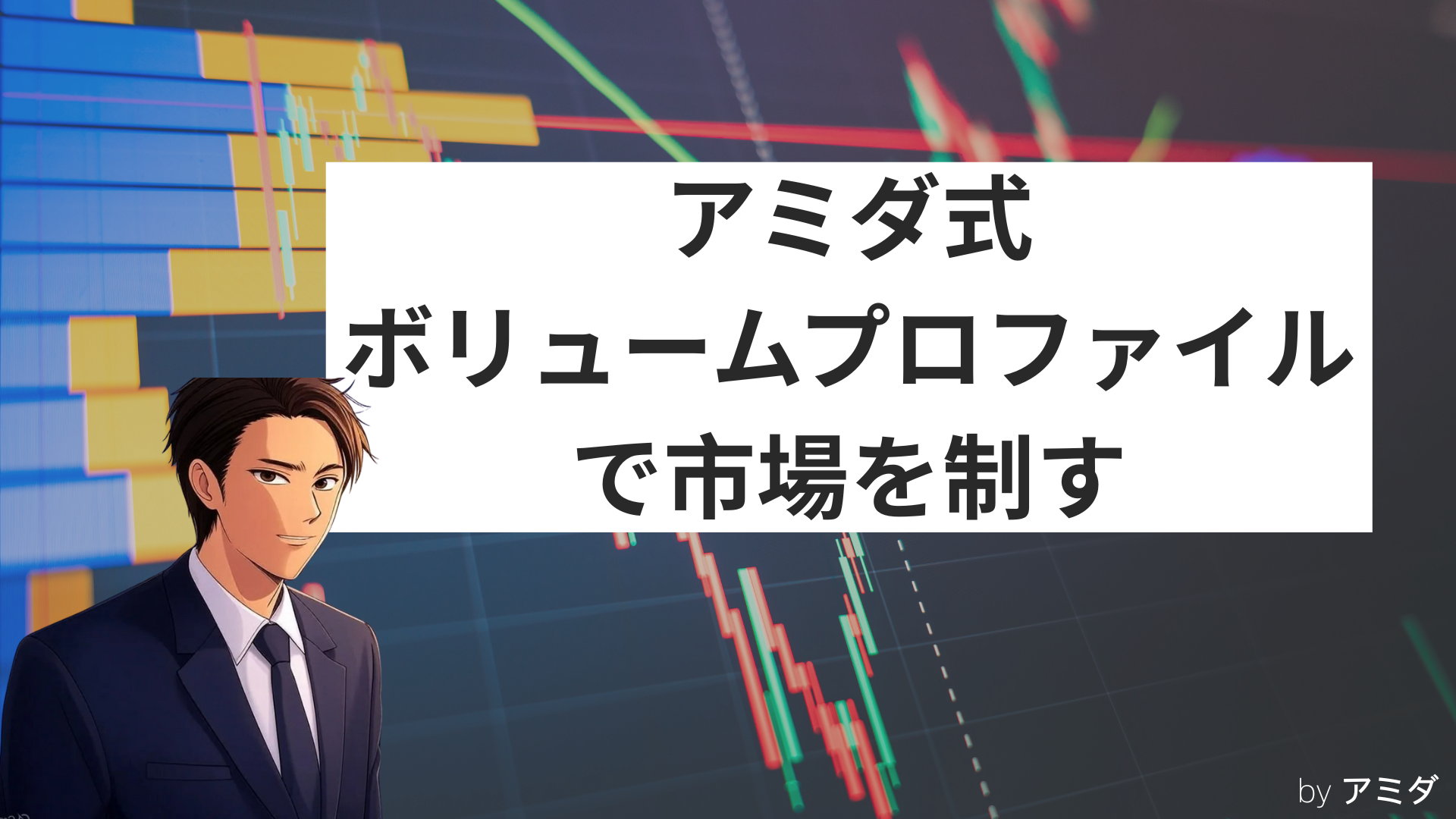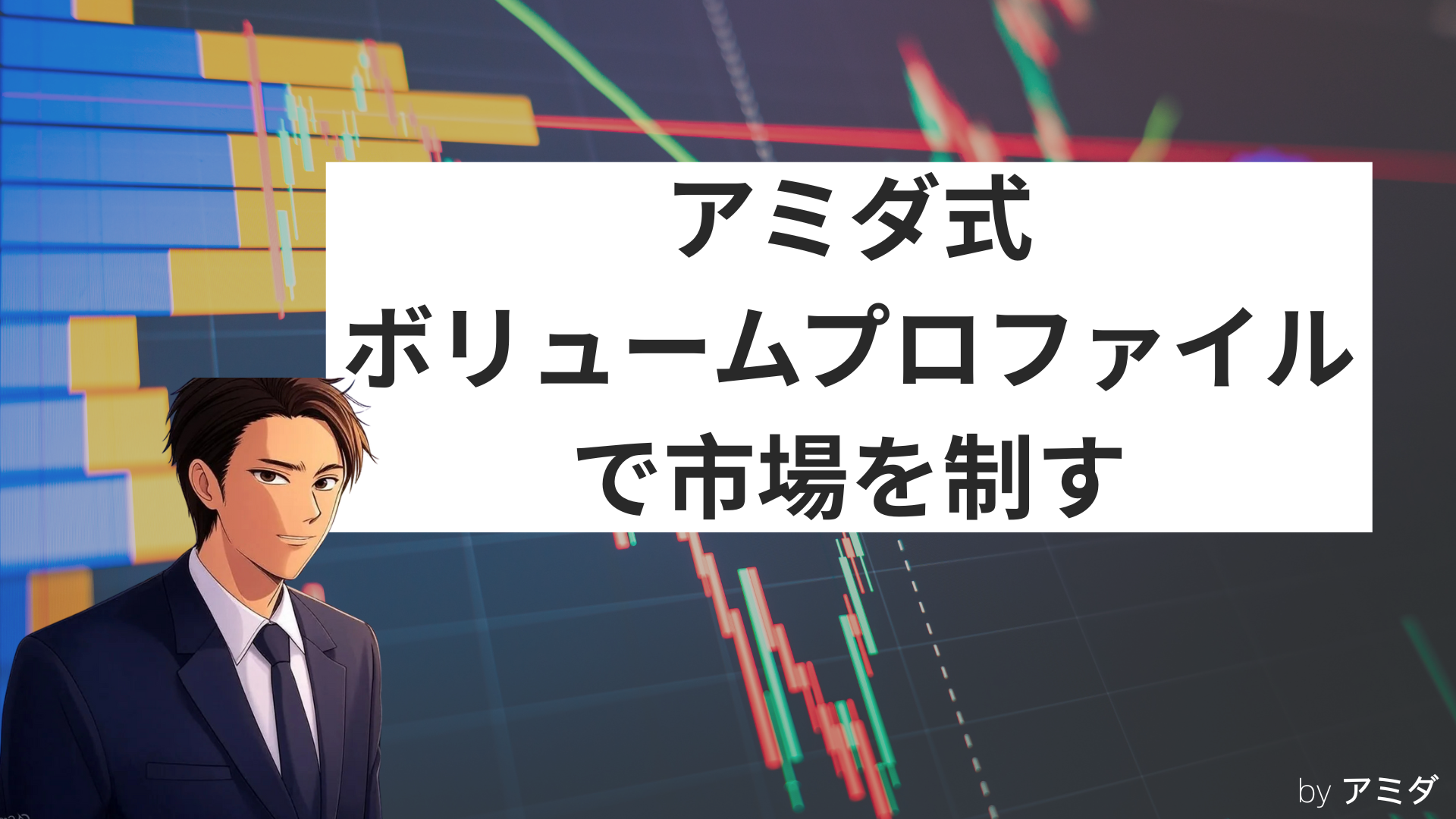

[Amida式:ボリュームプロファイルで市場を制す] レ레ッスン17 — 出来高プロファイル Area of Control (AOC):Volume Profileにおける価格帯コントロール Note: The content contains Japanese terms. If you want a pure translation of the text inside, it would read: "[Amida式: Master the market with Volume Profile]
“To know the market’s truth, focus not on price but on the ‘controlled price range’.”
What you should grasp next after understanding POC (Point of Control) is
the Volume Profile formed around it Area Control (AOC) , that is the price ranges that the market actually pays attention to.
What is the Volume Profile — Area Control (AOC)?
AOC is a zone where, within a specific period or defined range, trading volume gathered prominently.
It marks where major market participants (institutional investors) left traces of active buying and selling,
and, centered on POC, includes the volume clusters above and below it.
If POC is the “center of gravity of volume,” then AOC is the “control zone where market battles concentrate.”

Basic structure of AOC
POC (Point of Control): the price with the highest trading concentration within the volume profile
Volume cluster: the price range where trading volume around the POC was high
Upper and lower bounds of the AOC: boundary lines where price reactions tend to occur
POC (Point of Control): the price with the highest trading concentration within the volume profile
Volume cluster: the price range where trading volume around the POC was high
Upper and lower bounds of the AOC: boundary lines where price reactions tend to occur
Unlike Value Area (VA), AOC is not based on a fixed 70% rule; it is a flexible zone setting grounded in actual market participant trading behavior.
? Three trading-use points of AOC
Functions as an equilibrium zone: when price is inside the AOC, the market is considered to be in balance
A point to verify supply and demand: when price returns to the AOC, the battle between buyers and sellers becomes clear
Often the starting point of a breakout: a breakout with volume through the AOC often signals new trend formation
Functions as an equilibrium zone: when price is inside the AOC, the market is considered to be in balance
A point to verify supply and demand: when price returns to the AOC, the battle between buyers and sellers becomes clear
Often the starting point of a breakout: a breakout with volume through the AOC often signals new trend formation
Tips for basic strategies using AOC
(Details will be explained in upcoming lessons in the “Profile Setup” series)
AOC is the starting point for Volume Profile strategies.
The following are “pre-study points” to understand the strategies that will be explored in future lessons.
1️⃣Range-bound mean-reversion strategy – Mean Reversion Setup
a short-term mean-reversion method aiming at a rebound within the AOC
using price action at the upper and lower bounds to target a return to the POC
→ Lesson 21 – Volume Accumulation Setup to be explained in detail
2️⃣Breakout strategy – Breakout Setup
a trend-following entry when price clearly penetrates the AOC and volume increases
→ Lesson 24 – Volume Gap Setup will introduce the strategy in detail
3️⃣Trend-following strategy – Trend Setup
buying on dips or selling into rallies when price revisits AOC or volume clusters during a trend
→ Lesson 22 – Trend Setup for detailed explanation
4️⃣Rejection point strategy – Rejection Setup
short-term trading strategy when price strongly reverses near the AOC
→ Lesson 23 – Rejection Setup to be explained with concrete examples
✅ Summary
Volume Profile’s Area Control (AOC) is a core zone for deciphering the intentions of big players.
By observing how price reacts to this zone, you can undertake trades with a clear edge over other traders.
? And from next time, the “Profile Setup” series will finally begin!
We will delve into the representative profile shapes appearing in Volume Profile, how to read them, and practical trading strategies in detail.
? Next schedule…
Lesson 18 will focus on the basic shapes of Volume Profile, the D-profile and P-profile,
describing their characteristics, how they appear in the market, and how to use them.
We look forward to deepening your understanding of Volume Profile in this upcoming lesson!