

[Amida-form: Dominating the Market with Volume Profile] Lesson 13: Failed Auction — Market Flaws and Hidden Trade Opportunities
1. Review from last time: Strong highs/lows and market decisiveness
In the previous Lesson 12, we introduced the difference between "strong highs/lows" and "weak highs/lows." This is a very important clue for judging the reliability of support and resistance.
Strong high/low: a point where large orders intervene and price reverses strongly
Weak high/low: a point formed gradually without a clear reversal, unstable
With this knowledge, we can:
Improve entry/exit precision
Avoid fake-outs
Develop the ability to read the intentions of market participants (especially large players).
And this time, we will dive deeper into the concept of “Failed Auction” and uncover the market’s traces that should be amended.
2. The market is an “endless auction”
? Basic of auction-type price formation
Financial markets always have buyers and sellers presenting prices to execute trades, forming a structure like an endless auction.auction.
For example:
In an uptrend, buyers keep offering higher prices
Finally, when only one person buys at the highest price, the rise stops and a decline begins
→ This is a normal auction completion (Successful Auction)
3. What is a Failed Auction?
What does “auction incomplete” mean?
A Failed Auction refers to a situation where the price should have reversed, but the final participant does not appear and the reversal occurs abruptly. .
The last buyer/seller at the highest (or lowest) price does not appear
Trading ends incomplete
As a result, an “incomplete zone = defect” remains in the market
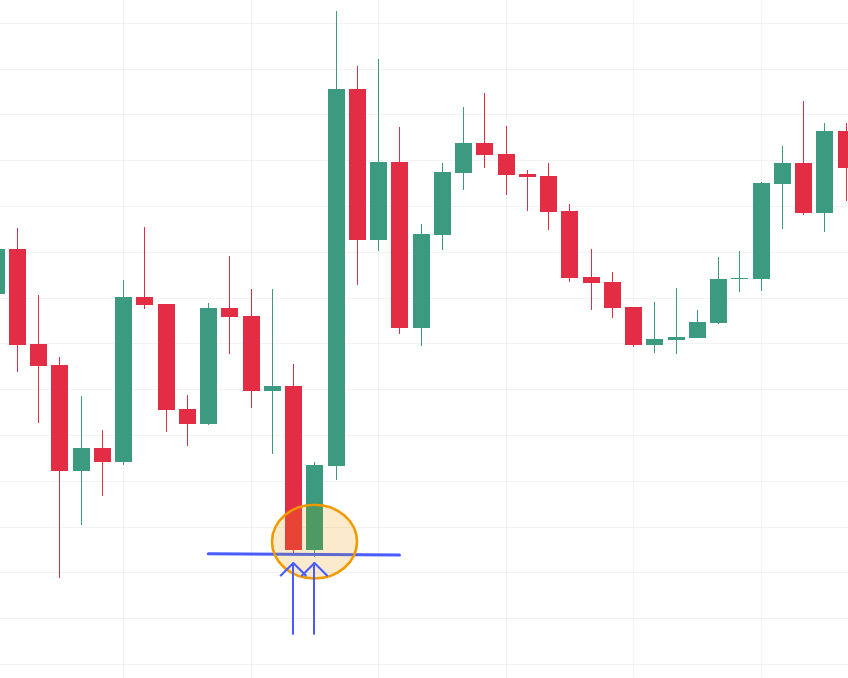
This incomplete zone acts as a psychological magnet that later pulls prices back toward it.
4. How the market reacts to a Failed Auction
Prices tend to return to complete the incomplete zone
When a Failed Auction occurs, the market moves to fix the unfinished business
Prices retest that zone and break through, completing the auction
→ At that point, it shifts from “incomplete → complete”
Prices are drawn like a magnet
If the Failed Auction is in an upper position: prices tend to rise and are likely to retest
If it’s in a lower position: prices tend to fall and test that incomplete zone
Thus, a Failed Auction has structural reasons to attract price.
5. How to apply in practice
✅Maximize profits
Example:
After a strong rise from support, pause at past high (orange box)
↳ Since there was no clear rebound, there is a possibility of a Failed Auction
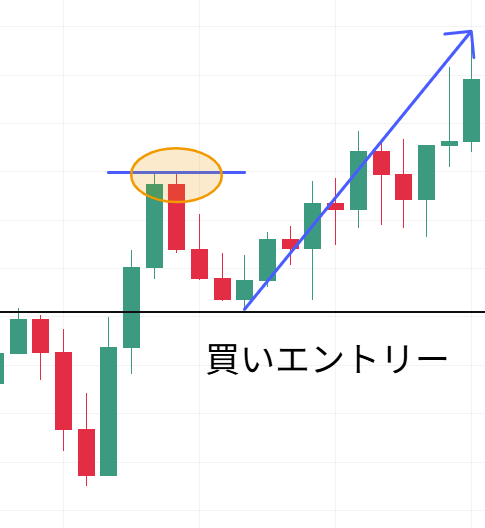
If you simply treat this zone as resistance and take profits early, you risk missing further upside
Alternatively, by viewing it as an “incomplete market zone,”
→ price has a higher chance of retesting and breaking through
Judgment: without increasing risk, profits target could be expanded
→ price breaks the zone and profits expand
?Avoid unnecessary losses
Principle at entry:
Buy entry: if there is a Failed Auction immediately below, NG → price may be drawn downward
Sell entry: if there is a Failed Auction immediately above, NG → drawn upward risks stop-out
→Always check the position of the Failed Auction to improve trade accuracy.
6. Adaptable to all trading styles
Day trading:confirmation on 30-minute chart is effective
Swing trading:observation on the daily chart is recommended
Failed Auctions can be applied to scalping, day trading, and swing trading across any time frame.
7. Summary & next up
A Failed Auction is not just a technicality; it is an “unfinished story” reflecting market participants’ psychology. The market continually tries to finish this story, so we can ride its flow.
With this knowledge:
You can predict points where price may revert in advance.
Set profit targets that are more realistic and larger.
Avoid unnecessary entries.
?Next time (Lesson 14) will integrate knowledge from Lessons 6–13 and summarize an overall view of “Organizational Price Action Analysis” from the perspectives of prop firms and institutional investors, and it will form the foundation for building trading strategies, so stay tuned!