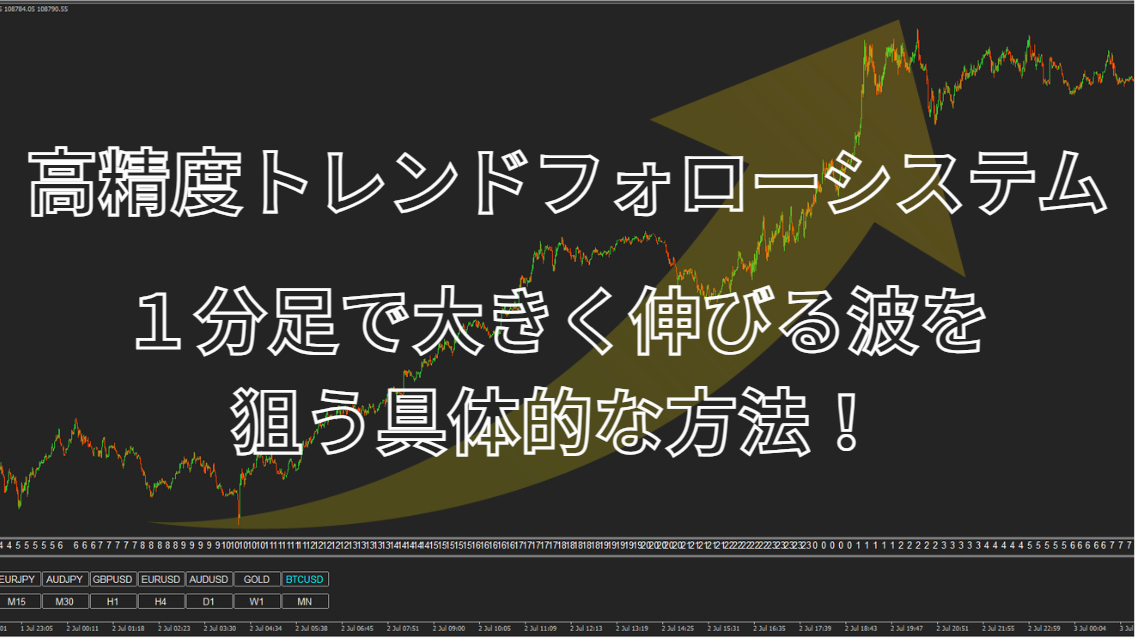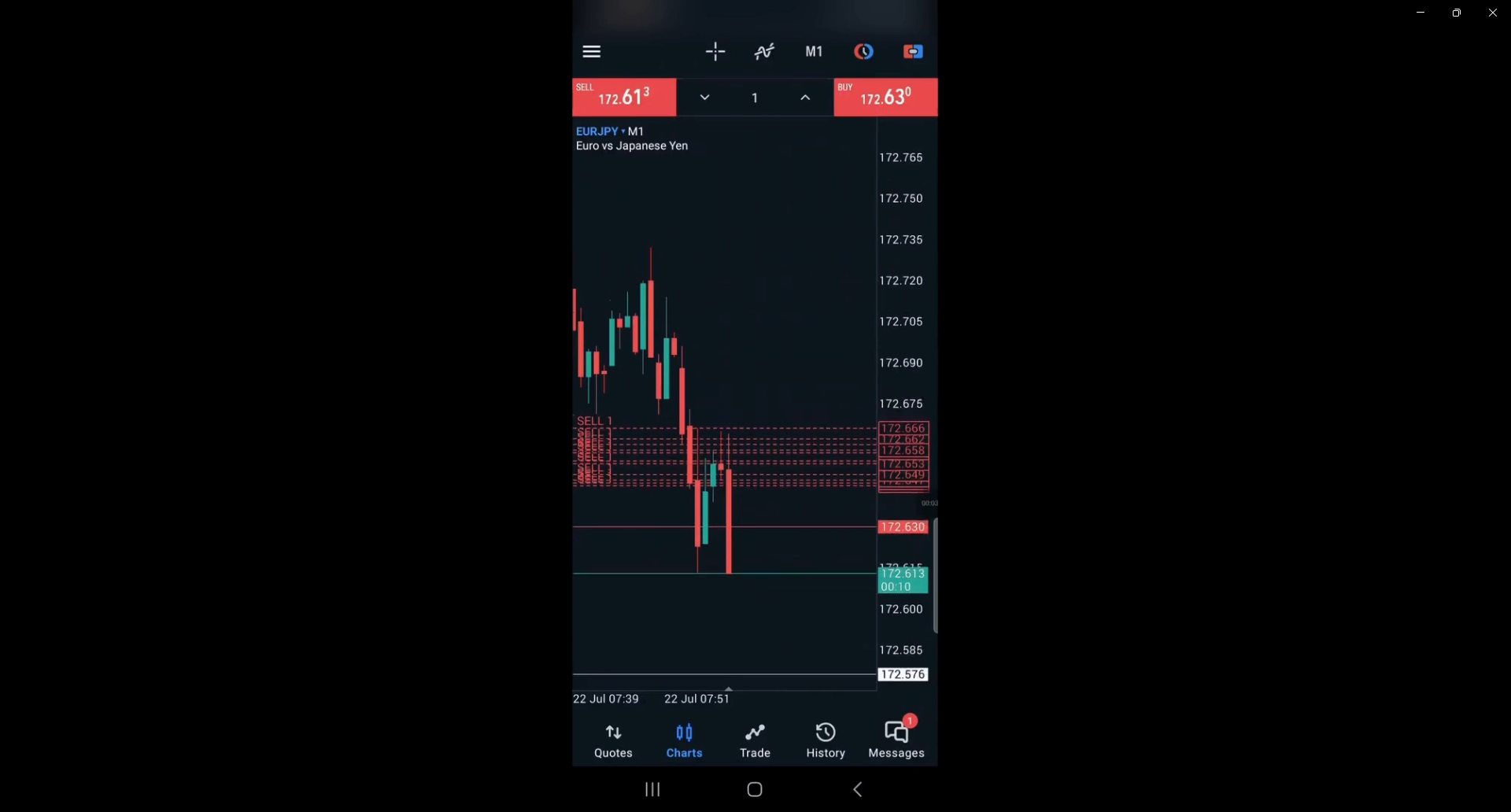

"Don't you know how to catch waves that still have room to grow?" ★ It's okay! I'll teach you! ★【 2025年06月27日 】
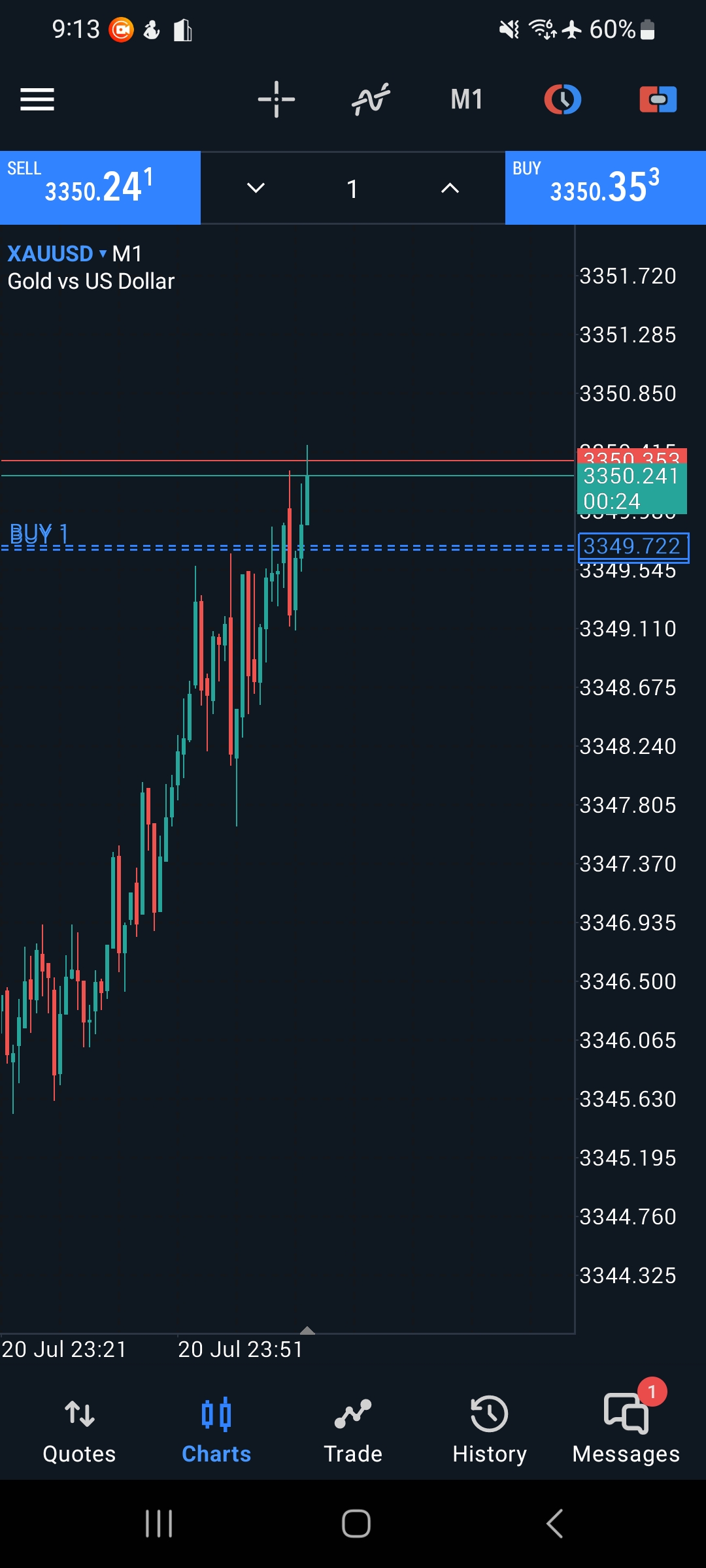
【 2025.06.27 】 Let's look at GOLD chart.
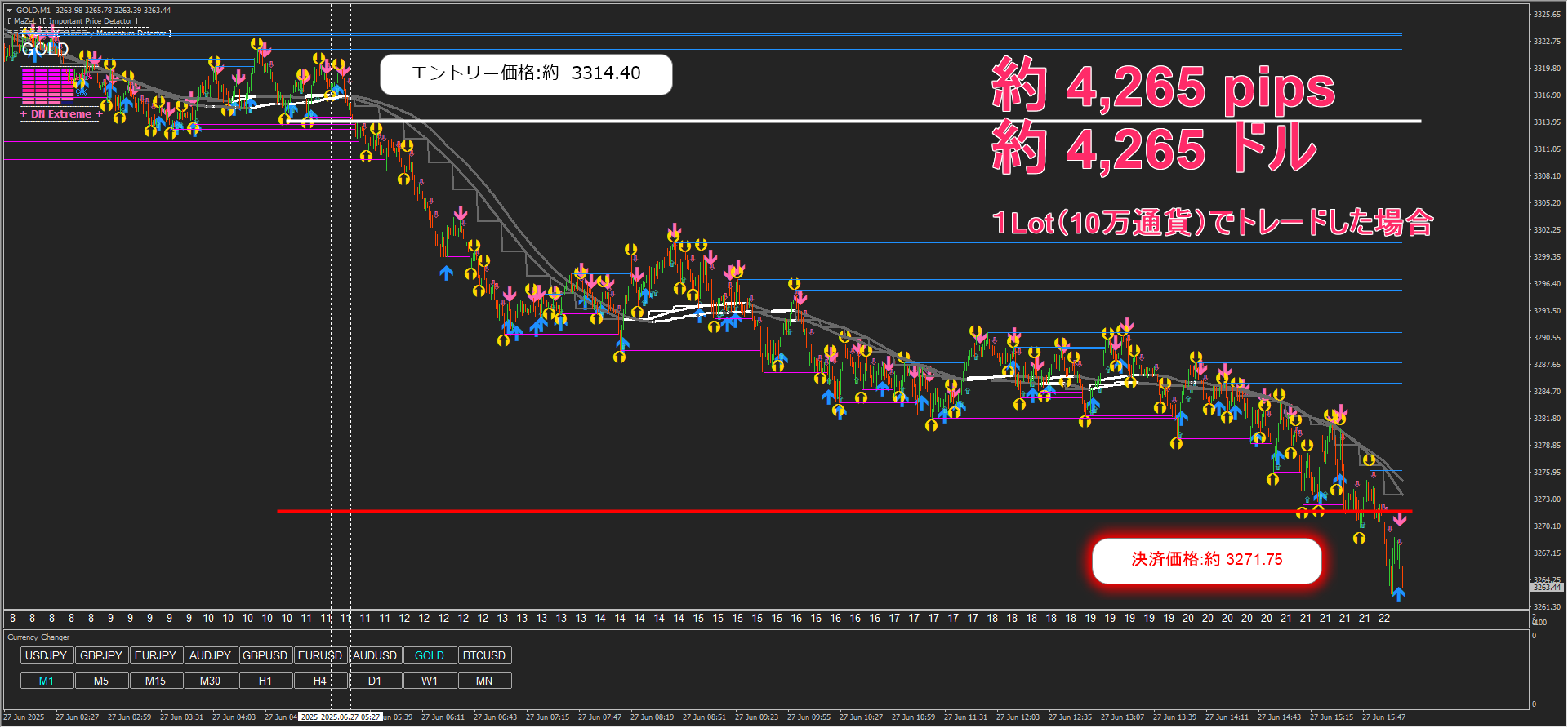
Today, it is easy to capture a large move here.
Look at the 15-minute chart, then enter on the 1-minute chart.
It is an image like the one below.
Confirm profit-taking target by IPD on the 15-minute chart.
↓15-minute chart↓
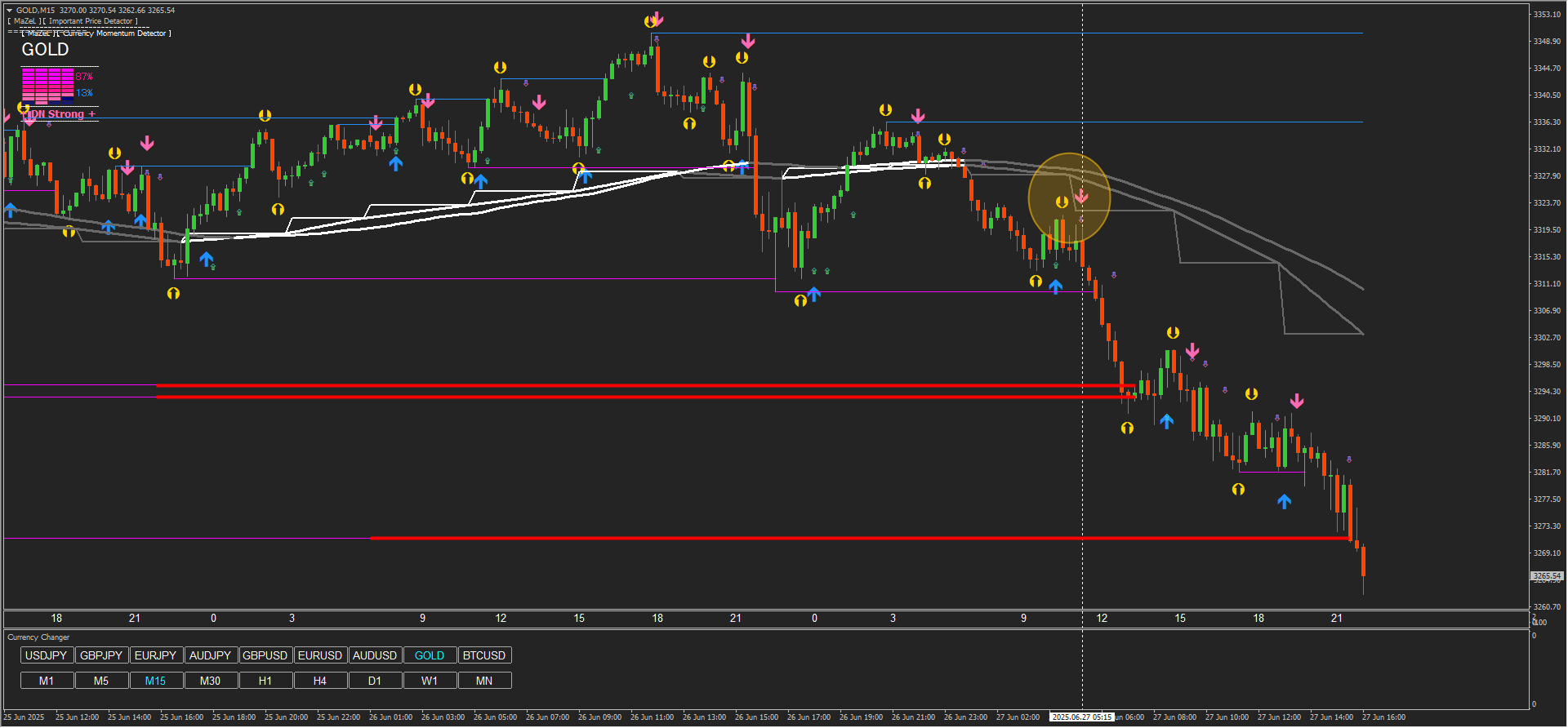
※If the profit target price of a higher time frame is reached, it may be farther away.
Therefore, before reaching there,
based on the risk management in the product manual,
it is best to firmly seize profits using the risk-reward ratio as the basis.
↓ 1-minute chart ↓
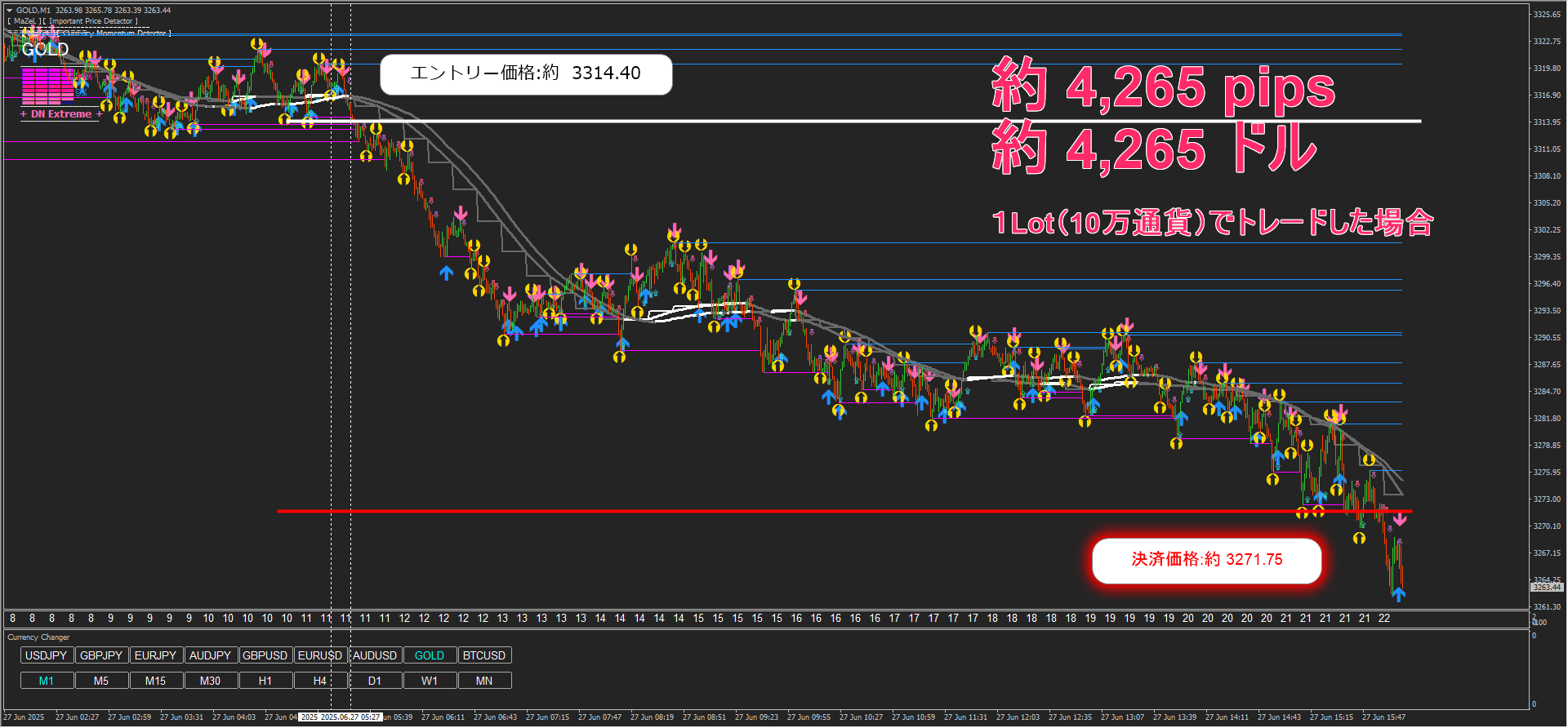
If you want to trade like this,
please read to the end.
Please refer to the following images.
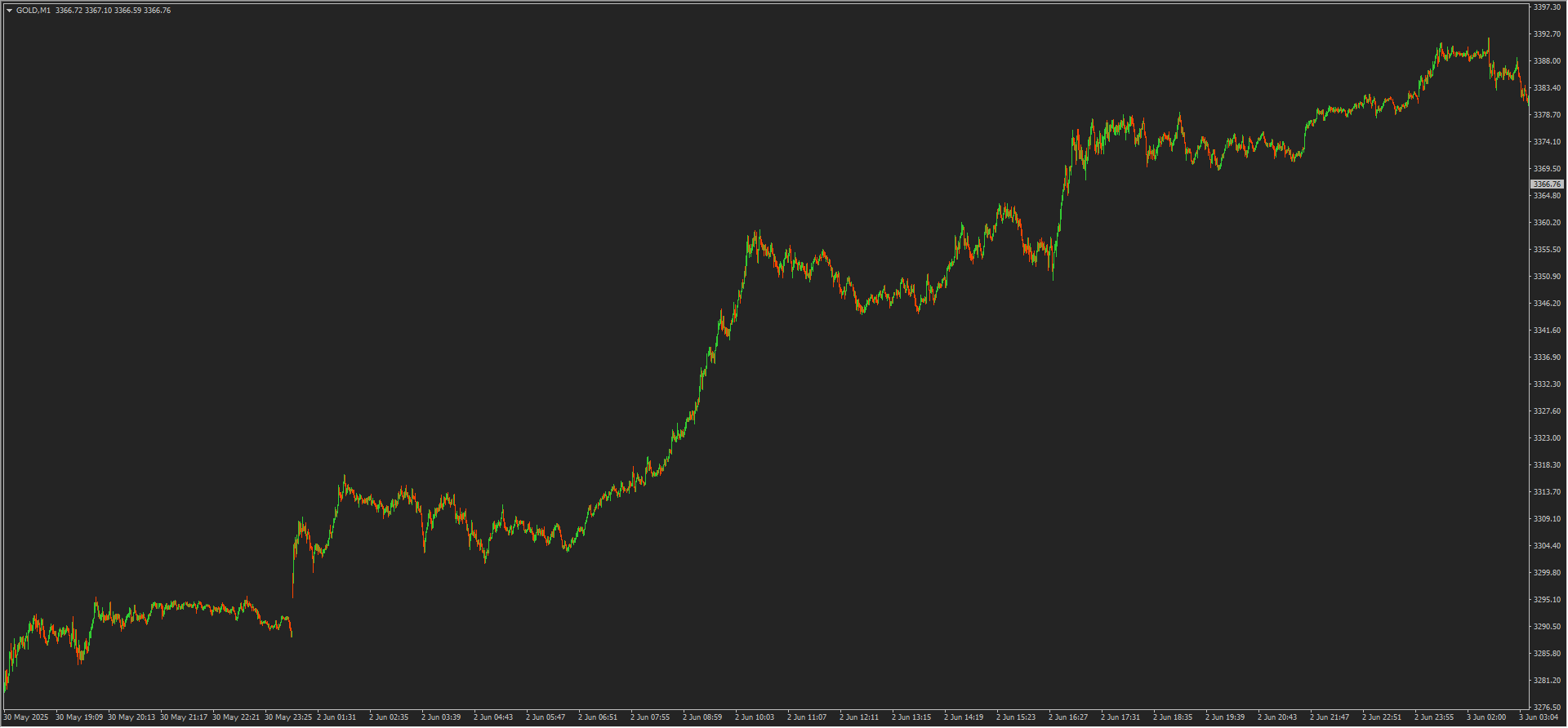
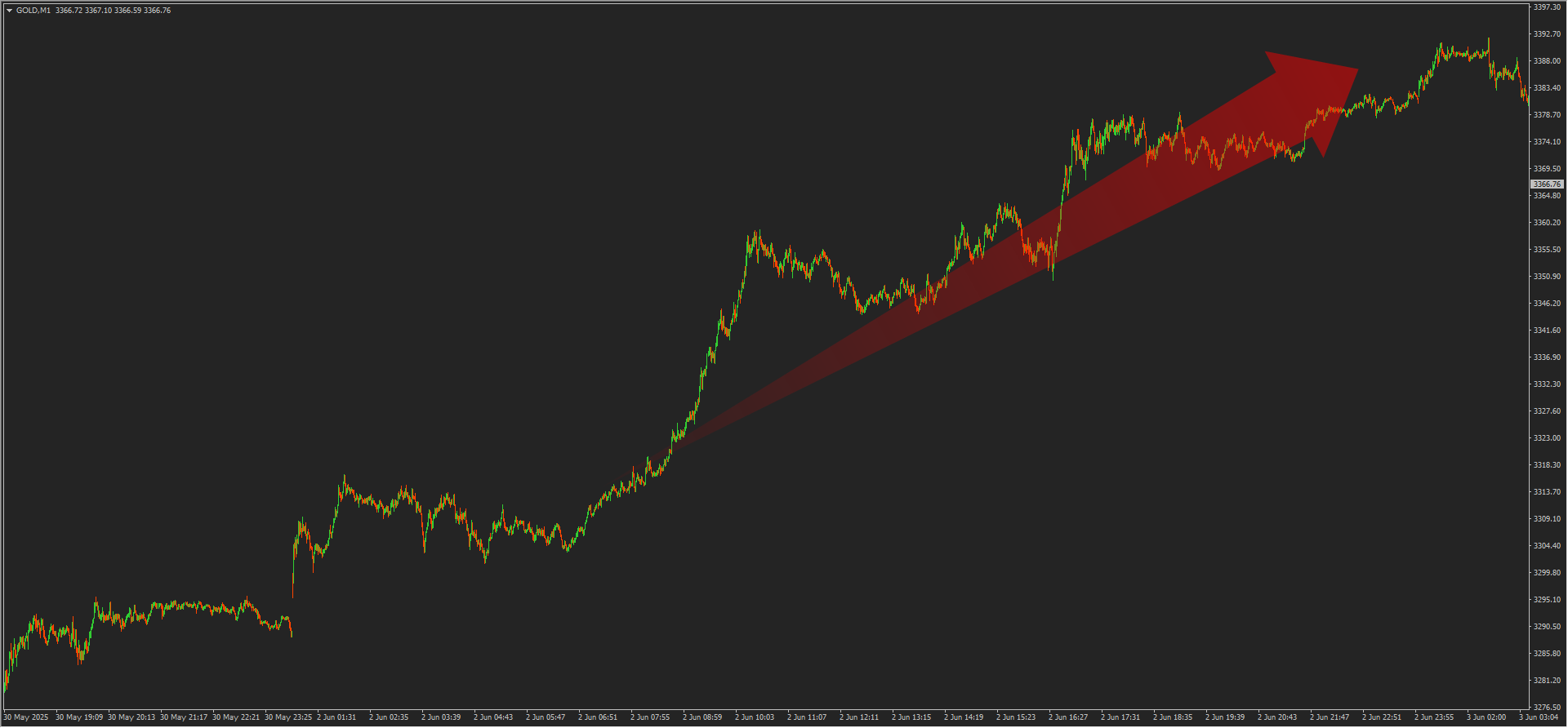
This is GOLD’s 1-minute chart for Monday of this week (2025-06-02).
It has risen sharply in just one day.
Watching this kind of wave,
“I want to ride the big wave.”
“If I could ride this kind of wave, the risk-reward would be superb.”
“I want to make a lot of money.”
I find myself just watching with my finger in my mouth…
Even when planning a strategy, it’s hard to realize…
If you are reading this article and
you are worried about not being able to ride such waves,
please read the following article!
A method to solve thiswill be shared!
So, how should you aim?
A method that even beginners can easily imagine is
“Aim for the big wave using lower time frames”
I think this is the strategy.
Please refer to the image below.

We display the earlier rise on the 15-minute chart and apply a white frame around the area.
Let's observe the wave movement.
※From here on, how to draw waves differs from person to person, so treat this as a reference.

As drawn in yellow lines, waves are hitting on the 15-minute chart.
Since the 15-minute chart is 15 times larger than the 1-minute chart,
even one wave can yield a high risk-reward ratio.
Let's confirm this on the 1-minute chart.


On the 1-minute chart, waves are breaking as shown by the red line.
“I understand the wave movement, but how do I enter?”
Some of you may have this question.
Let’s test a few widely known methods.
For example, using Dow Theory or line trading,

the basic forms allow this kind of analysis, it seems.
Since analysis methods and wave interpretation depend on the individual,
the above example is just a sample,
beginners in particular may find it difficult.
Also, if you rely on widely used moving averages,
you may be even more confused.
※ Short-term: 20 SMA & EMA
※ Mid-term: 50 SMA & EMA
※ Long-term: 200 SMA & EMA
※ Refer to numbers commonly seen in books, online articles, videos, etc.

Nevertheless, those who have achieved results may think like this:
・It is important to narrow down the methods you use and train hard
・Use indicators to establish criteria for how to read waves
・Master winning patterns and losing patterns
・Study by watching many different entry points
etc...
Indeed, there are many ways to profit in the financial markets,
and narrowing down to one and mastering that method is
not something to deny; rather, it is a shortcut, in my view.
However, how long will that take,
whether that method is truly optimal for you,
even if you research a lot, the average risk-reward may be “-1 : +1.5”
and the win rate may be around 55%.
“If there is profit, even that is fine,” some may say.
However, if you can change the situation where you are not satisfied after putting in effort,
that would be a better outcome.
In the market, on a macro scale, similar shapes appear often, but
on a micro scale, the same shapes do not recur,
and there will be times when you need to rethink each time.
Of course, it’s wonderful to explore methods that suit you.
However, achieving profits while continuing to search for a method that suits you
is a very meaningful environment to create.
If I use the system I have developed, “猛攻鉄守” (Mokko Tetsu Mamori),
in the previous market, with a “simple 4-STEP” you can enter as in the image below.
↓ 15-minute chart ↓

↓ 1-minute chart ↓

↓ Overall view of the 1-minute chart ↓

If you are curious about the system details,
you can view them at the URL below.
There are testers who doubled in one month
to increase assets with “Aggression and Defense”
Destructive power × Fast trading system!

★Especially for beginners, those struggling to make a profit should get this!★
Solid foundations! A leap forward!

Fully supports scalping and binary options.
High win rate recorded
A “certain winning opportunity” , detected and reacted to with high precision by the trading system!
If you haven’t viewed it yet, please use the link below!