

[Amida式: The market is mastered by volume profile] Lesson 4: The pattern of strong rejection – the moment the market says "no"
In the previous articles, we explained the range market where organizations quietly accumulate positions, and the "strong propulsion pattern" where organizations move decisively to create powerful price moves.
However, organizations do not always move the price in directions unfavorable to them.
When necessary, they clearly reject a specific price range and intervene in the market.
This is the pattern known as "Strong Rejection."
3. Strong Rejection – Signals of Organization Defense
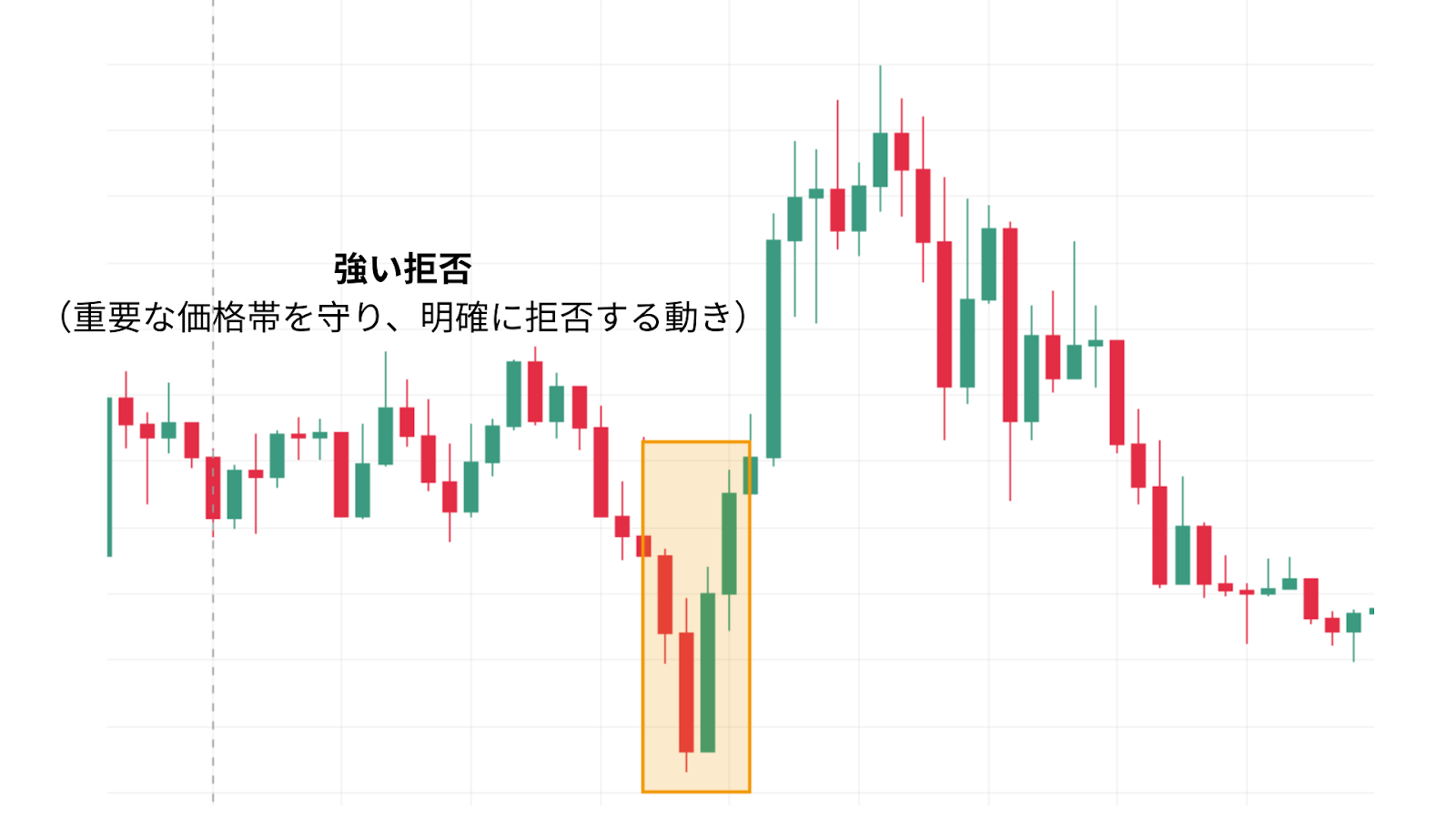
One of the clearest signals that an organization is defending its position is the "rejection candlestick" that has a long wick and a small real body and closes in the opposite direction of the initial breakout.
For example, if the price spikes up and is strongly pulled back, with a long upper wick forming a pin bar, buyers tried to push the price higher, but the organization (or a strong selling force) intervened and rejected that price range.
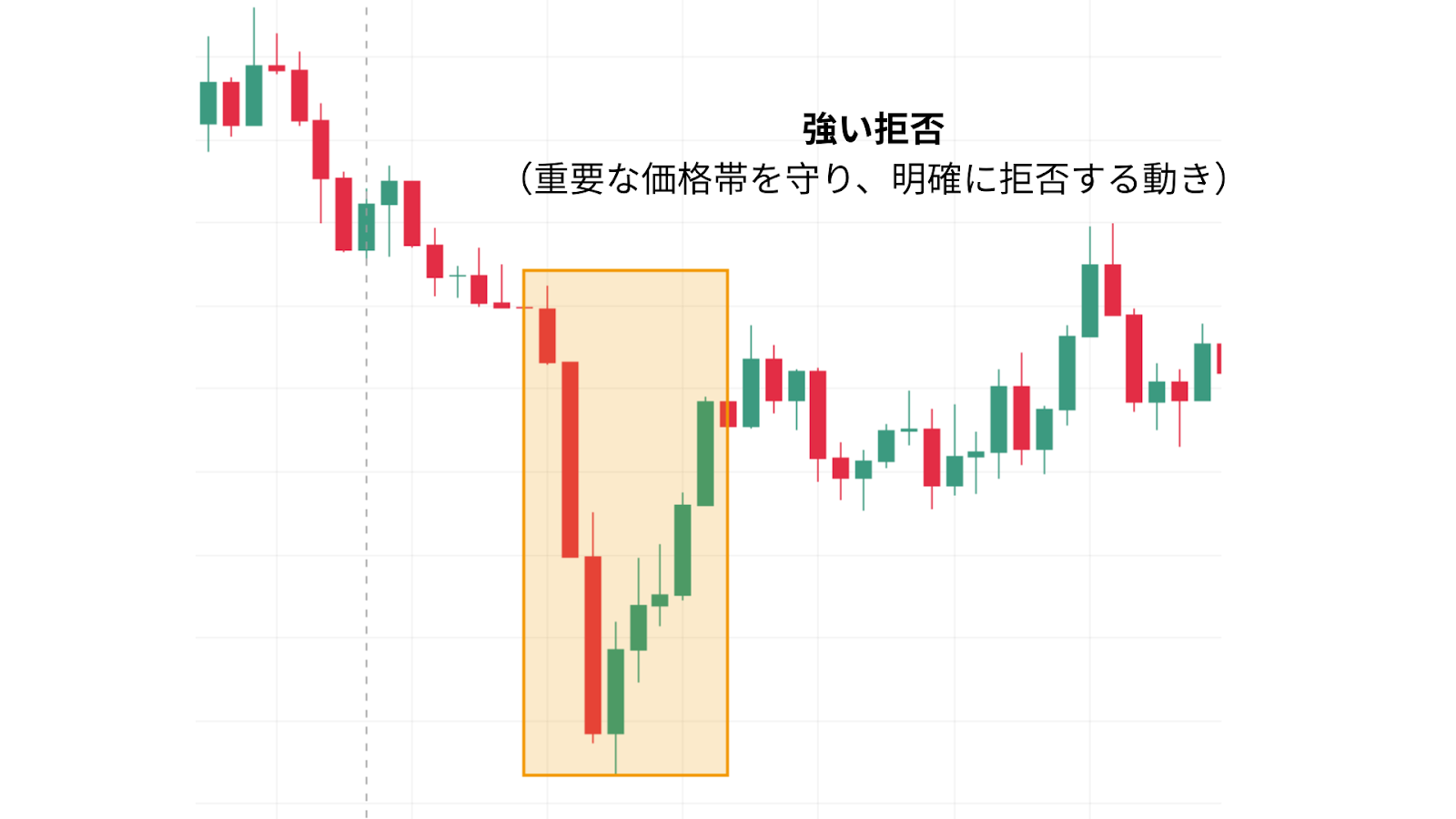
Conversely, if price at the market bottom drops sharply but strongly rebounds and a candlestick with a long lower wick forms, it suggests that large buyers have stepped into the market.
? Price ranges that are strongly rejected are important zones where organizations defend or start building new positions.
Also, they are areas to watch closely as entry points when combined with stop-loss placement and other factors.
? How to identify:
Long wicks with small bodies, appearing near the highs or lows.
Prices are strongly pushed back after testing resistance or support lines.
Often there is a clear reversal confirmed in the following few candlesticks.
Divergences or rapidly increasing volume may accompany it.
➡ This pattern is a strong signal that "the organization has rejected this price range," and we should align with the organization's side.
In this article, you have understood how the organization "rejects" a specific price range and how that pattern indicates a potential reversal point.
If you time it correctly, it can be a very attractive risk-reward entry point.
Next time, we will review the three patterns discussed so far — "range market," "strong propulsion," and "strong rejection" — and derive practical trading strategies.
Please stay tuned.