

[Amida-style: Dominating the Market with Volume Profile] Lesson 2: How to Infer Organizational Activity from Price Action
As I continued trading, I realized one important thing.
It is “the importance of identifying zones where large institutions were involved in the past.”
These zones attract large amounts of capital, and the market is highly likely to react strongly in the future.
For me, “tracking the footprints of institutions” is one effective strategy to improve win rates.
To discern institutional activity from price action, there are three main signals:
Range market (Sideways)
Strong initiation (Aggressive Initiation)
Strong rejection (Strong Rejection)
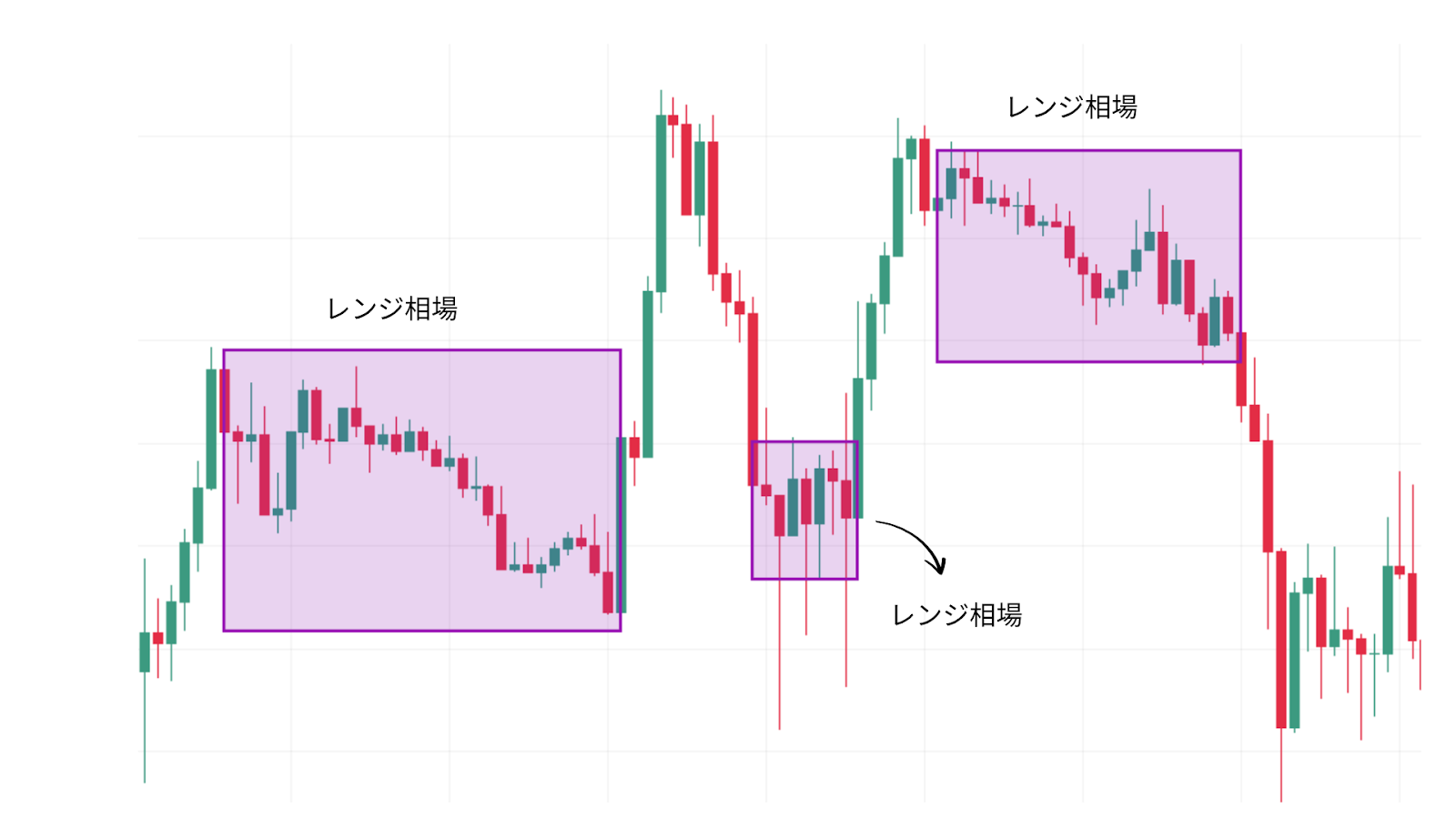
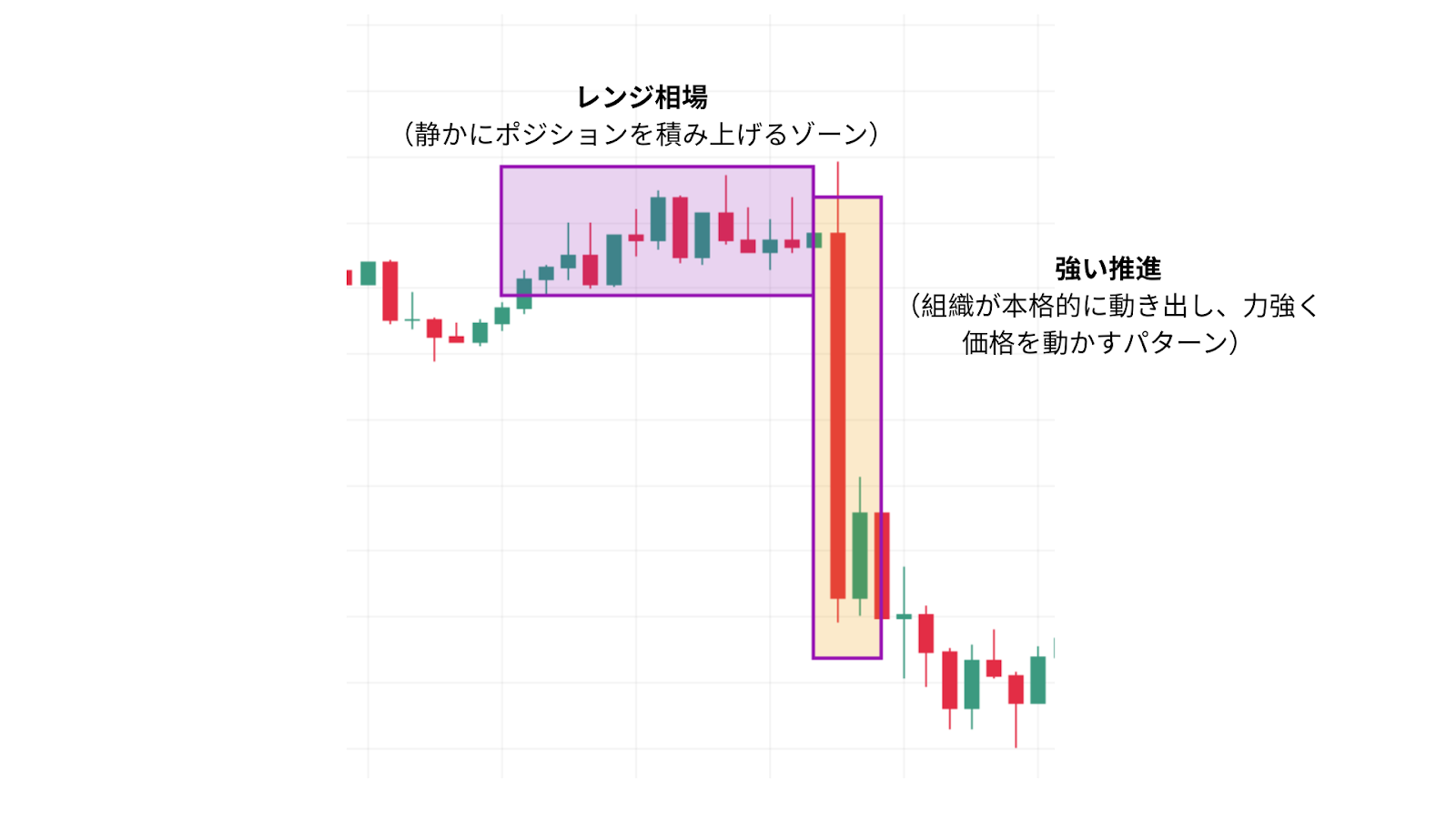
1. Range market – the phase where institutions quietly build positions
Institutions such as financial firms manage far larger sums of money than individual traders.
Therefore, if they enter en masse, it can significantly impact the market and create prices unfavorable to them.
To avoid this, they split orders and gradually build positions over time.
And the most efficient way to do this is in a low-volatility range market.
When analyzing charts, I first focus on this “range zone.”
This is where institutions “conceal themselves” and prepare for the larger moves to come.
? Quick tip:
When you display Volume Profile, you often see volume concentrated in the range zone.
This indicates a large pile of positions was accumulated there.
? This logic is valid on any timeframe (from 1-minute to weekly charts).
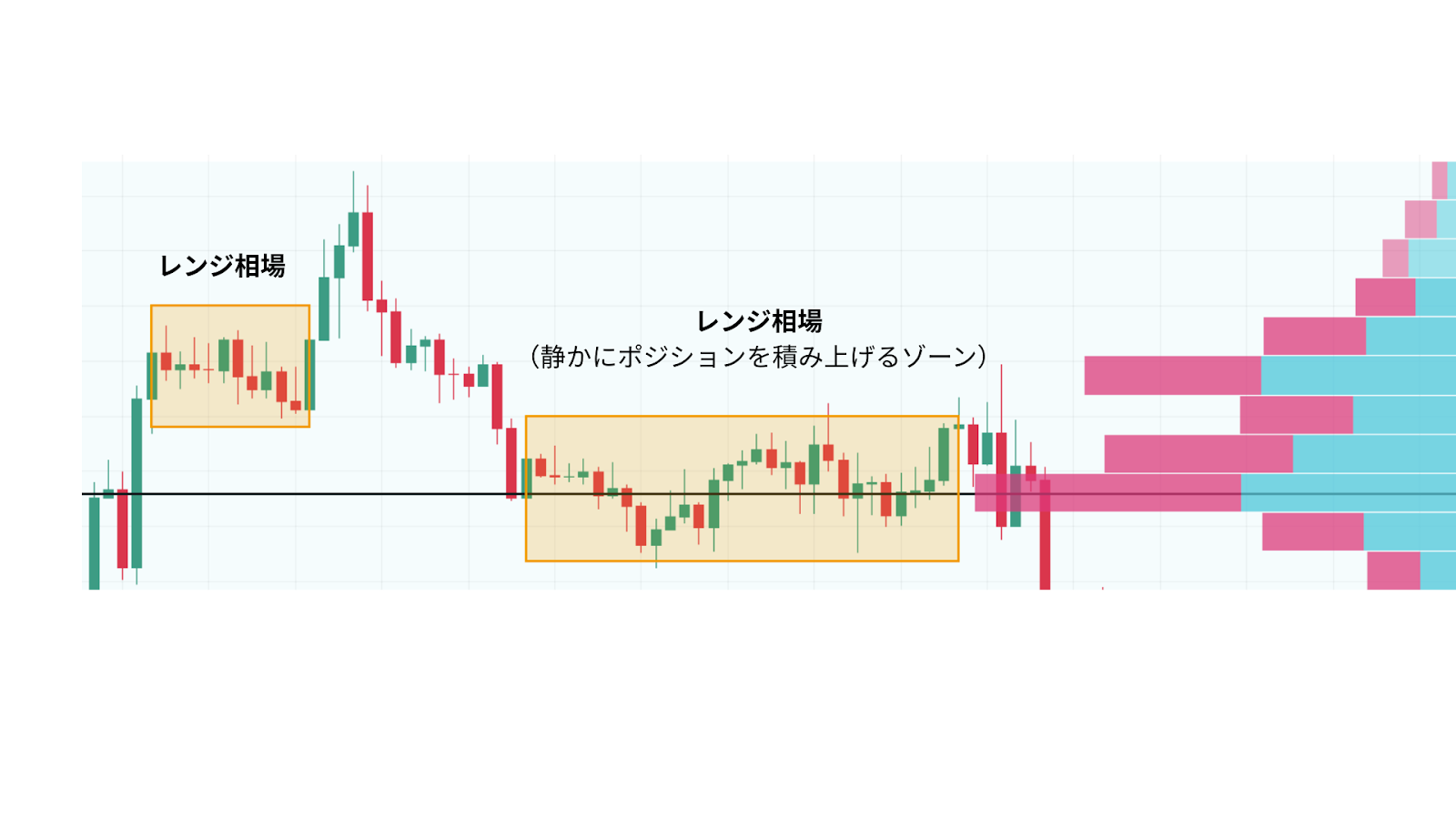
? How to identify a range market:
Prices move in a narrow range with no clear trend
Small-bodied candles with upper and lower wicks continue
Volume is stable or unusually high (when using volume)
Several candles in a row extend, but there is no clear breakout
➡ This is precisely a sign that institutions are quietly accumulating.
Instead of rushing into entries, it is important to observe the reaction to impending breakouts.
✅ In conclusion
That’s all for this time’s explanation of the “Range Market (Sideways).”
This is a crucial area where institutions quietly build positions, and if discovered early, you can seize opportunities for the upcoming breakout.
Next time, we will take a closer look at “Strong Initiation (Aggressive Initiation)” when institutions begin to move the market more seriously.
Please look forward to it.