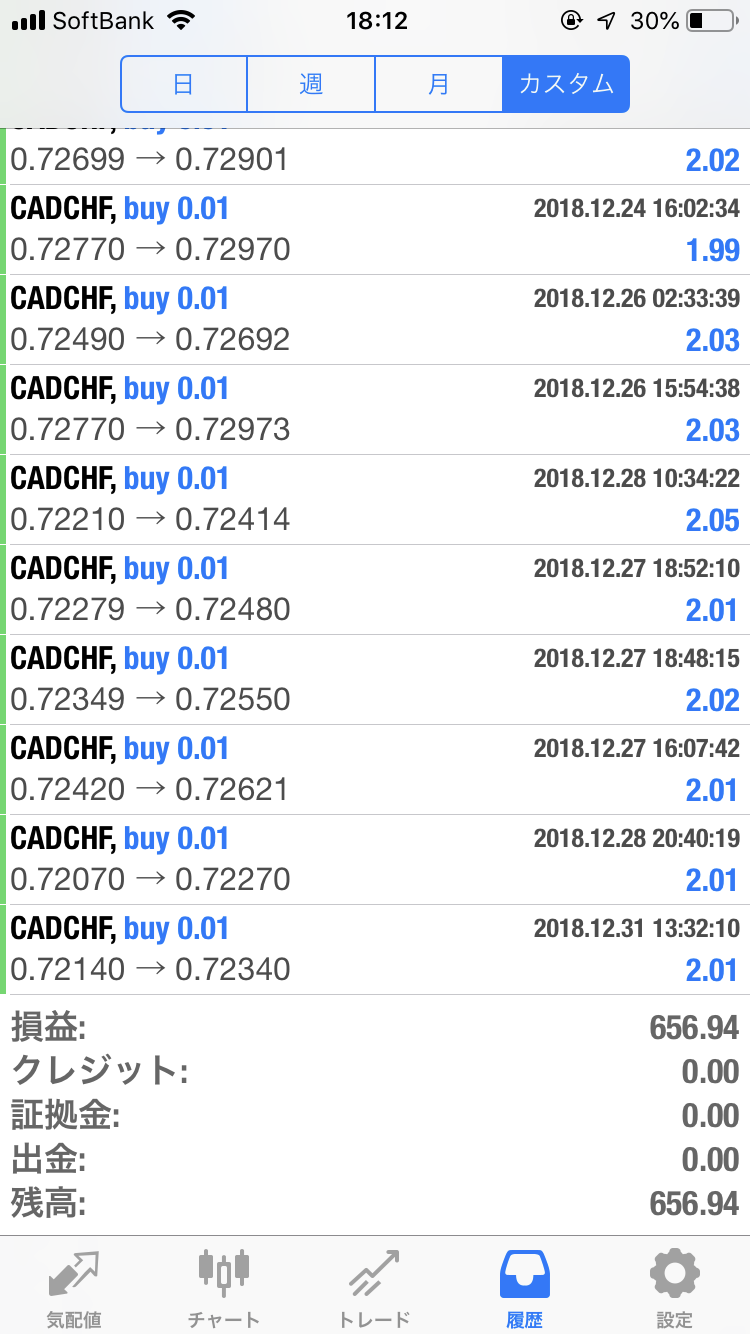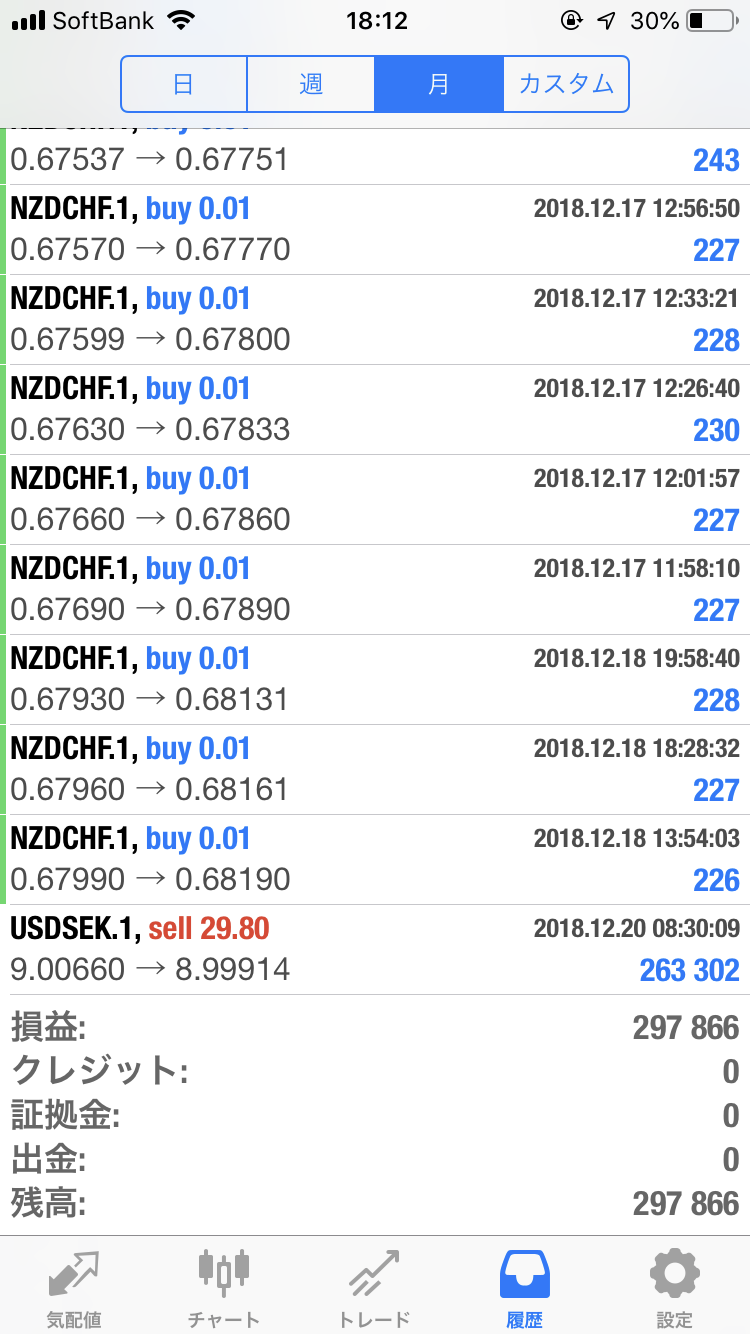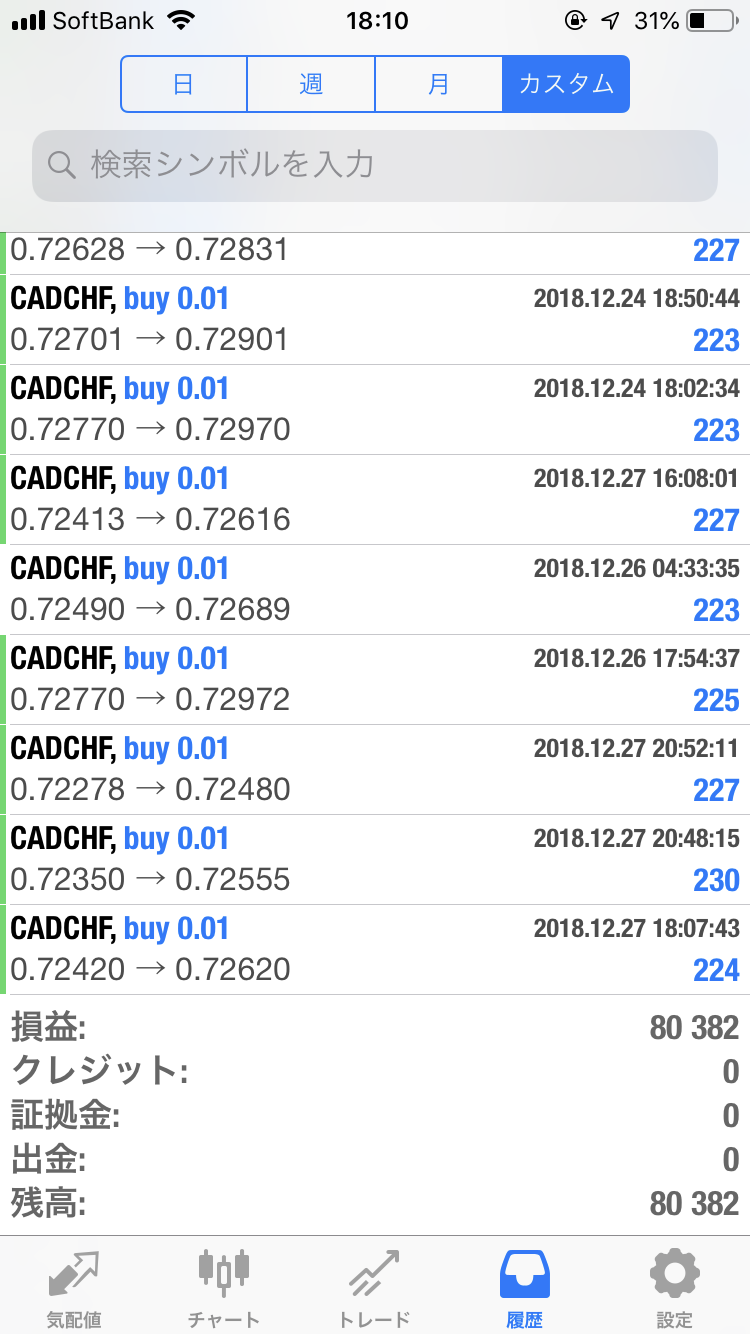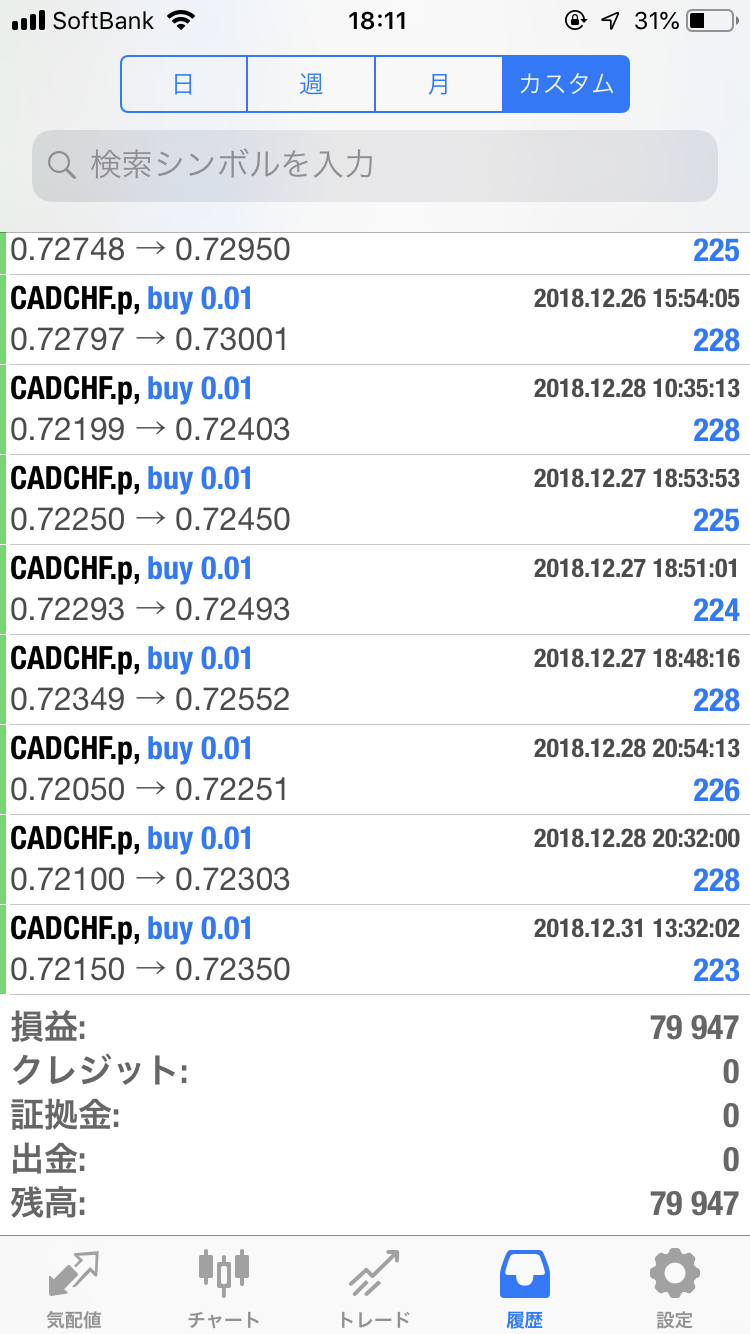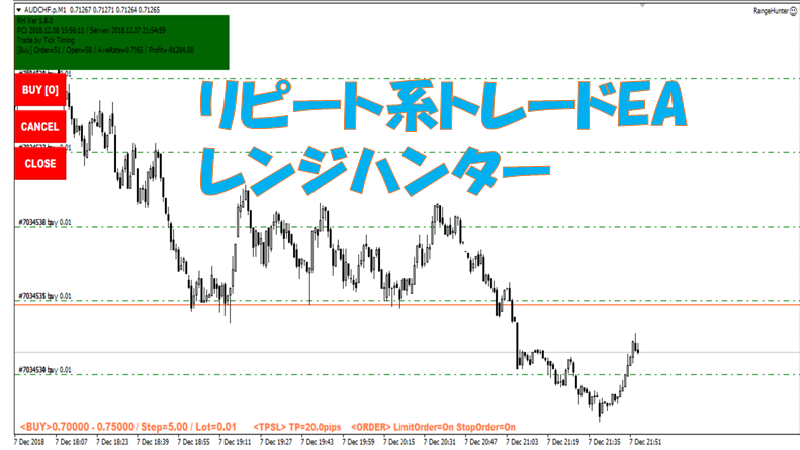

Don't fall prey to hedge funds! Range Hunter ¥263,871 (December)
This is Kawachan. Recently there was a sharp drop called the Flash Crash. I didn’t have any problem with this crash, but it seems the world around was in a terrible state.
Content about forced liquidations and margin calls is being posted on Twitter and YouTube
One of my accounts shows a current (as of January 6) unrealized loss of about 5%, and at the peak of this sudden drop I think it was about 15%. For long-term trading, after all,risk management is extremely important, right?
This time, I would like to explain why such things happen.
What is the true nature of the Flash Crash?
A sudden drop in the cross-yen during the morning of January 3
It plunges in an instant, then quickly recovers. This kind of price movement is called a flash crash. Could this have been predicted?Prediction is, of course, not possible, but we can anticipate. I’ve been trading FX for about 13 years, so I have seen drops worse than this many times. As I mentioned in a previous article about repeatable strategies,there are periods, like from Christmas to year-end, when trading volume is low and prices can be moved with a small amount of capital. In other words, some market makers and hedge funds can more easily push prices around.
Below is the previous article about repeatable strategies.
↓ ↓ ↓ ↓ ↓
Repeatable Trading: Stock Crash! Prepare for the Coming Risk-Off!!
What is the year-end stock crash?
First, there was a crash mainly in U.S. stocks at year-end. I personally see it as a correction. It is a large drop for a correction, though. Looking at the chart below, over the past three years it has risen by more than $10,000 on a rising trajectory. This can be said to be overbought, or a small bubble. Therefore, those who bought stockstake profits and sell short from overbought conditionsbelieve that. There aren’t clear crash factors like the subprime issue. The Fed has been repeatedly raising rates and companies are a little strained, perhaps. Still, after all these rate hikes, stock prices rose quite far, didn’t they?
Many people probably lost money in stocks during this crash. The price drop is large, but the drop percentage is about half of the rise. The chart below is the Dow Jones Weekly chart.
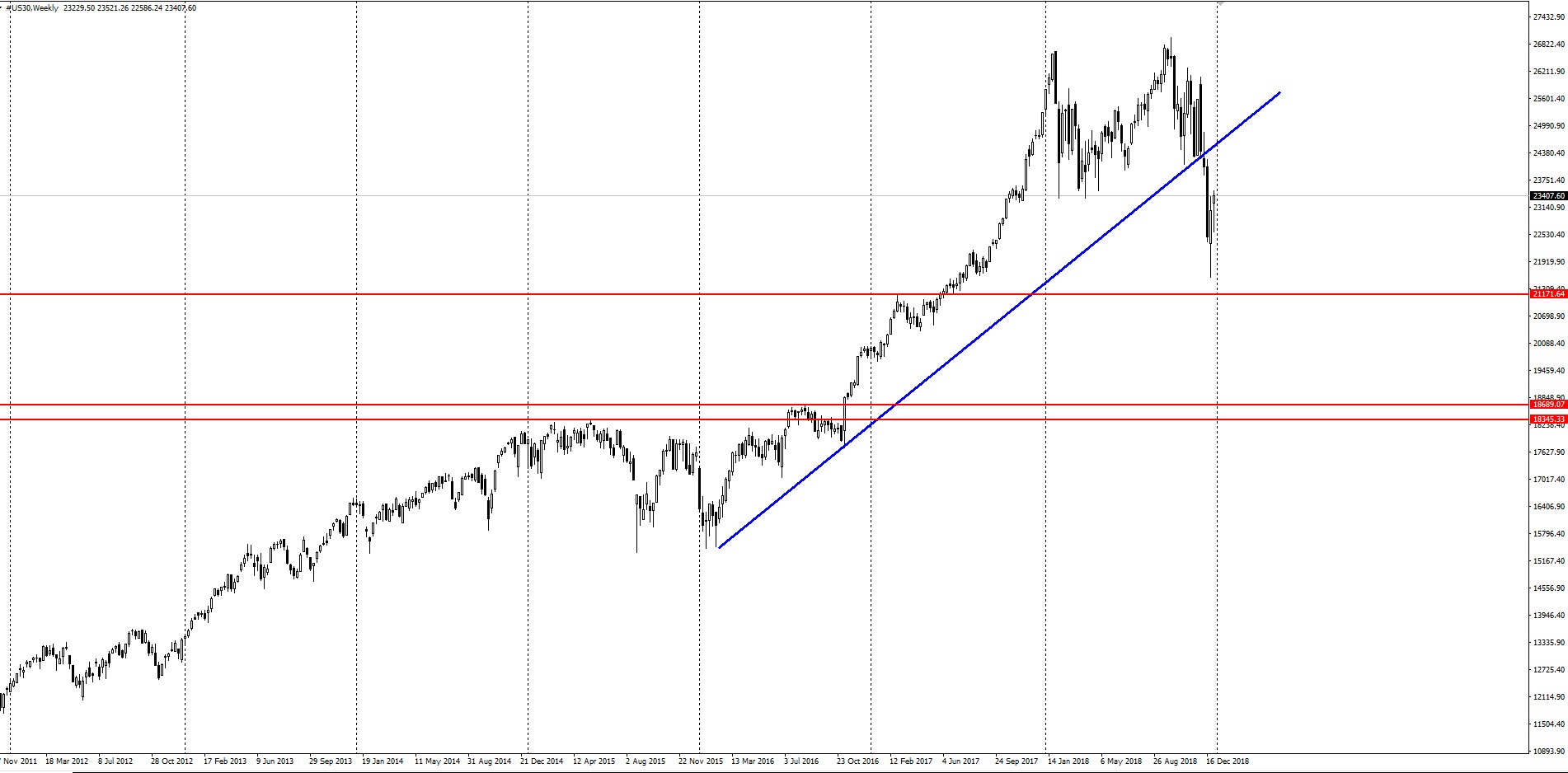
(Dow weekly chart)
Next, a fall aimed at FX
However, the cross-yen did not fall that much. This feels a bit odd. So what gets targeted isthe funds of FX clients. Among colleagues, we were discussing that a crash might be coming soon.
Initially I predicted the pound ahead of the Brexit, but this time the yen was targeted. Especially the AUD/JPY, I suppose. In particularJapanese customers’ “Toraripi” and “Gurutore” AUDJPY buying positionsseem to have been targeted, I think.
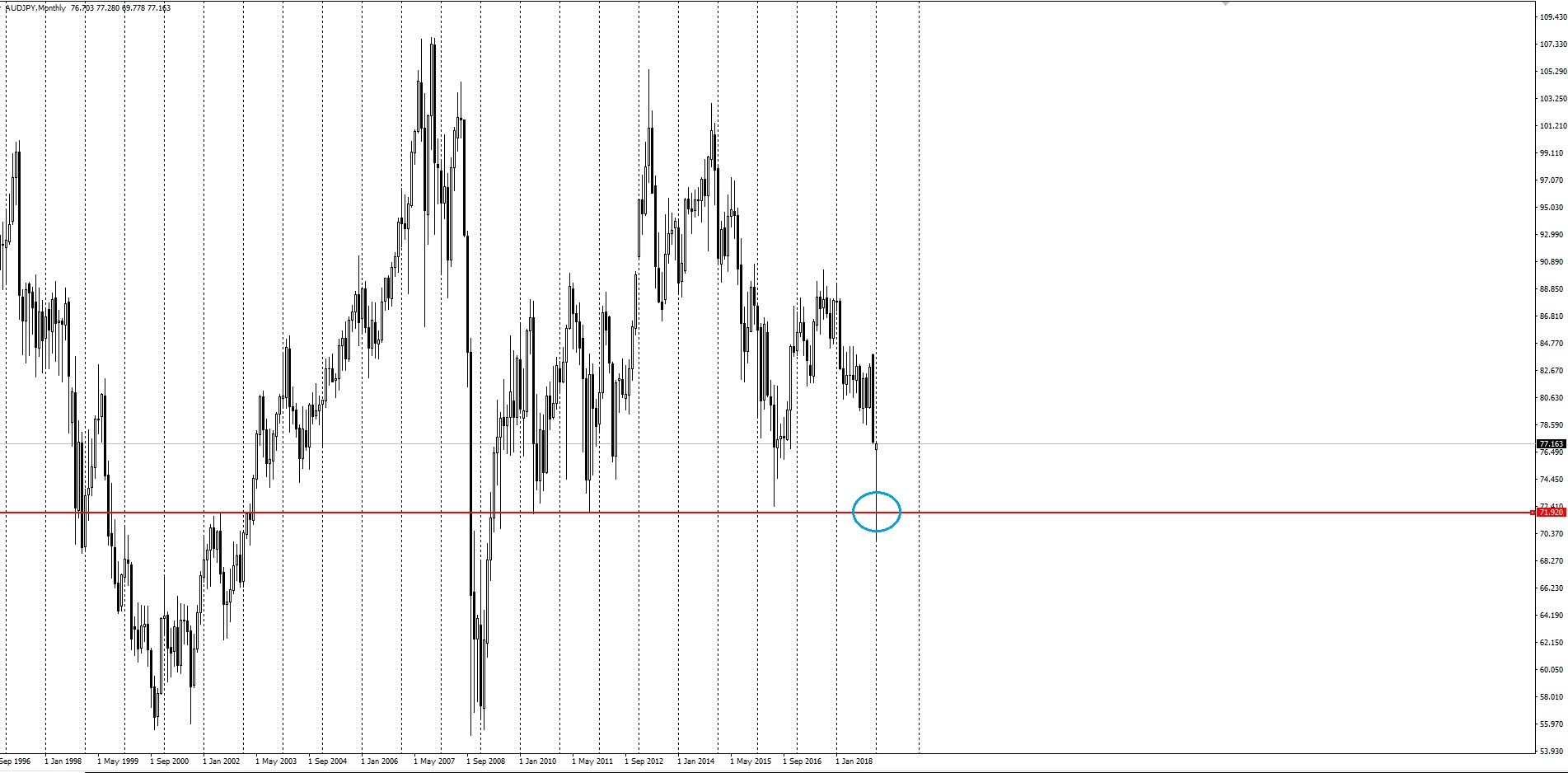
AUDJPY fell by about 10 yen over the past year. It was pulled down by year-end stocks in particular. Yet many people did not reach the level of getting liquidated. The red line is the monthly support line, and the blue circles around that area indicate places where many stop-loss orders were likely lined up. I believe some hedge funds and others targeted this rate.
Why do hedge funds trigger such moves?
Why would hedge funds do this? It’s becausethe FX mechanismis at play.
To put it simply, FX is like a platform created by banks (market makers) around the world. FX brokers are like their subordinates.Think of it as a large-scale casino or pachinko parlor. That meansa system designed to let individual investors play and extract profits. The big funds or speculators move large sums of money within that system. In short, they play the role of the house, taking profits from individual investors’ funds. And sudden, instantaneous drops like this happen when
trading volume is thin (when the New York market is closed in the morning) or during year-end and New Year holidays, making it an ideal target. The last time there was a crash of the pound in 2016 after the Brexit, andthe pound-yen dropped about 1000 PIP in the morning. This time, about 500 PIP dropped. How much capital would be required to move prices by that much? And how much loss would that trigger? They know such things.
“The masses (the many people)”tend to behave in the same way.Leverage and stop losses often follow the same patternwhen trading. If you trade with the same strategy as the crowd, you’ll eventually get picked off. Iwatch Twitter and YouTubeto see what many people are trading like. It’s totake the opposite trades of those people. For long-term traders, I look at people posting long-term trades. If you do that, you can identify points where those people will face stop-outs. For example, during a crash, when they give up and cut losses, that becomes a perfect buying opportunity.To grasp the “mass positions,”social media is invaluable. You might want to try using SNS with that perspective!!
In FX, this is like a carnivorous animal (hedge funds) targeting a herbivore (retail investors), with hyenas (the outside the mainstream) waiting to reap the leftovers. We may need to be mindful of becoming the hyena ourselves.
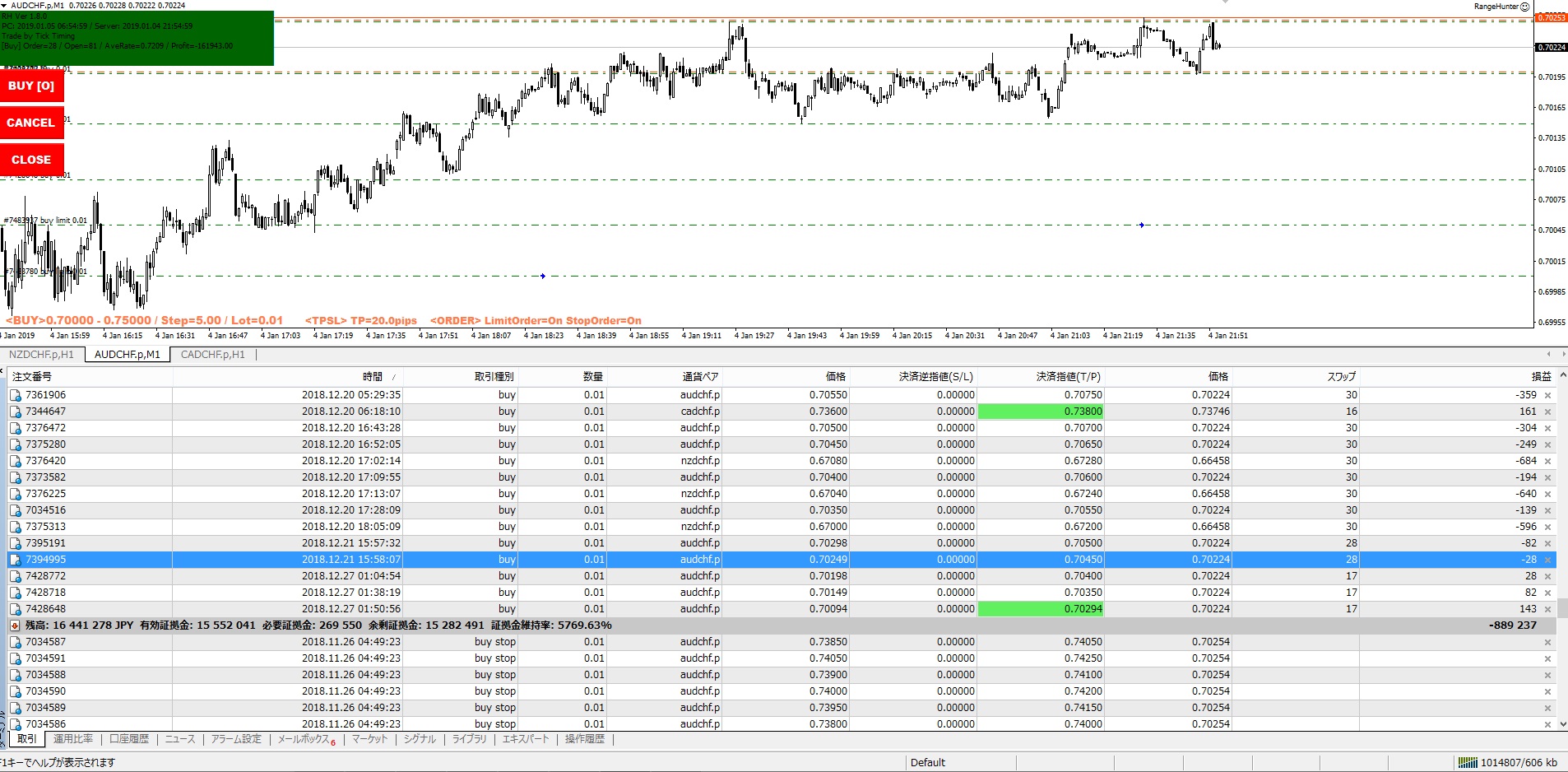
Range Hunter December Profit and Loss
¥263,871(Calculated with USD = 105 JPY. Excludes profits from indicator scalping.)