
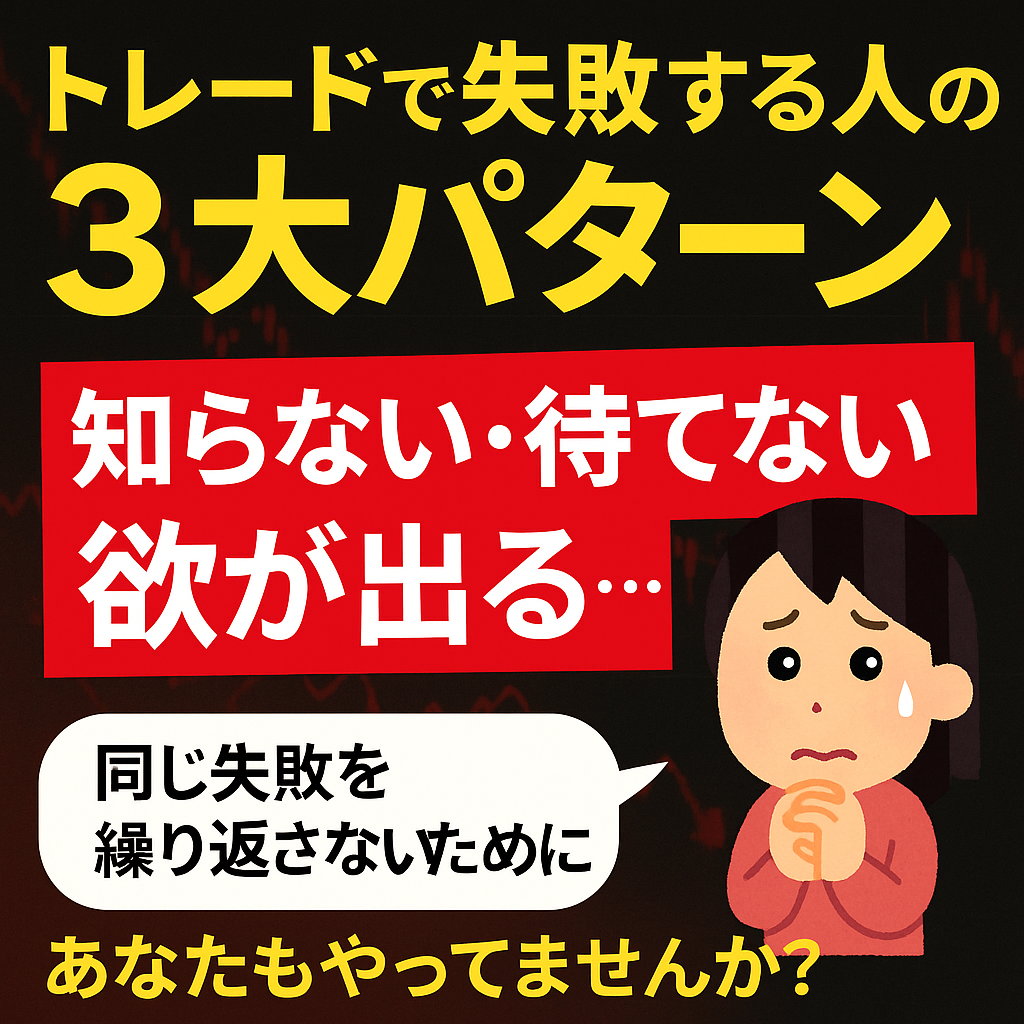
Three patterns that result in a negative (outcome)
First, I’ll say this in advance, FX is a world where you can genuinely earn as long as you do it properly.
Yet most people, starting FX to grow their money, end up losing money instead.
And their parting words as they exit the market are usually
“Investing is basically gambling.”
That’s right. It’s exactly that.
However, the reason investing becomes gambling
is none other than themselves, and it seems very few people realize this.
In the first place, how many people truly understand the difference between gambling and trading??
What about you?
Can you logically explain the difference between “gambling and asset management” if asked?
Since this is a different topic, please refer to another article for “The difference between asset management and gambling.”
I will summarize three patterns that lead to losses in FX (not limited to FX alone) below.
1️⃣Entering without knowing the timing at all carelessly entering is happening
2️⃣Knowing the correct entry point, but not being able to endure until that point, and making a feel-based entry.
3️⃣Knowing the correct entry point and entering as prescribed, but, letting greed take over and failing to take profit, holding too long and ending up negative
…I will explain.
1️⃣This goes without saying, but it’s out of the question to begin with.
2️⃣This is the most common pattern.
No matter how hard you study, if you don’t possess and maintain the basic mental state of “waiting,” you can’t expect a lasting positive outcome.
In another article I discuss pachinko pros, but the difference between gambling and asset management actually concentrates in this part. Many people suffer from “positioning to the max” but to be blunt, position anxiety = gambling addiction.
3️⃣This is for a slightly higher level of people. It’s said that 90% of trading is entry, but it comes down to the final take-profit and stop-loss. If you enter with correct (evidence-based) entry points and have a time to take profit, but greed arises and you hold on thinking “it might go further,” you end up negative because you held on too long.
Especially in markets like gold today, where everyone thinks it will rise for a long time, when you have a running loss you feel holding on is better than cutting losses, so you keep the position and end up stopping out.
Actually, among my consulting clients, recently several have fallen into this pattern.
The important thing is that with real assets, no matter how much you’re in drawdown, it’s totally fine if you have a long-term market view and are holding positions. However, with leveraged trading, that can certainly lead to a forced stop-out.
I’ve explained these three patterns above. People say mental state is important in trading. “Everyone knows that.” You certainly understand it in your head.
But unless you clearly understand what kind of “mental state” you are in during actual trading, you won’t notice yourself acting on a vague “intuitive feeling,” and your money will keep decreasing.
All three patterns above ultimately originate from the mental state.
Please take this opportunity to analyze, when you are trading and especially when you’re losing money, which pattern you are in.
Sato