

Why don’t we use hedging (two-sided positions)? There are various ways to use hedging.

Please use this to help your trading activities.
■■■■■■■■■■■■■■■■■■
Good morning everyone.
Since overseas is off today, I don’t think there will be frantic trading on the way home.
This morning's USD/JPY started quite normally.
That said, it has already moved a 1-yen range.
USD/JPY weekly chart and 1-minute chart
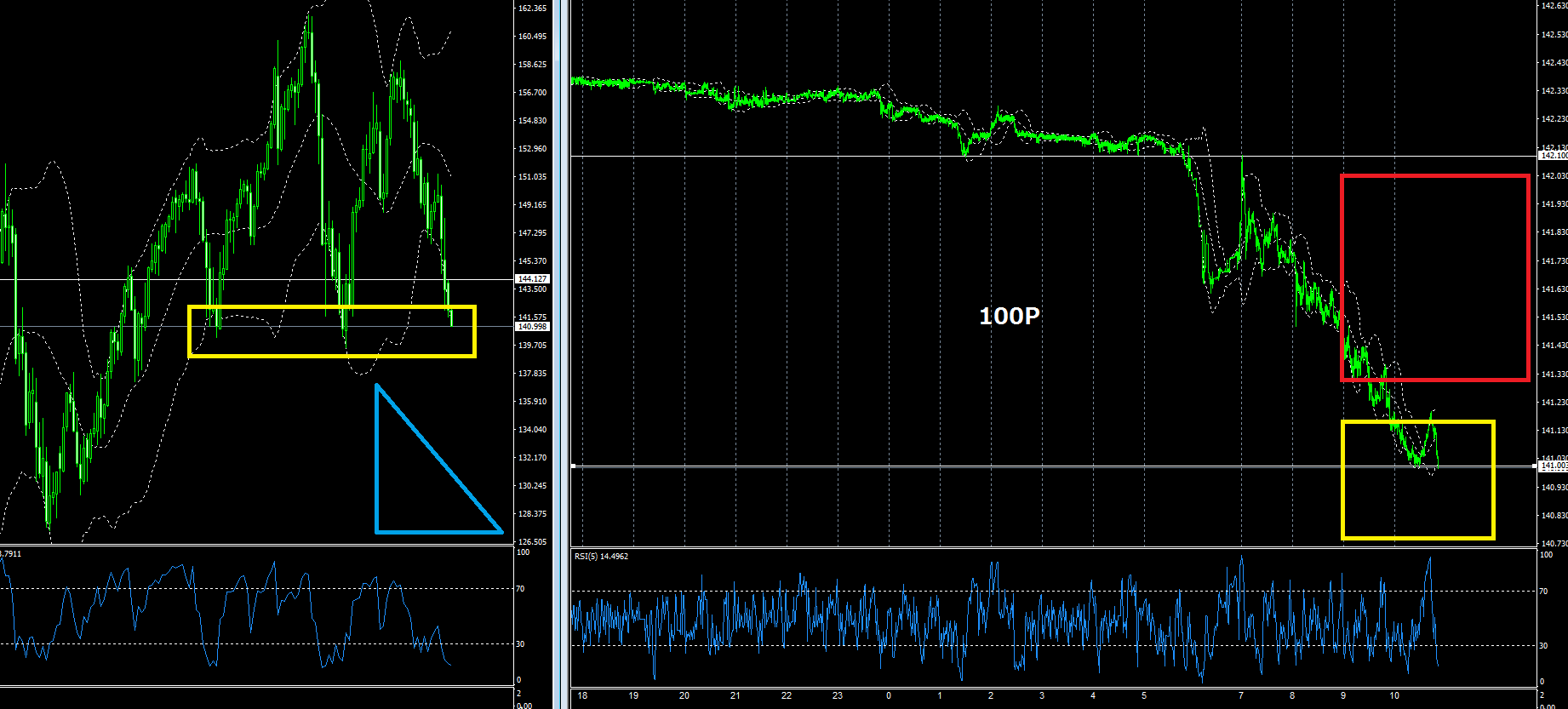
I’ve been writing recently that I think it will rebound in the weekly yellow □ zone, so I’m waiting to buy in that zone, but if it breaks down and enters blue △, the downside could be deep.
In the 1-minute chart, the yellow □ zone overlaps with the weekly yellow □ zone.
Around 140 or below, I think I’ll start considering buying.
Also, if it continues to rise today, readers of the Billionaire Trader will be buying the red □ zone on the Billionaire Trader lines and charts.
In a decline, since the Billionaire Trader chart cannot be confirmed, from the level up to 140 yen I’ll switch from buy to sell and consider a short position.
As this article has explained, USD/JPY is at a knife-edge, yet at the same time it feels ambiguous whether it will go to the edge or not.
If you’re unlucky, it could be a confusing moment where “buying causes it to fall and selling causes it to rise.”
Long ago, when I didn’t know which way it would go, I naturally wondered about “doing both” (hedging).
So I researched hedging and arrived at the conventional hedging strategy.
You take positions both long and short at the same time, and you gradually exit from the profitable side while increasing positions, a common hedging practice.
At that time the spread was thick, about 5 pips for USD/JPY.
In such an environment, spreads losses were inevitable, and as the number of positions increased, so did the required capital.
Fortunately, back then domestic regulation allowed 400x and 200x leverage, so one could get by momentarily, but as the position lasted longer (a month or so), capital became a problem, and the result was
not profitable relative to capital used
long hours of commitment
and other drawbacks, leading to the conclusion that it wasn’t very usable.In such a contextFX trading: Unusual hedgingled me to consider• Short time, ideally within an hour. No, even shorter hedging positions• Easier capital management• Not becoming financially poor from stop losses• Is there a way to enter like scalping?• No long time to settle• Want to reverse on longer frames like 1-hour or 4-hour• Ultimately, insurance if it isn’t profitable• If a reversal opportunity is razor-close, to take a positionThus, I was trying to figure out hedging trades that would suit me.Then came the era of 25x leverage reductions, 20% tax reform, and spread reductions,so I thought, this is the way to go!!SoFX trading: Unusual hedgingled me to this approach.This hedging covers the “convenient for me” aspects described above.From insurance to profit-taking, it can cover everything, and more importantly, you can decide the trading scenario to suit yourself.For example, in today’s morning article I wrote• Entering against the trend in the weekly reversal zone’s yellow □ zoneThis is a weekly chart, but whether the chart is on 1-minute, 1-hour, or 5-minute, the way it appears depends on the time frame, so the time axis doesn’t matter much.If it fails, I hedge, so I feel comfortable.Also• Entering around 140.00 or 140.50, etc.If there is a Billionaire Trader chart• Entering immediately after the buy/sell switchIn short, it’s a matter of taste, and it can be done anywhere.Subjectivity about whether it will rise or fall is not very relevant;you can take positions with ease.That said, there are also drawbacks.For example,the position stops moving suddenly and ends up in a narrow range.This is a disadvantage of regular hedging as well, but unusual hedging tries to manage by closing positions before such a drawback occurs to limit losses.FX trading — readers of unconventional hedging users understand this already.So we manage funds and trades, and depending on capital, we may adjust the number of lots or the distance to achieve a goal like earning 20P.At the start of this hedging, I considered a hedging trade that could be completed with 100,000 units (about 600,000 yen margin in a domestic account), so the product description and manual reflect that structure.This depends on funds and accounts, so ten people, ten colors.This is part of MT4 account supportSemi-automatic tradingTrading signalsLuxurious specificationsThere is an EA called Soten no EA though…Anyway, unconventional hedging does not pick a market, but if you trade with it selectively, the success rate is quite high.Shouldn’t you trade at a high point?Also, if standard methods include hedging, it becomes a godsend with a demon’s stick.I have taken hedging quite seriously, so I am fully aware there are pros and cons.But,ultimately, it is about how you use it well or poorlyI believe this is where it all comes together.It is difficult to translate what you know in your head into action.But thisUnconventional hedging>>• Short time, ideally within an hour. No, even shorter hedging positions• Easier capital management• Not becoming financially poor from stop losses• Is there a way to enter like scalping?• No long time to settle• Want to reverse on longer frames like 1-hour or 4-hour• Ultimately, insurance if it isn’t profitable• If a reversal opportunity is razor-close, to take a positionI will use these to clear things as easily as possible.For me,I believe unconventional hedging is a method that should be used more.Please give it a try.Thank you for your continued support today as well.I’ll pin important articles on my Investment Navigation+ so please take a look.Please take a look.
In such a context
led me to consider
• Short time, ideally within an hour. No, even shorter hedging positions
• Easier capital management
• Not becoming financially poor from stop losses
• Is there a way to enter like scalping?
• No long time to settle
• Want to reverse on longer frames like 1-hour or 4-hour
• Ultimately, insurance if it isn’t profitable
• If a reversal opportunity is razor-close, to take a position
Thus, I was trying to figure out hedging trades that would suit me.
Then came the era of 25x leverage reductions, 20% tax reform, and spread reductions,
so I thought, this is the way to go!!
So
led me to this approach.
This hedging covers the “convenient for me” aspects described above.
From insurance to profit-taking, it can cover everything, and more importantly, you can decide the trading scenario to suit yourself.
For example, in today’s morning article I wrote
• Entering against the trend in the weekly reversal zone’s yellow □ zone
This is a weekly chart, but whether the chart is on 1-minute, 1-hour, or 5-minute, the way it appears depends on the time frame, so the time axis doesn’t matter much.
If it fails, I hedge, so I feel comfortable.
Also
• Entering around 140.00 or 140.50, etc.
If there is a Billionaire Trader chart
• Entering immediately after the buy/sell switch
In short, it’s a matter of taste, and it can be done anywhere.
Subjectivity about whether it will rise or fall is not very relevant;
That said, there are also drawbacks.
For example,
the position stops moving suddenly and ends up in a narrow range.
This is a disadvantage of regular hedging as well, but unusual hedging tries to manage by closing positions before such a drawback occurs to limit losses.
FX trading — readers of unconventional hedging users understand this already.
So we manage funds and trades, and depending on capital, we may adjust the number of lots or the distance to achieve a goal like earning 20P.
At the start of this hedging, I considered a hedging trade that could be completed with 100,000 units (about 600,000 yen margin in a domestic account), so the product description and manual reflect that structure.
This depends on funds and accounts, so ten people, ten colors.
This is part of MT4 account support
Semi-automatic trading
Trading signals
Luxurious specifications
There is an EA called Soten no EA though…
Anyway, unconventional hedging does not pick a market, but if you trade with it selectively, the success rate is quite high.
Shouldn’t you trade at a high point?
Also, if standard methods include hedging, it becomes a godsend with a demon’s stick.
I have taken hedging quite seriously, so I am fully aware there are pros and cons.
But,ultimately, it is about how you use it well or poorly
I believe this is where it all comes together.
It is difficult to translate what you know in your head into action.
But thisUnconventional hedging
>>
• Short time, ideally within an hour. No, even shorter hedging positions
• Easier capital management
• Not becoming financially poor from stop losses
• Is there a way to enter like scalping?
• No long time to settle
• Want to reverse on longer frames like 1-hour or 4-hour
• Ultimately, insurance if it isn’t profitable
• If a reversal opportunity is razor-close, to take a position
I will use these to clear things as easily as possible.
I believe unconventional hedging is a method that should be used more.
Please give it a try.
Thank you for your continued support today as well.