
With progress in mutual tariffs by the米政権, the dollar/yen is volatile.
【4/9Market Overview
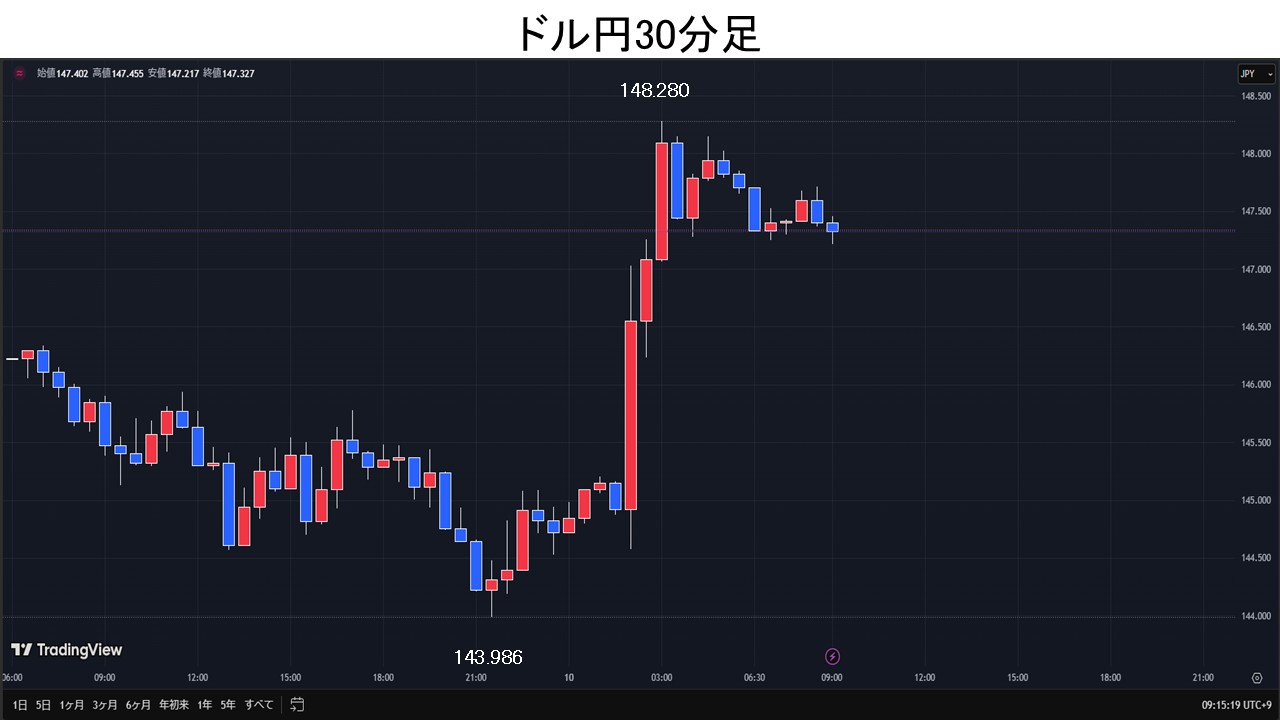
Tokyo time, the dollar/yen fell to as low as144.58yen due to concerns over global trade tensions from the U.S. imposing additional tariffs and a sharp drop in the Nikkei Stock Average. In European session, the Trump administration proceeded with the planned mutual tariffs (the added portion). With additional tariffs on China, the total reached104%. Meanwhile, the European Union (EU) approved the first retaliatory measures against the tariff intensification by the U.S. government. As a countermeasure against tariffs on steel and aluminum, the U.S. products such as agricultural goods, iron and steel, and consumer electronics would face up to25% additional tariffs. Also, the Chinese government stated that tariffs on products imported from the U.S. would be raised to84%. Amid tariff exchanges and concerns about worsening global economy, European stocks and after-hours NY Dow futures fell, leading to risk-averse yen buying and dollar selling. With comments from U.S. Treasury Secretary Steven Mnuchin about the recent yen strength as a “natural development,” the dollar/yen briefly fell to143.98yen.NYtime, President Trump posted onSNSmessages such as “BE COOL!” and “Now is a buying opportunity,” sending U.S. stocks higher and causing the dollar/yen to rise gradually. Later, President Trump stated that he would raise tariffs on China to125%, while also announcing that a 90-day pause would be placed on raising tariffs (added portion) for countries/regions that have not taken countermeasures against the United States, easing concerns about the trade war, and the dollar/yen rose to as high as148.28yen.
【4/10Market View