
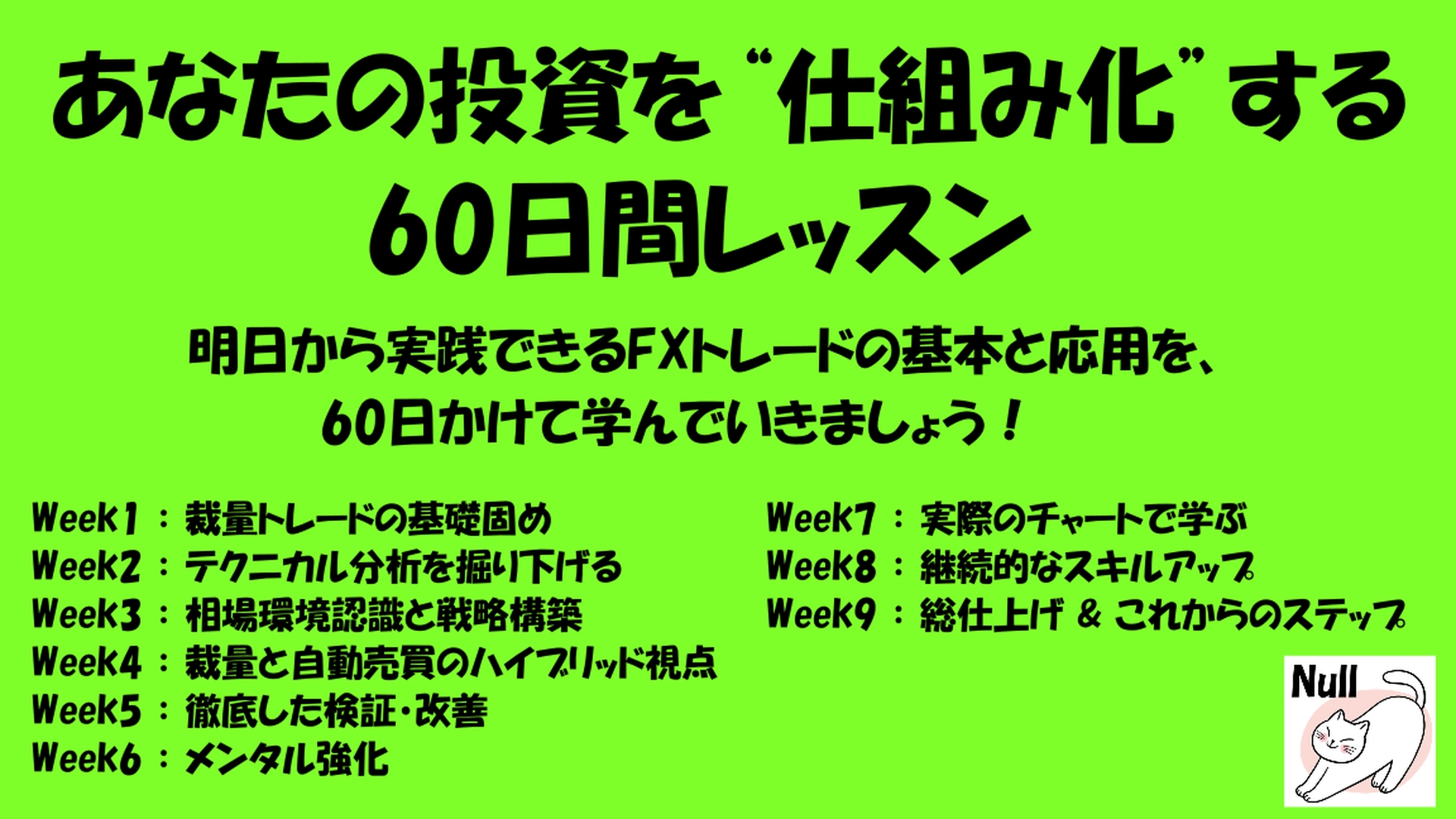
DAY 56: Trade Life Design – Integrating Daily Rhythm with the Market
On DAY 55,Setting annual goals and a continuous learning mechanismwas introduced to learn perspectives for growing your long-term trading.
Today’sDAY 56is,“Trading Life Design”as a theme.
No matter how excellent your methods and risk management are, if they do not fit your actual life (work, family, health),continuation becomes difficult.Conversely, if you can establish a lifestyle that fits your daily rhythm, you can aim for stable performance over the long term with reduced stress. This time,how to integrate trading with lifestylewill be explored, along with the mindset and practical examples.
1. Why is Trading Life Design important?
-
A demanding style undermines mental health and well-being
- Continuing scalping late at night while having a full-time job, leading to fatigue and poor health…
- Spending too much time watching charts can affect family and work…
- All of thesehinder long-term trading success.
-
When lifestyle rhythm matches the market, continuation is easier
- People with a little morning time can focus on Tokyo-time short-term trading, while at night watching moves of the European and US markets, etc.—固定した時間割(fixed schedule)reduces fatigue.
- A consistent routine also leads to mental stability.
-
Becomes the foundation for PDCA (Plan-Do-Check-Act)
- If you allocate time for validation and reflection,strategy adjustments and learningprogress.
- Balancing family and work helps maintain motivation.
2. How to analyze your own life rhythm
-
Visualize a daily schedule
- What is your wake-up time, commute, time after work, and how much free time is available after returning home? What about holidays?
- Use your smartphone calendar or a planner to list “truly usable time slots.”
-
Cross-check with market-active hours
- Tokyo time (9:00–15:00), London open (16:00–18:00), NY morning (22:00–25:00), etc.—times with larger moves.
- If you can monitor during those times, do short-term trading; if not, consider swing trading or letting an EA handle it.
-
Think on a weekly and monthly level as well
- Busy weekdays but some time on weekends → should you prepare swing positions or allocate time for validation?
- If there are monthly busy dates, reduce positions during that period to ease mental load.
3. Examples of trading styles by life rhythm
(1) Weekday full-time work × hard to do day trading pattern
- Characteristics
- Cannot see charts during the day; mornings and evenings have limited time.
- Countermeasures
- Mainly swing trading (4-hour or daily charts), with light chart checks in the morning or evening.
- Run EA 24 hours and pause from your phone before major indicators.
- Use weekends for validation and learning.
(2) Night shift or days off with free daytime
- Characteristics
- Can fully watch Tokyo time after night shift ends, or have free time from early morning to European hours, creating a unique rhythm.
- Countermeasures
- Focus on short-term and day trading during your peak concentration times.
- Take breaks and naps to avoid accumulating fatigue from night shifts.
- Even for scalping, ensure adequate sleep.
(3) Self-employed or freelance with flexible time management
- Characteristics
- Can view charts relatively freely and respond in real-time to European and US hours.
- Countermeasures
- Conversely, too much freedom can lead to overtrading by watching charts all the time.
- Set a daily time limit,define focus time + validation time + refresh time.
4. Tips to sustain Trading Life
- Create rituals and routines before trading
- Brewing coffee before opening the PC, 5 minutes of meditation before checking the charts, etc.,habitualizeto reduce unnecessary hesitation.
- Specify “validation time” and “trading time” on your schedule
- If you don’t secure time for learning and backtesting, daily trading alone makes growth difficult.
- Putting it on the calendar helps prevent conflicts with other plans.
- Make weekends and holidays truly off
- Trading is also a mental challenge.Facing the market continuouslycan reduce analytical accuracy due to stress.
- Having at least one day per week with no market viewing refreshes you.
5. Utilizing organizations and communities
- Share information with friends and on SNS
- When alone, motivation can dwindle → sharing results and encouraging each other makes it easier to persevere.
- Online salons and study groups
- Regular study sessions and Z**M meetings provide market sense and exchange of the latest information.
- Howeveravoid being swept by information; it is important to maintain your own core.
- Understanding from family and close people
- Sometimes family support is needed due to time slots or fund usage.Keep reporting and consultingto reduce trouble.
6. Summary & future directions
Summary
- Trading Life Designis not just about creating methods and risk management, but aboutbalancing daily life, work, and healthwhen scheduling.
- Understand your own life rhythmmatching free time × market activity peak × your strengths makes it easier to sustain.
- Plan weekly and monthly schedules with “validation time,” “trading time,” and “off time” in advance to reduce stress and overtrading.
- Support from friends, SNS, and family also greatly affects continuity. Be careful not to make trading a solitary task.
Remaining days of WEEK 8
- DAY 57–59: further final adjustments to risk management and image of a complete trading system will be introduced to integrate overall learning.
- DAY 60 (final day): wrap-up & final Q&A, marking the end of the learning course.
If you are interested in automated trading, please check the link below.
https://www.gogojungle.co.jp/users/147322/products
If this was helpful, I would be grateful if you click “Read more.”
Thank you.