

If you display a one-hour trend line (signal) on a 15-minute chart
Confirm the trend direction more reliably
Win rate 70% Trend Following Signal Aizen3
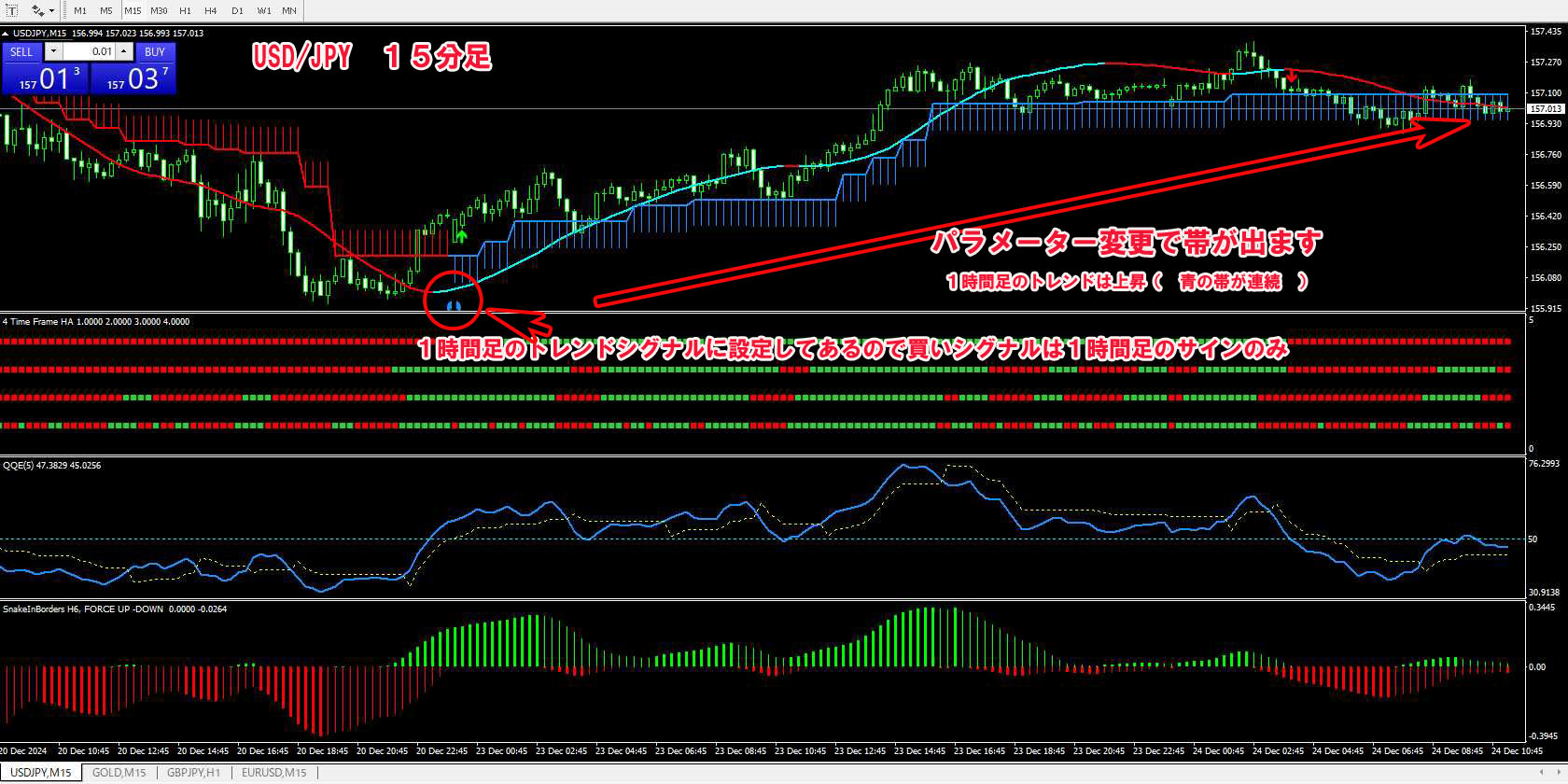
The image above is the 15-minute chart of USD/JPY. (2024/12/24 5:00 PM)
GMMA is hard to see, so it has been removed.
In the parameters where the main signal appears for trend following, the time frame has been changed to 1 hour.
The blue buy signal appears on the 1-hour chart, so it only appears at the locations shown in the figure above.
The slope line changes from blue to red at times, but since the trend-following line is set to the 1-hour chart, the blue rising line continues from the blue buy signal.
I have also drawn bands by changing the parameters. (The default is False, but if changed to true, they appear.)
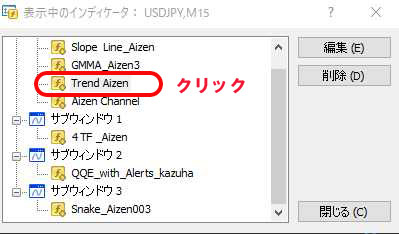
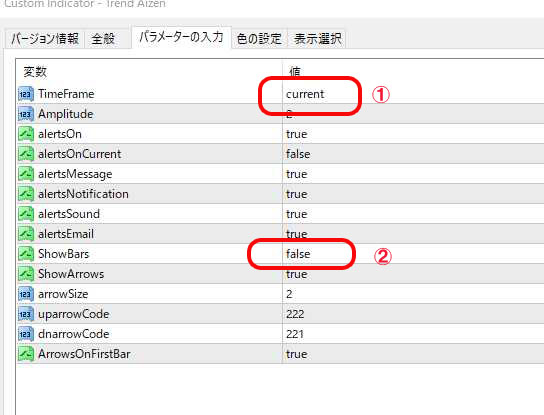
① Click to switch from 1-minute to monthly chart.
In this case, it has been changed to the 1-hour chart.
② Click to normally show only the lines, but if changed to true, the banded visuals become available to help with visual understandingHowever, I thought it might be bothersome to display GMMA up to the Slope line, so the default is false.
Why display the 1-hour chart signals (trend-following signals) on a 15-minute chart?
We are looking at the 15-minute chart, but by also grasping the situation on the 1-hour chart, we can account for longer time frames (meaning larger gains).
Even if you check with four bars of the sub-chart at different timeframes, it should be clear, and displaying it this way as a basis for indicators is also good to verify.
For a 15-minute chart, it is a swing trade
With a 15-minute chart, positions are generally held longer in a swing manner.
From my experience, first confirm the direction on the 4-hour chart, then enter on the 5-minute or 1-minute chart.
Using the so-called trigger with shorter timeframes.
When I first started FX, I mostly did scalping, but as I gained experience I shifted to swing trading to avoid fatigue and aim for larger gains.
It has become a style where I check approximately 2 to 3 times a day.
Mental state is important
I believe maintaining a calm mental state is an essential condition for winning in FX.
Next is money management.
If your mental state is unstable, your own rules (logic) will crumble, and as a result you may not win relative to the effort.
When I trade FX, I first check this product's indicators in order.
If you don't know the direction (trend), you cannot trade with pullbacks and other trend-following strategies, and conversely, chasing profits by entering with the hope of earning more rarely leads to success, in my experience.
It doesn't pay off relative to the mental effort (even if you win).
If you purchase this product and trade only based on signals, you will not win 100% of the time.
There is no such thing as a 100% market.
There will be some losses somewhere.
But overall, you will be positive, and even if there are losses, they will be small.
FX or anything else is good if you can win in total.