
How to Win FX: The Impact of Spreads on Winning and How to Choose a Trading Environment
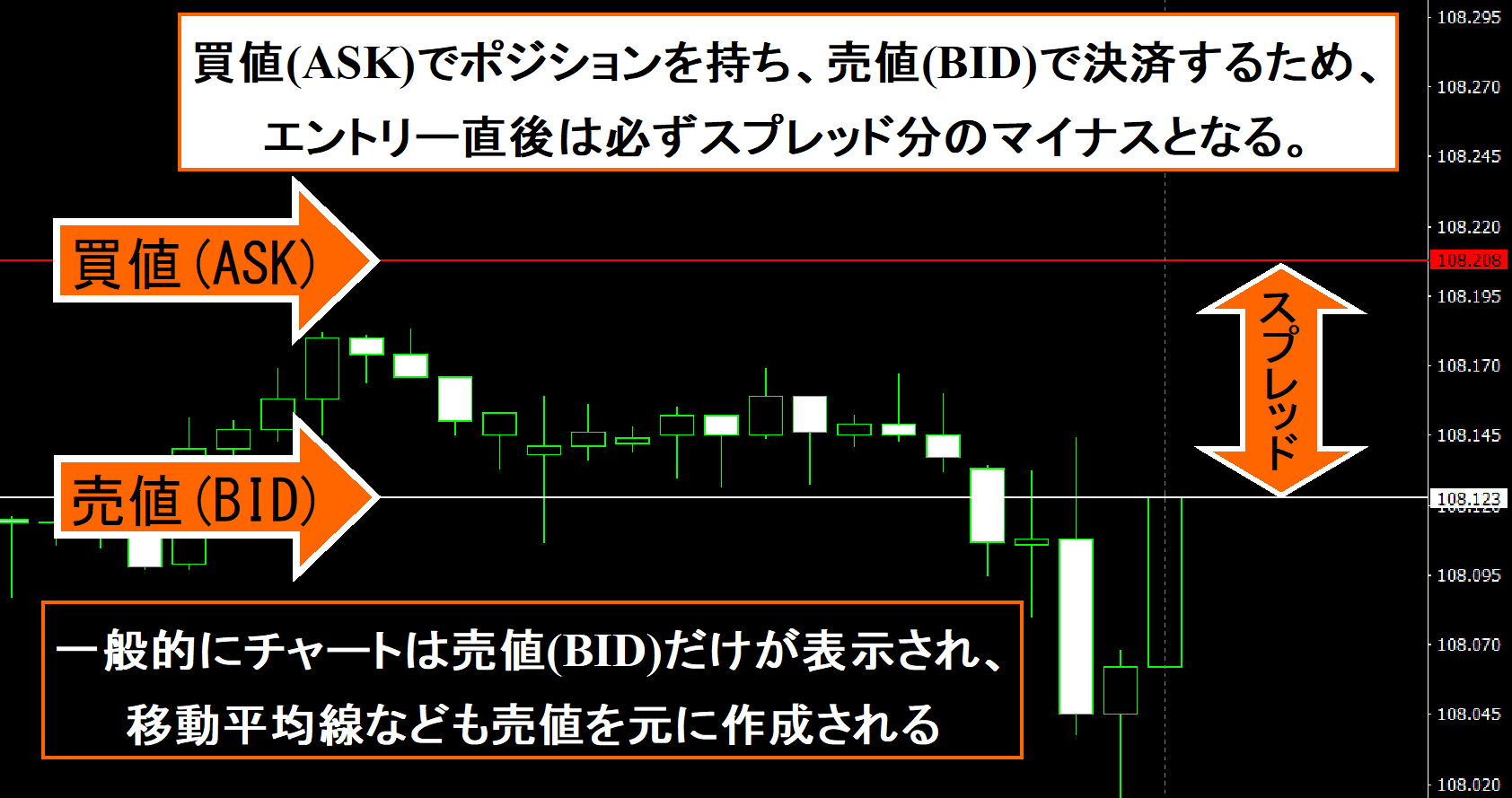
In FX trading, a crucial element you will always encounter is the "spread." The spread refers to the difference between the currency's "Ask" price and "Bid" price, and it effectively affects traders as trading costs. For example, if the bid price is 150.000 and the ask price is 149.980, the spread is 0.020, i.e., 2 pips.In trading,this difference incurs a cost at the moment of entry, so to achieve profit, the price must move by at least more than the spread.
Spreads occur with every trade and tend to accumulate, especially in short-term trading, directly affecting win rate.The narrowness or wideness of the spread often determines the difficulty of trading, and it is a key consideration for traders when choosing brokers and trading environments.In this article, considering the characteristics of spreads, we will look specifically at what kind of environment is advantageous for trading.
■Attractions and risks of overseas accounts: you can start with low capital, but spreads may be wide and winning could be difficult
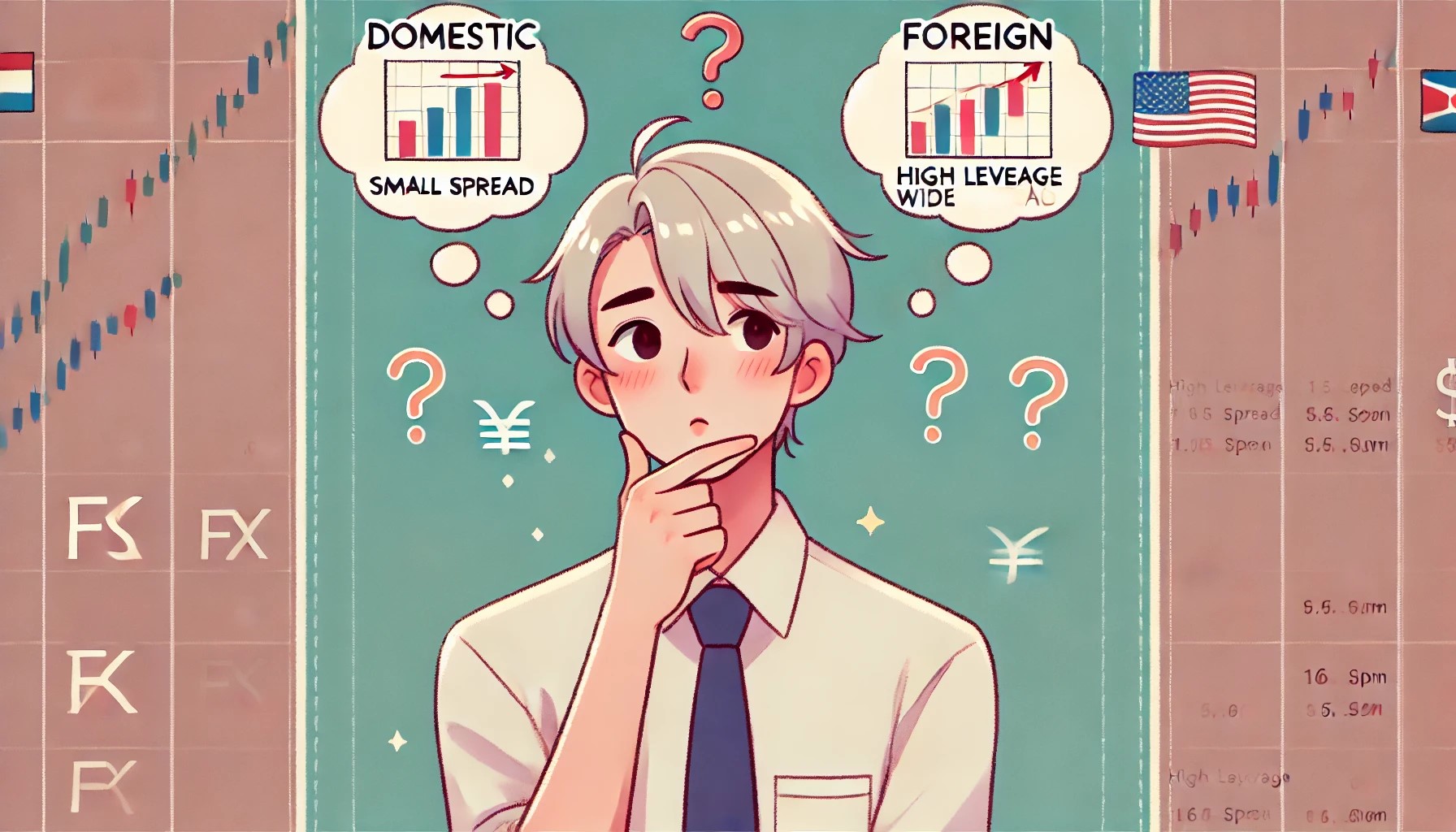
In recent years, overseas accounts look attractive to FX beginners and traders seeking small investments because of “high leverage” and “the ability to trade with low capital.” In particular, even with a small amount of capital, you can place large trades with high leverage, so theoretically there is potential for large profits in a short period. However, the risks are also very high,especially for beginners, a “wide spread” can be problematic.
If the spread is wide, you start with a larger negative as soon as you begin trading, so to profit you must aim for a larger price movement. This often makes it harder to win compared with domestic accounts with narrower spreads.
■Domestic accounts: narrow spreads and why they support easier, stable trading
Domestic FX brokers generally set narrower spreads than overseas brokers. This is because Japan's FX market is tightly regulated by the Financial Services Agency, and many brokers use a dealing desk model. In a dealing desk model, trades are completed within the broker, making it easier to maintain narrow spreads.
With narrow spreads, especially in short-term trading, it is easier to target profits right after entry, creating an environment where beginners can become accustomed to trading.The narrow spreads offered by domestic brokers can be said to provide a “win-rate-friendly environment” for beginners.
If you compare spreads to a land race, it’s like starting from behind at the 100-meter dash. And unless you overcome that handicap to be first, there is no victory. The smaller the handicap, the higher the chance of winning; conversely, if you start far behind, there is little chance to win even if you run.
■Malicious brokers: beware of tactics to widen spreads!
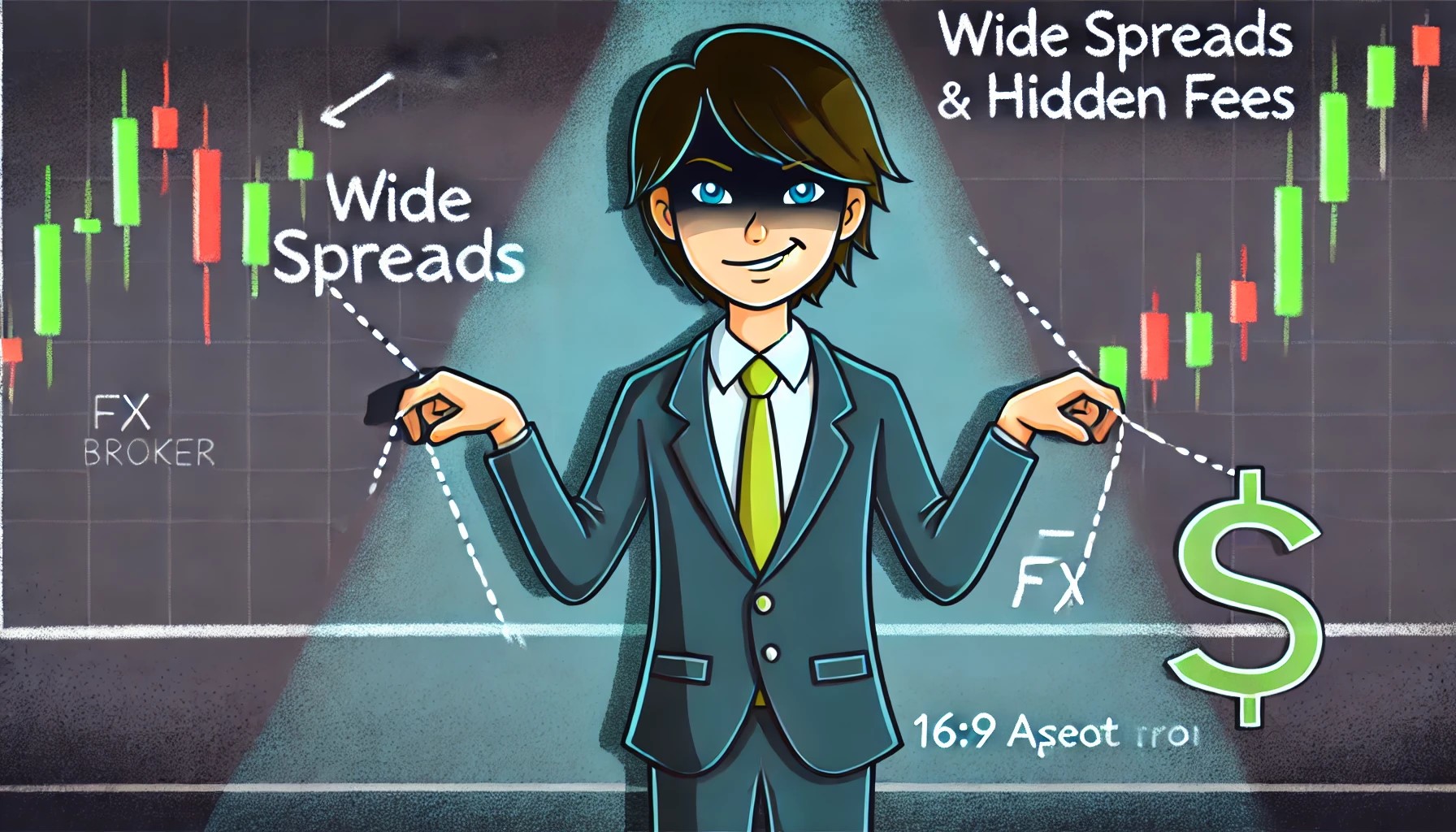
Some unscrupulous brokers may use a structure that profits from traders' losses and deliberately manipulate spreads. In particular, around major economic indicator releases or times of significant market movement, spreads tend to widen more than usual. In malicious brokers, this widening can be extremely large,which not only increases the difficulty of trading but makes profits very hard to achieve.
When choosing a broker, carefully check the spread transparency and whether they provide a reliable execution environment. Also, rely on online reputations and reviews to select a trustworthy broker.
■The merits of spreads: why narrower spreads make it easier to win?
Narrow spreads mean lower trading costs for traders. In particular, with high trading frequency in short-term trading, costs accumulate, so narrower spreads reduce trading costs and create a more favorable environment for profits. Specifically, a narrow spread means the distance from entry to profit target is shorter, making it easier to secure profits with a smaller price move.

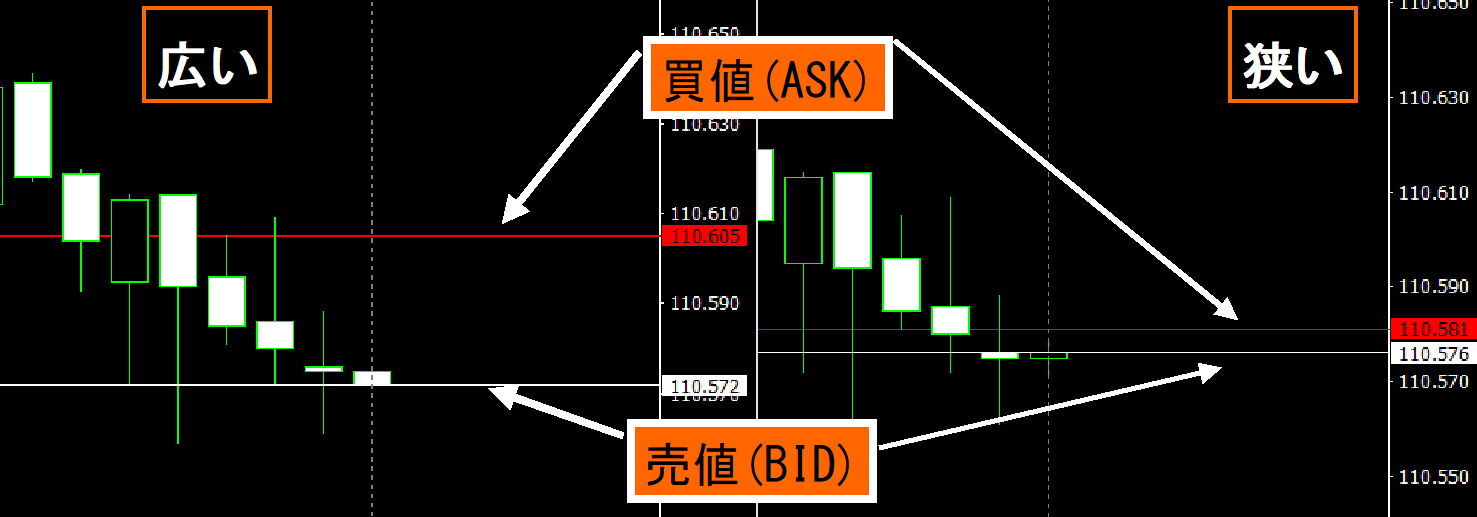
Additionally, since the stop-loss line can be set closer, risk management that aims to limit losses while pursuing profits becomes easier. For beginners, choosing a broker with narrow spreads lowers trading difficulty and makes risk management easier.
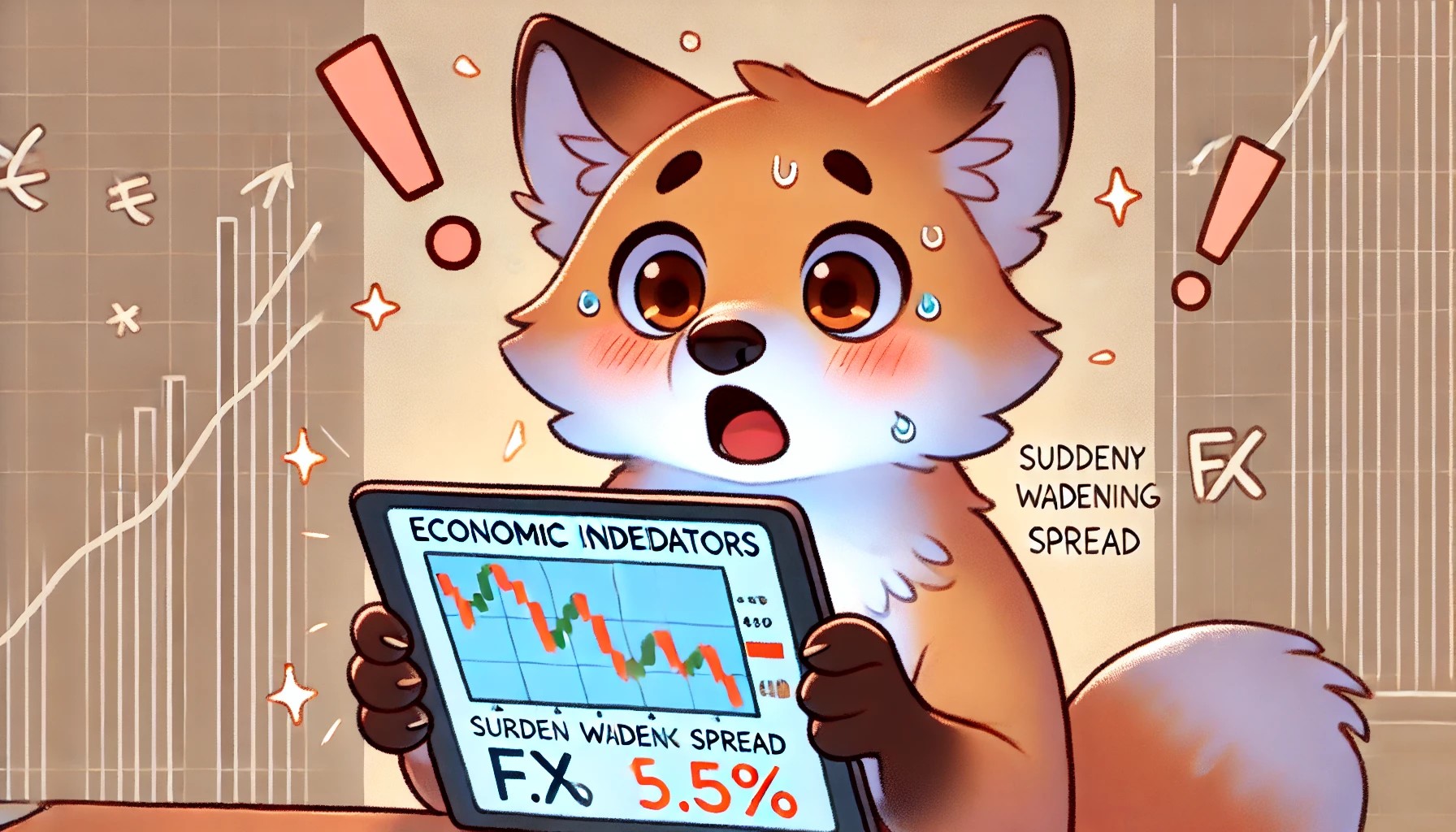
■Risks at economic indicator releases: beware of the “dangerous time” when spreads widen suddenly!
At the release of economic indicators, traders pay attention, and it can have a large impact on the market. Around these releases, liquidity can decreaseand brokers may widen spreads temporarily to manage trading riskWhen trading around important indicator releases, you may end up with trades that incur costs beyond expectations, increasing the risk of losses.
In particular, beginners should watch the spread movement before and after releases and avoid trading as much as possible during such times. Also, when engaging in scalping or other short-term trading, pay attention to entry timing and avoid entries in time periods when spreads are prone to widening.
■
Check the spread before trading! Learn how spread affects trading results
Checking the spread before entering a trade is an important part of trading preparation. Especially in short-term trading, where spread width can determine win or loss, it is essential to understand the spread at the point of entry.
Spreads vary with trading environment and time of day, so they are not always the same. Even brokers that advertise fixed spreads can widen spreads, so don’t forget that.
In particular, during low liquidity at night or early morning, or before indicator releases, spreads tend to widen, so make it a habit to check this. Also, tools that display spreads on the chart, like One-Click FX MAX, are important.One-Click FX MAXHaving spreads displayed on the chart is important for learning and improving trading decisions.
■Practice spread differences with One-Click FX Training! Experience how easy it is to win
One-Click FX Trainingallows you to freely set the spread width and practice in a way that resembles real trading. Start by setting a narrow spread to solidify trading basics and stabilize your win rate. Then gradually widen the spread to increase the trading difficulty and to train entry decisions and risk management in wider-spread scenarios.

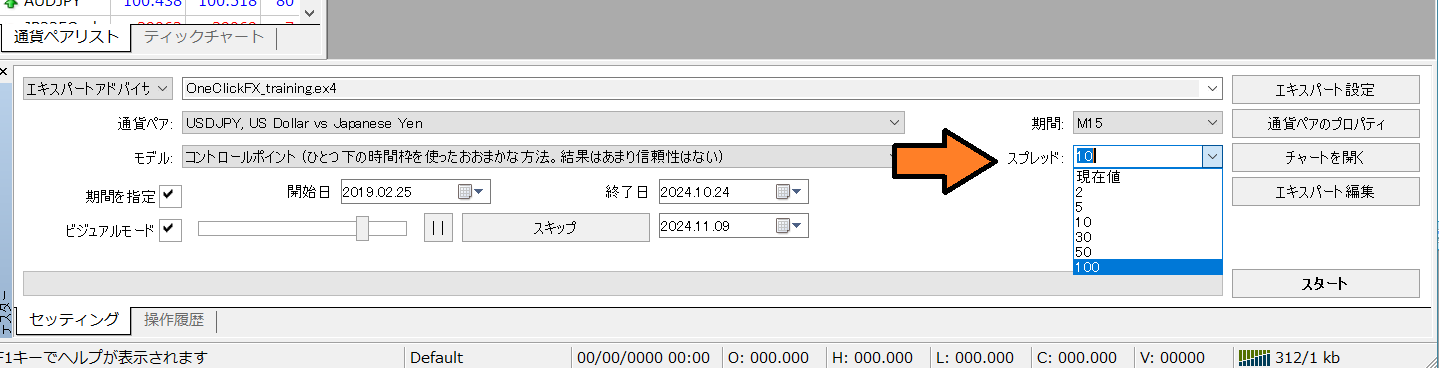
By practicing with varying spreads, you can learn what spread width ensures your reliable win and what spread width suits your trading style, enabling you to approach real trades with confidence. You will also feel how spread differences affect trading, enabling more realistic practice.
▼One-Click FX Training MAX Support PageSpreads are a critical factor in determining trading costs and are closely related to your win rate and risk management. Domestic accounts have narrow, stable spreads, making it easier for beginners to achieve higher win rates. Overseas accounts offer the appeal of high leverage, but spreads are often wide, increasing the difficulty of trading.
Also, be wary of spread manipulation by unscrupulous brokers and sudden spread widening around economic releases.One-Click FX TrainingUsing One-Click FX Training allows you to experience spread differences, helping you identify the spread width and the risks of spread widening that suit your trading style, so you can trade more advantageously in real markets. Understand the importance of spreads, choose a better trading environment, and aim for stable trading performance.