

What is currency intervention?
When the weather turns nice, Kotsukomega loves drying yukata; hello.
Including the children of acquaintances, even adults seem to be getting more sick.
Could the big temperature swings and the疲れ of the new school year be the cause?

By the way, the economy also remains unstable.
Recently there were reports of currency intervention,
and some news claimed, “We did not intervene.”
while others deny it.
However
it seems the authorities are in a state of “we may intervene at any time”
(;^ω^)
Today I’ll introduce a clear article I found last week.
(Below, quoted from Yahoo News ↓)
Rough movements in the yen: What is “foreign exchange intervention”? What are the effects?
From a depreciation to a sharp appreciation, the yen in the foreign exchange market has been fluctuating wildly. There is growing speculation of intervention, but what exactly is intervention? What effects does it have? We explored the mechanism and aims.

Q: You often hear in the news that “there might have been intervention,” but what does that mean?
A: In the foreign exchange market, where a currency is exchanged for another, there has been a surge in demand to buy the U.S. dollar, which yields higher returns due to its higher interest rate. Conversely, the Japanese yen, with relatively lower interest rates, is being sold, causing yen depreciation to accelerate.

Q: What happens when the yen depreciates?
A: More yen is needed for imports, and prices rise, increasing living costs. On April 29, the yen briefly fell to the 160 per dollar level for the first time in 34 years. A few hours later, it rapidly strengthened to the 154 per dollar level. A nearly 5-yen move in one day is unusual. Markets hypothesize that the government conducted large-scale trades to correct excessive yen depreciation. This large-scale action is called “foreign exchange intervention.”
Q: Specifically, how is it done?
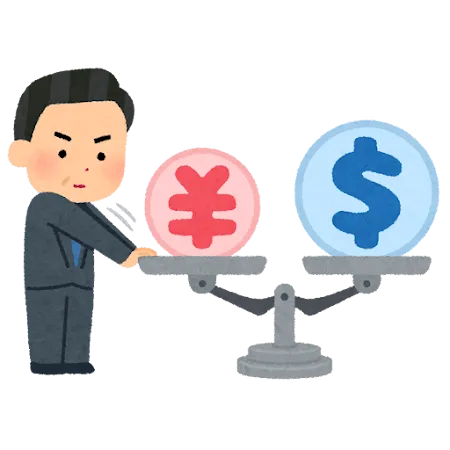
A: The finance minister directs the Bank of Japan. To curb yen depreciation, the government sells dollar deposits and U.S. government bonds amassed as foreign exchange reserves, buying yen in the trillions of yen. Conversely, if the yen appreciates too much, the government sells yen obtained from issuing government bonds and buys dollars. There are also “coordinated interventions” where other countries align their actions.
Q: Will the yen stop depreciating?
A: The government and the BOJ conducted three dollar-selling/yen-buying interventions in Sept.–Oct. 2022, but their effects were temporary, and yen depreciation continued. Intervention serves to deter investors from rapid speculative trading, but foreign exchange reserves have limits, and it requires understanding from other countries, so it cannot be done anytime, anywhere. Until U.S. inflation eases and rates fall, or Japan’s rates rise further, the yen weakness and dollar strength may continue.
Answer by Miho Kato (Economics Dept.)
…Will there be more “interventions” in the future?
Real wages: 24 consecutive months of decline—the longest on record; 3月 down 2.5%
This indicates a longer downturn than around the Lehman Shock era.
With rising prices, our daily life will likely be affected for some time to come (-_-;)
(Please purchase from here ↓)
× ![]()