
Where to store/keep the Bitcoin you obtained? Part 2 (Episode 10)
0
Serialized Column:Starting from Zero: Crypto Trading:Episode 10

Last time I wrote about storing the obtained Bitcoin on an exchange. Now, this time it will be about storing it in a wallet.
Put it in a wallet
A wallet is a wallet. Bitcoin is a “data” composed of addresses and private keys, so a wallet can be thought of as a place to store addresses. There are several types of wallets specifically for Bitcoin.
Web Wallets
A web-based service that manages wallets on behalf of Bitcoin holders. They are highly convenient, but you should be aware that security is entrusted to the wallet operators.
■Popular Japanese-language Web Wallets A major web wallet with offices in London and New York.Blockchain.info

It supports Japanese to a large extent, and I find it very user-friendly.
Software Wallets
Software-type wallets installed on a computer or smartphone. If your computer’s hard drive fails completely or you lose your smartphone, there is a high risk of losing your Bitcoin as well.
There is also the risk of similar damage from cracking or virus infections.
The official Bitcoin walletBitcoin Coreneeds to download the entire vast blockchain, so installation can take from a day to several days…!
■Japanese-language Software WalletsELECTRUMIt seems to support Japanese, but I have not used it…。
Hardware Wallets
Compact hardware-type wallets. Since they do not need to be connected to a computer all the time, there is no risk of Bitcoin being stolen by cracking.
If you lose or break the hardware wallet itself, there is a high chance you will lose Bitcoin as well.
CryptoLabs’ pocket-sized hardware wallet “Case ($199~)” can send/receive Bitcoin and also trade, and its three security features appear to include fingerprint authentication.Blockchain.info

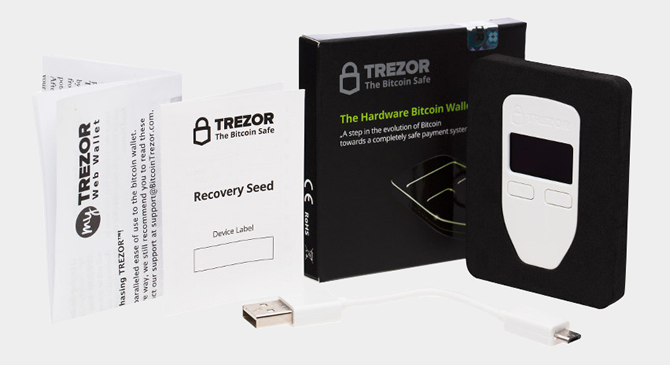
On Japanese exchange Zaif, “Ledger Nano / Nano S” and
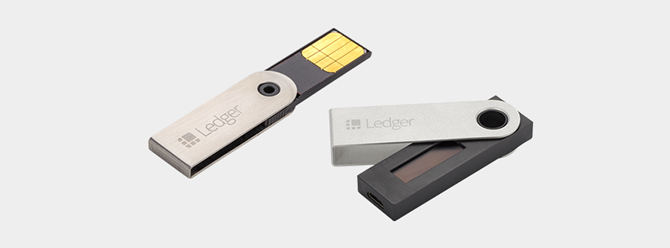
“TREZOR” are popular wallets available via Amazon.
Paper Wallet
A paper printed Bitcoin address and private key.
If it is burned or lost, Bitcoin could be lost as well.
bitaddress.orgthen,
● Download a dedicated source code (program)
● Open it on a computer with the Internet disconnected
● Generate the address and private key, and print them.
● After printing, delete browser and printer caches for safety
in this way, you create it yourself.

Summary
For Bitcoin and other cryptos, you can store them on the exchange where you obtained them, or in various types of wallets. Either way, choose at your own risk and responsibility! This time I introduced wallets dedicated to Bitcoin, but not all cryptos are supported.

TrendStream
Operates the FX trader and FX information site TrendStream, and also develops EA. In 2016, after 7 years of FX experience, I sensed strong potential in cryptocurrency investment and started.
Blog:Crypto Stream
Operates the FX trader and FX information site TrendStream, and also develops EA. In 2016, after 7 years of FX experience, I sensed strong potential in cryptocurrency investment and started.
Blog:Crypto Stream
× ![]()