

Ways to stabilize trading mindset and tips to avoid losing streaks
Recently, many articles have focused on business thinking,
and it may have moved slightly away from FX.
This time, I will write plenty of FX-related articles!
Tips to Avoid Losing Streaks
To stabilize your thinking, daily mental care is important.
First, clarify your goals and values, and act based on them.
To avoid losing streaks, learning from mistakes and growing is
crucial. When you experience a defeat, suppress emotions and analyze
the situation objectively to identify improvements.
Also, by setting realistic goals and progressing in steps,
you can steadily move forward while avoiding major failures.
Most importantly, do not dwell on past failures; maintain a positive
mind and continue new challenges.
How to keep winning consistently in trades?
A solid attitude and mindset toward FX are indispensable.
Even with excellent trading rules,
if your mindset to implement them is immature,
you may fail to follow rules,
lose composure and become self-destructive.
There are times you may lash out emotionally and
make poor decisions.
If you trade with excitement, you will not gain returns; you may
expose yourself to risk and incur large losses.
In the future, to earn stable profits,
you need to become a stable trader.
To do that, it is important to think of all trades probabilistically.
Do not be swayed by temporary emotions; always consider whether your actions will have long-term meaning.
In FX, making judgments based on emotions will, with high probability, lead to losses.
To avoid that, even if a decision is temporarily painful, you should execute it if it is the right long-term choice.
What matters is taking actions with high expected value in the future.
Let’s consider concrete examples.
Day trading is not always about winning every time.
In daily trading, sometimes you will have losing streaks.
During those times, if you let your emotions control you,
you may try to recover, or trade without signals,
which can lead to a loss of coolness.
It is especially dangerous when the number of trades in a short time increases.
Usually, for one currency pair, there is not one market (for example, the New York market) where signals appear repeatedly.
If you take a loss on a buy and then again on a sell,
and then enter a new buy,
the frustration can lead to premature trades within minutes and
you may fall into an unbelievable losing streak.
In such situations, calm judgment is difficult, so it is wise to step away from the chart immediately.
However, being excited is a human psychological trait.
When that happens, it can be hard to control yourself, but
it is crucial to take a breath in those times.

I have a rule: "Do not trade repeatedly in a short time."
What I constantly tell myself is,
"Do not take the same direction positions in the same trend repeatedly."
For example, if a buy signal appears and you cut losses,
you decide not to re-enter buying in that time frame or trend.
Once you cut losses once, you think the decision may be wrong.
Even if the market trends downward,
if you repeatedly buy thinking it will rise,
the number of losses will equal the number of entries.
For example, if you enter buy 10 times,
you are making decisions against the trend,
so you will inevitably lose all 10 times.
This kind of 10 consecutive losses was avoidable, not a coincidence.
These losing streaks occur frequently and do not lead to victory in the end.
To avoid losing streaks, do not trade in the same situation multiple times; wait for the next trend.
By suppressing the urge to enter and changing the trading scenario,
you distribute the risk of judgment errors.
If you think, "once you cut losses, the opportunity is over,"
you feel pressure on that single moment.
In my case, I usually allow three entries.
If losses occur for three consecutive times, I judge that I cannot win in that trend,
and I give up at that point.
Because the win-rate is 2 or more, three consecutive losses actually reduce only one unit of capital.
However, five consecutive losses make it difficult to recover the next day.
Losing streaks can also affect the next trades due to pressure to win.
Taking the same direction positions in the same trend is extremely dangerous.
Even that awareness alone helps deter unnecessary trades.
For example, after one loss, check other currency pairs or wait several tens of minutes before the next entry to diversify the risk of a large loss in one scene.
This helps maintain trading balance and reduce unnecessary losses.
"The joy of discovering continuously creates enjoyment"
In trading, if you only think about money and become greedy, your mental state will
suffer when you cannot win.
Of course, at first you started FX to earn money.
But after trading for many years and earning some victories,
you will inevitably face "boredom."
You may think, "If I can earn, I won't get bored,"
but in reality humans do get bored.
Because earning becomes the norm.
If earning becomes normal, people lose interest in their work.
To avoid this, it is important to find meaning and enjoyment in the work itself.
If the work is enjoyable and pays well, you can sustain motivation over the long term.
Trading is the same. If you trade just because you can make money, you end up simply watching charts, and boredom will come.
To avoid this, it is important to continually discover new insights and learning.
Therefore, by discovering new insights in trading, try to enjoy it. Pursue daily new knowledge.
In the market world, there are many analysis methods and ways to win.
In other words, there is no single fixed correct answer.
The foreign exchange market is the world's largest financial market.
In this huge market, discover new chart interpretations and ways to win.
Daily trading follows the core buy/sell rules, but also
never forget to explore questions like "Can I build a new strategy?"
"Is there a more efficient trading method?"
and pursue them.
By doing so, you will not be satisfied with the status quo,
you will improve your trading, and ideas like "Can I formalize this into a rule?"
may arise.
Enjoying this process is important.
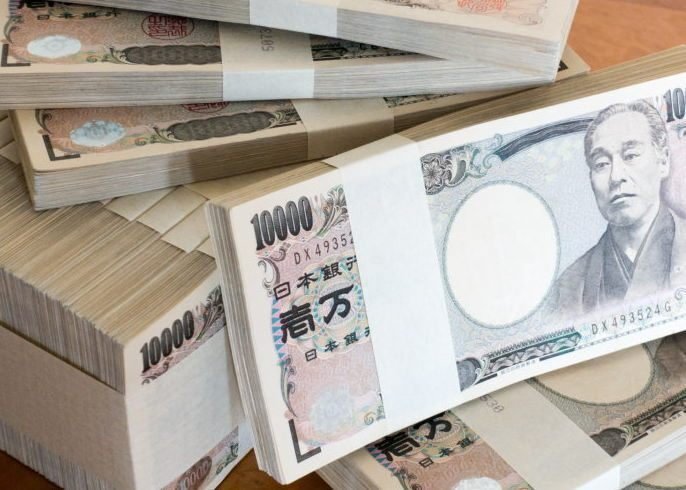
Trading is not only about wins and losses;
remember to appreciate new discoveries and the joy of exploration.
You may misunderstand the meaning of words, but
including the element of games, actively seek new joys
in trading.
By doing so, you can maintain motivation and
this will lead to long-term continuity.
What matters is consistency.
To improve skills, maintaining consistent trading is crucial.
As you continue, your skills naturally improve.
However, many people do not trade every day.
One reason is that they are not serious about it.
FX is a world of high risk and return.
Therefore, emotions swing greatly and can cause physical and mental stress.
A few consecutive losses can break your spirit.
If this continues for days, it may take even longer to resume trading.
Eventually, you might end up not trading for a week.
To recover that week would require another week.
This cycle makes it extremely difficult to sustain trading. Even if you trade as planned, unless trading is your main job,
it does not affect your life if you skip FX.
If you do it as a side job, you might think "it's okay to postpone it."
However, if you truly want to earn from trading,
FX should become your top priority in daily life.
If you have a strong will not to prioritize other plans over trading,
that mindset is important.
"If you get the hang of it, profits will follow"
This way of thinking brings mental leeway.
To achieve such leeway, it is important to establish a mindset of continued persistence.
To do that,first you must have a serious intent.
If you only think, "I just want to win somehow,"
maintaining a high level of awareness will be difficult.
Ask yourself what you want to achieve through FX.
Rather than seeking immediate large profits,
cherish the process of gradually sharpening your skills,
which reduces impatience and fosters a sense of room to breathe.
Basic actions to implement in trading include,
for example, the following:
Do not enter unless the chart matches your image,
cut losses when the price moves against you,
review past trades on weekends and prep for the next week.
By steadily performing these obvious actions,
when you hesitate about entries, you can make appropriate judgments
like "Enter if the expected value is high; otherwise, pass."
In exits (settlements), the basic idea is to
hold until you achieve the price range.
Realizing early take profits just because unrealized gains exist is
a mistake; be aware.
All actions should be considered with the simple criterion: "Is it appropriate in the long run?"
In chart analysis as well, identify whether it is range or trend,
and keep a simple judgment like, if range-bound, refrain from trading.
In day trading, understanding moving averages and necklines

can yield sufficient profits,
using candles and three moving averages to draw seven lines and
find points where price moves or stops is crucial.
To trade for a long time, use simple charts and keep simple trades in mind.
However, even if your skills improve, there are still many unknowns.
The market moves randomly due to countless factors, so
100% prediction is impossible.
Even when a downtrend is expected,
it may reverse into an uptrend.
In such cases, it is important to not rush and to say, "This is inevitable."
Simply wait for a chance.
Waiting for a chance is natural, but many people cannot implement this.
It is not about complexity or difficulty; persisting in simple, obvious actions
steadily and quietly is the key to stress-free profits in day trading.