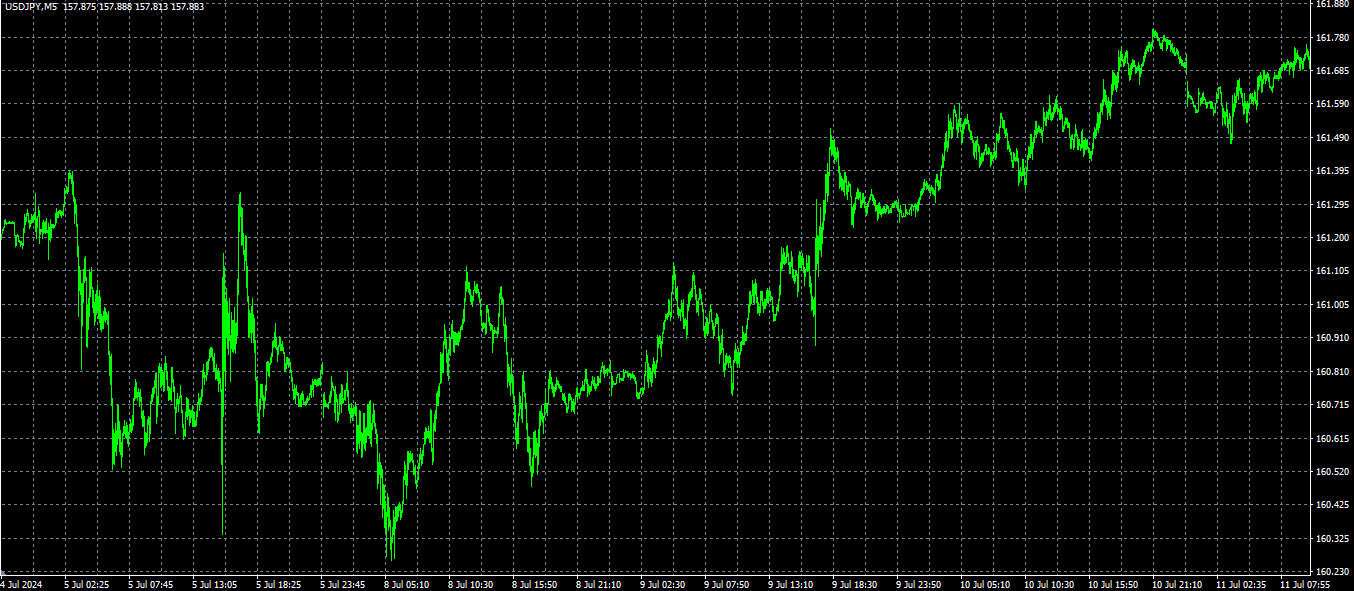

Technical analysis that lets you feel Dow Theory intuitively
Technical analysis exists in countless forms when combined with indicators,
but in the end they are all just variations of metrics like moving averages.
They only chase past ghosts.
Therefore you should use indicators that forecast the future, like Dow Theory.
From there, variations arise and your own discretionary approach can be found.
Finding a strong discretionary method is the holy grail and a means to increase capital.
Turning point and baseline of Ichimoku Kinko Hyo
MA lead
Envelope
These technicals tend to move in line with Dow Theory.
The turning point and baseline of Ichimoku Kinko Hyo
are close to the breakout points described in Dow Theory
and are easy to treat as classic Dow Theory trend-following signals.
Envelopes produce signals at the initial trend-following point, and
when used together with the MA lead,
they can be viewed as a combination of trend-following and breakout signals.
Among these, I felt I could use the turning point and baseline.
Indeed, envelopes and the MA lead produce signals quickly,
so because they are fast, the signals keep coming.
That means more losing trades, so I think they are not suitable for day trading.
(It would be effective if used with shorter-term parameters by changing timeframes.)
However, with turning point and baseline,
some would say it is disadvantageous in large, choppy range markets,
but more positively, you can take advantage of beautiful, trending markets.
These clean, large trending markets tend to have a tendency to gain momentum.
In short, most traders who are betting on momentum are not viewing this from the turning point/baseline perspective.
Therefore, it makes sense to use Dow Theory-faithful indicators suitable for long trends.
However, even if technically useful,
you still need to add a bit of discretion to the technique.
I think it would be good to add MACD to turning point and baseline.
Please try using it in trending markets.
※ For those who want to keep earning with FX, go here ↓
× ![]()