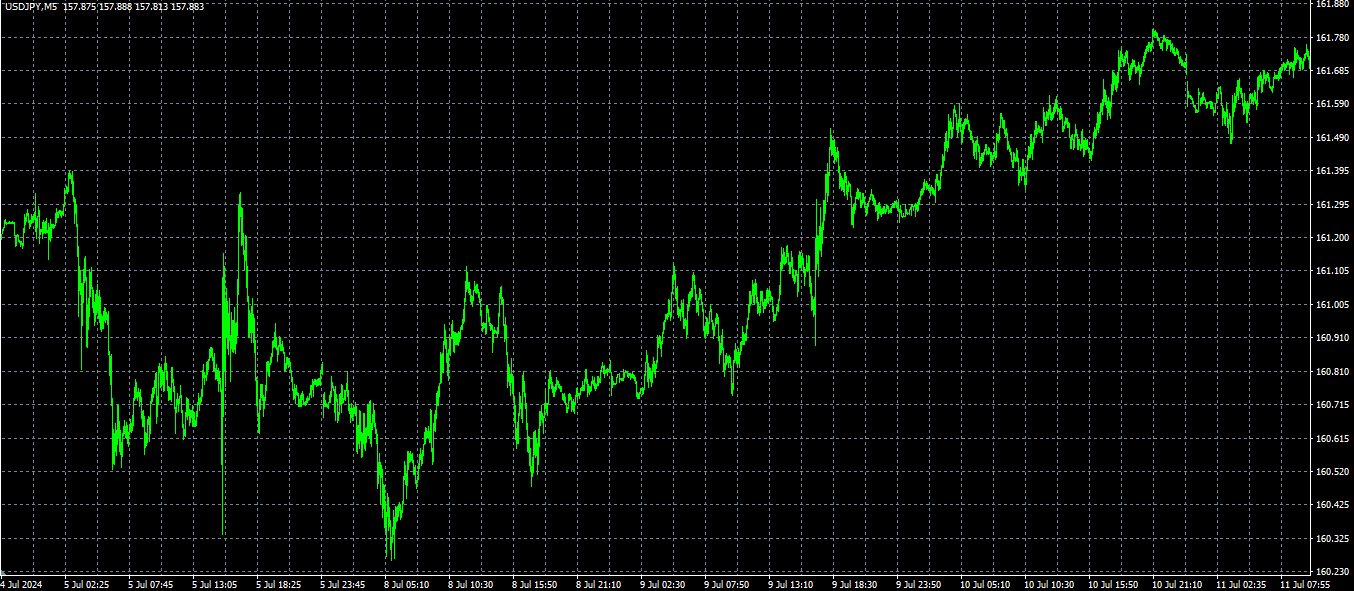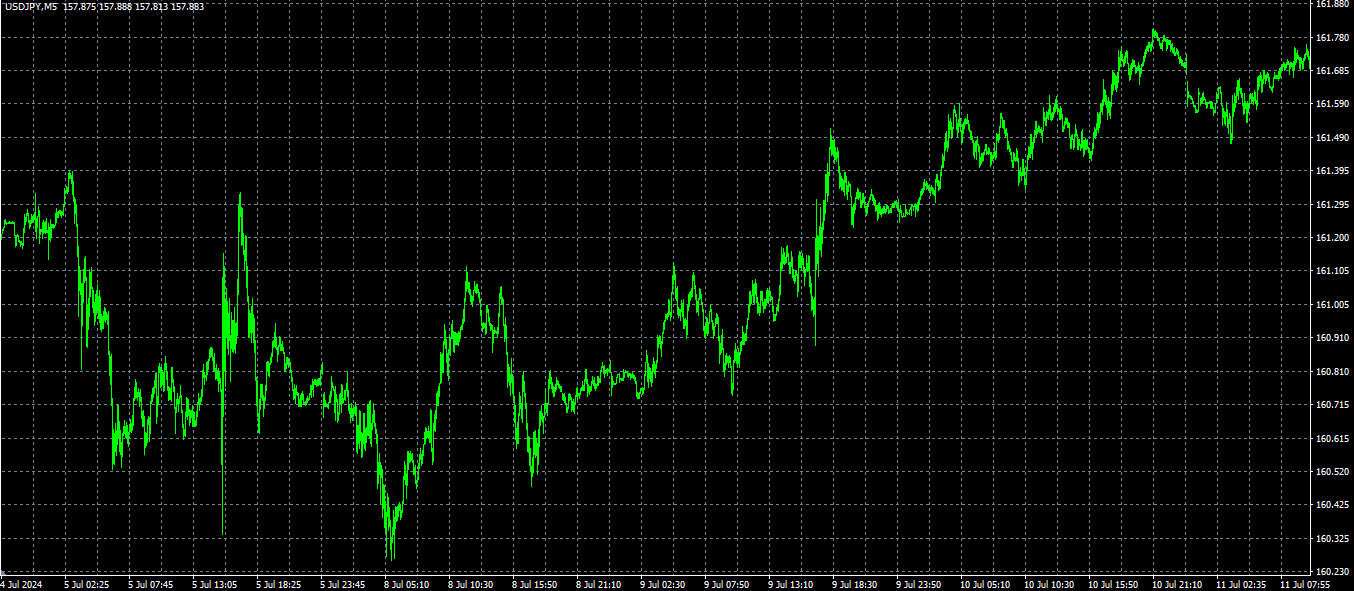

An example of an exchange that practically captures a trade strategy regarding discretionary trading
Discretionary trading = averaging-down trading cannot
stop losses from expanding in a way that prevents being halted by stop losses
even if 10 yen moves occur within a minute, you cannot stop it, and you cannot exit the loss afterward
Discretionary trading tends to be profitable, but
because the maintenance margin changes extremely, it keeps a high level of risk
If you start with 200,000
and aim for a 5x profit rate = about 0.5% profit
and since you divide this into four parts, 2% profit
you can make a profit in a week
Whatever happens, just follow the trend
Make additional trades in the trend
Aim for 5x profitability
Set stop losses at the most recent bottom
With averaging-down trading, you eventually reach a path to a loss cut
Only when stop trades push the profit rate to 5x or more does profit remain
Feeling calm and secure
After that, the maintenance margin can rise to around 1800%, which is discretionary = averaging-down trading
Discretionary cannot withstand the burden of losses
Stop losses were created to mitigate that handicap trading
Even if it is 5% in one week, in one year it becomes tenfold
Stop losses are
contrarian-following and trend-following
Reserved trades every 12 hours
Oto-ten trading
is about all that exists
There are hardly any elements that generate profit other than oto-ten
Is trend following important?
The trades you do are
averaging-down contrarian stop losses
Usually that yields profit
Conversely, doing the opposite trend-following only increases losses unnecessarily
Here
Contrarian-following and trend-following both just increase losses
When you try to capture timing in the market, both will incur losses
Even if you catch both, timing will slip
Both carry the risk of expanding losses, and you should not add trades in a trending market
Trying to shift to trend-following at the right timing
and failing spectacularly, continuing trend-following until a trend appears
giving up after it’s impossible and then losing again—these are common patterns
Moreover, if you try to do only trend-following
you will end up unable to recover losses in a range market
Ultimately losses just keep increasing
At best, it takes about a month to recover
If you miss that recovery period, performance will continue to decline
Therefore, ultimately there is only oto-ten trading
Even reserved 12-hour trades come down to timing
Profit expansion is nothing but oto-ten trading
Everything besides this perspective of “oto-ten trading” is fiction
There are places you cannot confront with contrarian-oto-ten
It is precisely in such markets that you must confront them
Therefore you are left with “oto-ten trend-following trading”
Recompressing candles and regular candles
In mid-term candle parameters, the re-compressed candle chart uses a ceiling for how far the trend will go
In short-term candle parameters, the regular candle chart does not consider how far the trend will go
On a short-term basis, for long-term candles
It is easier to grasp timing relative to the trend
Trends start from the long-term candles
If you want to pursue profit
You must faithfully follow the trend on 30-minute and 1-hour charts
In other words, you can only grasp this flow by combining work and part-time effort
If you stumble once
You cannot do stop-loss trading
Because a lineage of losses
A proper market must appear for trend-following
And at that time, you must be able to perform proper market analysis
Trends often end without you finishing, making it hard to realize profits
So profit is hard to grasp
On the 1-hour chart
Analysis with short-term parameters reveals it
Only MA-leading is meaningless
Ultimately, when considering oto-ten,
It is nothing but trend-otosen
The idea of contrarian-following oto-ten is good
But leaving contrarian-following as-is has no meaning
That is the point
For forecasting trends
The only conclusion is to use technicals for trend inference
Oto-ten is also oto-ten
If you trade only with oto-ten signals,
losses along the way become severe
Also, with oto-ten, markets that shake off stop losses come
Neither is easily treated as a clear signal like an oto-ten signal
Rather, watch the market with trend signals rather than trend indicators
There is no other method
Oto-ten does not guarantee victory; what matters is that it seems winnable
In practice, only “trend-following signals that land a stop loss wins”
In other words, in terms of a hindsight theory,
They are just going after the first move
This is the reverse pattern of contrarian averaging-down
In contrarian averaging-down, you should keep making profits
Trend-following stop losses are only “one shot”
Beyond that, it’s “no different from averaging-down” and often doesn’t move with the trend
Both carry risk and you should not add trades in a trending market
Because only that market yielded profits, if no trend appears you end up in a dried-up state, meaning you keep losing as you trade
If you look at the number of losses, it becomes clear
If you keep trend-following and realize profits discretionary, you end up in a pattern of huge losses in range markets
And since you trade with discretion, even if a trend market appears you cannot extend profits
If profits look good but the trend ends, you fall to stop losses
Also, additional trend-following trades
Even if the trend succeeds, it often turns back
Each time you lose, so essentially the contrarian averaging-down mechanism is the same
The more it retreats, the more losses accumulate, and when the trend fails you simply incur losses
From the start, the only correct path is “oto-ten 1-shot trend-following”
What confuses people is labeling it as contrarian 1-shot
That is the current state of stop-loss trading
Except for the one-shot, markets are predetermined
In effect, it becomes nearly the same theory as discretionary contrarian trading
Because
Stop losses
In a strong trend market, you cannot trade according to the trend
Also, when a trend fails and stop losses occur
Your market view also goes awry, making profits impossible
Similarly, one-shot contrarian also has a similar logic
One-shot trend-following market becomes quite fearful
However, one-shot oto-ten trend-following is only doing trend-following in a tentative way
Just observe
Also, from a hedging perspective it becomes a safe trade
Talent is not something extraordinary
This lies in the profit-changing power of trend-following in one word
Often people say, like the Turtle method,
That it is because someone broke the rules
But that is completely different
In reality, it lies in
the part of increasing profits
the number of trades
Moreover, using automated trading generally does not improve performance
That is why
there is meaning in combining averaging-down with oto-ten trading
A market that goes back
A market that does not return
The market is just this much
And
Markets where oto-ten works
Markets where it does not
That is all
These loops are the point
No matter how much you trade, if you cannot profit from trading
you will stop making profits thereafter
The extension of a negative spiral is all you get
※ For those who want to keep earning from FX, click here ↓
× ![]()