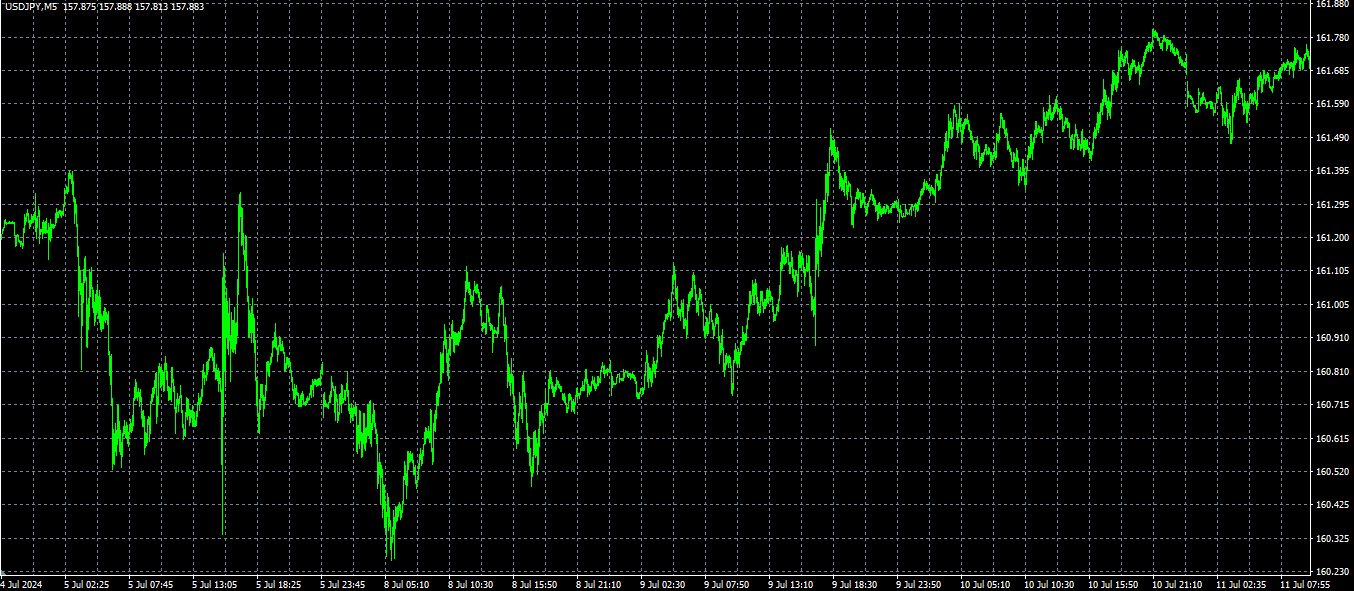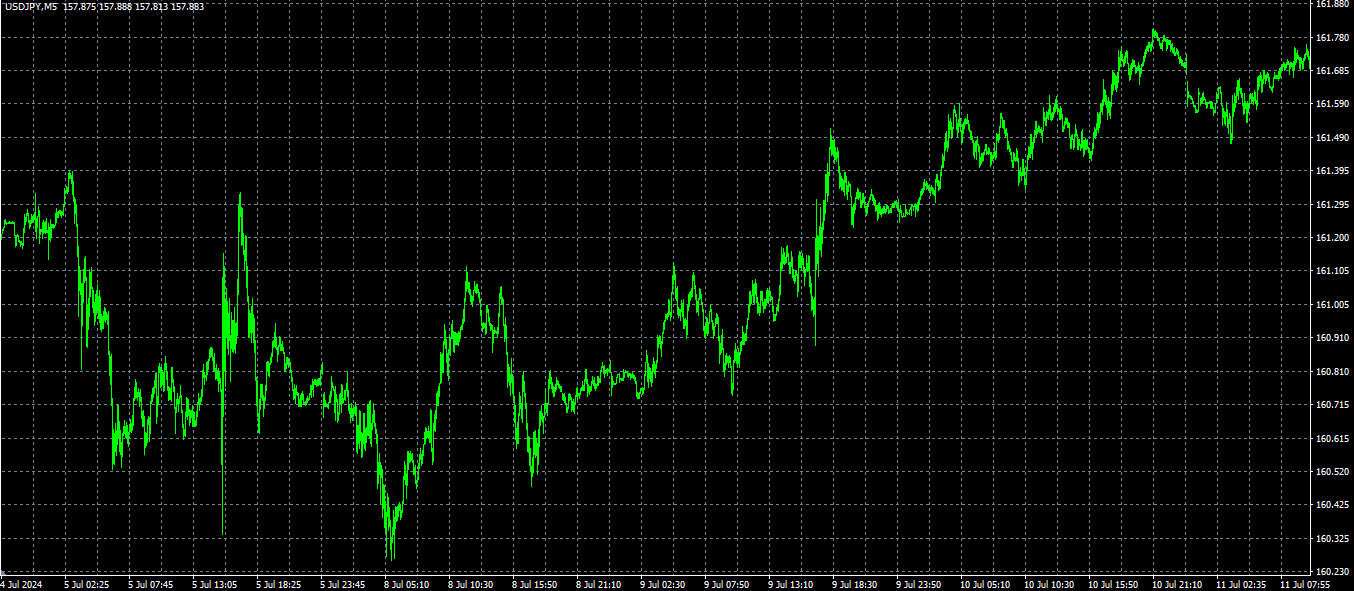

Increase profits in a market where averaging down is profitable by continuing to average down
Nampin-style market
A market where you can make money with averaging down, just keep averaging down
In a market where averaging down cannot make money, you simply continue averaging down in the direction of the trend
Averaging down = you won’t profit unless it returns
If the market is moving in your favor, leave it alone
What you’re doing itself isn’t wrong
However, there is no moment when losses are realized
But because it hasn’t been realized, you can amplify it
↑
That OCD-like discipline is everything
It appears that averaging down increases
Because you’re only looking at a staircase-style market, in reality, those who trial-and-error and trade by trial and error actually make more money
Once the market stops obeying the staircase, because you’re watching
You think you can trade in the trend direction when averaging down doesn’t work
Basically, the market state doesn’t change just because the form changes
The market exists in two states
Range-dominant
Trend-dominant
In a word
From the beginning
Neither a range market nor a trend market truly exists
In one word
It’s not the market but the predominance
Because you call it a market, you only lose
Averaging down itself
If you fix it to 1:1
It would be like 0.5:1 or thereabout
And you’re "hiding it somehow" with averaging down
This is almost the same mindset as scalping
Averaging down “hides the net change” that’s averaging down
Even so, it doesn’t increase the pyramid
If you want to trade cautiously, in the end you’ll end up with stop-loss trading
Better to time it and commit to stop-loss trading
Trading is
Just trade by aligning with the current market move
So instead of averaging down, reserve stop-loss is appropriate
If a trend emerges, you only need one entry within three hours for a trend correction
Anything else and you’ll just keep losing
Averaging down is just masking that with averaging down
In reality, when entry movements are appropriate, there’s no need for averaging down
The allure of averaging down lies in
While stop-loss waits in time, usually one entry is enough, but
Averaging down yields profit simply because the market returns regardless of intermediate failures
That pattern of profit during the meantime is the allure of averaging down
Stability is not something to seek
Even if you think losses should be cut when a trend-dominant market appears
That market will continue many times, and you’ll end up with no profit
Therefore, basically you should repeatedly switch directions or hedge and use nampin pyramiding heavily
To keep earning profits there
No matter what, averaging down will lose when a trend or a one-way move appears
There are levels where you can cut losses, and levels where you cannot
Averaging down = trading with zero-cut as the only option
Averaging down essentially has a stop-loss position level
You only cut through that at zero-cut
In effect, you’re averaging down up to the stop-loss and increasing with a reverse martingale pattern
Stop-loss
1) 12-hour range-waiting trade; 3-hour waiting for a trend entry
2) 3-hour wait choosing 1:1 and 1:2 while reverse martingale to +3 or more
Manual reversal
3) Averaging down using zero-cut; if you lose, take a day off
Trading both directions leads to losses
Simply going in one direction increases profits
If you’re going to pyramid, better to leave it alone from the start for higher profit
Whether using nampin or pyramid, leaving it alone sometimes yields profits
That many times offsets the profit, so only one shot minimizes risk
Anti-martingale must be mechanical and without discretion to be meaningful
Evenly spaced reserved trades are enough
Nampin family
Certainly there are times you multiply tenfold and do zero-cut operations
But that depends on the duration and
the market, so you can’t increase much
It's better to increase properly with normal reversal nampin
Essentially all long-term strategy logic becomes hypothetical
So you can only realistically increase with short-term reversal nampin
Repeat reversal nampin as you go
Reasons nampin strategy loses
Because you can’t cut losses in a trend
Because you misread reversals
Because you thought it was a trend, but it isn’t
Considering these, nampin
The idea of trading when nampin doesn’t save you becomes a theoretical abstraction
Simply because you can’t easily determine when a trend will occur
Also, simply reversing would be much safer from then on
Since you don’t know how the market will move
Trading by reversing as the market moves is more realistic
If you earn a little there
Losses are better than reversals
Nampin is not suited for reversals
When you should cut losses, cut losses
When you should reverse, reverse
Also
The results differ between trading with nampin and trading with market recognition
To trade what you studied in past markets or analyses
You can do so by trading with market recognition
Stair-step trading
Range trading
Wave trading
Automating them inevitably leads to losses
Markets generally have waves and movements,
All of this is due to price
So in the end, prices move
Plainly speaking, the market is
Not a 1-to-1 staircase, but a 1-to-10 staircase
Because the strength of the steps changes
None of the range-style trades will work
That is due to waves and patterns as described in Dow’s theory
Therefore although the market is a range,
The main movement comes from waves and patterns
Both trend and range appear in the market,
But waves and patterns dominate
So rather than aiming perfectly at the top and bottom with a range trade
A single-point buy on waves and patterns yields more profit
Because range trades seem to nicely hit the top and bottom, but in reality they can be messy and often fail due to waves and patterns
However with single-point buys on waves and patterns
Even if the market moves away, they often remain after the moves
Compared to trying to hit tops and bottoms with range trades
Considering where single-point buys of waves and patterns tend to increase,
In other words, such
Trading aligned with patterns that reflect market influence will increase profits
Remember and trade with flags and recognize them as waves to trade with the wave coefficient
By doing this, even if you nampin, it isn’t a range-trade, so it becomes meaningful
Waves and patterns
Trend-range switching trades
Reserved range-timing trades
Other than these, it won’t be trading
Must be a trade that can increase by repeating increases and decreases
With waves, patterns, Dow theory, and trend lines
Range trades only apply to the patterns that fit ranges
From mid-way, range-style becomes unusable
Because you’re nampin, you don’t understand the drawbacks of its versatility
Waves and patterns
Market does not move by support/resistance
Market doesn’t move by waves and patterns, but
Market movements are faithful to waves and patterns
If you consider this with support/resistance, you’ll lose
Counter-trend gets driven by waves
A pattern that goes beyond 100 pips with a return is
Just leaving it to the market, so it isn’t trading
In the end, nampin is a form of trading that tries to distinguish markets where it can survive from markets where it cannot
That isn’t trading
If you were to trade, better to set a 50 pips stop-loss
In other words, keep a loss-limiting setting
Ultimately
The trades that involve nampin plus zero-cut
If reversals occur,
They’re at the d’Alembert level with a stop-loss, so you should think in terms of d’Alembert
Loss control is
After losing twice
A nampin success of 0.5:1
A pattern of winning and losing
Only small losses or break-even; large losses will lose anyway
Nampin strategy tends to become large losses, so it’s pointless
※ If you want to keep earning with FX, click here ↓
× ![]()