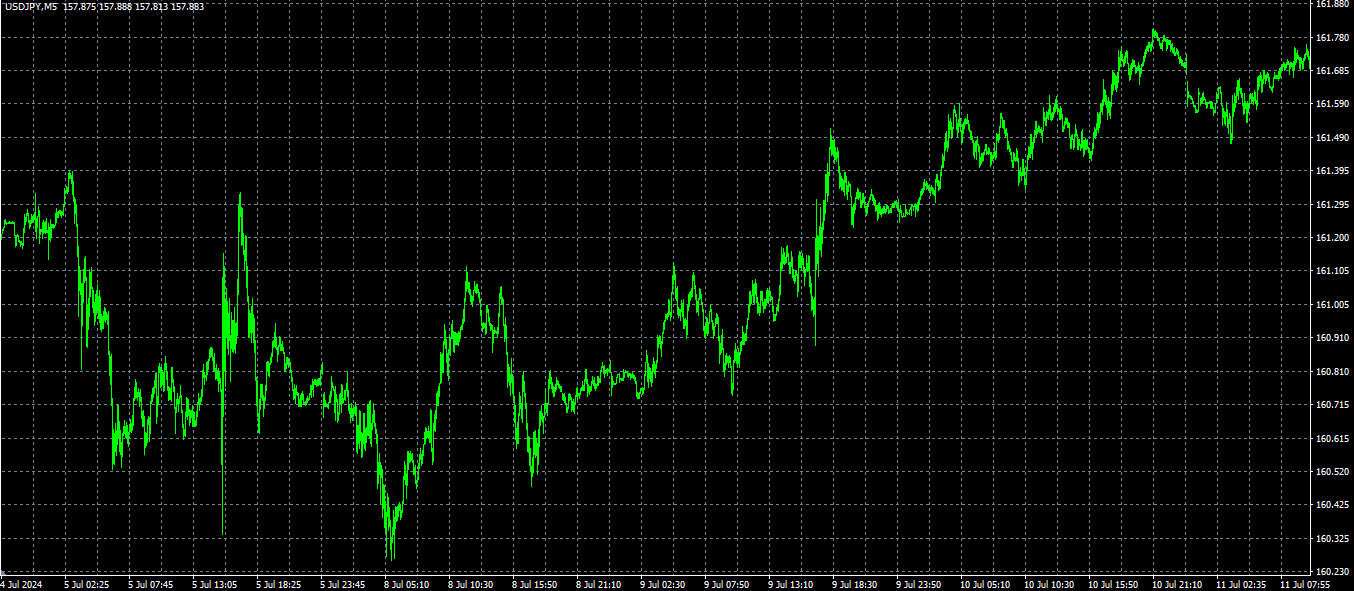

Discretion is a trade that follows randomness
Discretionary trading involves both trend-following and contrarian strategies
Its structure is randomness
If it is not random, then it is pattern-based
Discretionary trading
1. Randomness alternating between trend-following and contrarian strategies
2. Pattern-based tendencies specialized in trend-following or contrarian strategies
3. Pattern-based tendencies alternating between trend-following and contrarian strategies
Randomness or pattern-based
In roulette, pattern-based approaches end depending on the house edge
Pattern-based tendencies specialized in trend-following or contrarian strategies, and alternating trend-following/contrarian patterns—unless repeated, they cannot increase
Simply following trends or simply contrarian trading yields the highest win rate and a downward trajectory
Randomness involves waiting time and number selection by randomness, so you only lose against randomness
Wins or losses are still random, but there is no advantage
Unless it’s a logic that can be increased through pattern-based methods
It cannot become a capital-increase logic
FX is the same, it increases through pattern-based methods
What can be considered in roulette
A fixed pattern logic will lose
Suppose there is a pattern logic of red-red black-black
As a result of following that
Black-Black-Red-Red means four losses
Red-Black-Red-Black means a draw
Black-Red-Red-Red means two losses
There is no way to consistently win a trade
To change this, only consecutive trend-following can work
Not追随するために追随するのではなく、順張りを連続するだけ
In binary options, it is less about a fixed bet and more about
Contrarian approaches tend to work in certain market conditions, but
In roulette, there is no market where contrarian works
Thinking about contrarian in roulette leads to going back and forth and losing
Because contrarian thinking tends to lead to losses
Only a method of repeatedly entering the same region, i.e., continuous staking, can be profitable
When considering the red-black strategy
There is no way to profit by taking turns with a pattern-like chasing approach
Roulette is theoretically random on paper
In reality, it involves cheating or randomness or house edge, all intertwined
Considering this, pattern-based chasing is highly risky
Therefore, the most appropriate is a method that increases the number of winning trades through continuous staking
In video roulette, whether chasing a pattern in a recovery mode or doing continuous staking, you cannot profit
To succeed in capital increases
You must use a pattern that leads to capital increase
In roulette, that simply means continuous staking
If this is an alternating pattern, it is only randomness, so for capital increases it is “impossible”
Continuous staking is comparable to capital increase because
It is not random, whereas alternating patterns are completely random in concept
Continuous staking is not random; it is a provable pattern of capital increase seen in past data
With alternating patterns, you cannot know where they manifest
Because you cannot smoothly realize that alternating pattern
There are markets where a large profit comes from continuous staking of dozens and columns
Only by focusing on such moments does capital increase become surprisingly profitable
There is no need to employ complex techniques
What is needed
The mechanism of capital increase
The logic of capital increase
The pattern of capital increase
The rules of capital increase
Only
※ For those who want to keep earning in FX, go here ↓
× ![]()