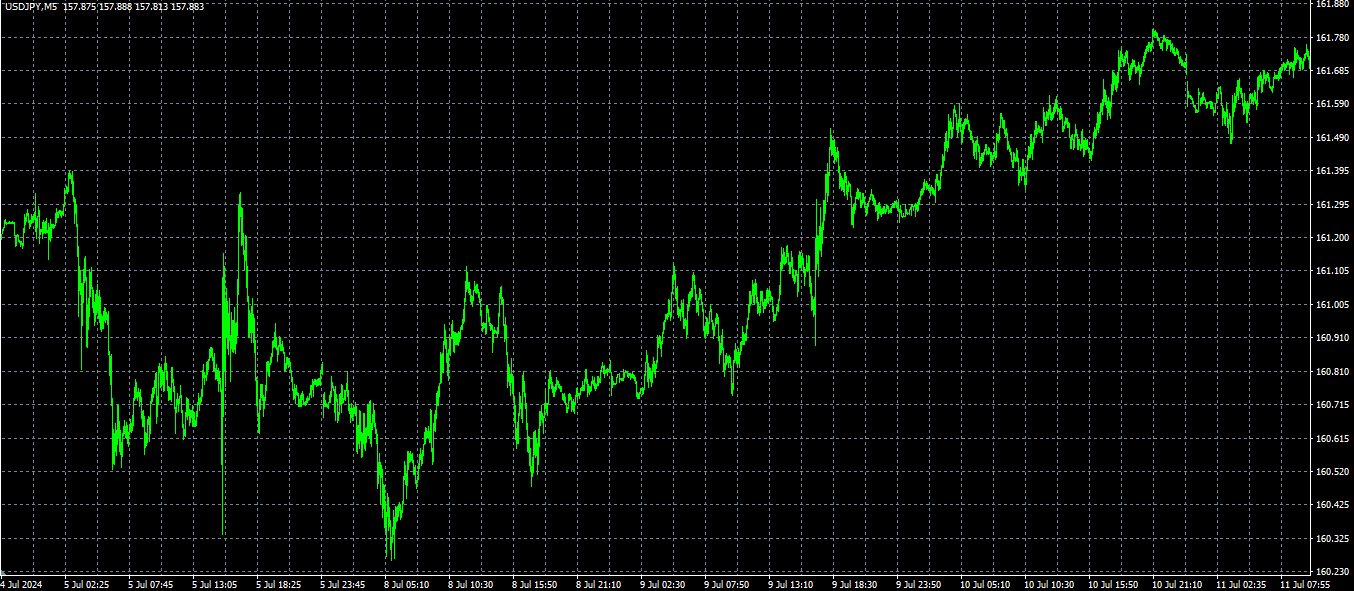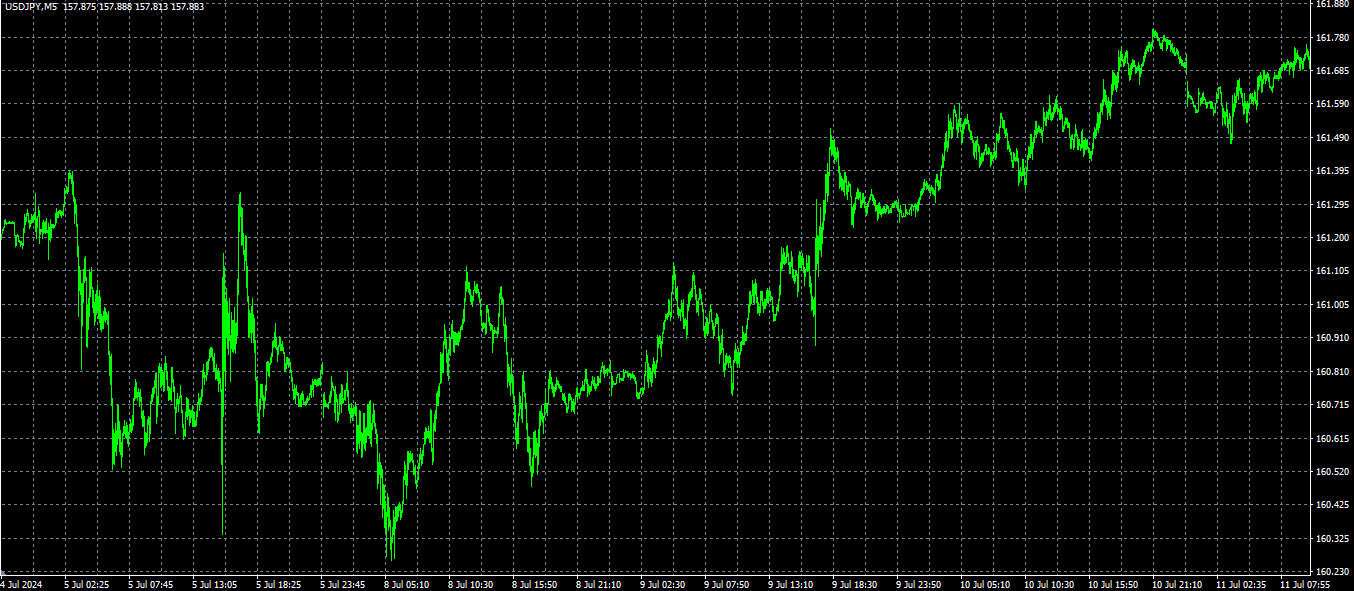

Trend trades should only be targeted when the market is strong
When the market trend is strong,
the movement comes after a support-resistance break.
In other words,
it is a pattern where the recent market keeps updating in a place where there is nothing new.
You often hear in markets that they have “updated,”
but such things are routine and merely signals of a trend.
It's pointless to attach too much importance to them.
A support-resistance breakout is also a signal of a trend,
but it is only a sign that the initial movement has started.
It tends to reverse midway.
What was the goal of trend trading?
Ultimately, it’s about a trend market of over 100 pips, right?
If you look at past markets to some extent,
even after moving 60 pips, it can suddenly bounce back.
Naturally, you wouldn’t profit from trading in such areas.
In trend trading,
you operate with the idea that a trend market will appear, right?
A market that moves 60 pips and then retraces
is basically one that advances suddenly and then reverses suddenly.
Should we call such moves trend trading?
If you recognize them as trend trading,
you’ll quickly lean toward range-mindedness.
The appeal of manual trading is
not possible with automated trading
and it relates to such market awareness.
In other words,
if you’re aiming for trend trading
you should of course trade with the trend in mind.
That means a strategy to capture large profits.
As for trend entry points,
the key is that it has broken out of the box.
However, there are many deceiving moves, called traps.
To cope with this,
you need to wait and confirm the trend.
With only a break-entry logic,
you cannot avoid such traps, but
waiting can prevent them.
Trend trading is
a function of recognizing the trend in the market.
However, you only need one recognition of the trend.
Whether the market is moving diagonally—just that is enough.
In technical analysis terms,
that is simply the MACD moving above the zero line.
In RSI terms, it is 50,
and in Williams %R terms, it is the stagnation at 20 and 80.
Trend trading is built on the culmination of these factors.
If you’re aiming for the trend in the initial movement, take profit on the body.
Because the purpose of this initial-trend aiming is small to medium trend targets.
Therefore, take profit as the market advances.
When targeting the trend from the body, aim for the tail as well.
This is because the trend is occurring, i.e., you’re positioned in a strong trend.
Naturally, larger profits come from targeting the body of the trend.
However, larger profits mean a lower probability of success.
Since you don’t know when that market will appear,
Trend trading is
body profit from initial-trend targeting,
and
the tail profit from truly targeting the body of the trend and then entering toward the tail.
That’s what it comes down to.
When the market is strong,
it is a situation where other currencies move in the same direction.
Also, in such cases,
there are times when the trend moves for a week.
So basically, waiting one day before entering the trend is not late at all.
Why is that? Because
the trend is that strong.
Trend trading is a carryover trade, so this is a natural phenomenon.
At such times,
people who hold positions
have other recognitions besides range or trend
and are unsure where to place trades.
Even though the trend has appeared and a day has passed,
it is not late to trade toward the trend.
That’s because it’s a sign of the trend.
It’s around the body’s neck region, so to speak.
Therefore, if a trend appears, the trend entry will be successful.
※For those who want to keep earning in FX, click here↓
× ![]()