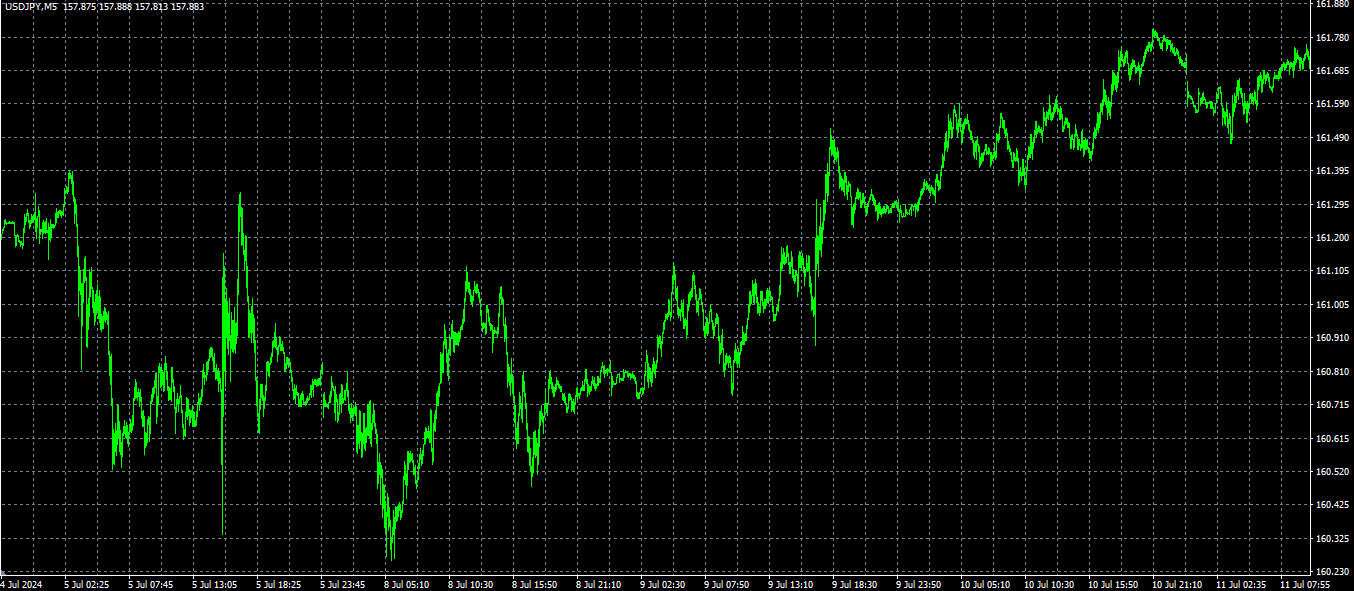

An example of practical exchanges about trading strategies for discretionary trading
0
Discretionary trading = averaging down trading cannot
prevent the expansion of losses that could be stopped by a stop-loss
Even if 10 yen moves within a minute, it cannot be stopped; afterward, you cannot cut losses
Discretionary trading is easy to profit from, but
the maintenance margin changes extremely, so in terms of risk, it remains a high-risk
If starting with 200,000
If the profit rate is 5x, = about 0.5% profit
Since this is divided into four parts, 2% profit
Profit within a week
Do whatever it takes to only follow the trend
Make additional trades in the trend
Aim for a 5x profit rate
Set the stop-loss at the most recent bottom
With averaging down, you inevitably head toward a stop-out
Only when the stop trade increases the profit rate by five times or more does profit remain
While feeling that it’s okay
after that, the maintenance margin can rise to around 1800%, which is discretionary trading = averaging-down trading
Discretion is not able to withstand the burden of losses
Stop-loss was created as a handicap trade to mitigate that relief
Even if it’s 5% in one week, after a year it will become tenfold
Stop-loss
Contrarian-following and trend-following
Traded on a 12-hour reservation
Position-turn trading
There are only about that much
There are no other elements that yield profit beyond position-turn
Is trend-following important?
The trades being conducted are
A stop-loss based on averaging-down contrarian approach
Usually that yields profits
Conversely, doing the reverse trend-following only increases losses unnecessarily
Here
Contrarian-following and trend-following only increase losses
If you try to capture timing in the market, both will accumulate losses
Even if you capture either, timing will slip
Both carry the risk of expanding losses, and you must not add trades during a trend
If you try to shift to trend-following at the right timing, you’ll fail spectacularly, continue trend-following until a trend appears, and end up losing again
That’s what happens most of the time
Also, even if you try to just do trend-following
you will end up in a situation where losses from range markets cannot be recovered
Ultimately losses will continue to grow
At best, it takes about a month to recover
And if you miss that recovery period, your performance will continue to decline
Therefore, ultimately there remains only position-turn trading
Even 12-hour reservation trades are ultimately about timing
Profit expansion is nothing other than position-turn trading
All other aspects besides this “position-turn trading perspective” are fake
There is a place where contrarian-position-turn cannot be faced
In markets where you cannot face it, you must face it
Therefore you end up having to trade with position-turn and trend-following
Contraction to smaller bars and regular bars
In mid-term bar parameters, a retracement chart regards how far the trend can rise as a ceiling
In short-term bar parameters, a normal bar chart does not consider how far the trend can go
In the short-term sense, on a long-term chart
It’s easier to grasp timing relative to the trend
The trend starts from the long-term chart
If you pursue profits
You must faithfully follow the trend on the 30-minute and 1-hour charts
In other words, you can only grasp this flow through side jobs
If you stumble once
You cannot perform stop-loss trading
Because there is a lineage of negatives
A proper trend-following market must appear
And at that time, you must be able to perform proper market analysis
When the trend continues, you often end it there, making it hard to seize profits
So it’s hard to grasp profits
With the 1-hour chart
Analyzing with short-term parameters makes it clear
MA-leading is the only meaningful thing
Ultimately, in the realm of position-turns,
It is nothing other than a trend-turn
The idea of contrarian-position-turning only is good
Simply turning contrarian-position-turning as is has no meaning
That is
To merely gauge the trend
The only conclusion is to use technical analysis for trend inference
Even within position-turn,
If you trade only with signals for position-turn,
Losses become severe partway through
Also, with position-turning, markets will come that shatter stop-loss
Neither of these are easily treated with clear indicators like position-turn signals
Instead, view the market with trend signals rather than trend indicators
That’s the only method
Position-turn does not guarantee profits; the only thing that matters is that profits seem possible
In reality, it’s “the one who enters the stop-loss with a trend-following signal wins”
In other words, in a late-start theory
They are just aiming at the first move
This becomes the opposite pattern of contrarian averaging-down
In contrarian averaging-down, you should aim to maximize profits
Trend-following stop-loss is only a single shot
Beyond that, it’s not different from averaging down and often does not follow the trend
Both lead to risk and you must not add trades during a trend
Because profits were only tied to that market,
If no trend appears, you end up in a dried-up state, meaning you just keep losing as you trade
It’s easier to understand by the number of losses
If you keep trend-following and realize profits with discretion
In ranging markets, you’ll end up with huge losses
And because you trade with discretion, even if a trend market appears you cannot extend profits
If profits rise, the trend ends and you immediately reach stop-loss
Also, adding further trend-following trades
Even when the trend succeeds, it often returns mid-way
Each time you lose, and practically the contrarian averaging-down story is the same
The more it retreats, the more losses rise, and when the trend fails, you take it as a loss
From the start, there is only the way of “one-shot position-turn trend-following” that is correct
Which is muddled with contrarian one-shot
This is the current state of stop-loss trading
Apart from one-shot, the market dictates
In effect, it becomes the same theory as discretionary contrarian trading
Because
Whether it’s a stop-loss
In a strong trend market, you cannot trade according to the trend
Also, when the trend fails and stop-loss occurs
Market view is also distorted, so profits aren’t possible
Also, the one-shot contrarian is based on similar logic
In a trend market, you become quite cautious
However, one-shot position-turn follows trend-turning, so
You only observe
Also, from a hedging perspective, it becomes a safe trade
Talent is not something inherent
This lies in the point that profit changes with the act of contrarian following
Often people say it’s like turtle trading
Because someone broke the rules and did it
That is completely different
Because, in reality
It lies in the part where profits are extended
And in the number of trades
Also, if you use automated trading, the overall performance tends not to improve
That is the reality
There is meaning in contrarian + position-turn trading
Market that can return
Market that cannot return
This is it
And
Markets where position-turn works
Markets where it does not work
That’s all
Because these are loop patterns
No matter how much you trade, you will stop making a profit
Afterward you stop being able to profit
The only thing that leads to the negative spiral is the worst case
※ If you want to keep earning from FX, click here ↓
× ![]()